BEFORE I TELL YOU WHY you should read my new novel, The Sound of Life, please read this:
CONGRATULATIONSON THE BOOK YOU’RE ABOUT TO WRITE!
To ensure that your book gets maximum visibility in the marketplace, please select from each of the following categories before you begin your manuscript. When you have made your selections, please feed them into the AI engine of your choice and direct it to write a book synopsis using the terms you have chosen. Once you have your synopsis,you may begin your manuscript, using the synopsis as your guide.
Note: Every chapter MUST reflect each category and MUST use the terms you choose (see final category, below) at least once.
Basic Story Themes (Select One)
Evil despot in shady country intent on taking over the world
Mysterious global cabal intent on taking over the world (must involve banking or healthcare)
Climate change or deadly, unpredictable weather
Evil aliens arrive from Procyon Alpha with suspicious intent
Religious/political/academic/corporate zealot with a dirty bomb
Upgraded (v2.0) Religious/political/academic/corporate zealot with a stolen nuclear weapon
Upgraded (v3.0) Religious/political/academic/corporate zealot with a stolen biological agent
Deadly virus/bacterium deliberately released from a lab
Deadly virus/bacterium accidentally released from a lab
Deadly virus/bacterium inadvertently released from an ancient tomb
Hordes of zombies that inexplicably outnumber the planet’s population by a factor of six
Main Bad Actor (Select No More Than Two)
Evil despot
Global cabal
Zealot
Virus
Bacterium
Weather
Soulless aliens
Out-of-control AI
Mindless super-soldiers operated by out-of-control AI (or brain worms)
Zombies
Pissed-off animals with brain worms
Main Hero (Select One)
Regular guy with no particular skills who must save the world/galaxy/universe
Regular woman with no particular skills who must save the world/galaxy/universe
Regular guy or woman whose husband/wife/boyfriend/girlfriend/dog/child gets kidnapped
Grizzled, world-weary veteran who has seen it all, with chip on shoulder
Grizzled, world-weary veteran who has seen it all, with dog
Grizzled, world-weary veteran who has seen it all, with chip on shoulder and dog
Child prodigy
Child prodigy with special powers
Hero’s Main Weakness (Select as Many As Required)
Man/woman left them
War scarred them for life/PTSD
Dog died
Drug/alcohol dependency
Couldn’t save buddy
Gun shy because of that thing that happened that they can’t/won’t talk about
Innocent but blamed for the crime they didn’t commit (usually pursued by many people from a wide range of military and paramilitary groups)
Main Hero’s Sidekick (Select One)
Dog
Short round guy whose main weapon is humor and wisecracks (must be loyal)
Very large guy with extreme weapons knowledge
World-class hacker who can get into any system in the solar system in 11 seconds or less
Super-tough, smart woman
Former convict who “knows the ropes”
Android
Robot
Imaginary or dead friend
Required Descriptive Terms (Select One From Each Sub-Category)
[Unspeakable] +
[horror, evil, madness, assassination, murder, ancient scroll, ancient seal, ancient tomb, act, deadly, anger, rage, or outcome] +
[collapse, fall, revolution, terror in the streets, lawless, undead, maniac, bloodshed, bodies, or terrorism] +
[superhuman, soldier, detective, officer, firefighter, Navy SEAL, Army Ranger, tracker, doctor, paramedic, archaeologist, mercenary, or veteran] +
EVERY DAY I GET BOOK RECOMMENDATIONS in email from various sources. They always begin with “We think you’ll like this,” or “For readers of…,” followed by a well-known author’s name. Sometimes there’s a winner, but increasingly, my eyes glaze over as I read the descriptions. It’s as if they all used the template I created above to design their story arc.
Look: I read everything, and I mean everything. I average around 125 books per year, and they’re drawn from almost every genre out there. I read them all because I enjoy them, and because the variety makes me a better writer.
So: why should you read The Sound of Life? Well, a couple of reasons. First, you should know that if I had used that checklist I showed you earlier to develop the story, I would have had to add a final category in each bullet list that says None of the above. I don’t have evil cabals, slimy despots, deadly germs, evil politicians, or horrifically corrupt business leaders in this book. What I have is a group of good people who prove that hard work, kindness, serendipity, loyalty, and trust can lead to good things when facing adversity.
The truth is, that’s what our world is really like. Good things do happen to good people. Do my characters face challenges? Absolutely! Are there hair-raising moments? Of course! But none of them pose an existential planetary threat that can only be stopped by an overtired elementary school teacher with a pet iguana, falsely accused of an improper relationship with a student (the teacher, not the iguana), who really doesn’t want to get involved…but does, thus saving the planet.
But the real reason you should read the book? It’s a great story! It has plenty of action and a cadre of characters that you’ll be sorry to see go when you close the back cover. This is my 106th book (really) and it’s the first book I’ve ever written that caused me to feel a bit melancholy when I wrote the last page. I didn’t want it to end. That says something, doesn’t it? It also has a great environmental message that will make you think about our role on this beautiful blue ocean planet, long after you’ve finished the book.
The Sound of Life is available now on Amazon, in trade paperback and Kindle editions.
I earned my NAUI Certification card—my C-card, as divers call it—in 1977, and proudly pocketed my Instructor card a year later. As a newly-minted dive shop owner, I taught basic skills in the pool every weeknight, and on weekends I was either somewhere along California’s north coast taking new divers on their first free dive, or in Monterey for final class certification dives. The ocean has always fascinated me; like so many people, I watched, enraptured, as Jacques Cousteau and his team explored the undersea world. When I was a little boy, I pulled a pair of my underwear over my head so that one leg hole served as my face mask and pulled a pair of my dad’s socks onto my feet to serve as fins. I swam down the dark hallway, Jacques at my side. Once I was certified, the ocean became the center of my life, and that has never changed.
My first open water SCUBA dive was at Monterey Bay’s Cannery Row, back when it still had the ruin and wreckage of the old canneries strung along the beach where fancy hotels and restaurants stand today. With the clarity of poignant memory I remember pushing off the surf mat, raising the BC hose over my head, and descending below the calm surface into a world that I would come to love more than just about any other place on the planet. It is a place in which I am so inordinately comfortable that I once fell asleep lying on the bottom of Monterey Bay, my hands under my regulator as I watched life go on, tiny creatures crisscrossing the sandy bottom on their mysterious errands.
In consummate awe I dropped through the kelp on my way to the bottom during my first dive. As I descended, I brushed against the kelp leaves, causing a shower of pea-size crabs, moon snails, nudibranchs and other creatures that before my descent had been in-residence on the various levels of the Macrocystis. I would later teach my own students that at as much as a foot a day, giant kelp is one of the fastest growing plants on Earth, and that its flotation bladders are filled with enough carbon monoxide to kill a chicken in three minutes.
As I approached the sandy bottom on that first dive, I realized I had a problem. I was falling too quickly. I was a new diver, and buoyancy was not yet something I controlled subconsciously. Looking down as I approached the ocean floor, I had the overwhelming realization that no matter where I landed, whether on those rocks in front of me, or that patch of sea lettuce over there to my left, or on those old, eroded pipes from the canneries, or on the flat, sandy bottom over there, in the process of touching down I would crush countless lives. So profuse was the riot of living things that there wasn’t a square centimeter anywhere that didn’t have something living on it.
Luckily, I was able to arrest my descent before I destroyed the community below me. I managed to go into a hover, where I stayed, unmoving, just taking it all in. My sense of wonder was so great that I lacked the ability to move. But the truth is that I didn’t want to move: I would have had to drain the tank on my back and three more like it before I saw every living thing on the patch of bottom directly beneath me. In fact, I was so motionless in the water column that my instructor came over to make sure I was okay.
As I floated, unmoving, something else crept into my consciousness: the sounds of the underwater domain. The bubbles from my exhalations. The mechanical hiss and click of my regulator. The far-away sound of a propeller frothing the ocean. A deep, unrecognizable rumble, something industrial, far away.
And then there were the clicks, trills, and bloops, the buzzing and scratching and chirping of ocean life. In other words, a cacophony, a joyous symphony, the countless voices of Monterey Bay.
At night, the score changed. There were fewer human sounds and more natural sounds, mysterious and eerie. This became my favorite time to be in the ocean; night diving is profoundly magical. Once we sank to the bottom, turned off our lights, and allowed our eyes to acclimate to the darkness, we could see remarkably well. Every movement, every fin stroke, every turn of the head created a star-storm as the moving water caused bioluminescent plankton in the water to spark alight. Every passing seal or sea lion or otter drilled a contrail of glowing green through the black water like a living comet. This was nature’s alchemy at its best.
And, there were sounds—so many sounds. I once did a night dive at the far end of the Monterey Coast Guard Pier where a huge colony of seals and sea lions congregates. Divers know that if they turn on their powerful dive lights during a night dive, their vision goes from a dim awareness of everything around them to brilliant awareness of whatever is illuminated by that narrow white beam directly in front of them, drilling a hole into the darkness. Night divers also know that for reasons known only to them, sea lions enjoy barreling down the light beam toward the diver, blowing bubbles and roaring like a freight train—then veering off into the darkness at the last moment before colliding with the now terrified diver. It has happened to me more times than I can remember, and it still scares the hell out of me when it does.
Twice over the years I heard the siren song of whales while night diving in Monterey; once I heard the telltale blast of sonar, presumably from a submarine somewhere outside the Bay. It was mildly terrifying, and it was more than a little painful. One night I found myself on the Cannery Row side of the Coast Guard Pier, not far from the sea lion incident I just described. Sensing movement beside me, I saw that three gigantic ocean sunfish, mola mola, easily eight feet from top to bottom, had unwittingly surrounded me. They meant no harm and were most likely oblivious to me. But with them came a sound, a combination of stomach rumble and the squeak of a hand rubbing a balloon. It was all around me, and it was loud. At first I thought it was air moving around inside their swim bladders, a common marine sound, but giant sunfish don’t have swim bladders. To this day, I have no idea what I was hearing, but I’ve never forgotten it. All I know is that when the sunfish disappeared into the depths of the Bay, the sound disappeared with them.
I have long been an avid photographer, both above the surface and below it. But as time went on, I began to pay more attention to what my ears were telling me than what my eyes were. I don’t know what caused that focal shift; perhaps it was the fundamental nature of the two senses. Not long ago, on a whim, I sat down with a calculator and my photo database and did a back-of-the-envelope calculation. It turns out that from the time I started shooting seriously until today, a period that covers just shy of 50 years, I shot approximately 500,000 images. Big number. Most of them I shot at a 250th of a second, my preferred shutter speed. That means that every 250 images I shot covered one second of Earth time. 500,000 images, then, translates to 2,000 seconds, which is just over 33 minutes. In other words, my nearly 50 years of serious, near-constant shooting captured a half-hour of my life.
On the other hand, when I go out to record sound, I often sit for an hour or more with the recorder running, capturing a soundscape. During that time, I immerse myself in the environment and become part of it, something that’s impossible to do in a 250th of a second. With my camera I click and go, rarely lingering after the famous ‘moment it clicks’ to savor the entirety of what I just captured a tiny slice of.
Photography is about capturing a still image, a single, frozen moment in time. But what in the world is a ‘still sound’? The answer of course, is there is no answer. The difference between a photograph and a sound recording, beyond the obvious, is time. A photograph captures a moment in time; a sound recording captures a moment over time. Photography is often described as a “run-and-gun” activity. But when I go out to record, that approach doesn’t work because sound recording by definition is immersive: I have to settle down in the environment, get my gear sorted, and be quiet by being still. If I’m still, I pay attention. And if I pay attention, I notice things. My awareness of my surroundings isn’t limited to what I see through the narrow viewfinder of a camera; it’s as broad as I choose to make it, and the longer I sit, the richer my awareness becomes.
Maybe it’s age-related. I’m older now than I was when I started photographing seriously; with age comes patience, and patience is a critical element of sound recording. Saint Augustine said, “The reward of patience is patience.” And it isn’t because I have more time now that I’m older; I have the same time now that I had when I was 21, a full 24 hours every single day. It’s a question of how I choose to use those 24 hours. Bernie Krause, writing in The Power of Tranquility in a Very Noisy World, said, “Heed the narratives expressed through the biophony. Our history is writ large within those stories. Be quiet. Listen. Be amazed.”
Be quiet. Listen. Be amazed. Great advice for all of us.
This essay contains an important story for the ages. Given current events, and the absolute truth that history does repeat, the lesson is plain, and chilling.
One of my treasured possessions from the years I lived in Spain is a 16th-century manuscript. It’s a big book, about fifteen by twenty inches, and it contains around 40 hand-written and hand-illuminated parchment pages. According to a faded and somewhat mysterious note inserted between two of the pages, itself very old and its ink faded, “This book contains the responsive readings and Benedictions for all the Masses of all the Saturdays.”
My parents bought the book at a junk shop one Sunday morning in Madrid’s famous flea market, El Rastro. When asked how much the book cost, the shop owner picked it up, hefted it to assess its weight, shrugged his shoulders, and declared, “140 Pesetas.” About two dollars. Years later, They passed it on to me.
There’s nothing in the book that identifies its origins, other than its Catholic purpose. I’ve studied and researched it extensively, and spent countless hours with scholars of ancient manuscripts. Here’s what I know. The cover is most likely Spanish, as evidenced by the intricately tooled designs in the leather. The pattern is made up of rows of tiny rosettes, similar to covers from the same period which were often inlaid with ivory and precious stones. The binding mimics the German style of binding of the same period.
The contents are mid-16th-century. There is handwriting toward the end of the book appears to be in the style of the early 18th-century, which implies that the book must have been in use until at least the 1700s.
The book is divided into sections by crude index tabs, hand-labeled and made of vellum, a stronger paper than the high-quality rag of the manuscript itself. A careful examination of one of the pages under a special microscope designed for the purpose reveals a pattern of lines pressed into the surface, a consistent fraction of a millimeter apart, a result of the mold and deckle used in the paper manufacturing process. This line pattern confirms the date of the book.
The pages are hand-written in Latin, and the lines of text alternate with musical staff for the choir that chanted them.
A year or so ago, I decided that I wanted to know more about this strange and ancient book that fell into my hands. I wanted to know where it came from; who wrote it; what the ink was made from; where the paper was sourced; what church or cathedral it was used in; and what was going on in the world at the time. I wanted to know about socioeconomics, geopolitical happenings, and cultural mores. Was it used in a church that was abandoned due to declining attendance, its assets scattered? Was the book looted during the Spanish Civil War? I didn’t know, but I wanted to.
I started by looking into the time period just before the book was first created and used. I don’t know for sure and probably never will, but based on my own research and the insights of academics and scholars far more informed than I, the middle of the 15th-century seemed like a good place to start.
During the mid-1400s, the late Middle Ages were coming to a close, and the Renaissance, with its focus on the arts, music, and the humanities, was beginning. The Hundred Years’ War between England and France was finally drawing to a close, the Byzantine Empire fell to the Ottoman Turks with the capture of Constantinople in 1453, and Spain and Portugal were demonstrating their sea powers, on the hunt for new trade routes with the rest of the world.
Equally important was the invention of the printing press in Europe, which arrived too late for my book, but had a profound impact, nonetheless, on the spread of global knowledge, insight, awareness, and ideas.
In essence, the mid-15th century was a period of transformation, of turnover from one set of guiding principles to another. It was here, shortly after this moment of transition, that my manuscript book came into existence.
The Iberian Peninsula, which comprises Spain and Portugal, has been a multicultural melting pot for its entire existence. For centuries, Muslims, Jews, and Christians coexisted, each playing a role in the rich cultural development of what ultimately became modern Spain. Ten centuries ago, Muslims brought science, architecture, medicine, and extraordinary art, while the Jewish community developed the country’s economy and served as its powerful merchant class. The Christians provided administrative governance. In fact, when Alfonso X, also known as Alfonso the Wise, died in the latter half of the 13th century, he ordered that it be inscribed on his tomb that he was ‘King of the Three Religions.’ Even today it’s impossible NOT to see the influence of the three belief structures that characterized ancient Spain. Look at the Mezquita Cathedral in Córdoba, where a Catholic church has been built to surround a mosque. The country was a palimpsest of contradictions, but it worked.
In the mid-1400s, things changed in a way that is eerily reminiscent of current events. Alonso de Ojeda, a Dominican friar from Seville who had the attention of the Catholic Kings, Fernando and Isabela, told Queen Isabela during an official visit to Seville that large numbers of Jews who had converted to Christianity were actually Christians in name only—that they in fact continued to practice what came to be known as crypto-Judaism. A study, written by the Archbishop of Seville and Tomás de Torquemada (a Jewish convert himself and soon-to-be administrator of the Spanish Inquisition), offered the same conclusion. I don’t know if this was the first example of a conspiracy theory, but it certainly qualifies as one.
In response to these baseless claims, Fernando and Isabela requested a mandate from the Pope to establish an inquisition in Spain. The Pope agreed, and granted them permission to select a panel of priests to serve as Inquisitors.
In 1482 Fernando sought to take over the existing Papal Inquisition in the province of Aragon, which resulted in major resistance because it infringed on local rights. Relatives and friends of those accused complained of the brutality to the Pope, who wanted to maintain control of the Inquisition. The Pope wrote that “… in Aragon, Valencia, Mallorca and Catalonia, the Inquisition has for some time been moved not by zeal for the faith and the salvation of souls, but by lust for wealth, and that many true and faithful Christians, on the testimony of enemies … have without any legitimate proof been thrust into secular prisons, tortured and condemned as relapsed heretics, deprived of their goods and property and handed over to the secular arm to be executed, to the peril of souls, setting a pernicious example, and causing disgust to many.”
The Pope, whose position on the “new Christians” was far more tolerant than those of the Spanish Catholic Kings, tried to maintain control over the Inquisition to ensure that the punishments being meted out were appropriate and justly assigned. He issued a new order that stipulated a more tolerant approach to the practices of the Inquisition.
Fernando was outraged, arguing that no sensible pope would have published such a document. In May of 1482, he wrote a threatening letter to Rome, saying: “Take care therefore not to let the matter go further, and to revoke any concessions and entrust us with the care of this question.” In response, cowed by the power of the Spanish monarchy, the Pope changed his stance to full cooperation, and issued a new order in 1483 that appointed Torquemada as Inquisitor General of Aragon, Catalonia and Valencia, in the process creating a single entity to administer nationwide punishment without oversight.
The first victims were burned at the stake in Aragon in 1484. Fierce opposition continued, protesting the loss of local autonomy. Meanwhile, the Pope withdrew all papal inquisitors from the region, handing total control to the Inquisitor General Torquemada, including the handling of all appeals. The Catholic Church abdicated its oversight, effectively washing its hands of the whole affair.
Keep in mind that the Jews represented the country’s merchant class—the artisans, shopkeepers, laborers, and craftspeople. In 1483, all Jews living in the province of Andalusia were expelled from the country. The Pope was troubled by this aggressive stance, but his protest fell on deaf ears because of political pressure from King Fernando, who threatened the Pope if he continued to question the actions of the Catholic Kings. The Pope backed down, and in short order Torquemada established additional arbitrary rules for persecution. One of them was that new courts could be established on an ad hoc basis as needed, with a thirty-day grace period for the accused to confess. And as for the accused, they were guilty until proven innocent based on such ludicrous things as the lack of chimney smoke coming from their homes, clear evidence that they were observing the Sabbath. The accused were allowed to confess and do penance, but if they relapsed—and all it took was the whispered word of an angry neighbor—they were executed. Those who had nothing to confess were tortured until they came up with something, anything, to make the pain stop. Then they were executed.
1492 is widely recognized as the year that Christopher Columbus received permission from the Catholic Kings to sail off to the New World in pursuit of untold riches that would add wealth to the Crown’s coffers. His voyages, often taught as brave forays into the unknown, were in fact expeditions of hegemonic terror.
The Catholic Kings gave Columbus, whose actual name was Cristobal Colón, the title of admiral, viceroy, and governor of any land he discovered. And, he was allowed to keep ten percent of any treasure he found, which motivated him greatly to do so—and by any horrific means necessary.
But 1492 is also studied by Spanish historians because of a less well-known but far more profound event: by royal decree, all of Spain’s remaining Jews were expelled that year. They left the country by the tens of thousands, taking with them what amounted to the entire merchant class of the country—and the economy that they made possible. As a result, Spain slid into a slow but inevitable economic collapse. The country found itself morally and economically bankrupt, its trade routes disrupted, its trading partners non-existent. Spain entered its own Dark Age, hopelessly crippled.
It doesn’t take a degree in Medieval Spanish History to do a little plug-and-play exercise here, replacing 15th-century names with names from the 21st, substituting one ethnic group for another, inserting a 15th-century excuse for an unspeakable action for one that is similarly vile from the 21st-century.
I’ve quoted George Santayana a lot lately about the state of things, so I think I’ll end with a quote this time from Polish poet Stanislaw Lec: “When smashing monuments, save the pedestals—they always come in handy.”
‘The only thing I owe you is my utter indifference.’
I heard Dennis Miller say that on his show, years ago. It stuck with me, and in the last few weeks it’s come back into my memory. Recent events in my life have made me think long and hard about who I am, what I am, and how I am. Let me explain.
I don’t care what color you are. I don’t care who you love. I don’t care what beliefs help you get through the day. I don’t care if you are skinny, fat, old, young, rich, poor, feeble, or sharp. I don’t care what you studied, where you studied, why you studied, or IF you studied. I’m indifferent to these things because they don’t—matter.
Here’s what I do care about.
Kindness. Your ability and willingness to engage with others. Your level of curiosity (more is better). Your interest in things outside yourself. Your story. Your family. The things that make you laugh, smile, cry, and despair. These are the things that make you human.
Let me tell you a story. When I was 13 years old, my family moved to Spain, thanks to a job transfer. Considering that we moved to cosmopolitan, European Madrid from Midland, Texas, in the heart of the oil (and prejudice)-soaked Permian Basin, the adjustment was—jarring. But I dealt with it—I adjusted—I went native, as seasoned (and, perhaps, jaundiced) expats say. But it didn’t happen without help.
We rented a house in a small village a few miles west of downtown Madrid, a cozy little pueblo called Aravaca. To call it a house was a gross understatement: it was a house in the same way that Costco is a ‘shop.’ It had nine bedrooms, five bathrooms, a beautiful garden with a pool, two kitchens, and Loli.
Loli, at right, modeling a Flamenco dress; her parents, at left.
Loli worked for the family that preceded us in the house as a domestic—a maid, I suppose—and she saved us. When we rented the house, it was just assumed that she was part of the package, and thankfully, she was. That was 50 years ago; I still see Loli every time I go to Spain on business. She’s a few years older than I am, and as much a part of my family to me as my parents and brothers are. She’s my sister.
One winter day, we accepted an invitation from Loli to join her at her parent’s home for coffee and dessert. They lived in an even tinier town beyond ours called Majadahonda, a scrubby little pueblo that looked like a Star Wars outpost town—no paved streets, cattle and sheep running around, ancient Spanish women dressed all in black, the sign of a lost husband. Light snow was falling; it was December, and it was very cold.
We parked the car and climbed a half-completed brick staircase on the outside of an equally incomplete building that led to their home. It comprised two rooms: a kitchen and dining room about eight feet on a side, and a bedroom and bath about the same size. In the center of the kitchen was a small round table with a heavy felt table cloth that reached all the way to the floor. Under the table was a heavy metal brazier, filled with burning coal; this was what heated the home. We were instructed to sit at the table, and wrap the table cloth around our legs to stay warm.
My prejudices began to surface—I felt them rise, like the tide. These people were so poor—they had nothing. The only things hanging on their bare, whitewashed walls were a large crucifix, and a slightly crooked photograph of Generalísimo Franco. I felt embarrassed, awkward, out-of-place. I didn’t know how to—BE.
We spoke enough Spanish to carry on a halting conversation with our hosts, but most of what we exchanged were smiles, and hand gestures, and a tremendous amount of laughter. I had no idea what they were talking about most of the time, but I don’t think I’ve ever in my life had a more fun day. These people were poor, they spoke no English, but they were kind, and they were inclusive.
Soon, neighbors began to arrive because they wanted to meet us, and with them, a cornucopia of food. An entire Serrano ham came through the door, the entire leg of a pig, air cured, strongly flavored, delicious. Strings of chorizo and lomo and morcilla and salchichón sausages, rich with paprika and garlic and savory fat. Bowls of fried and marinated anchovies. Olives and peppers. Mushrooms, sautéed in olive oil and garlic. Bags of French bread, torn apart to soak up the leavings on the plate. And a universe of cheeses from all corners of Spain.
We ate until we were full, and then we ate some more. Desserts arrived, mysterious and unknown and incredibly tasty. And then, the music started.
Spain is a musical country. Spaniards are wired with arpeggios; 16th notes flow through their veins, and their hearts beat to the staccato attack of a Flamenco dancer’s shoes. And so it was that spontaneous singing began to break out. One person would begin to wail, that sad, lonely sound that makes me think of foghorns and that is completely unique to Spanish love songs, and everyone else would join in, clapping in syncopated rhythm as the music progressed. As each song approached its final chorus, a voice would begin a different song, and the group would switch over, seamlessly. I did not understand the words, but the music, the rhythm, the emotion, spoke to me. I was entranced.
And it was at that moment that I became aware of a deep shifting in my heart, or perhaps in my soul, a feeling that I can recall to this day, with crystalline clarity. I was changing, fundamentally. My preconceptions about poverty and the measure of a person’s worth shattered, and were remade that day. Our nine-bedroom house, with its landscaped garden and pool that I had bragged about to my friends in letters, was meaningless. These people, these wonderful, warm, giving, caring, connected people, were far richer than I would ever be.
The Dalai Lama once said, ‘My religion is very simple. My religion is kindness.’ That’s the most profound thing I’ve ever heard a religious figure say.
So, let me go back to my original thought, the one that transported us to a family gathering in Majadahonda. That experience, and countless others that I was honored to be part of during my time in Spain, changed the way I look at the world. I don’t care about those superficial, unimportant, physical and metaphysical things that surround you, and I expect the same indifference of you. But: I also expect you to seek kindness in me, and to expect my interest in those deeply human things that truly make you who you are.
Look, I’m not naïve. I’ve been around long enough to have witnessed acts of human cruelty that defy my ability to rationalize them. I watch, as more and more people in the world today try to define themselves by the things that they surround themselves with, rather than by the things that lie inside them. I shake my head as we glorify actors and sports figures and call them society’s game changers, yet we pay little attention to teachers, scientists, activists, aid workers, and artists, the REAL game changers.
On the other hand, I’ve also seen breathtaking examples of human kindness. I’ve seen ordinary people engage in acts of bravery that, in wartime, would have earned them a medal. I’ve seen art and listened to music and read literature that made me cry with unfettered emotion, and that made me feel that we humans, for all our faults, still have redeeming qualities.
So, this is my pledge, to myself as much as to others. I will strive to be more aware. I will think before I open my mouth. And I will try, very hard, to understand that the way I experience the world is vastly different than the way many others do.
I make occasional trips to a small pond near my home, a place called Mud Pond, which is really a flooded peat bog. I love it, because it’s close—it takes me five minutes to get there—and because it’s a diverse mix of ecological zones. During a 15-minute walk I can wander through deep conifer and deciduous forests, a delicate riparian zone, and I can walk along a chattering, rocky brook as it makes its way to the pond.
The forest there is a gentle, quiet place during the day, and in the summer, it’s a green cathedral—my idea of church. Birds sing; the wind sighs and mumbles through the branches; the stream giggles over the rocks with a voice like a crystalline wind chime. Otherwise, it’s pretty quiet.
Night, on the other hand, is a different story. That’s where I am right now. I’m sitting here, in the dark, deep in the forest. It might be because there’s no moon, and the darkness has wrapped around me like black velvet, but there are sounds, all around me, none of which I hear during the day. Branches crack and fall with a sound like collapsing Tinker-toys, a sound that’s amplified by the darkness. Small things scurry and forage in the leaf litter, and they sound a lot bigger than they are. Somewhere overhead, a screech owl lets loose, and my heart skips beats. Mountain lions come to mind.
I’m wearing a headlamp, and when it’s turned on, it projects a cone of light ahead of me in the darkness. Flying things, insects and bats, flit through the beam, instantaneous and momentary shadow shapes that are unnerving. They remind me of my days as a professional SCUBA diving instructor, when we did night dives in the Pacific Ocean. Until we extinguished our lights—an act of faith of the highest order— and allowed our eyes to grow accustomed to the darkness, we were blind. And even when the lights were on, the only piece of the ocean that we could see was whatever found its way into the cone of light created by our dive lights. All too often, we’d find ourselves in a game of chicken with a harbor seal or a California sea lion. Attracted to our lights and naturally curious, they’d swim down the light beam like a runaway locomotive, veering away at the last possible moment, disappearing into the sea. You never—EVER—forget the first time that happens.
The forest at night is calm, sometimes loud, gentle, often violent, friendly, mysterious, and more than a little terrifying. I’ve stopped to sit on an old fallen tree that’s slowly disappearing into the ground as it returns to the soil. I’ve turned off the light and closed my eyes to take it all in. Eyes open; eyes closed. Nothing changes. The darkness is absolute, but the sounds are all around me. My eyelids make no difference whatsoever, and I have no earlids, so the sounds of the forest are ever-present. A bat whooshes so close to my ear that I feel the wind as it passes. It sounds like a falling envelope.
I slowly grow accustomed to the fact that I’m alone in a dark forest, where my only company is the trees, the mosses, the ferns, the rotting biomass, and whatever unnerving thing is rustling around in the leaves behind me. The smell is deep and rich, slightly foreign, the incense of the forest cathedral. Looking around, I see nothing; I look to the sky, to the treetops, and see the same, although I can just make out the silhouettes of branches against the dark sky.
But when I look down, I see—something. There’s light down there. I can barely see it, but it’s definitely there. Squatting down, then on hands and knees, I move in for a closer look. Clinging to the bottom of the rotting log, in a clump about the size of my fist, is a cluster of small, pixie-capped mushrooms. And they’re glowing in the dark. They aren’t bright; it’s nothing I could read a book by, but they glow.
There’s something intellectually wrong about this glowing mass at my feet. This should not be happening. These are mushrooms, and they’re glowing in the dark. In spite of the fact that I’m struggling to wrap my head around a glowing fungus, I’m no neophyte; this isn’t the first time I’ve experienced bioluminescence. As I said, I used to be a SCUBA instructor. I often taught advanced classes, during which I put the students through their paces to earn a higher-level certification. Over the course of a grueling long weekend, they had to perform a deep dive, a rough water dive, and a salvage dive, during which, if they completed the exercise, they’d successfully bring a large sunken case to the surface, where they would find it to be filled with iced beer, champagne, soft drinks, and snacks. They also had to demonstrate proper underwater navigation skills by swimming a complex compass course, the proper execution of which would take them to a very non-natural formation on the bottom of Monterey Bay called The Bathroom. Years ago, someone dumped a claw foot bathtub, a pedestal sink, and a toilet overboard. Divers gathered the pieces, set them up on the bottom, and, of course, took all of the appropriate photographs of themselves bathing in the tub, brushing their teeth at the sink, and sitting on the toilet. There was no ambiguity about whether a diver succeeded at the navigation dive—they either arrived at the Bathroom, or they didn’t.
The final activity in the program was a night dive. The group would gather in a sloppy, floating circle on the surface, and vainly try to create a sense of collective courage before releasing the air from their vests and descending into the unknown blackness of the dark ocean. Once they arrived at the bottom, they were instructed to turn off their lights, which they reluctantly did. The ocean swallowed them; the darkness was utterly complete.
Initially, they’d see nothing, because their eyes had not yet acclimated to the darkness. After a minute or so, though, as pupils expanded and retinas began to fire in overtime, they’d begin to make out the ghostly, shadowy shapes of rocks and kelp forest and the decaying pipes from the old canneries on shore. And then, in a moment never to be forgotten, magic would strike. One of the divers would collect her courage and push off the bottom, like a fledging bird. The instant she moved, the ocean would catch fire with the sparks of bioluminescent plankton annoyed by the moving water column, a sparkling constellation of biological stars. It was beyond breathtaking. A sweep of a hand through the water left a wash of light like an underwater sparkler; kicking fins left a glowing contrail. It was the most fitting graduation ceremony I could imagine, the earth’s original light show, a microscopic celebration of life.
How appropriate it is that the compounds responsible for this cold light are named for Lucifer, the dark lord, the fallen angel. His name means ‘bringer of light,’ and, just like its namesake, biological light is appropriately otherworldly. And it is indeed cold; 80% of the energy consumed in the generation of bioluminescence creates light; only 20% becomes heat, which is far more efficient than today’s best LED lights, which create 85% heat and 15% light from the energy they consume. Even Shakespeare, in Macbeth, jumped on the Lucifer bandwagon: ‘Angels are bright still, though the brightest fell.’ Into the ocean, apparently.
This luminance occurs when two compounds are combined: Luciferin, the substrate that forms the foundation for the reaction; and Luciferase, an enzyme that accelerates the oxidation of Luciferin, a byproduct of which is the light from the mushrooms at my feet—and from the plankton that my divers disturbed during their night dive. It occurs naturally, and all over the world. In New Zealand, bioluminescent glowworms dangle by the tens of thousands from the ceiling of the Waitomo Cave system, like glowing blue spaghetti.
Strangely, the phenomenon results in a host of emotions. I met a man at Mud Pond the other day who will not venture into the woods after dark. He isn’t afraid of animals, which is the fear that most people have; I won’t go there because things glow there, he told me.
I myself am fascinated, and enchanted, and unnerved by the faerie-fire at my feet. I covet this strange light—I want it. A part of me wants to gather the mushrooms and clutch them to my chest like Gollum and his ring, my precious, and run shrieking through the woods. Another part of me wants to put distance between us.
As a biochemistry student at Berkeley years ago, we filled test tubes with light by mixing hydrogen peroxide with dye and a phenyl oxalate ester. Chemically different from Lucifer’s light, it’s equally enchanting (this is the stuff that makes the chemlight sticks that people wave at rock concerts work). Chemical light can be manufactured, but it is a far more elegant undertaking to bioengineer living creatures to glow in the dark. By splicing a specific jellyfish gene into the genetic matrix of the mouse, scientists have created glowing green rodents. And while bioluminescent mice aren’t everyone’s cup of tea, imagine walking through a bioluminescent forest at night, a place out of Avatar’s Pandora. Imagine a city where bioluminescent trees and bushes replace electric streetlights, where glowing, multicolored lichens and mosses and flowers encrust the walls of buildings, and where shimmering grasses carpet everyone’s lawn with flowing waves of light. Imagine if plants could signal their need for water or nutrients by glowing in a particular way, or signal distress by flashing on and off in a specific pattern, a visual, biological SOS, an early warning system against infestation.
So I’m still lying flat on the ground, and I tentatively reach out and touch the glowing fungus at the base of the log. I don’t know what I expect; maybe some kind of a reaction, a subtle shift in colors in response to my approach. Or perhaps I expect warmth; but no, it’s just as cold as any other fungus. This incongruity of cold light is beyond understanding; it defies logic. I can look at the complex diagram of Luciferin’s structure on my phone, its string of intricately interconnected carbon rings, strung with molecular bangles of sulfur and nitrogen and hydroxyls; I can even follow the oxidation process that takes place during its dance with Luciferase that yields light. That doesn’t mean I have to believe it, though. This is faerie fire, plain and simple. There are faeries about in these woods, or perhaps Pandorans; I just haven’t found them yet.
A few weeks ago, I gave my final career keynote in Cedar Rapids, Iowa. Sabine and I decided to do it as a road trip, so we made a big, looping three-week journey that took us as far west as the sand hills of Nebraska, where I wanted to record the sounds of the prairie in the early fall. On the way out, we passed through New York, Pennsylvania, Ohio, Indiana, northern Illinois, and Iowa, before reaching Nebraska; on the way back we drove through Missouri, southern Illinois, Kentucky, West Virginia, Virginia, Maryland, then Pennsylvania and New York again, before crossing back into Vermont via the Crown Point Bridge. 19 travel days, 4,400 miles, 13 states. Not bad.
Other than the keynote in Iowa and the recording stops we made, which included a few sandhill cranes, a great interview with Bethany Ostrom, a field biologist at the Crane Trust in Nebraska—you’ll hear from Bethany in an upcoming episode—meadowlarks, freight trains, wind rattling the endless cornfields of Iowa, a couple of dawn choruses, bison grunting, cattle lowing, the sound of huge barges moving up and down the Mississippi River at Cape Girardeau, the booming of gigantic wind turbines—more on that later—and the fife and drum marching band at Colonial Williamsburg, which, together with the bellows in their blacksmith shop and the clopping of horses pulling carriages brought the place to life, Sabine and I spent a lot of our time trying to see the country differently than we ever have. We try to live by Mark Twain’s quote, that “travel is fatal to bigotry, prejudice and narrowmindedness.” We wanted to get a better understanding of just what this country, this place, is, especially as we face a very weird political period. I’m not sure if we actually managed to scratch that particular itch, but we definitely came home more enlightened than we were when we left.
So, in this post, I thought I might share some of our observations, because I think they might help to dispel some of the venomous myths and legends that try so hard to define the bright line between ‘them’ and ‘us’—whatever ‘them’ and ‘us’ actually means. Spoiler alert? We concluded that ‘them’ and ‘us’ is a myth where it matters: the country is still mostly about ‘we.’
So, observations.
The midwestern states are sometimes called the I-states (for Iowa, Illinois, Indiana), or the flyover states, because of the misconception among many that you have to fly OVER them to get anywhere that matters. Sorry, but if you believe that, you’ve clearly never been to the Midwest. This has always been an unimaginably big and abundant agricultural region, with fields rolling to the horizon in every direction. A harvester the size of a triceratops looks like a Matchbox Car in these fields, they’re so big. A little research told me that the Midwest comprises 127 million acres of farmland, which have historically produced a cornucopia of bounty that includes alfalfa, apples, asparagus, green beans, blueberries, cabbage, carrots, sweet and tart cherries, cranberries, cucumbers, grapes, oats, onions, peaches, plums, peas, bell peppers, potatoes, pumpkins, raspberries, strawberries, sweet corn, tobacco, tomatoes, watermelon, and wheat. By the way, California sprawls across 100 million acres, just for comparison.
Railroads and corn in Iowa.
But here’s the dirty little secret that my research turned up. Those food crops are only produced on 25 percent of those 127 million acres. The other 75 percent—some 95 million of those 127 million acres—produce corn and soybeans, which, I’m chagrined to say, are the only agricultural crops we saw during our entire journey, other than a few hundred acres of cotton planted in extremely rural southern Illinois. Believe me, we were looking, but we saw nothing other than those two crops in gigantic fields that stretched into the distance.
But, we did see evidence of a third crop: electrons.
Turbines–as far as the eye can see.
Everywhere I listened I heard the wind blowing through dry cornstalks. But I also heard the rhythmic whoosh of gigantic wind turbines, which, along with enormous fields of solar panels, cover huge swaths of the prairie. These turbines are massive: tip to tip, their blades span 110 yards—longer than a football field. So, the Midwest produces three meaningfully large crops: soybeans, corn, and electrons. The corn is used to produce ethanol; Iowa, Nebraska, Illinois, Minnesota, Indiana, and South Dakota collectively produced 265 million barrels of ethanol in 2016 (the most recent numbers I could find that I trusted), which accounts for 72 percent of the nation’s total production. Most of it gets mixed with gasoline to create E85 sustainable fuel, and it’s big business out here. According to the statistics I found, Iowa has 41 ethanol plants, Nebraska, 326, Illinois, 13, Minnesota, 19, Indiana 14, and South Dakota, 15. It’s important. But you can’t eat it.
Meanwhile, soy goes into everything because it’s cheap and easy to grow. 80 percent of the soybean crop is fed to livestock for beef, chicken, egg and dairy production. Soy oil is used for cooking and is also used to produce margarine, chocolate, ice cream, baked goods, cosmetics, and soap. It’s widely useful, but there are some concerns about its long-term effect on human and animal hormone production. That’s not proven, there’s no clear science behind it, but there are concerns.
Meanwhile, the electrons go to power—what? Data centers, I suppose, needed for AI and Bitcoin mining.
I found it interesting that as we drove through the heartland, the only crops we saw were those three—corn, soybeans, and electrons. Not much actual food. Anybody else find that weird, that the largest farming region in the country, 20 percent larger than the entire state of California, mostly grows inedible crops? I’m not being critical of midwestern farmers—please believe me when I say that. Farmers, like everyone, have to follow the money to make a living in an industry where margins can be razor-thin and the vagaries of the weather and the water table can mean the difference between a fair profit and a devastating loss. Corn and soy are two of the most heavily government-subsidized crops in the United States. But as I dug into this, I learned a few things.
According to author David Simon, who wrote “Meatonomics,” about two-thirds of government subsidies support meat production, which as a nation we eat way too much of, while about two percent goes to the production of fruits and vegetables, which we don’t eat enough of.
But the most heavily subsidized crop? The number one most government-underwritten crop in the country? Electric vehicles and batteries. And what’s the third big cash crop in the Midwest? Electrons. Hmmm.
I have no judgment to make here, just an observation. This country is ginormous. We drove from Vermont to Nebraska, 2,200 miles, not quite to the vertical midline of the country, one-way. As a country, we’ve got a world-class transportation system that serves somewhere north of 330 million people. It reaches from Key West or Brownsville or San Diego all the way to Utqiagvik, the northernmost point in Alaska. But as good as the transportation system may be, we also have a vulnerable supply chain.
The Platte River at dawn.
I don’t worry about most things related to infrastructure in the United States, but I do worry about the food supply, because much of its production is concentrated in vulnerable regions. California is subject to drought and wildfire and earthquakes; other regions worry about flooding, freezing, and unanticipated and increasingly violent weather events brought on by climate change. I also worry about the power grid, because it is data network-dependent for telemetry and load-sharing and is not hardened to the degree it should be against cyberattack. During our trip, we could always tell when some kind of power generation facility was nearby, because we saw great rows of power line pylons marching off into the distance. If we lose the power grid, it’s not a laugh-it-off moment with a ‘we’ll just camp in the back yard and eat smores until it comes back on—it’ll be fun!’ response. Without power, heaters and air conditioners don’t work, gas pumps at gas stations can’t pump fuel, trucks can’t deliver food to grocery stores, traffic lights don’t work, refrigeration systems can’t prevent food from spoiling, stoves and ovens and refrigerators don’t do what they’re supposed to do, and critical infrastructure—police, government, healthcare, industrial production—can’t do what they’re supposed to do. It ain’t Armageddon, but it ain’t pretty. And home generators? Great—until you run out of fuel, which you can’t resupply because the pumps at the station don’t work. And that also means that telecom networks eventually start to go down for lack of fuel for the backup generators that keep the towers working. So, good that the Midwest is doing its part to help generate energy. But it’s not the production I worry about—it’s the distribution.
Concentration of resource production, regardless of what that resource is, never ends well. Yes, it can be a cost-effective way to do things, but there’s a reason we no longer rely on mainframe computers to do our work for us. Instead, we use personal computers connected via local area networks with backup protocols in place, because they eliminate the single point of failure problem. Even data centers are made up of endless racks of blade servers, each one of them a small computer that slides into a bay and collectively becomes a virtual supercomputer resource that can be sliced and diced as needed to satisfy the needs of its users and to ensure redundancy. This is why I have long advocated for more local production of food. No single point of failure. It’s fresher and healthier because it’s locally produced. More expensive than mass-produced crops? Sure, somewhat. But I don’t have to worry anywhere near as much about salmonella, listeria, and other nasty things that keep happening at the national level, because they’re often transported from a single vulnerable source. Just a thought that kept recurring in my tiny little brain as we drove through the endless fields of the heartland, few of which were producing food.
Okay: change of topic. We found ourselves morbidly watching the evolution in roadkill as we drove west. In Vermont, it was raccoons and skunks smeared across the highways. That continued into New York, but as we approached Pennsylvania, the victims became suicidal deer. So many deer. Then, somewhere in Iowa, we started to see armadillos—opossum on the half-shell—and then on the way back through Kentucky they turned into real opossums, before returning to deer and skunk and trash pandas—what my grandson calls raccoons—as we headed back into the northeast.
Apparently, it’s easier to just PAINT the roadkill than it is to move it.
At the same time, we watched the political shift happen as we migrated from east to Midwest and then back again. No big surprise: we expected that. After all, we live in Vermont, the home of Bernie Sanders and Ben and Jerry’s and other left-leaning establishments. But please take note that Vermont has a Republican governor who is very good at his job—he takes it seriously and does great things for Vermont. Just saying—it works. Anyway, as we drove west, we entered Trump country, with lots of MAGA signs and billboards with religious themes, but surprisingly, quite a few signs for Harris, as well. And then there’s this: Everybody everywhere, regardless of their political persuasion, was kind. I spoke with all kinds of people, some of them ardent Trump supporters, and they were all thoughtful and respectful. I didn’t try to argue the merits of one candidate over the other, but as I have found so many other times, everybody—okay, ALMOST everybody—wants the same things from life, regardless of party affiliation: meaningful work, decent income, the ability to take care of family, balance in their lives (meaning not having to work two full-time jobs just to stay ahead of the bills), an occasional vacation, a sense of pride and purpose, and a sense of meaning and personal accomplishment. Those things transcend politics, and are, in fact, far more important. Party matters far less than people.
That said, there is a sense of oppression in the center of the country that’s less obvious along the nation’s edges, where wealth is concentrated. Obesity, drug abuse, and poverty are everywhere, and many people are desperate. Jobs have gone away completely due to automation or offshoring, and more often than not they have not been replaced. Many people I spoke with in the Midwest feel abandoned and ignored, and the political posters and yard signs we saw express this. Lots of promises made, lots of promises broken. This is the hollowing out of the middle class that I wrote about in my book, The Nation We Knew. It’s real, and it has done serious damage. And as near as I can tell, precious little is being done in Washington or anywhere else to fix it. Call me naïve, but that’s criminal.
I’ve always been a big fan of globalization, and I still am, but my enthusiasm about its long-term value came away tempered from this trip. Yes, it’s good for companies to keep production costs down, because by keeping costs down, the market wins. And in the spirit of international cooperation and international business, when work is offshored through globalization, jobs are created in other countries, which stimulates those countries’ economies. Those countries get jobs and the opportunity to create a middle class for the first time; we get cheaper imports. But when the money saved is exclusively passed on to shareholders and corporate executives instead of to employees as wages and basic benefits, and when domestic jobs go offshore and are not replaced, that’s a dangerous and damaging double whammy. Some people will say that that’s an oversimplification, but it’s not. Once those other countries have their own middle class with legitimate disposable income, they aren’t willing to work for those markedly lower wages anymore, which means that cheap labor becomes a thing of the past. So, the price of things goes up, including offshore labor, and imports get more expensive. And, just to add one more factor, those countries with new middle classes now create more domestic demand for many of the same products—or for the labor that creates the products they want. Suddenly, that labor arbitrage doesn’t look quite so attractive anymore.
The back side of the seawall (Riverwall?) that faces the Mississippi River.
I’m standing on the bank of the Mississippi River, watching it flow around the bow of a gigantic barge, pushed by a specialized tugboat. These vessels have to be careful: As big as this river is, thanks to drought, it’s only nine feet deep here. That’s unimaginably shallow for a river this big.
We spent the night in Cape Girardeau, Missouri, in a downtown hotel that’s just up the street from the Mississippi River. The river, of course, is unimaginably immense, and this is a comparatively narrow section of it—at Cape Girardeau’s waterfront, it’s about 900 feet across. The river’s surface is about 30 feet lower than the street, and the street—and therefore, the town—is protected by a 25-foot “seawall”—river-wall? —because several times in the recent past, the river has gone OVER the wall. Think about that: A river as massive as the Mississippi, 11 miles wide at its widest point, has risen more than 50 feet from where we were standing at its shore.
Sabine standing next to the seawall that protects Cape Girardeau. Look closely–you can see the marks showing the high water levels over the years, and the river, far below.
Cape Girardeau is a beautiful little town, but many of the downtown storefronts are boarded up because they were restaurants and retail shops before the pandemic, and they didn’t survive the shutdown. Now developers want to turn them into office space and condos, except that far fewer people work in an office anymore and the condos will be expensive for a town that suffers the same job deficit as every other small town in the region. The downtown felt vaguely unsafe, in spite of its brightly painted river panoramas. We saw the same thing in other towns we visited: Grand Island, Nebraska, where we stayed for a couple of days, was the same. We ate at a small restaurant there that was reported to be the best breakfast place in town. It was barely half-full, about to close for the day at 1 PM, the food was marginal at best, and the people, while friendly and welcoming, just felt resigned. The people that sat at the few tables that were occupied were mostly farmer types, universally complaining about the low price of whatever it was that they grew, the inept government that provided no assistance whatsoever in spite of their promises to do so, and their inability to get the help they needed to run the farm. We heard this a lot throughout the region. There were, interestingly, large numbers of Latin American workers around. In Grand Island we shopped in a small Mexican market on the town’s main street, and it was very busy. And the most common restaurant cuisine we encountered by a long shot throughout the heartland was Mexican. Spanish was spoken everywhere, and Latin American farm labor seemed to be an accepted part of the local economy.
Okay, on to a different topic. The Homogenization of America is real and kind of heartbreaking. So first, the interstate highway system is completed in 1955 as a massive and highly effective conduit for national commerce following WWII. As a result, it became possible to move product quickly and easily from source to destination, anywhere in the country. But by design, the highway system bypasses small town America, and as a result, those towns slowly and inexorably died out, taking with them the soul of the country, its diversity and quirkiness. This is why William Least Heat-Moon wrote Blue Highways. By avoiding freeways, or highways, or interstates, or whatever you call the roads in your area that are red on maps, he was able to visit those towns that demonstrate just how diverse, and unique, and extraordinary this country is.
But the view from the freeways is pretty bleak. Every town—EVERY town—greets the traveler with exactly the same mask on its face: a collage made up of Wal-Mart; Dick’s Sporting Goods; Marshall’s; McDonald’s and its ilk; Home Goods; Dollar Store; Dollar General; and Target. Small local restaurants or diners are truly scarce, because they’ve been ground out of existence by the big chains that often have a mission to do that very thing. When we did find local businesses, they were usually kind of sad, most of them just barely making it like the breakfast place we visited, where a slowly turning ceiling fan was one of the few signs that a place was even open.
Local products are as scarce as unicorn horns, although some of the places we visited sold unicorn horns. Apparently, unicorns originate in China, because that’s where they all came from. Anyway, before we left, my dad told us to eat at the Amana Colonies north of Cedar Rapids, one of the original German colonies in the country built by people who fled persecution in Germany. He told us that the food was unbelievable, served family style, and the crafts they sell there are all made by local craftspeople. Well, the food is now identical to what we would get at Appleby’s—chicken fingers, fries, cheese sticks—and the crafts are all embarrassingly cheesy, most of them manufactured in Asia.
One of the main streets in Colonial Williamsburg.
We ended our trip at Colonial Williamsburg, a place we have long wanted to visit. Funded by John D. Rockefeller, Jr., Colonial Williamsburg has been restored and preserved in its original state as a colonial village. This is not a theme park; it’s a national treasure, where colonial life cannot just be imagined; it can be seen.
In the visitor center there’s a plaque honoring Rockefeller that says:
The restoration of Williamsburg offered an opportunity to restore a complete area and free it entirely from alien and inharmonious surroundings, as well as to preserve the beauty and charm of the old buildings and gardens of the city and its historical significance. But here’s the important part.
The plaque ends with this:
Perhaps an even greater value is the lesson that it teaches of the patriotism, high purpose, and unselfish devotion of our forefathers to the common good. May this restored city ever stand as a beacon light of freedom to the world.
Politicians, take note.
To enter Colonial Williamsburg, we had to walk across a bridge that connects the visitor center to the town. Embedded in the ground, about every 20 feet or so, are brass plaques that take the visitor back in time as they walk toward the village. We stopped to read every one of them, and they were powerful. I’m not going to read them all to you, but let me offer this.
In December 2021, the editor-in-chief of the Pennsylvania Capital Star wrote an insightful piece about the state of the nation, and he used Colonial Williamsburg as his set piece. Here’s what he said, reading the plaques as he went across the bridge toward the visitors center:
“The return trip across the bridge is a voyage to where we are now: With religion becoming a matter of personal choice, rather than state mandate. The embryonic United States expanded westward, but at a terrible cost to the native peoples who already occupied the land. President Abraham Lincoln lifted the chains of bondage for millions, but so much work still remained. Public education became an option for all. By the 1930s, Social Security and other programs provided a safety net to those who needed it the most. In the 1950s, a woman named Rosa Parks stood up for what was right, by sitting down.
There’s a final plaque set into the concrete on the return leg to the Visitors’ Center. The question it asks is as simple as it is towering in the challenge it poses: “What difference will you make?”
Here’s what I conclude from all this travel. More than anything else—ANYTHING else—education matters. It really, really does. This is one of the biggest realizations that struck me about the emotional and opportunity disparity in this country. First, let’s be clear: the “growing division of wealth and opportunity” is not a gradual slope; it’s a cliff, and a steep one at that. Education is very clearly one of the key difference-makers, if not THE difference-maker. And I’m not just talking about a four-year or longer degree; those are fine, but I’m also talking about certificate programs, two-year degrees, apprenticeships, mentorships, and training in the skilled trades. Education is the gateway to opportunity, but it is also the solution for dealing with unexpected change. Jobs have always gone away; we no longer have rat catchers, or lamplighters, or riveters, or telephone operators, or knocker-uppers (look it up), or Fuller Brush guys knocking on the door. So, having your job disappear is not a new phenomenon; people have always had to adapt to such changes. Paraphrasing Darwin, ‘it isn’t the smartest or strongest that survive, but those that are most adaptable to change.’ But adapting to the kinds of changes that happen today isn’t about walking down the block and joining a different work crew and learning on the job, because of the complicated nature of the world. If I work on an assembly line at a car factory and a robot replaces me, I can’t just start maintaining the robot tomorrow; that requires complex training. Hence, education. Sabine is forever reminding me that education, like money, won’t buy happiness, but it will buy choices. There’s nothing more valuable in this increasingly unpredictable world.
What I saw on this trip confirms my belief that education should not be a barrier to be overcome; it should be a gateway that is freely and aggressively available in one form or another to everybody, and everybody should be motivated to take advantage of it.
Unfortunately, the cost of education has become an impossible barrier for far too many people in this country, and that’s criminal, given education’s clear ability, in all its many forms, to accelerate success and raise people up.
But it’s more than that. Having an education provides little value if there aren’t places to apply it as a value-creation tool. When companies replace people with AI-driven robotic machinery, when they refuse to offer full-time employment, when they do nothing to make basic benefits available to all, al in the interest of profit, they damage the fabric of society. At the risk of sounding like an old guy—a moniker I accept with pride, by the way—I can’t help but think back to August 3rd, 1981, the day I joined Pacific Telephone, the California arm of the not-yet-broken-up AT&T, as an entry-level, wet-behind-the-ears, know-nothing new employee. One of the days we spent that first week was dedicated to a session with Human Resources, during which the HR person explained the benefits we would now get, in addition to full-time employment: two weeks of paid vacation, to start; a pension; a savings plan, which the company would match; complete medical, dental, and vision care; annual training in a variety of technical areas; opportunities for advancement; and other things that I no longer recall. I stayed there for eleven years; many stayed their entire career. I wonder why.
Just to poke the bear a bit, I did a little back of the envelope calculation, thanks to the Amazon Web site. Jeff Bezos, the company’s founder, is worth $177 billion. Let me say that a different way to add some perspective. There are 173 recognized nations on Earth. 97 of them—more than half—are worth less than Jeff Bezos.
According to Pew Research, the average four-year college degree in the U.S. costs $30,000. That’s average—I know that lots of schools charge much more than that. But, based on those numbers, $75 billion of Jeff’s $177 billion would pay for 2,500,000 four-year degrees, leaving Jeff with a paltry $102 billion to live on. Of course, that doesn’t take into account the potential and perpetual annuity earnings of all that cash, which would allow the fund to actually pay for far more than that. And four-year degrees are only one answer. There are also professional certificate programs, two-year degrees, and skilled trades training—all equally valuable, and many of them costing far less than a four-year degree—but often yielding more income. Have you hired a plumber or electrician lately?
Or, a fraction of that money could be used to pay for one-hundred percent of the healthcare needs of every employee at Amazon and perhaps even beyond. Want to see your employee loyalty numbers go through the roof? Reward your employees with things that matter—like real benefits and a livable wage and the prospect of a long-term, full-time job.
I have to be careful here not to sound like Bernie Sanders—I don’t do bleeding heart. I don’t believe in the Robin Hood thing—taking from the rich to give to the poor or punishing somebody like Jeff Bezos who figured out a legal way to be wildly successful, even if he spends a chunk of his money on a phallic rocket to go into space for no reason other than ‘because I can.’ That trip, by the way, cost just shy of six billion dollars. That’s a lot of food. Or education. Or healthcare. Just sayin’. But to punish someone for being successful? For working unbelievably hard to achieve success? I would never punish someone for that. You earn it legitimately? You deserve what you earn.
But after visiting Williamsburg, and seeing the prescience of Nelson Rockefeller (Jeff Bezos before there was a Jeff Bezos), and after driving around the country and seeing people who were working hard and striving for better lives for themselves and their families, facing challenges over which they have very little control, hoping against hope that they will be able to leave a better future for their children and grandchildren, but worrying that current events will never allow that to happen, I can’t help but compare: Where are the corporate leaders today who would use their time, talent, treasure and influence to motivate and challenge others, individuals and governments alike, to help them lock horns with these great existential challenges? Where are they? Who will step up? I like to think that if I found myself with more money in my pocket than I could ever spend in my wildest imaginings, I’d look for a way to make a legitimate, tangible difference with some of it, on the largest scale I could manage. Just to be clear, I’m not suggesting that Jeff Bezos and his ilk should wake up someday, infected by Ebenezer Scrooge disease, leap out of bed, and give their money away. Not at all. But what’s the goal? We’re all here on the same adventure; being remembered for making the adventure better by making a long-term, measurable, tangible difference in the lives of others seems like a good idea. Somehow, “He died wealthy” isn’t a particularly impressive or inspiring epitaph.
Stepping off of my soapbox, now. Thanks for letting me rant. It’s good to be home.
It was mid-1982. I had been married and working for the phone company in California for just about a year, the first phase of a 40+ year career in the telecom industry. I had left my commercial SCUBA diving business behind, but still wanted to be a professional travel photographer and writer even though I was now going corporate, becoming an Organization Man. It was different, and it was exciting, and I was grateful for the opportunity, not to mention the paycheck, given that I had a young family. But the writer and traveler in me still burned bright, as they do today, more than 40 years later.
One evening, Sabine handed me a book that had come out two weeks before, saying, “Read this. It has you written all over it.” The book was called, “Blue Highways: A Journey into America,” by previously unknown (and quirkily named) author William Least Heat-Moon. If you haven’t read the book, stop whatever you’re doing right now and go buy a copy. I can wait.
Here’s the story, and why even today, 42 years after its release, it’s one of the most important books that has appeared in the American publishing pantheon in the last century. I realize that that statement sounds bombastic, but it isn’t.
The cover of the original book.
Heat-Moon (his name comes from his Osage heritage; he was born William Trogdon) was an English professor at a small college in Columbia, Missouri when a sequence of events left him free of employment and personal attachments. He had a Ford Econoline van into which he tossed a sleeping bag, a camera, a typewriter and writing supplies, and a scattering of camping gear. Leaving Columbia, he drove east on what would become a three-month, 13,000-mile amble around the United States, during which he avoided freeways and interstates, choosing instead to drive only on secondary roads—which are blue on maps, hence the name of the book that grew out of the trip and that would stay on the New York Times bestseller list for more than 40 weeks.
The Interstate Highway System that was built in the 60s and 70s bypasses the small towns of America, the backbone and soul of the country. Freeways, along with the soulless interchanges around which fast-food chains, hotels, discount stores, and gas stations cluster in a homogeneous nothingness, may create a fast and convenient way to drive across the country, but they don’t allow travelers to drive through the country. Traveling cross-country via interstates gets you there faster; traveling the Blue Highways, as Heat-Moon did, gets you there richer.
As we enter yet another political election cycle characterized by vicious, puerile attacks between candidates, social media’s slimy degradation of whatever respect and reverence still exist between people of different viewpoints, and the reduction of thinking, caring people into meaningless labels because a label requires far less effort to hate than the complicated person behind it, it’s a very good time to read Blue Highways for either the first, second or in my case, 19th time (and yes, that’s a real number). Here’s why.
Heat-Moon’s journey took him from Missouri to the east coast, where he turned south to follow a slow, wandering route down the eastern seaboard, then westward across the southern tier of the country, up the eastern spine of California, back across the Great Plains states and around the Great Lakes, all the way up to Acadia, then back down and finally west to where the journey began in Missouri.
With William Least Heat-Moon in Vermont.
I had the good fortune to meet the author in the early 1990s, when he taught a week-long creative nonfiction writing workshop at the University of Vermont, and I managed to get accepted into the program after Sabine surreptitiously signed me up for it. In addition to the elements promised in the workshop syllabus, Bill also regaled us with stories about three months on the road in his van, Ghost Dancing, and what he learned during the journey.
Many of you have heard me quote Mark Twain in my own writings and audio programs. One of my favorites Twainisms is, “Travel is fatal to bigotry, prejudice, and narrow-mindedness, and most of our people need it sorely on all three counts.” Heat-Moon is anything BUT bigoted, prejudiced, or narrow-minded, and it shows, as does his adherence to Twain’s words. As he traveled the nation, he went out of his way to stop and talk with people in cafes and diners and bars, when he picked them up as hitchhikers, at their workplaces, occasionally joining in as part of the local labor force. These were not the travelers one meets at freeway exits, stopped only long enough to stretch, use the bathroom, grab a bite and fill the tank. These were the people who live in forgotten Blue Highway towns, the detritus of economies bypassed in pursuit of expediency, at the cost of rural relevance.
But these were also the people Heat-Moon set out to find. They were, for the most part, genuine, welcoming, and interested. Of course, he met a few unlikeable people along the way, but most were kind and open in the stories they shared with him, and they came from across the spectrum of work and life. Every one of them had something important to say; every one of them had a lesson to share. Blue Highways is the collected teachings of those lessons.
As it happened, as Heat-Moon listened to the stories of strangers and let them sink in, he realized that he was on a journey of self-discovery as much as he was a journey of national discovery. ‘Self-discovery’: an overused term from the realm of psychobabble, which makes me reluctant to use it here. In this case, though, it was William Least Heat-Moon charting a path to his own future through the stories of others. In the same way the First Nations people of Australia believe that the gods dreamed the world into existence, Bill dreamed his future into existence—who he was and who he wanted to be—by building a fabric from the weft and weave of collective story. In the process, he also painted a national vision, a picture of what could be, although he might deny it.
Blue Highways is not about a driving trip around the country in a van to see the nation’s oddities along the way—the world’s biggest ball of twine or frying pan, the Spam Museum, the biggest truck stop. It’s a vision quest, an attempt to see the future and all its elements in the context of a large, complicated, messy, ultimately good country that has, whether you choose to believe it or not, a very big heart. It’s who we are, and Heat-Moon’s trip in Ghost Dancing is the nation’s collective story writ large. To me, what Heat-Moon discovered as he traveled from place to place and story to story was that who we are as a nation is very different from what we are as a nation. ‘What’ defines a label; ‘who’ is something far deeper and richer and more important—and, very, very difficult to describe or quantify without seeing it firsthand. He proved that hegemony, the attempts of colonialism to overlay a new culture on a place when the existing culture works just fine, thank you very much, fails every time. And if you don’t believe that, then why is there so much discussion going on about ‘the culture wars’? Blue Highways chronicles a journey to discover the things that weave us together, not the things that tear at the fabric of national self.
As we make our way through this latest election cycle, it’s important to remember who we are, not what we are. It says it all on the Statue of Liberty’s inscription:
Give me your tired, your poor, Your huddled masses yearning to breathe free, The wretched refuse of your teeming shore. Send these, the homeless, tempest-tost to me, I lift my lamp beside the golden door!
Read the book. And for those of you who already have, it’s worth a second read. Or, in my case, a 19th. For me, it won’t be the last.
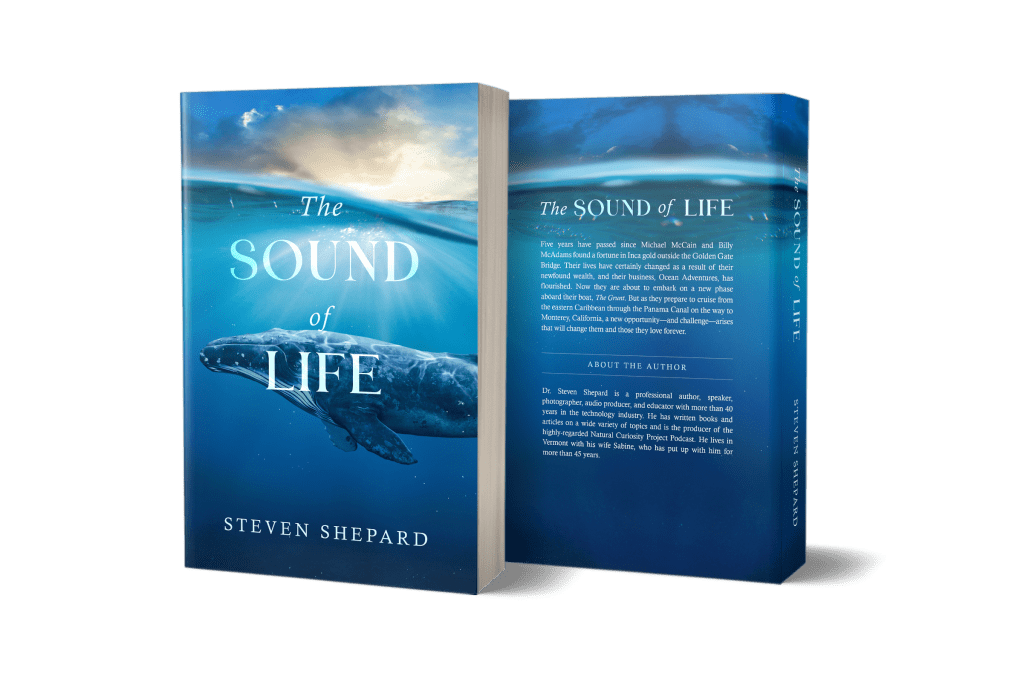
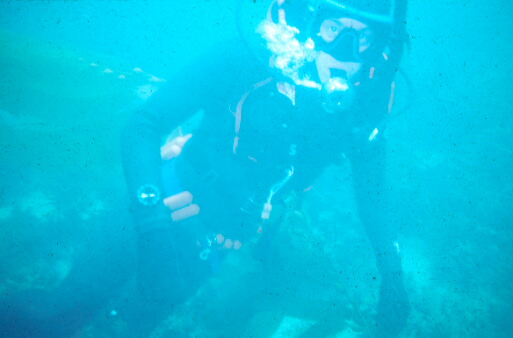
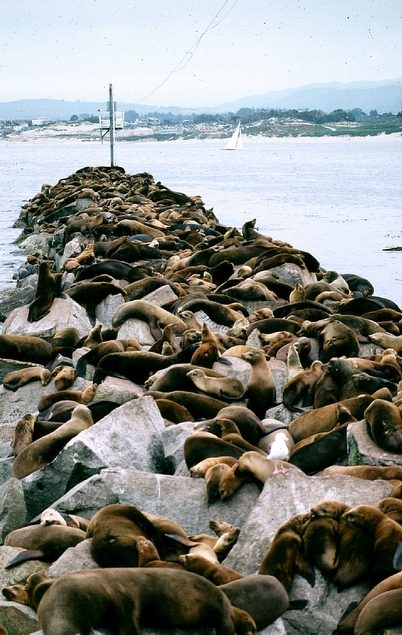


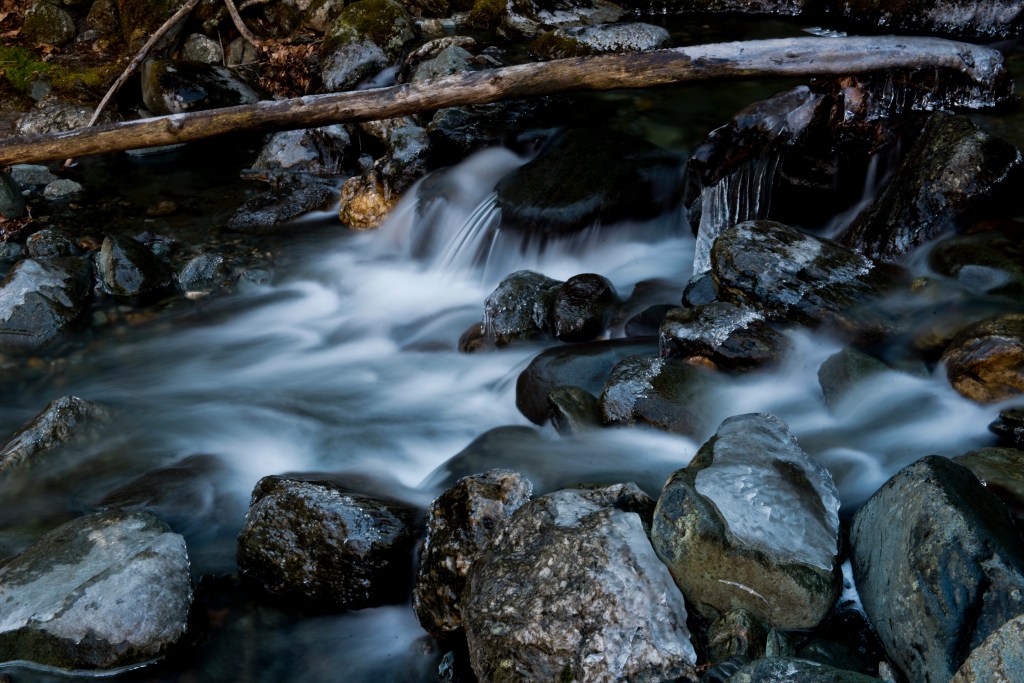
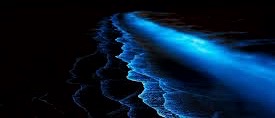
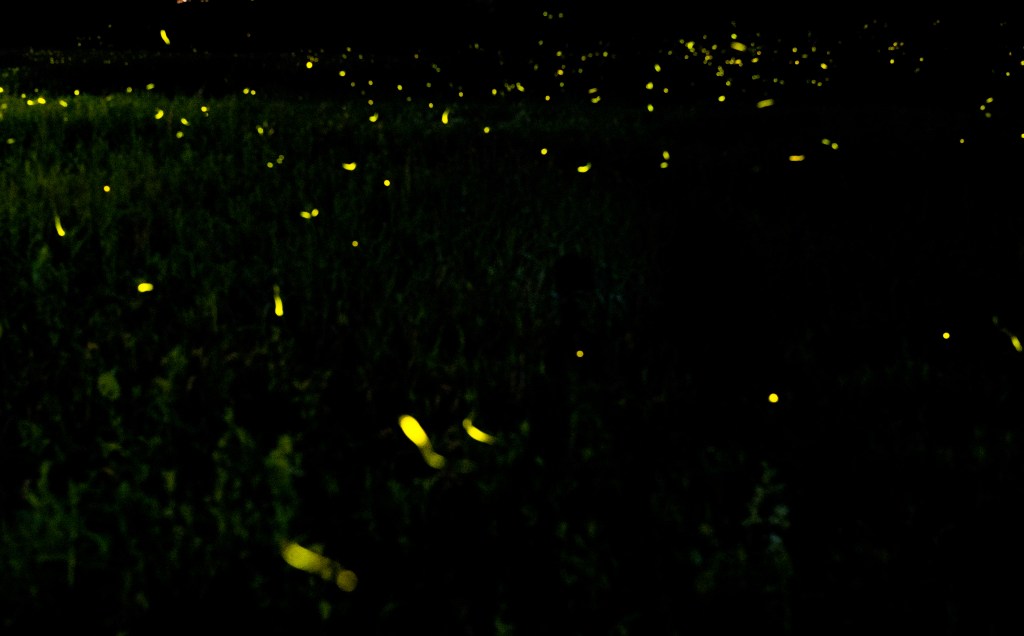
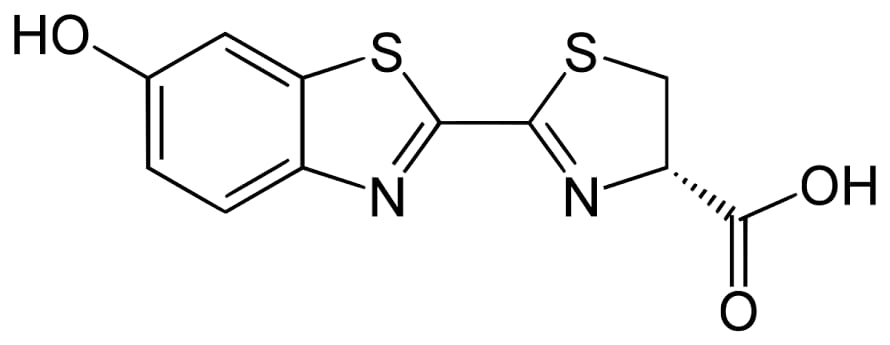


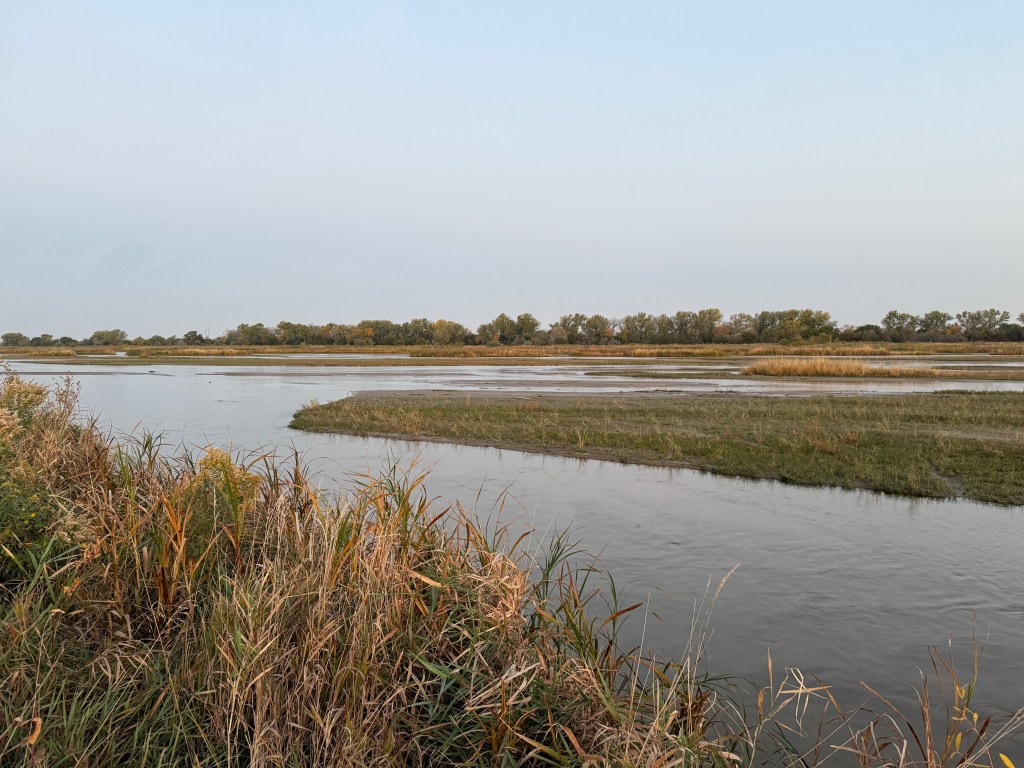
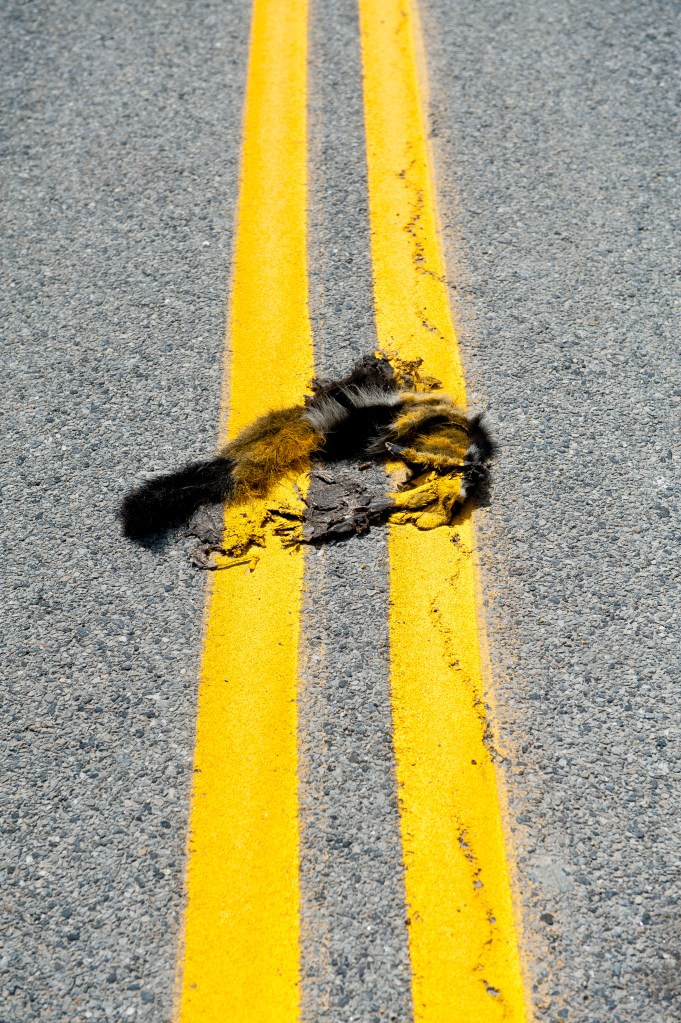
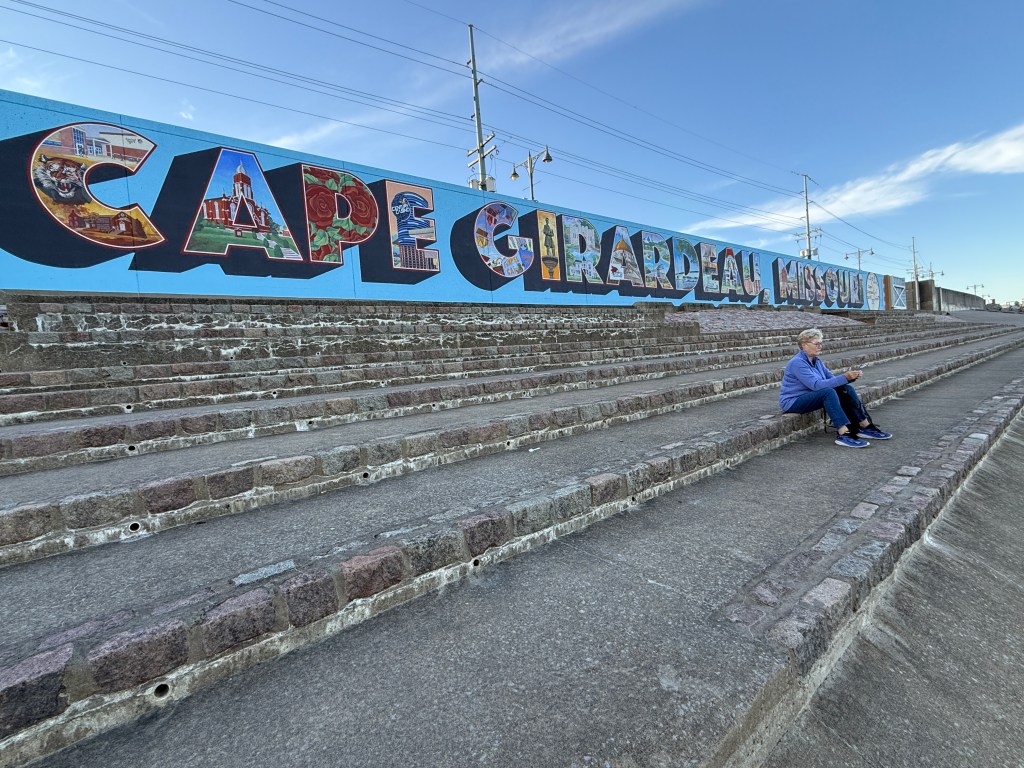
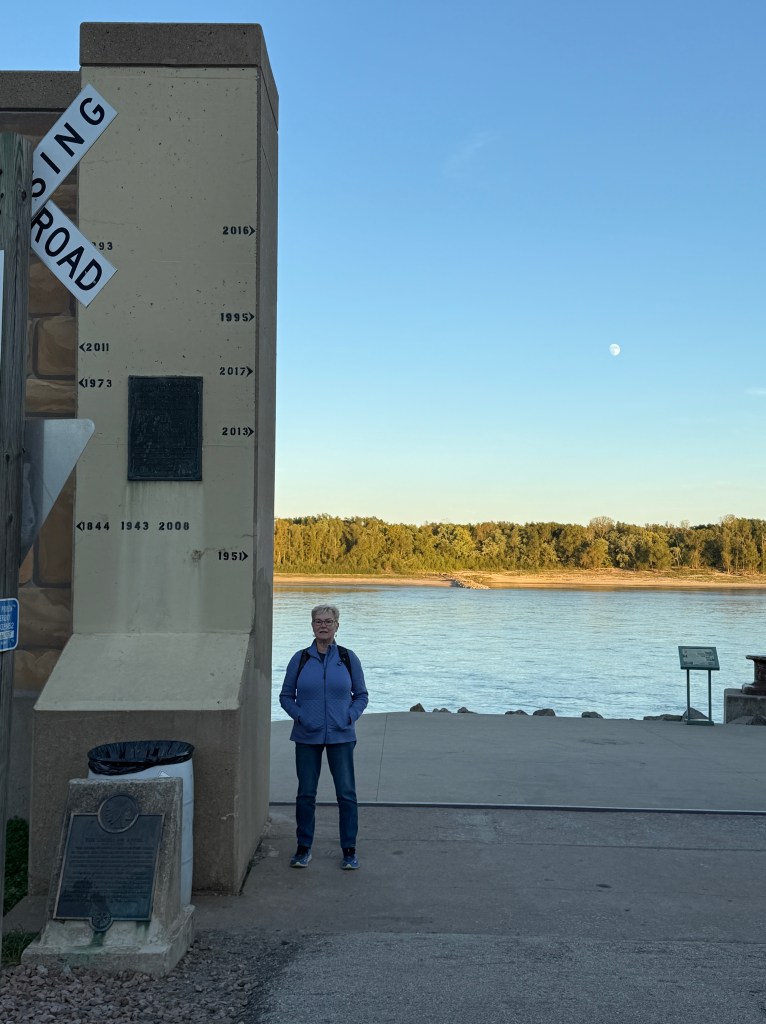
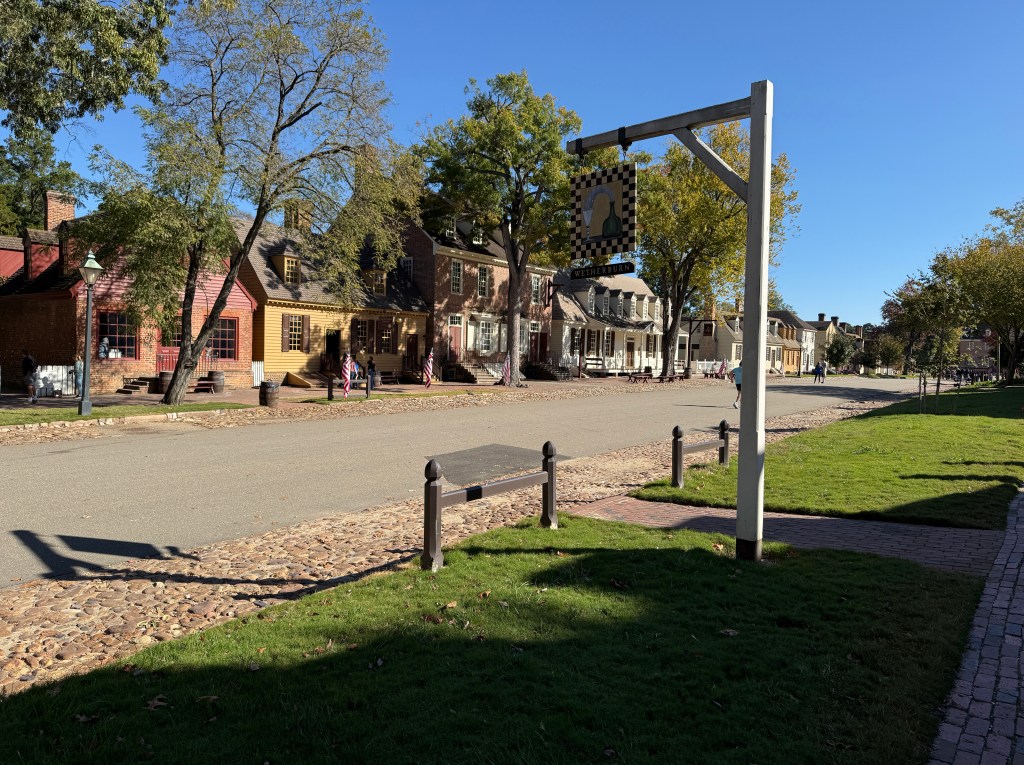
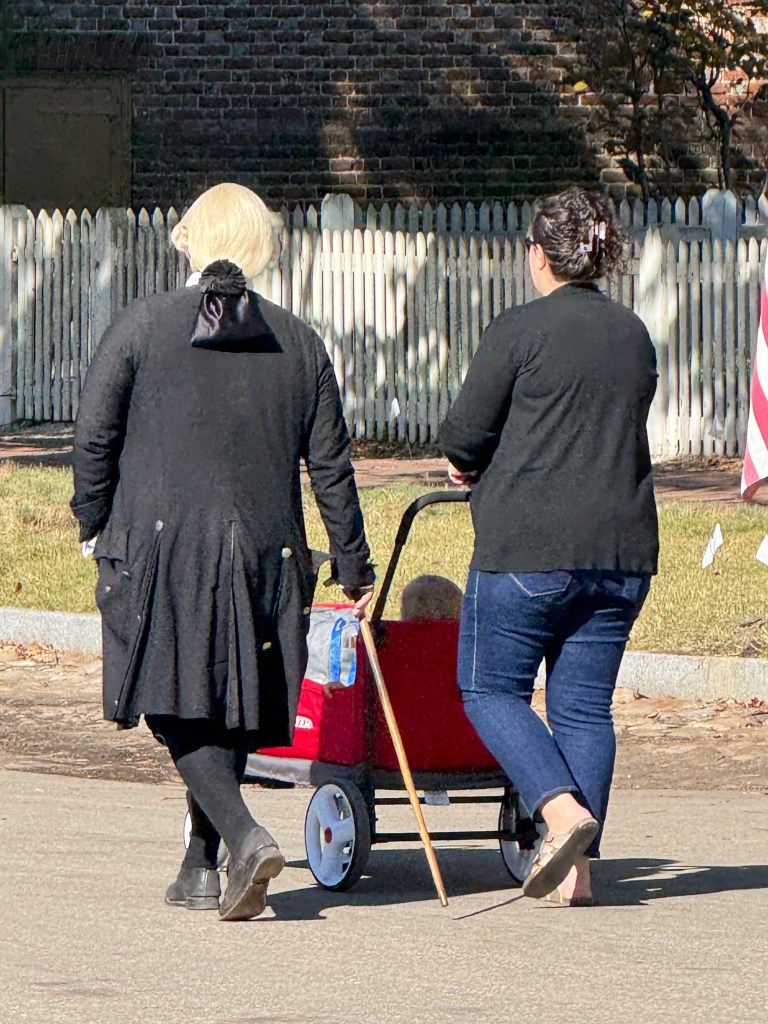


 Steven Shepard