Tag Archives: nature

Tumblin’ Tumbleweeds

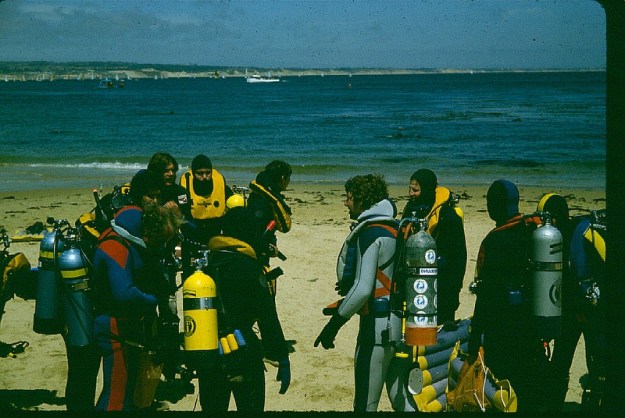
ack in my diving days, my fellow instructors and I used to take groups of divers down to Monterey for their checkout dive. This is the first dive they do in the ocean with full SCUBA gear, during which they have to demonstrate all the skills they’ve learned in class before we certify them as divers. Typically, I’d send the assistant instructors down to the bottom with the students, and they’d run them through all the drills and skill demonstrations to make sure they knew their stuff. I’d stay on the surface, sitting on an inflatable surf mat and nibbling on kelp, ready to deal with any students that came to the surface and needed assistance.
One day, while sitting there watching a pod of sea lions circle the mat (something they did all the time), I spotted something bobbing on the surface a few yards away. I couldn’t tell what it was, so I paddled over and grabbed it. It turned out to be a bottle, sealed with wax, and yes, it had a note inside. I pulled it out, and it was a message from a college student at Cal Poly, who had dropped it into the water nine months before as an experiment to see how far the bottle might go. It included a telephone number (this was before email was common (hell, we barely had electricity), so I called him. He was very grateful and told me that he had dropped it in the water in Morro Bay near San Luis Obispo, which meant that it had traveled almost 150 miles to get to Monterey. I agreed to seal it back up and drop it in the water again so that it could continue its journey, which I did. I never heard back from him, but I assume it continued northward.

Years later, after I had left my professional diving days behind and become a telecom analyst, I was teaching a program in Dallas, where I met an old cowboy who worked part-time in one of the hotels as a greeter. His name was Bud. We chatted every day, sometimes for hours when it was quiet at the hotel, and one day he confided to me that he had a very strange hobby. Not one to ignore that kind of comment, I asked him what it was. He smiled, and, looking around to make sure no one was within earshot, he told me that he drives out into the desert and ties notes to tumbleweeds. He then releases the tumbleweeds, to let ‘em continue rolling across the plains. The notes have the location, date and time that he released them, along with a brief message asking whoever finds the note call him and tell him where and when they found the tumbleweed and the note. He told me that he had released more than 600 tumbleweeds (technically, Russian thistles) and had heard back from over 150 people. He said that he figured that most of them ended up stuck on fence lines or run over by road traffic. One of them, he told me, he released just south of Waco, and it was found in Lampasas. That’s about 90 miles away. He also said that that particular tumbleweed was huge—almost five feet across. Those things really get around.

Everybody thinks of tumbleweeds as having an iconic presence in old westerns. Unless there’s one or two blowing through the streets of that old western town, it just isn’t realistic—although I have to say that I worked on a movie set once where we had a tumbleweed wrangler who used a leaf blower to move them down the street, since the wind wasn’t cooperating. 

Anyway, as I mentioned earlier, tumbleweeds are officially known as Russian thistle, and they originated in Ukraine. Most likely, the seeds got mixed into a shipment of flax seeds that came over from Europe back in the 1800s, took root, and never left. Now, they’re pretty much everywhere, especially in the southwest. And they can be a real problem. Back in 2018, a windstorm came up that was howling at about 60 MPH. For some bizarre reason, the wind funneled hundreds of thousands of tumbleweeds into the California town of Victorville. There were so many that they piled up in huge mounds, in some cases actually burying houses. Go look it up—the pictures are amazing.

But here’s what else is amazing. A typical tumbleweed has 250,000 seeds nestled down inside its dried, thorny leaves. In the summer, the plant, which starts out as a green bushy ball, dries out. A layer of specialized cells right at the base of the plant, called the abscission layer, snaps off, and the wind blows the plant across the prairie, scattering seeds everywhere it goes. It’s a hardy plant, so wherever the seeds fall, they typically, eventually sprout, which is why they’re considered such a nuisance. Not only do they infest crop fields, they also collect along fences, sometimes knocking them down due to their sheer weight. They also have a nasty tendency to blow across roads at the most inopportune times. I’ve had it happen: there’s something pretty unnerving about a six-foot diameter ball suddenly rolling in front of your car from out of nowhere on the highway. They also carry insect pests that hitch a ride and can be widely dispersed across an agricultural area. Not a good thing.

It turns out that plants are a lot smarter than we give them credit for. In fact, they’ve developed a handful of techniques for spreading themselves far and wide. One is by harnessing the wind, which is what tumbleweeds do, as well as maple trees, dandelions, and lots of others. They swim; the reason that coconut trees are on almost every island in the south Pacific is because coconuts fell into the ocean and floated thousands of miles until they landed somewhere. Some explode; there are plants with seed pods that explode with such seed-scattering force that the seeds fly over 300 feet (we’re talking about the length of a football field!) at 160 MPH.

Next, we have the seeds that have to be eaten to be scattered. In fact, some of them actually MUST be eaten to germinate, because the hard shell that protects the embryo inside has to be abraded away by the grinding action of a bird’s gizzard before they’ll sprout.

Then we have those seeds that count on a rodent of some kind collecting them and burying them in the ground, where at least some of them sprout, and seed becomes tree. And then we have the cling-on approach—and no, I’m not making a Star Trek joke. Seed pods from the burdock plant, what we call a cocklebur, are covered with natural Velcro (in fact, it’s what gave the inventor the idea in the first place). When an animal brushes against them, they get tangled in the animal’s fur, and hitch a ride to wherever the animal’s going.

I know this is a pretty geeky topic, but hey, consider the source. I find it remarkable how different species adapt to whatever they’re given to work with. I’ll tell you what—I bet you look at tumbleweeds a little differently from now on. 

By the way, one more thing before I go. Sabine and I watched a pretty good movie a few years ago called “Conagher.’ It’s an adaptation of a Louis L’Amour novel, and it stars Sam Elliott alongside his wife, Katherine Ross. It’s a love story, set in the old west, and it has a great theme. Sam Elliott is this grizzled, lonely cowboy who keeps finding poems tied to tumbleweeds on the prairie. He doesn’t know who’s writing them, but he wants to. I’ll bet you can figure out what happens.
The Dubious Value of Interspecies Communications

Like most young 19th-century boys, Hugh Lofting liked animals and playing outdoors. Born in 1886 in Maidenhead, in England’s Berkshires, he had his own little natural history museum and zoo when he was six years old. The fact that it was in his mom’s bedroom closet wasn’t a problem until she found it there.

The point is, Hugh loved nature, and everyone who knew him was convinced that he’d become a naturalist, or biologist, or something in a related field, when he grew up. So, everybody was surprised when he decided to study civil engineering. He started at MIT near Boston and completed his degree at London Polytechnic. When he graduated, he got work in the field: prospecting and surveying in Canada, working on the Lagos Railway in west Africa, then on to the Railway of Havana in Cuba. After traveling the world, he decided that a career change was in his future. He married, settled down in New York City, had kids, and began to write articles for engineering magazines and journals about topics like, ‘building culverts.’

In 1914, World War I, ‘The Great War, The War to End All Wars,’ broke out, and Hugh was commissioned as a lieutenant in the Irish Guards. He fought in Belgium and France, and the horrors of war affected him deeply. In fact, his feelings about the natural world once again came to the surface, as he witnessed the treatment of draught animals in the war. Their suffering affected him as much as the suffering of his fellow soldiers. 

To help himself deal with the emotional trauma of war, he returned to his writing. He began to compose letters to his two children about a mythical, magical doctor who took care of animals, curing them of whatever malady had beset them.

In 1918, Hugh was badly wounded when a piece of shrapnel from a hand grenade shredded his leg. He left the military and after recovering from his injuries in England, returned to his family in New York.

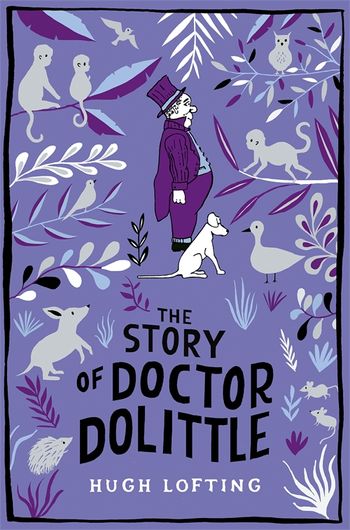
Serendipity definitely played a role in the direction of Hugh Lofting’s life. His wife, charmed by the letters he wrote to his children while he was deployed, had kept them, and suggested he turn them into a book. He did. It was called, “The Story of Doctor Dolittle: Being the History of His Peculiar Life at Home and Astonishing Adventures in Foreign Parts.”

The book was an immediate bestseller, and between 1922 and 1928, he wrote a new Doctor Doolittle book every year, along with other titles. 

Interesting story—it’s always fun to hear how a writer finds the track that defines their life’s work. But that’s not what I want to talk about here. I just finished re-reading Doctor Doolittle for the first time in a long time (I love children’s books), but I also just finished reading Ed Yong’s “An Immense World: How Animal Senses Reveal the Hidden Realms Around Us.” I didn’t plan it that way; they just happened to pop up in my reading stream, and much like Hugh Lofting, serendipity kicked in. Doctor Doolittle could talk to animals; Ed Yong writes extensively in his book about the extraordinary ways that non-human species communicate. In fact, there’s been a lot of chatter in the press lately about advances in interspecies communication and our soon-to-be-available ability to translate what our non-human neighbors are saying. That’s quite a breakthrough, considering how much trouble I often have understanding what other HUMANS are saying.

Before I get too far into this, let’s lay down some basics. We are NOT the only species that communicates, nor are we the only species that uses body language. Lots of animals do that. Orangutans, for example, often use pantomime with each other, and even with their human caregivers in orangutan rescue centers. And after recording thousands of hours of sound and observing the behavior of herds of elephants over a long period, researchers have determined that elephants have a specific call that means, ‘Bees—Run!!!’ In fact, there may be a form of interspecies communication going on here. When African wild dogs show up, one of the fiercest and most dangerous predators in all of Africa, elephants have a specific warning call which also causes other animals, like gazelle and impala, to take notice and run. But when elephants bellow about bees or other things, calls that sound just as urgent, they don’t even flinch. They just keep grazing, entirely unconcerned.

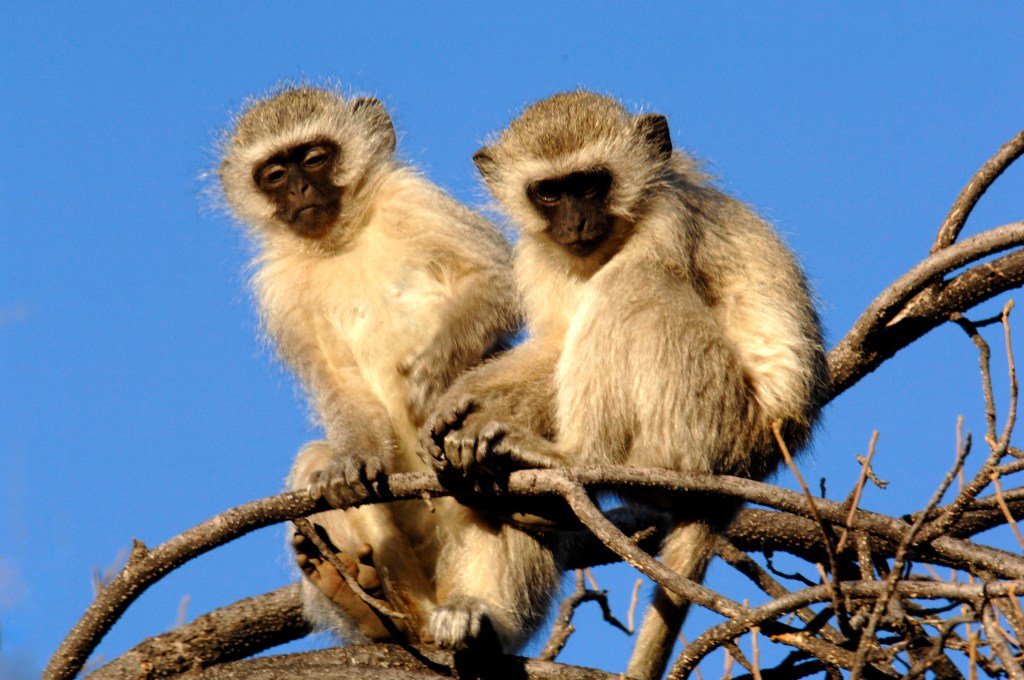
Monkeys do similar things. Vervets, the annoying little monkeys that once invaded and destroyed my room at an African game preserve in search of the sugar packets that had been left for coffee, have distinct calls for distinct scenarios. If one of them sees a land-based predator, like a leopard, they issue a specific call and everybody takes to the trees. If they see an aerial predator, like a crowned eagle, a distinctly different call sends the troop into the safety of ground cover. 

Some species even add nuance and meaning to their calls by changing the order of the sounds they make. For example, if west African Campbell’s monkeys begin their threat calls with a deep booming sound, it means that whatever threat they’re seeing is still far away, but pay attention—be aware. If they start the call without the booming sound, it means that the threat is close and that whoever hears it should take cover immediately. 

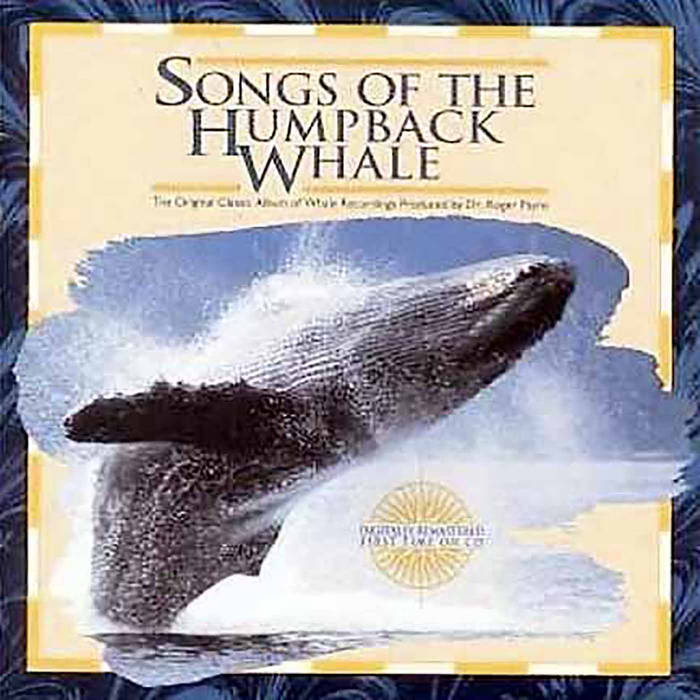
Sixty years ago, Roger Payne, a bioacoustics researcher at Tufts University who spent his time listening to the calls of moths, owls and bats, met a naval engineer who monitored Soviet submarine activity using hydrophones scattered across the sea floor. The engineer told Payne about sounds he had recorded that weren’t submarines, and after playing them for him, Payne was gobsmacked. He asked for and was given a copy of the sounds, which turned out to be made by humpback whales, and after listening to them over and over for months, he began to detect that the sounds, which were extremely diverse, had a structure to them. He loaded the audio files into a software package capable of producing a spectrogram, which is a visual representation of a sound, using time on the X-axis and frequency on the Y. By the way, this required a partnership with IBM to get access to a mainframe computer to do the analysis. Anyway, what his analysis confirmed was that whales call in a very specific order of unique vocalizations. Sometimes a call lasts 30 seconds, sometimes thirty minutes, but the sequence is always the same—identifiable sequences that he called songs. In fact, in 1970, Payne published his recordings as an album called Songs of the Humpback Whale. It went multi-platinum, selling more than 125,000 copies and catalyzing the effort to end commercial whaling around the world. Some of its tracks were included on the gold album attached to Voyagers 1 and 2 when they were launched into deep space in 1977.

Most recently, researchers have taken their analysis of animal sounds even farther, using AI to identify more complex patterns. Shane Gero is a Carleton University researcher who for the last 20 years has studied the vocalizations of sperm whales. After analyzing hundreds of hours of recordings, he and his team identified specific characteristic patterns that he called codas. It appears that the whales use these unique sounds to identify each other. He and his team are now feeding the sounds they’ve captured into a large language model that they will then unleash AI against in an effort to enhance our understanding of whale speak.

That’s remarkable—stunning, in fact. But speaking for myself, I feel inclined to invoke what I call the Jurassic Park Effect: Just because you can doesn’t mean you should. In the movie, researchers re-created dinosaurs from the DNA found in dinosaur blood in the stomachs of Jurassic mosquitos that were trapped in amber. They did it because they could, ignoring whether or not they should, and it didn’t end well. In fact, none of the sequels did—for humans, anyway. Creating a large language model to translate other species’ languages into human language strikes me as the same thing. Because when it happens, the conversation might go something like this:

‘Hey—nice to meet you! We’re the creatures who violently kick you out of your homes and then tear them down because we want to live there instead; we destroy your food sources; we blast loud noises into your marine homes 24 hours a day; we capture and eat huge numbers of you; we pour countless toxins into your air and water and soil; we build huge dams on your rivers to prevent you from migrating home as you’ve done for thousands of years; we do all kinds of things to help to make the environment hotter and unpredictably violent; and we make your terrestrial habitat so noisy that you can’t hear predators coming or mates calling. So with that introduction, how ya doin’? What shall we talk about?’

I don’t know. Maybe it’s just me, but I don’t think we’re gonna like what they have to say. 

The Pleasure of Fecundity

There is a word in the English language that I have come to love. It is onomatopoeic in a way, a word that, when pronounced, sounds like what it describes. The word is fecundity. Something that exhibits the qualities of fecundity is said to be fecund. It means prolific, and its origins are entirely feminine: rooted in old Dutch and Middle English words for the adjective feminine, the verb suckle, the noun nipple. It’s all encompassing. 

For me it defines a seasonal intermezzo: a short movement between the two longer sections of a major work. In this case, the major work is summer. In my mind it has two movements: the first, when winter fades and spring finally lets go and full-blown summer begins; the second, when the summer begins to grow tired from the feverish pace of the annual re-ignition of life. The intermezzo is the period that’s happening now, in mid-July. It’s used as a setup, an indicator of the beginning of the long slide once again toward bittersweet fall and melancholy winter.

I am sitting in a chair on my deck, trying to read a book while being unrelentingly ambushed by a multi-species land and air attack force. Ants of diverse sizes swarm the deck, the railings, and all the furniture, including the chair I’m sitting in. They don’t bite, but they send a message: don’t mind us, just passing through, but don’t get in the way of progress. 

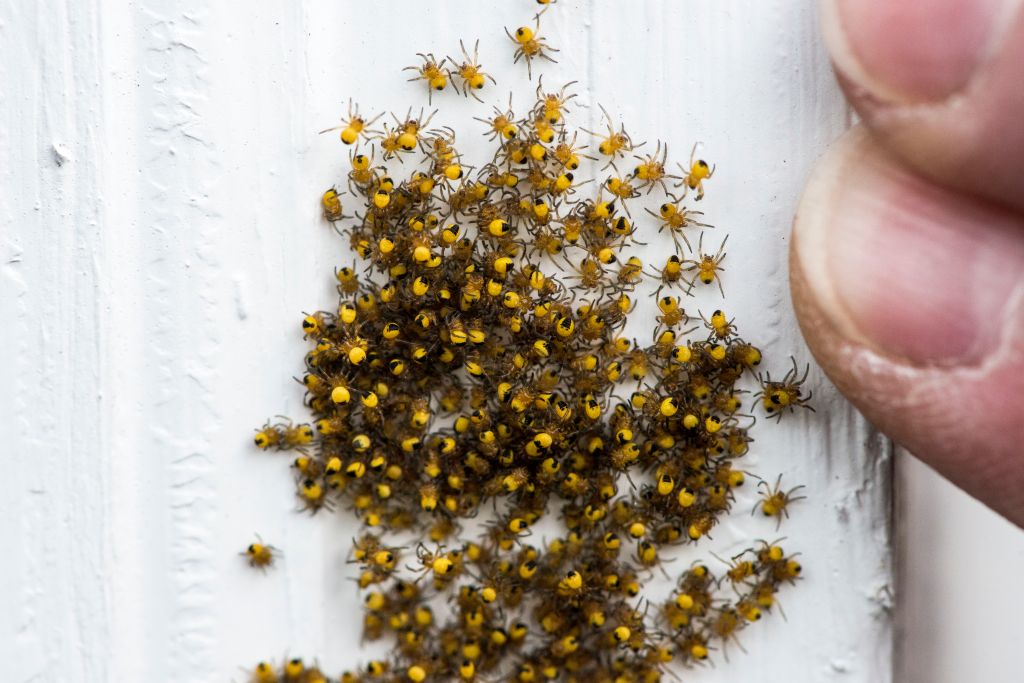
Cobwebs and sheet webs are everywhere—on the ground, between the deck rail balusters, connecting the post lights to the rails in great gossamer sheets of webbing, barely visible filaments waving in the air with spiderlings attached, tiny paratroopers on their telltales, off to colonize anything standing still, ballooning, kiting off. Contrary to the oft-stated belief that these were the webs found in corn cribs, cob comes from the Middle English coppe, meaning ‘spider.

I stand and peer over the railing at the flowerbed below. Weeds have profoundly grown out of control overnight, as if there was a countdown clock that zeroed at midnight last. GO-GO-GROW! Yesterday, a lone grass blade among the daylilies; today, an occasional daylily among the grass hummocks. 

But it isn’t just the weeds that have mounted an invasion. The plantings in the garden redefine unruly, all fighting each other suddenly for center stage. A week ago, a walk among the hostas and daylilies and columbines was easy, the path we carved clear. Today, my mind turns to machetes.

Meanwhile the bugs and the birds grow weary of the manic pace of summer’s onset. The birds seem slower, less exuberant when they call; the bugs grow clumsy, with far more collisions and near-misses now than earlier in the season. The F35s have become Zeppelins. The fireflies, once staccato in their flashings, grow occasional, intermittent. The only exception seems to be the mosquitos. The black flies are gone, deer flies and horseflies make only half-efforts to land and bite, but the mosquitos are renewed, born-again assholes. They seem spawned from the humidity, a form of aquatic parthenogenesis, taking evil form from the very air. What a name: in Spanish, “little fly.” Who would give such an unpleasant and annoying—and in malarial miasmas, deadly—insect such a harmless name? And Spanish, for God’s sake—a language famous for stringing together extraordinarily colorful syllabic sequences for things far less annoying. Here, let me try: Hijo de puta gillipollas insecto cabrón. There. That’s better.

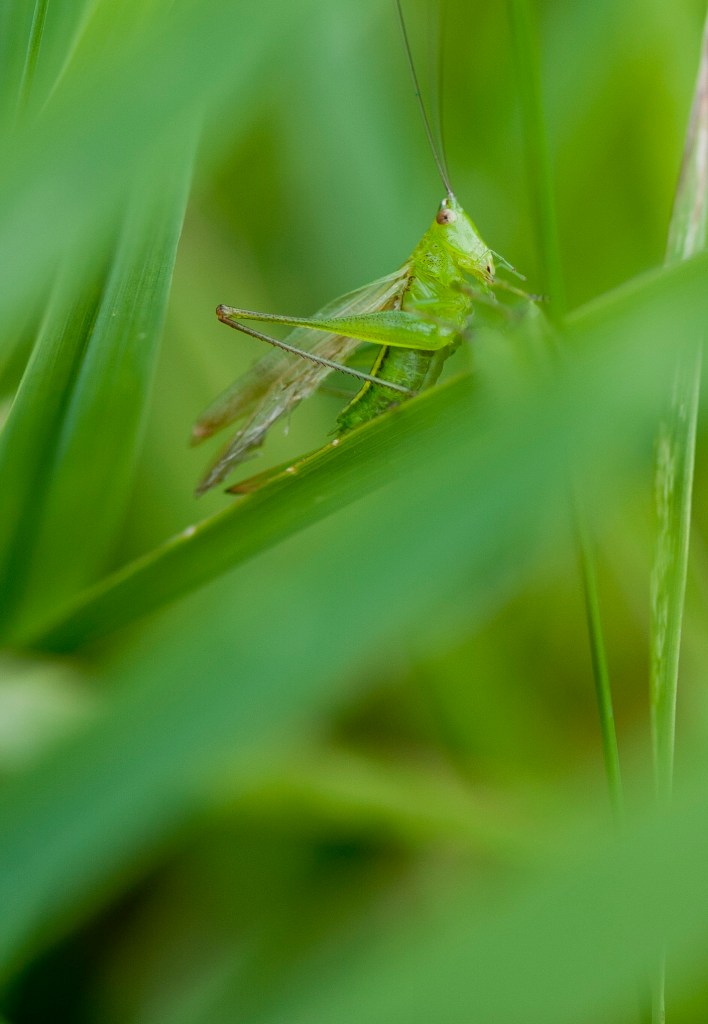
Another intermezzo phenomenon is that insects seldom seen suddenly appear in numbers: earwigs, grasshopper nymphs, potato beetles, and creatures I fail to identify. A second wave. 

The weather is different during the intermezzo. Different descriptors apply. Sullen. Sultry. Torrid. Dank. Muggy. The sky boils with evil black thunder bumpers that rise to the stratosphere before flattening in great anvils, but then tease without dropping rain. 

And water? It feels thicker somehow. I drop a hydrophone in a pond, intent on recording stridulating aquatic insects, and instead of the usual kerplunk I’m accustomed to, it comes back with more of a schloop, as if I were dropping a stone into Jello. Water moves more slowly, passing along the stream bed under protest. It doesn’t splash; it globs. It doesn’t flow serenely into back channels and eddies; it gets squished into them. 

The second act of summer begins slowly and secretly. It’s stealthy, sneaking up on us. The plants of summer, Joe Pye Weed and poison parsnip, Queen Anne’s lace and milkweed, rye grass and cattails and goldenrod, all start to look unkempt and sullen, brown and torn around the edges, ragged and uncared for. They droop and fall over as nature gets sloppy in the second act. Vernal ponds dry and disappear, streams shrink to trickles and mud flats, and there, in mid-trail, a red leaf, a maple’s announcement of things to come.

Enjoy it. The intermezzo is nearing its end.