If you’d prefer to listen to this as an audio essay at The Natural Curiosity Project, please click here.
I want to start this new year with a question.
Do the actions of a single individual matter?
If you subscribe to the fundamental tenets of negativism, pessimism, resignation, and snark, the answer to that question is decidedly ‘no.’ But let’s reconsider that.
I’m Steve Shepard with the NCP. Welcome. As a university undergrad, I studied two completely unrelated fields, Spanish and marine biology. Both were equally important to me, and both appealed to me as possible career vectors, in spite of the fact that I had no idea what I wanted to with the rest of my life. I graduated, wandered a bit, became a certified SCUBA diver, then a certified SCUBA instructor, then an owner in a diving business in the San Francisco Bay Area.
After five years of full-time diving I switched gears, married Sabine, joined the telecom industry, and had kids. I stayed with the telephone company for eleven years, then left California to join a Vermont-based consulting firm for ten years. I left them in 2000 to start my own company, where I wrote books, taught technology programs, delivered keynotes, wrote, directed and produced audio and video programs, and traveled nonstop to more than 100 countries over the course of 25 years, at which point, with the urging of the COVID lockdown, I decided to retire, having accumulated four million miles on United and a million points each with Marriott and Hilton. It was time.
To restate the obvious, I studied Spanish and biology in school, but spent my career in the world of bit-weenies and propellerheads. The funny thing is that my Spanish studies served me extremely well during my career, making it possible for me to write and teach technical training programs and deliver keynotes all over the world in Spanish. And marine biology? I never stopped diving, and I stayed connected to my biology roots. In my mind, that world is never far away.
I continue to write; I just published my 106th book, and my Podcast, The Natural Curiosity Project, just hit 300 episodes.
My newest novel, “The Sound of Life,” is a sequel to my first novel, “Inca Gold, Spanish Blood,” which was released in 2016. That first book centered around the search for a priceless treasure, and bounced back and forth between the 16th century and modern day. “The Sound of Life” builds on that, but as I worked the story arc, my passion for marine biology began to heat up again, and combined with my work as a wildlife sound recordist and my interest in bioacoustics, the story hit me like a lightning bolt. I’m proud of the book, and I think you’ll enjoy it. But, you’d be right to ask me a question right about now: What does all this have to do with the question I asked at the beginning of this essay: Do the actions of a single individual matter? Yes—they absolutely do. From my own personal experience, they matter immensely.
We’ve all had heroes in our lives. I’m not talking about the kind that appeared between the covers of DC and Marvel comics when we were kids, or who have made it onto the big screen today. I’m talking about real people, who did real things, and who, in the process, created real change by flipping the status quo on its complacent head. I’m talking about people like Rosa Parks. Jane Goodall. David Attenborough. Greta Thunberg. Barack Obama. Want more? Sure. Jacques Cousteau. James Cameron. Malala Yousafzai. Taylor Swift. The unknown man who stood in front of the tank in Tiananmen Square in 1989 with a grocery bag in his arms. The person who tore the first stone out of the Berlin Wall that same year.
These are the individuals who come to mind for me, people who inspired me to be more, to do more, to demand more, to think beyond the confines of my own mind, to be there for others, to be less selfish, to believe that every kind act is repaid a hundred times over. Each of those individuals changed my own life as well as the lives of thousands of other people. But let’s be clear about one thing. None of them—not a single one—created change by telling us what to do. They created change by showing us what to do. They shared their beliefs and motivated change through their own actions, not by waving signs and hanging banners. They led the charge. They led. They were leaders. They demonstrated what leadership is supposed to look like.
Here’s a quote for you that I love:
“Recognize that every out-front maneuver you make is going to be lonely and a little bit frightening. If you’re entirely comfortable, you’re not far enough ahead to do any good. That warm sense of everything going well is nothing more than the body temperature at the center of the herd.”
You can’t lead from the center of the herd, which is why I learned the power of righteous indignation, not by looking it up in the dictionary or reading about it, but through the bravery of Rosa Parks and other people like her. It’s why I became an ardent conservationist and environmentalist, not because it was trendy, but because Jacques Cousteau, Jane Goodall, David Attenborough, Greta Thunberg, and many others like them showed me what we stood to lose if I and others like me didn’t take a stand. I became a wildlife sound recordist and a passionate advocate for wild places and the creatures that live there because Bernie Krause, Gordon Hempton, Melissa Pons and other recordists showed me how impoverished the planet would be if the voices of the natural world were to be silenced forever. I don’t ever want my grandchildren to ask me what a magpie sounded like. Or a tree frog. Or a humpback whale. The past tense has no place here.
And writing? My writing gets better every time I read a book. I learned long ago that skilled authors wield a power that I call lexemancy, the singular magic of language. In a well-written book, authors turn lead into gold, transmuting ideas into words, and words into breathtaking, inspiring experiences for those who read them.
Each of these people, these individuals, have inspired others. When they started, no one knew who Rosa Parks or Greta Thunberg were. Cousteau was an officer in the French Navy with a passion for the sea; Attenborough was a radio broadcaster; and Jane Goodall was a wet-behind-the-ears anthropology novice who took a chance and followed a passion. And just look what their individual passions and advocacy have accomplished—individuals all.
So: Do the actions of a single individual matter? Yes, they do. In fact, the actions of a single individual are the ONLY thing that matters.
Do your actions matter? More than you will ever know.
If you would like to listen to this as an audio essay, complete with the calls of marine mammals, please go here.
In the inaugural issue of National Geographic in 1888, Gardiner Hubbard wrote, “When we embark on the great ocean of discovery, the horizon of the unknown advances with us and surrounds us wherever we go. The more we know, the greater we find is our ignorance.” Gardiner was the founder and first president of the National Geographic Society, the first president of AT&T, and a founder of the prestigious journal, Science. He knew what he was talking about.
104 years later, NASA scientist Chris McKay had this to say: “If some alien called me up and said, ‘Hello, this is Alpha, and we’d like to know what kind of life you have,’ I’d say, water-based. Earth organisms figure out how to make do without almost anything else. The single non-negotiable thing life requires is water.”
Several years ago I met Alaska-based sound recordist and author Hank Lentfer. During one of several conversations, he asked me to imagine that all the knowledge we each have is ‘inside of this circle,’ which he drew in the air. “Everything that touches the outside the circle is what we don’t know,” he told me. “But as we learn, the circle gets bigger, as more knowledge is added to it. But notice also, that as the circle gets bigger, so too does its surface area, which touches more of what we don’t know.” In other words, the more we know, the more we don’t. As Hubbard said in 1888, “The more we know, the greater we find is our ignorance.”
I love science, and one of the things about it that I love the most is how it constantly refreshes itself in terms of what’s new and fresh and exciting and worthy of exploration as a way to add to what’s inside Hank’s circle. Think about it: Over the last twenty years, scientists have mapped the entire human genome; developed CRISPR/CAS9 to do gene editing; created synthetic cells and DNA; discovered the Higgs Boson, gravitational waves, and water on Mars; developed cures or near-cures for HIV, some forms of cancer, and Hepatitis-C; and created functional AI and reusable rockets. And those are just the things I chose to include.
One of the themes in my new novel, “The Sound of Life,” is interspecies communication—not in a Doctor Doolittle kind of way—that’s silly—but in a more fundamental way, using protocols that involve far more listening on our part than speaking.
The ability to communicate with other species has long been a dream among scientists, which is why I’m beyond excited by the fact that we are close to engaging in a form of two-way communication with other species. So, I want to tell you a bit about where we are, how we got here, and why 2026 is widely believed to be the year we make contact, to steal a line from Arthur C. Clarke.
Some listeners may remember when chimps, bonobos and gorillas were taught American Sign Language with varying degrees of success. Koko the gorilla, for example, who was featured on the cover of National Geographic, learned to use several dozen American Sign Language symbols, but the degree to which she actually understood what she was saying remains a hotly-debated topic, more than 50 years later.
But today is a very different story. All the research that’s been done so far in interspecies communication has been based on trying to teach human language to non-human species. Current efforts turn that model on its head: researchers are using Artificial Intelligence to meet animals on their own terms—making sense of their natural communications rather than forcing them to use ours. Said another way, it’s time we learned to shut up and listen for a change. And that’s what researchers are doing.
There have been significant breakthroughs in the last few years, many of them the result of widely available AI that can be trained to search for patterns in non-human communications. Now, before I go any further with this, I should go on record. Anybody who’s a regular listener to The Natural Curiosity Project Podcast knows that I don’t take AI with a grain of salt—I take it with a metric ton of it. As a technologist, I believe that AI is being given far more credit than it deserves. I’m not saying it won’t get there—far from it—but I think humans should take a collective breath here.
I’ve also gone on record many times with the observation that ‘AI’ as an abbreviation has been assigned to the wrong words. Instead of being associated with Artificial and Intelligence, I think AI should stand for Accelerated Insight, because that’s the deliverable that it makes available to us when we use it properly. It makes long, slow, complex, and let’s face it, boring jobs, usually jobs that involve searching for patterns in a morass of data, enormously faster. Here’s an example that I’ve used many times. A dermatologist who specializes in skin cancers has thousands of photographs of malignant skin lesions. She knows that the various forms of skin cancer can differ in terms of growth rate, shape, color, topology, texture, surface characteristics, and a host of other identifiers. She wants to look at these lesions collectively to find patterns that might link causation to disease. Now: she has a choice. She can sit down at her desk with a massive stack of photographs and a note pad, and months later she may have identified repeating patterns. Or, she asks an AI instance to do it for her, and gets the same results in five minutes. It’s all about speed.
That’s a perfect application for AI, because it takes advantage of AI’s ability to quickly and accurately identify patterns hidden within a chaos of data. And that’s why research into interspecies communication today is increasingly turning to AI as a powerful tool—with many promising outcomes, and a few spellbinding surprises.
Let’s start with the discovery of the “Sperm Whale Phonetic Alphabet.” Project CETI, the Cetacean Translation Initiative, has produced what bioacoustics researchers are calling the “Rosetta Stone” for marine interspecies communication. Here’s what we know. Researchers have identified structural elements in the sounds generated by sperm whales that are similar to human vowels, like a, e, i, o, and u, and diphthongs, like the ‘ow’ in the word sound, the ‘oy’ in noise, and the ‘oo’ in tour. They’ve also identified a characteristic called “rubato,” which is measurable variation in tempo that conveys meaning, and “ornamentation,” which is the addition of extra clicks, which suggest that sperm whales may have what’s called a combinatorial grammar that could transmit enormous amounts of information. Combinatorial grammar: let me explain. “He had a bad day” is a perfectly acceptable statement. “He had a no-good, horrible, terrible, very bad day” is an example of combinatorial grammar. It adds richness and nuance to whatever’s being said.
This is the first time researchers have ever found a non-human communication system that relies on the same kinds of phonetic building blocks that human speech relies on. This is a very big deal.
So: Using machine learning, scientists have analyzed almost 9,000 codas, which are uniquely identifiable click sequences, and in the process have discovered that sperm whale communication is enormously more complicated and nuanced than we previously believed.
So, how did they do it? Well, in the same way that ChatGPT is trained on huge databases of human text, new models are being trained on the sounds of the natural world. For example, NatureLM-audio is a system that was launched by the Earth Species Project in 2025. It’s the first large audio-language foundation model specifically built for bioacoustics. Not only can it identify unique species, it can also determine the life stage they’re in and the emotional state of the animal when it was recorded—for example, whether the creature was stressed, playing, relaxed, and so on. And it can do this across thousands of species, simultaneously.
Then there’s WhAM, the Whale Acoustics Model. This is a transformer-based model that can generate synthetic, contextually accurate whale codas, which could someday lead to two-way real-time engagement with whales.
I should probably explain what a transformer-based model is, because it’s important. In bioacoustics, a transformer-based model uses a technique called the self-attention mechanism, which is part of natural language processing, to analyze animal sounds. The self-attention mechanism asks a question: To truly understand the context and meaning of this particular word (or in this case, sound), what do I need to know about the other words that are being used by the speaker at the same time? This allows the system to capture long-range patterns in audio spectrograms, which allow for highly accurate species identification, sound event detection (like bird calls or bat echolocation), and other identifiers, especially when the data to be analyzed is limited. Models like Audio Spectrogram Transformer and custom systems like animal2vec convert captured audio into small segments called patches, then process them to identify patterns.
In bioacoustics—such as studying the meaning and context of whale song, or in the case of animal2vec, the vocalizations of meerkats—the raw audio is converted into visual representations called spectrograms, which display the changing frequency of the recording against elapsed time. These are then broken into smaller patches. Each patch then gets a unique “position” tag so the model knows the order of the sounds in the sequence. This is called Positional Encoding.
Next, the system unleashes the Self-Attention Mechanism, which allows the model to weigh the importance of different sound patches relative to each other, which creates a better understanding of context and relationships across long audio segments.
The next step is Feature Extraction. The model learns deep, complex acoustic features, such as nuanced meaning in bird songs or bat calls, which can be tagged to different species or behaviors.
Finally, the model classifies the sounds, in the process identifying unique species, or detecting specific identifiable events, such as a predator call.
The implications of all this are significant. First, contextual understanding is created because the system captures long-range dependencies among the audio patches, which are crucial for understanding complex animal vocalizations. Second, the performance of these systems is better than any other model, including Convoluted Neural Networks, which are considered to be on the forefront of AI learning. Third, it works well in what is called a Few-Shot Learning Environment, which is an environment where the amount of labeled data that can be analyzed is limited. And finally, because of the use of the Self-Attention Mechanism, the system creates a high degree of interpretability.
These are tools which have utility well beyond the moonshot project of interspecies communication. They can be used to monitor wildlife populations through sound alone; they can detect and identify bird and bat calls; and they can even be used to identify bee species from the frequency and tonality of the buzz their wings create when they fly by a microphone. Remember— Karl von Frisch won a Nobel Prize for deciphering the complex dance of the honeybee and how that dance conveys complex, species-specific information to other members of the hive.
All of these are important in the world of ecology and habitat monitoring and protection.
Here’s another fascinating example that has gotten a lot of attention. Recent field studies have proven that elephants and carrion crows engage in a form of unique naming behavior for others of their own species. In the case of elephants, researchers have used machine learning tools to prove that wild African elephants use unique vocal labels to address each other. Unlike dolphins, who mimic other dolphins’ whistles, elephants appear to use arbitrary names for other elephants—a sign of advanced abstract thought.
In the case of crows, researchers using miniature biologgers—essentially tiny microphones and recorders about the size of a pencil eraser that are attached to wild animals—have discovered that carrion crows have a secret “low-volume” vocabulary that they use for intimate family communication, very different from the loud, raucous sounds that are used for territory protection and alarm calls.
Finally, we’re seeing breakthroughs in animal welfare practices in the farming and ranching industries because of bioacoustics. In the poultry business, for example, a “chicken translator” is now in use that can identify specific distress calls, which allow farmers to locate sick or stressed birds among thousands, significantly improving the welfare of the flock.
Before I continue with this discussion, let’s talk about why all this is happening now, in the final days of 2025, and why scientists believe we may be on the verge of a major breakthrough in interspecies communications. It has to do with three factors.
First, we have Big Data, both as a theory and as a hard practice. The idea that patterns can be found in massive volumes of data has been around for a while, but we’re just now developing reliable tools that can predictably find those patterns and make sense of them. Initiatives like the Earth Species Project are aggregating millions of hours of animal audio into a single database, which can then be analyzed.
Second, we have data aggregation techniques and mechanisms that allow for data to be collected around the clock, regardless of climate or weather. The tiny biologgers I mentioned earlier are examples, as are weatherproof field recorders that can record for weeks on a single memory card and set of batteries.
Finally, we have one of the basic characteristics of AI, which is unsupervised learning—the ability to find patterns in vast stores of data without being told what to look for.
I’m going to add a fourth item to this list, which is growing professional recognition that sound is as good an indicator of ecosystem details as sight. I may not be able to see that whale in the ocean, but I can hear it, which means it’s there.
Okay, let’s move on and talk about the nitty-gritty: how do those sperm whale vowel sounds that I described earlier actually work? And to make sure you know what I’m talking about, here’s what they sound like. This recording comes from Mark Johnson, and it can be found at the “Discovery of Sound in the Sea” Web site.
Amazing, right? Some scientists say it’s the loudest natural sound in the ocean. Anyway, to answer this question about how the sperm whale vowel sounds work, we have to stop thinking about sound as a “message” and start looking at its internal architecture. Here’s what I mean. For decades, researchers believed that the clicks made by sperm whales, the codas, were like Morse Code: a simple sequence of on/off pulses, kind of like a binary data transmission. However, in 2024 and 2025, Project CETI discovered that the clicks made by sperm whales have a sophisticated internal structure that functions exactly the way vowels do in human speech.
In the same way that human speech is made up of small units of sound called phonemes, whale codas are characterized by four specific “acoustic dimensions.” By analyzing thousands of hours of recorded whale song, researchers using AI determined that whales mix and match these dimensions to create thousands of unique signals. The four dimensions are rhythm, which is the basic pattern of the clicks; tempo, the overall speed of the coda; rubato, which is the subtle stretching or squeezing of time between clicks; and ornamentation, which are short “extra” clicks added at the end of a sequence, similar to a suffix or punctuation mark.
That discovery was a game-changer, and it really knocked the researchers back on their heels. But the most important discovery, which happened in late 2024, was the identification of formants in whale speech. In human language, formants are the specific resonant frequencies created in the throat and mouth that result in the A, E and O vowel sounds. Well, researchers discovered that whales use their “phonic lips,” which are vocal structures in their nose, to modulate the frequency of their clicks in the same way that humans do with their lips and mouth. For example, the a-vowel is a click with a specific resonant frequency peak. The i-vowel is a click with two distinct frequency peaks. Whales can even “slide” the frequency in the middle of a click to create a rising or falling sound similar to the “oi” in “noise” or the “ou” in “trout.” These are called diphthongs.
So, how does this actually work? It turns out that whale vocalization is based on what linguists call Source-Filter Theory. Compared to human language, the similarities are eerie. In human speech, air passes through vocal chords to create sound; in whales, it passes through what are called phonic lips. In human speech, variation is accomplished by changing the shape of the mouth and tongue; in sperm whales, it happens using the spermaceti organ and nasal sacs.
In humans, the result is recognizably-unique vowels, like A, E, I, O, U; in whales, the result is a variety of spectral patterns. And in terms of complexity, there isn’t much difference between the two. Humans generate thousands of words; whales generate thousands of codas.
So … the ultimate question. Why do we care? Why does this research matter? Why is it important? Several reasons.
First, before these most recent discoveries about the complexity of animal communication, scientists believed that animal “language”—and I use that word carefully—was without nuance. In other words, one sound meant one thing, like ‘food’ or ‘danger’ or ‘come to me.’ But the discovery of these so-called “whale vowels” now make us believe that their language is far more complex and is in fact combinatorial—they aren’t just making a sound; they’re “building” a meaningful signal out of smaller parts, what we would call phonemes. This ability is a prerequisite for true language, because it allows for the creation of an almost infinite variety of meanings from a limited set of sounds.
So: one of the requirements for true communication is the ability to anticipate what the other person is going to say before they say it. This is as true for humans as it is for other species. So, to predict what a whale is going to say next, researchers use a specialized Large Language Model called WhaleLM. It’s the equivalent of ChatGPT for the ocean: In the same way that ChatGPT uses the context of previous words in a conversation to predict what the next word will be in a sentence, WhaleLM predicts the next coda or whale song based on the “conversation history” of the pod of whales to which the individual belongs. Let me explain how it works.
Large Language Models, the massive databases used to train AI, rely on a process called ‘tokenization.’ A token is a unit of the system—like a word, for example, or in the case of sperm whales, the clicks they make. Since whale clicks sound like a continuous stream of broadband noise to humans, researchers use AI to “tokenize” the whale audio into unique, recognizable pieces. The difference, of course, is that they don’t feed text into the LLM, because text isn’t relevant for whales. Instead, they feed it the acoustic dimensions we talked about earlier: Rhythm, Tempo, Rubato, and Ornamentation.
Next comes the creation of a vocabulary. From analysis of the four acoustic dimensions, the AI identifies specific sound sequences, which are then treated as the vocabulary of the pod that uttered the sounds in the first place.
Next comes the creation of context, or meaning. WhaleLM made a critical discovery in late 2024, which was the identification of what are called long-range dependencies. These dependencies are described in what researchers call the “Eight Coda Rule.” Scientists determined conclusively that a whale’s next call is heavily influenced by the previous eight codas in the conversation, which is typically about 30 seconds or so of conversation time.
WhaleLM also has the benefit of multi-whale awareness. It doesn’t track the “speech” of a single whale; it tracks and analyzes the sounds uttered by all whales in the pod and the extent to which they take turns vocalizing. If Whale A says “X,” the model can predict with high accuracy whether Whale B will respond with “Y” or “Z.” But here’s a very cool thing that the researchers uncovered: Not only does WhaleLM predict a sound that will soon follow, it also predicts actions that the sounds are going to trigger. For example, researchers identified a specific sequence of codas, called the diving motif, that indicates with extreme accuracy—like 86 percent accuracy—that if uttered by all the whales in an exchange, the pod is about to dive to hunt for food. In other words, these sound sequences aren’t just noise—the equivalent of whales humming, for example—they’re specific instructions shared among themselves with some intended action to follow. I don’t know about you, but I find that pretty mind-blowing.
The natural next step, of course, is to ask how we might use this analytical capability to carry on a rudimentary conversation with a non-human creature. Because researchers can now predict what a “natural” response should be, they can use WhaleLM to design what are called Playback Experiments. Here’s how they work. Researchers play an artificial coda, generated by WhaleLM, to a wild whale to see if the whale responds the way the AI predicts it might. If the whale does respond, it confirms that the researchers have successfully decoded a legitimate whale grammar rule.
Let’s be clear, though. We don’t have a “whale glossary of terms” yet that we can use to translate back and forth between human language and whale language. What we have are the rules. We’re still in the early stage of understanding syntax—how words are constructed. We aren’t yet into the semantics phase—what words mean.
In the leadership workshops I used to deliver I would often bring up what I called “The Jurassic Park Protocol.” It simply said, just because you CAN make dinosaurs doesn’t mean you SHOULD. And we know they shouldn’t have, because there are at least six sequels to the original movie and they all end badly.
The same rule applies to interspecies communication. Just because we may have cracked the code on some elements of whale communication doesn’t mean that we should inject ourselves into the conversation. This is heady stuff, and the likelihood of unintended consequences is high. In 2025, researchers from Project CETI and the More-Than-Human Life Program at NYU, MOTH, introduced a formal Ethical Roadmap known as the PEPP Framework. PEPP stands for Prepare, Engage, Prevent, and Protect, and it treats whales as “subjects” with rights rather than “objects” to be studied.
So, PEPP stipulates four inviolable commitments that researchers must meet before they’re allowed to engage in cross-species conversations using AI-generated signals. The first is PREPARE: Before a sound is played back to a whale, researchers must prove they have minimized the potential for risk to the animal by doing so. For example, scientists worry that if they play an AI-generated whale call, they might inadvertently say something that causes panic, disrupts a hunt, or breaks a social bond. Similarly, PEPP requires that researchers use equipment that doesn’t add noise pollution that interferes with the whales’ natural sonar. We’ll talk more about that in a minute.
The next commitment is ENGAGE. To the best of our current knowledge, whales don’t have the ability to give us permission to engage with them, so PEPP requires researchers to look for any kind of identifiable behavioral consent. If the whale demonstrates evasive behavior such as diving, moving away, or issuing a coda rhythm that indicates distress, the experiment must stop immediately. The ultimate goal is to move toward a stage called Reciprocal Dialog, in which the whale has the right and ability to end the conversation at any time.
The third pillar of the PEPP protocol is PREVENT. This is very complicated stuff: researchers must take deliberate steps to ensure that they do not inadvertently become members of the pod. There is concern, for example, that whales might become “addicted” to interacting with the AI, or that it might change how they teach their calves to speak. A related concern is Cultural Preservation. Different whale pods have different “dialects,” and PEPP forbids researchers from playing foreign dialects to groups of whales—for example, playing a recording captured in the Caribbean to a pod of whales in the Pacific Ocean—because it could contaminate their own vocal culture.
The final commitment is PROTECT, and it has less to do with the process of establishing communication and more to do with what occurs after it happens. The PEPP protocol argues that if we prove whales have a language, then we’re ethically and morally obligated to grant them legal rights. And, since AI can now “eavesdrop” on private pod conversations, PEPP establishes data privacy rules for the whales, ensuring their locations aren’t shared with commercial fisheries or whaling interests.
There’s an old joke about what a dog would do if it ever caught the car it was chasing. The same question applies to the domain of interspecies communication. If we are successful, what should we say? Most researchers agree that first contact should not be a casual meet and greet, but should instead be what are called mirroring experiments. One of these is called the Echo Test, in which the AI listens to a whale and repeats back a slightly modified version of the same coda. The intent is not to tell the whale something new, but to see if they recognize that the “voice” in the water is following the rules of their grammar. It’s a way of asking, “Do you hear me?” Instead of “How you doin’?”
Researchers have identified three major risks that must be avoided during conversational engagement with whales. The first is the risk of social disruption. To avoid this, only “low-stakes” social codas can be used for playback, never alarm or hunt calls.
The second risk is human bias. To avoid this outcome, the AI is trained only on wild data to avoid “human-sounding” accents in the whale’s language.
Finally, we have the very real risk of exploitation. To prevent this from happening, the data is open-source but “de-identified” to protect whale locations from poachers.
The discovery of vowels in whale speech has given lawyers who advocate for whale rights significant power in the courtroom. For centuries, whales have been classified as property—as things rather than as sentient creatures. Recently, though, lawyers have begun to argue that whales meet the criteria for legal personhood. They base this on several hard-to-deny criteria. For example,lawyersfrom the More-Than-Human Life Program at NYU and the Nonhuman Rights Project are moving away from general “sentience” arguments to specific “communication” arguments. If an animal has a complex language, it possesses autonomy—the ability to make choices and have preferences. In many legal systems, autonomy is the primary qualification for having rights.
Another argument makes the case that by proving that whales use combinatorial grammar—the vowels we’ve been discussing—scientists have provided evidence that whale thoughts are structured and abstract. Lawyers argue that the law can’t logically grant rights to a human with limited communication skills, like a baby, while at the same time denying them to a whale with a sophisticated “phonetic alphabet.”
In March 2024, Indigenous leaders from the Māori of New Zealand, Tahiti, and the Cook Islands signed a treaty which recognizes whales as legal persons with the right to “cultural expression.” That includes language. Because we now know that whales have unique “regional dialects,” the treaty argues that whales have a right to their culture. This means that destroying a pod isn’t just killing animals; it amounts to the “cultural genocide” of a unique linguistic group.
Then, there’s the issue of legal representation of whales in a court of law. We have now seen the first attempts to use AI-translated data as evidence in maritime court cases. For example, in late 2025, a landmark paper in the Ecology Law Quarterly argued that human-made sonar and shipping noise amounts to “torture by noise” and is the acoustic equivalent of “shining a blinding light into a human’s eyes 24 hours a day.” And instead of relying on the flimsy argument that whales can just swim away from noise (clearly demonstrating a complete ignorance of marine acoustics and basic physics), lawyers are using WhaleLM data to demonstrate how human noise disrupts their vowels, making it impossible for whales to communicate with their families. And the result? We’re moving from a world where we protect whales because they’re pretty, to a world where we protect them because they’re peers.
Human-generated noise has long been a problem in the natural world. Whether it’s the sound of intensive logging in a wild forest, or noise generated by shipping or mineral exploration in the ocean, there’s significant evidence that those noises have existentially detrimental effects on the creatures exposed to them—and from which they can’t escape. The good news is that as awareness has risen, there have been substantial changes in how we design underwater technology so that it is more friendly to marine creatures like whales. Essentially, there is a shift underway toward Biomimetic Technology—hardware that mimics how whales communicate as a way to minimize the human acoustic footprint. These include the development of acoustic modems that use transmission patterns modeled after whale and dolphin whistles instead of the loud sonar pings used in traditional technology. Whales and other creatures hear it as background noise.
Another advance is the use of the SOFAR Channel. SOFAR is an acronym that stands for Sound Fixing and Ranging, and it refers to a deep layer in the ocean, down around 3,300 feet, where sound travels for great distances, much farther than in other regions of the ocean. The layer acts as a natural waveguide that traps low-frequency sounds, allowing them to travel thousands of miles and enabling long-distance monitoring of phenomena such as whale communication. Technology is now being designed to transmit over the SOFAR layer, allowing marine devices to use 80% less power by working with the ocean’s physics rather than against it, and at the same time being less disruptive to the creatures who live there.
Gardiner Hubbard said, “When we embark on the great ocean of discovery, the horizon of the unknown advances with us and surrounds us wherever we go. The more we know, the greater we find is our ignorance.” Interspecies communication is a great example of this. The more we learn, the more we unleash our truly awesome technologies on the challenge of listening to our non-human neighbors, the more we realize how much we don’t know. I’m good with that. Given the current state of things, it appears that 2026 may be the year when the great breakthrough happens. But the great question will be, when given the opportunity to shut up and listen, will we?
I earned my NAUI Certification card—my C-card, as divers call it—in 1977, and proudly pocketed my Instructor card a year later. As a newly-minted dive shop owner, I taught basic skills in the pool every weeknight, and on weekends I was either somewhere along California’s north coast taking new divers on their first free dive, or in Monterey for final class certification dives. The ocean has always fascinated me; like so many people, I watched, enraptured, as Jacques Cousteau and his team explored the undersea world. When I was a little boy, I pulled a pair of my underwear over my head so that one leg hole served as my face mask and pulled a pair of my dad’s socks onto my feet to serve as fins. I swam down the dark hallway, Jacques at my side. Once I was certified, the ocean became the center of my life, and that has never changed.
My first open water SCUBA dive was at Monterey Bay’s Cannery Row, back when it still had the ruin and wreckage of the old canneries strung along the beach where fancy hotels and restaurants stand today. With the clarity of poignant memory I remember pushing off the surf mat, raising the BC hose over my head, and descending below the calm surface into a world that I would come to love more than just about any other place on the planet. It is a place in which I am so inordinately comfortable that I once fell asleep lying on the bottom of Monterey Bay, my hands under my regulator as I watched life go on, tiny creatures crisscrossing the sandy bottom on their mysterious errands.
In consummate awe I dropped through the kelp on my way to the bottom during my first dive. As I descended, I brushed against the kelp leaves, causing a shower of pea-size crabs, moon snails, nudibranchs and other creatures that before my descent had been in-residence on the various levels of the Macrocystis. I would later teach my own students that at as much as a foot a day, giant kelp is one of the fastest growing plants on Earth, and that its flotation bladders are filled with enough carbon monoxide to kill a chicken in three minutes.
As I approached the sandy bottom on that first dive, I realized I had a problem. I was falling too quickly. I was a new diver, and buoyancy was not yet something I controlled subconsciously. Looking down as I approached the ocean floor, I had the overwhelming realization that no matter where I landed, whether on those rocks in front of me, or that patch of sea lettuce over there to my left, or on those old, eroded pipes from the canneries, or on the flat, sandy bottom over there, in the process of touching down I would crush countless lives. So profuse was the riot of living things that there wasn’t a square centimeter anywhere that didn’t have something living on it.
Luckily, I was able to arrest my descent before I destroyed the community below me. I managed to go into a hover, where I stayed, unmoving, just taking it all in. My sense of wonder was so great that I lacked the ability to move. But the truth is that I didn’t want to move: I would have had to drain the tank on my back and three more like it before I saw every living thing on the patch of bottom directly beneath me. In fact, I was so motionless in the water column that my instructor came over to make sure I was okay.
As I floated, unmoving, something else crept into my consciousness: the sounds of the underwater domain. The bubbles from my exhalations. The mechanical hiss and click of my regulator. The far-away sound of a propeller frothing the ocean. A deep, unrecognizable rumble, something industrial, far away.
And then there were the clicks, trills, and bloops, the buzzing and scratching and chirping of ocean life. In other words, a cacophony, a joyous symphony, the countless voices of Monterey Bay.
At night, the score changed. There were fewer human sounds and more natural sounds, mysterious and eerie. This became my favorite time to be in the ocean; night diving is profoundly magical. Once we sank to the bottom, turned off our lights, and allowed our eyes to acclimate to the darkness, we could see remarkably well. Every movement, every fin stroke, every turn of the head created a star-storm as the moving water caused bioluminescent plankton in the water to spark alight. Every passing seal or sea lion or otter drilled a contrail of glowing green through the black water like a living comet. This was nature’s alchemy at its best.
And, there were sounds—so many sounds. I once did a night dive at the far end of the Monterey Coast Guard Pier where a huge colony of seals and sea lions congregates. Divers know that if they turn on their powerful dive lights during a night dive, their vision goes from a dim awareness of everything around them to brilliant awareness of whatever is illuminated by that narrow white beam directly in front of them, drilling a hole into the darkness. Night divers also know that for reasons known only to them, sea lions enjoy barreling down the light beam toward the diver, blowing bubbles and roaring like a freight train—then veering off into the darkness at the last moment before colliding with the now terrified diver. It has happened to me more times than I can remember, and it still scares the hell out of me when it does.
Twice over the years I heard the siren song of whales while night diving in Monterey; once I heard the telltale blast of sonar, presumably from a submarine somewhere outside the Bay. It was mildly terrifying, and it was more than a little painful. One night I found myself on the Cannery Row side of the Coast Guard Pier, not far from the sea lion incident I just described. Sensing movement beside me, I saw that three gigantic ocean sunfish, mola mola, easily eight feet from top to bottom, had unwittingly surrounded me. They meant no harm and were most likely oblivious to me. But with them came a sound, a combination of stomach rumble and the squeak of a hand rubbing a balloon. It was all around me, and it was loud. At first I thought it was air moving around inside their swim bladders, a common marine sound, but giant sunfish don’t have swim bladders. To this day, I have no idea what I was hearing, but I’ve never forgotten it. All I know is that when the sunfish disappeared into the depths of the Bay, the sound disappeared with them.
I have long been an avid photographer, both above the surface and below it. But as time went on, I began to pay more attention to what my ears were telling me than what my eyes were. I don’t know what caused that focal shift; perhaps it was the fundamental nature of the two senses. Not long ago, on a whim, I sat down with a calculator and my photo database and did a back-of-the-envelope calculation. It turns out that from the time I started shooting seriously until today, a period that covers just shy of 50 years, I shot approximately 500,000 images. Big number. Most of them I shot at a 250th of a second, my preferred shutter speed. That means that every 250 images I shot covered one second of Earth time. 500,000 images, then, translates to 2,000 seconds, which is just over 33 minutes. In other words, my nearly 50 years of serious, near-constant shooting captured a half-hour of my life.
On the other hand, when I go out to record sound, I often sit for an hour or more with the recorder running, capturing a soundscape. During that time, I immerse myself in the environment and become part of it, something that’s impossible to do in a 250th of a second. With my camera I click and go, rarely lingering after the famous ‘moment it clicks’ to savor the entirety of what I just captured a tiny slice of.
Photography is about capturing a still image, a single, frozen moment in time. But what in the world is a ‘still sound’? The answer of course, is there is no answer. The difference between a photograph and a sound recording, beyond the obvious, is time. A photograph captures a moment in time; a sound recording captures a moment over time. Photography is often described as a “run-and-gun” activity. But when I go out to record, that approach doesn’t work because sound recording by definition is immersive: I have to settle down in the environment, get my gear sorted, and be quiet by being still. If I’m still, I pay attention. And if I pay attention, I notice things. My awareness of my surroundings isn’t limited to what I see through the narrow viewfinder of a camera; it’s as broad as I choose to make it, and the longer I sit, the richer my awareness becomes.
Maybe it’s age-related. I’m older now than I was when I started photographing seriously; with age comes patience, and patience is a critical element of sound recording. Saint Augustine said, “The reward of patience is patience.” And it isn’t because I have more time now that I’m older; I have the same time now that I had when I was 21, a full 24 hours every single day. It’s a question of how I choose to use those 24 hours. Bernie Krause, writing in The Power of Tranquility in a Very Noisy World, said, “Heed the narratives expressed through the biophony. Our history is writ large within those stories. Be quiet. Listen. Be amazed.”
Be quiet. Listen. Be amazed. Great advice for all of us.
I Just finished a terrific book called Following the Water by David Carroll. I’ve read all his books; he’s a New Hampshire-based naturalist who specializes in turtle ecology. That makes me smile, because there aren’t many animals that I like as much as turtles. Following the Water is a collection of reflections on his wanderings around the streams, ponds, forests and fields that surround his home.
I’ve spent most of my career in the technology domain, telecom mostly, so I’m very familiar with the acronyms and unique terminology that every field creates for itself. For example, I don’t play bridge, but I love to read the bridge column in the newspaper, just because I don’t have the foggiest idea what they’re talking about. Here’s an example:
In today’s deal the situation in three no-trump is complicated by South’s desire to keep West off-lead. Declarer will have seven top tricks once he has knocked out the heart ace, so must find two more tricks from somewhere. Fortunately, there are lots of extra chances: the spade finesse, an additional heart trick, and an extra club winner or more. The key, though, is for South to combine his chances in the right order.
Say what? The spade finesse and an additional heart trick? I have no clue what the author’s talking about, but reading the column is like watching a linguistic train wreck. I can’t stop myself.
So, it’s no surprise that Carroll’s book has its own words that address the needs of the aquatic ecologist. As he describes the place where water and land meet to create complex ecosystems that each produce their own unique collection of living things, he draws on a poetic collection of words to describe the hidden world that he’s devoted so much of his life to. What is so interesting to me is that as I read his book, one mysterious word leads to another, causing me to spend way too much time in the dictionary.
As we follow Carroll through a dense tangle of willows, he describes it as a carr. A carr, it seems, is a bog or a fen, where willow scrub has become well-established. That, of course, sent me back to the dictionary in search of bogs and fens (by the way, this was almost as much fun as actually getting muddy). A fen, it turns out, is one of six recognized types of wetland and one of two types of mire. The other is a bog. Fens tend to have neutral or alkaline waters, whereas bogs are acidic. A mire, by the way, sometimes called a quagmire, is the same as a peatland. Peatlands can be dry, but mires are always wet. Mires, by the way, are the same as a swamp, except that mires tend to be colonized by mosses and grasses, while swamps usually have a forest canopy over them.
Carroll also spends a lot of time describing vernal pools and the creatures that spawn in them. I love that term, vernal; it conjures something mysterious for me, a place of unknown creatures that rise from the depths at night. Think Dr. Seuss’ McElligot’s Pool. Anyway, vernal pools are temporary pools that provide habitat for specific species, although not fish. They tend to be temporary, and are often teeming with things like tadpoles, water striders and whirligig beetles. They’re called ‘vernal’ because they’re at their deepest in the spring (the word comes from the Latin, vernalis, the word for that season), and they’re typically found in low spots or depressions in grassland habitats.
Another word that comes up a lot is riparian. Riparian describes the transition zone that lies between the land and a river or stream that runs through it. Riparian areas are important, because they filter and purify water that runs off the land and enters the waterway. A biome, by the way, is a community of plants, animals or microorganisms that inhabit a particular climatic or geographic zone. So, a riverbank would be a riparian biome.
And what about the wetlands that Carroll refers to throughout the book? Well, a wetland is an area that’s eternally saturated with water, like the Everglades. They’re standalone environments, but they can also include swamps, marshes, bogs, mangroves, carrs, pocosins [puh-CO-sin], and varzea [VAR-zea].
By the way, because you’re dying to know, a pocosin is a palustrine [PAL-e-streen] wetland with deep, acidic peat soils, sometimes called a shrub bog. Palustrine, incidentally, comes from the Latin word palus, which means swamp. Palustrine environments include marshes, swamps, bogs, fens, tundra, and flood plains.
And since we mentioned it, a varzea is a seasonally-flooded woodland specific to Brazil’s Amazon rain forest. A marsh is a wetland dominated by herbaceous rather than woody plants – grasses, rushes and reeds, instead of shrubs and trees. It’s also a transition zone that’s marinated in stagnant, nutrient-rich water. By the way, swamps, like the Everglades, move water across their surfaces, while mires move water below the surface. Marsh plants tend to be submerged; mire plants are not.
Fens, swamps, mires and bogs: who would have thought there was so much diversity at the water’s edge.
*A note before you begin to read: This is a long post; if you’d rather listen to it, you can find it at the Natural Curiosity Project Podcast.
Part I
LIFE IS VISUAL, so I have an annoying tendency to illustrate everything—either literally, with a contrived graphic or photo, or through words. So: try to imagine a seven-sided polygon, the corners of which are labeled curiosity, knowledge, wisdom, insight, data, memory, and human will. Hovering over it, serving as a sort of conical apex, is time.
Why these eight words? A lifetime of living with them, I suppose. I’m a sucker for curiosity; it drives me, gives my life purpose, and gives me a decent framework for learning and applying what I learn. Knowledge, wisdom, insight, and data are ingredients that arise from curiosity and that create learning. Are they a continuum? Is one required before the next? I think so, but that could just be because of how I define the words. Data, to me, is raw ore, a dimensionless precursor. When analyzed, which means when I consider it from multiple perspectives and differing contexts, it can yield insight—it lets me see beyond the obvious. Insight, then, can become knowledge when applied to real-world challenges, and knowledge, when well cared for and spread across the continuum of a life of learning, becomes wisdom. And all of that yields learning. And memory? Well, keep listening.
Here’s how my model came together and why I wrestle with it.
Imagine an existence where our awareness of ‘the past’ does not exist, because our memory of any action disappears the instant that action takes place. In that world, a reality based on volatile memory, is ‘learning,’ perhaps defined as knowledge retention, possible? If every experience, every gathered bit of knowledge, disappears instantly, how do we create experience that leads to effective, wisdom-driven progress, to better responses the next time the same thing happens? Can there even be a next time in that odd scenario, or is everything that happens to us essentially happening for the first time, every time it happens?
Now, with that in mind, how do we define the act of learning? It’s more than just retention of critical data, the signals delivered via our five senses. If I burn myself by touching a hot stove, I learn not to do it again because I form and retain a cause-effect relationship between the hot stove, the act of touching it, and the pain the action creates. So, is ‘learning’ the process of applying retained memory that has been qualified in some way? After all, not all stoves are hot.
Sometime around 500 BC, the Greek playwright Aeschylus observed that “Memory is the mother of all wisdom.” If that’s the case, who are we if we have no memory? And I’m not just talking about ‘we’ as individuals. How about the retained memory of a group, a community, a society?
Is it our senses that give us the ability to create memory? If I have no senses, then I am not sentient. And if I am not sentient, then I can create no relationship with my environment, and therefore have no way to respond to that environment when it changes around me. And if that happens, am I actually alive? Is this what awareness is, comprehending a relationship between my sense-equipped self and the environment in which I exist? The biologist in me notes that even the simplest creatures on Earth, the single-celled Protozoa and Archaea, learn to respond predictably to differing stimuli.
But I will also observe that while single-celled organisms routinely ‘learn,’ many complex multi-celled organisms choose not to, even though they have the wherewithal to do so. Many of them currently live in Washington, DC. A lifetime of deliberate ignorance is a dangerous thing. Why, beyond the obvious? Because learning is a form of adaptation to a changing environment—call it a software update if you’re more comfortable with that. Would you sleep well at night, knowing that the antivirus software running on your computer is a version from 1988? I didn’t think so. So, why would you deliberately choose not to update your personal operating system, the one that runs in your head? This is a good time to heed the words of Charles Darwin: It is not the strongest that survive, nor the most intelligent, but those that are most adaptable to change. Homo sapiens, consider yourselves placed on-notice.
Part II
RELATED TO THIS CONUNDRUM IS EPISTEMOLOGY—the philosophy that wrestles with the limits of knowledge. Those limits don’t come about because we’re lazy; they come about because of physics.
From the chemistry and physics I studied in college, I learned that the convenient, simple diagram of an atom that began to appear in the 1950s is a myth. Electrons don’t orbit the nucleus of the atom in precise paths, like the moon orbiting the Earth or the Earth orbiting the Sun. They orbit according to how much energy they have, based on their distance from the powerfully attractive nucleus. The closer they are, the stronger they’re held by the electromagnetic force that holds the universe together. But as atoms get bigger, as they add positively-charged protons and charge-less neutrons in the densely-packed nucleus, and layer upon layer of negatively charged orbiting electrons to balance the nuclear charge, an interesting thing happens. As layers of electrons are added, the strength with which the outermost electrons are held by the nucleus decreases with distance, making them less ‘sticky,’ and the element becomes less stable.
This might be a good time to make a visit to the Periodic Table of the Elements. Go pull up a copy and follow along.
Look over there in the bottom right corner. See all those elements with the strange names and big atomic numbers—Americium, Berkelium, Einsteinium, Lawrencium? Those are the so-called transuranium elements, and they’re not known for their stability. If a distant electron is attracted away for whatever reason, that leaves an element with an imbalance—a net positive charge. That’s an unstable ion with a positive charge that wants to get back to a stable state, a tendency defined by the Second Law of Thermodynamics and a process called entropy, which we’ll discuss shortly. It’s also the heart of the strange and wonderful field known as Quantum Mechanics.
This is not a lesson in chemistry or nuclear physics, but it’s important to know that those orbiting electrons are held within what physicists call orbitals, which are statistically-defined energy constructs. We know, from the work done by scientists like Werner Heisenberg, who was a physicist long before he became a drug dealer, that an electron, based on how far it is from the nucleus and therefore how much energy it has, lies somewhere within an orbital. The orbitals, which can take on a variety of three-dimensional shapes that range from a single sphere to multiple pear-shaped spaces to a cluster of balloons, define atomic energy levels and are stacked and interleaved so that they surround the nucleus. So, the orbital that’s closest to the nucleus is called the 1s orbital, and it’s shaped like a sphere. In the case of Hydrogen, element number one in the Periodic Table, somewhere within that orbital is a single lonely electron. We don’t know precisely where it is within the 1s orbital at any particular moment; we just know that it’s somewhere within that mathematically-defined sphere. This is what the Heisenberg Uncertainty Principle is all about: we have no way of knowing what the state of any given electron is at any point in time. And, we never will. We just know that statistically, it’s somewhere inside that spherical space.
Which brings us back to epistemology, the field of science (or is it philosophy?) that tells us that we can never know all that there is to know, that there are defined limits to human knowledge. Here’s an example. We know beyond a shadow of a doubt that the very act of observing the path of an electron changes the trajectory of that electron, which means that we can never know what its original trajectory was before we started observing it. This relationship is described in a complex mathematical formula called Schrödinger’s Equation.
Look it up, study it, there will be a test. The formula, which won its creator, Erwin Schrödinger, the Nobel Prize in 1933, details the statistical behavior of a particle within a defined space, like an energy-bound atomic orbital. It’s considered the fundamental principle of quantum mechanics, the family of physics that Albert Einstein made famous. In essence, we don’t know, we can’t know, what the state of a particle is at any given moment, which implies that the particle can exist, at least according to Schrödinger, in two different states, simultaneously. This truth lies at the heart of the new technology called quantum computing. In traditional computing, a bit (Binary Digit) can have one or the other of two states: zero or one. But in quantum computing, we leave bits behind and transact things using Qubits (quantum bits), which can be zero, one, or both zero and one at the same time. Smoke ‘em if you got ‘em.
The world isn’t neat and tidy where it matters: it’s sloppy and ill-defined and statistical. As much as the work of Sir Isaac Newton described a physical world defined by clear laws of gravity, and velocity, and acceleration, and processes that follow clearly-defined, predictably linear outcomes, Schrödinger’s, Heisenberg’s, and Einstein’s works say, not so fast. At the atomic level, the world doesn’t work that way.
I know—you’re lighting up those doobies as you read this. But this is the uncertainty, the necessary inviolable unknown that defines science. Let me say that again, because it’s important. Uncertainty Defines Science. It’s the way of the universe. Every scientific field of study that we put energy into, whether it’s chemistry, pharmacology, medicine, geology, engineering, genetics, or a host of others, is defined by the immutable Laws of Physics, which are governed by the necessary epistemological uncertainties laid down by people like Werner Heisenberg and Erwin Schrödinger, and codified by Albert Einstein.
Part III
ONE OF MY FAVORITE T-SHIRTS SAYS,
I READ.
I KNOW SHIT.
I’m no physicist, Not by a long shot. But I do read, I did take Physics and Chemistry, and I was lucky enough to have gone to Berkeley, where a lot of this Weird Science was pioneered. I took organic chemistry from a guy who was awarded a Nobel Prize and had more than a few elements named after him (Glenn Seaborg) and botany from the guy who discovered how photosynthesis works and also had a Nobel Prize (Melvin Calvin). I know shit.
But the most important thing I learned and continue to learn, thanks to those grand masters of knowledge, is that uncertainty governs everything. So today, when I hear people criticizing scientists and science for not being perfect, for sometimes being wrong, for not getting everything right all the time, for not having all the answers, my blood boils, because they’re right, but for the wrong reasons. Science is always wrong—and right. Schrödinger would be pleased with this duality. It’s governed by the same principles that govern everything else in the universe. Science, which includes chemistry, pharmacology, medicine, geology, engineering, genetics, and all the other fields that the wackadoodle pseudo-evangelists so viciously criticized during the pandemic, and now continue to attack, can’t possibly be right all the time because the laws of the universe fundamentally prevent us from knowing everything we need to know to make that happen. Physics doesn’t come to us in a bento box wrapped in a ribbon. Never in the history of science has it ever once claimed to be right. It has only maintained that tomorrow it will be more right than it is today, and even more right the day after that. That’s why scientists live and die by the scientific method, a process that aggressively and deliberately pokes and prods at every result, looking for weaknesses and discrepancies. Is it comfortable for the scientist whose work is being roughed up? Of course not. But it’s part of being a responsible scientist. The goal is not for the scientist to be right; the goal is for the science to be right. There’s a difference, and it matters.
This is science. The professionals who practice it, study it, probe it, spend their careers trying to understand the rules that govern it, don’t work in a world of absolutes that allow them to design buildings that won’t fail and drugs that will work one hundred percent of the time and to offer medical diagnoses that are always right and to predict violent weather with absolute certainty. No: they live and work in a fog of uncertainty, a fuzzy world that comes with no owner’s manual, yet with that truth before them, and accepting the fact that they can never know enough, they do miraculous things. They have taken us to the stars, created extraordinary energy sources, developed mind-numbingly complex genetic treatments and vaccines, and cured disease. They have created vast, seamless, globe-spanning communications systems, the first glimmer of artificial intelligence, and demonstrated beyond doubt that humans play a major role in the fact that our planet is getting warmer. They have identified the things that make us sick, and the things that keep us well. They have helped us define ourselves as a sentient species.
And, they are pilloried by large swaths of the population because they’re not one hundred percent right all the time, an unfair expectation placed on their shoulders by people who have no idea what the rules are under which they work on behalf of all of us.
Here’s the thing, for all of you naysayers and armchair critics and nonbelievers out there: Just because you haven’t taken the time to do a little reading to learn about the science behind the things that you so vociferously criticize and deny, just because you choose deliberate ignorance over an updated mind, doesn’t make the science wrong. It does, however, make you lazy and stupid. I know shit because I read. You don’t know shit because you don’t. Take a lesson from that.
Part IV
THIS ALSO TIES INTO WHAT I BELIEVE to be the most important statement ever uttered by a sentient creature, and it begins at the liminal edges of epistemological thought: I am—the breathtaking moment of self-awareness. Does that happen the instant a switch flips and our senses are activated? If epistemology defines the inviolable limits of human knowledge, then what lies beyond those limits? Is human knowledge impeded at some point by a hard-stop electric fence that prevents us from pushing past the limits? Is there a ‘there be dragons here’ sign on the other side of the fence, prohibiting us from going farther? I don’t think so. For some, that limit is the place where religion and faith take over the human psyche when the only thing that lies beyond our current knowledge is darkness. For others, it stands as a challenge: one more step moves us closer to…what, exactly?
A thinking person will experience a moment of elegance here, as they realize that there is no fundamental conflict between religious faith and hardcore science. The two can easily coexist without conflict. Why? Because uncertainty is alive and well in both. Arthur C. Clarke: Any sufficiently advanced technology is indistinguishable from magic.
Part V
THIS BRINGS ME TO TIME, and why it sits at the apex of my seven-sided cone. Does time as we know it only exist because of recallable human memory? Does our ability to conceive of the future only exist because, thanks to accessible memory and a perception of the difference between a beginning state and an end state, of where we are vs. where we were, we perceive the difference between past and present, and a recognition that the present is the past’s future, but also the future’s past?
Part VI
SPANISH-AMERICAN WRITER AND PHILOSOPHER George Santayana is famous for having observed that ‘those who fail to heed the lessons of history are doomed to repeat them.’ It’s a failing that humans are spectacularly good at, as evidenced by another of Santayana’s aphorisms—that ‘only the dead have seen the end of war.’ I would observe that in the case of the first quote, ‘heed’ means ‘to learn from,’ not simply ‘to notice.’ But history, by definition, means learning from things that took place in the past, which means that if there is no awareness of the past, then learning is not possible. So, history, memory, and learning are, to steal from Douglas Adams, the author of The Hitchhiker’s Guide to the Galaxy, “inextricably intertwingled” (more on that phrase later). And if learning can’t happen, does that then mean that time, as we define it, stops? Does it become dimensionless? Is a timeless system the ultimate form of entropy, the tendency of systems to seek the maximum possible state of disorder, including static knowledge? Time, it seems, implies order, a logical sequence of events that cannot be changed. So, does entropy seek timelessness? Professor Einstein, white courtesy telephone, please.
The Greek word chronos defines time as a physical constant, as in, I only have so much time to get this done. Time is money. Only so much time in a day. 60 seconds per minute, 60 minutes per hour, 24 hours per day. But the Greeks have a second word, kairós, which refers to the quality of time, of making the most of the time you have, of savoring time, of using it to great effect. Chronos, it seems, is a linear and quantitative view of time; kairós is a qualitative version.
When I was a young teenager, I read a lot of science fiction. One story I read, a four-book series by novelist James Blish (who, with his wife, wrote the first Star Trek stories for television), is the tale of Earth and its inhabitants in the far distant future. The planet’s natural resources have been depleted by human rapaciousness, so, entire cities lift off from Earth using a form of anti-gravity technology called a Gravity Polaritron Generator, or spindizzy for short, and become independent competing entities floating in space.
In addition to the spindizzy technology, the floating cities have something called a stasis field, within which time does not exist. If someone is in imminent danger, they activate a stasis field that surrounds them, and since time doesn’t exist within the field, whatever or whoever is in it cannot be hurt or changed in any way by forces outside the field. It’s an interesting concept, which brings me to a related topic.
One of my favorite animals, right up there with turtles and frogs, is the water bear, also called a tardigrade (and, charmingly by some, a moss piglet). They live in the microscopically tiny pools of water that collect on the dimpled surfaces of moss leaves, and when viewed under a microscope look for all the world like tiny living gummy bears.
Tardigrades can undergo what is known as cryptobiosis, a physiological process by which the animal can protect itself from extreme conditions that would quickly kill any other organism. Basically, they allow all the water in their tiny bodies to completely evaporate, in the process turning themselves into dry, lifeless little husks. They become cryptospores. Water bears have been exposed to the extreme heat of volcanos, the extreme cold of Antarctica, and intense nuclear radiation inside power plants; they have been placed outside on the front stoop of the International Space Station for days on end, then brought inside, with no apparent ill effects. Despite the research into their ability to survive such lethal environments, we still don’t really know how they do it. Uncertainty.
But maybe I do know. Perhaps they have their own little stasis field that they can turn on and off at will, in the process removing time as a factor in their lives. Time stops, and if life can’t exist without time, then they can’t be dead, can they? They become like Qubits, simultaneously zero and one, or like Schrödinger’s famous cat, simultaneously dead and alive.
Part VII
IN THE HITCHHIKER’S GUIDE TO THE GALAXY, Douglas Adams uses the phrase I mentioned earlier and that I long ago adopted as one of my teaching tropes. It’s a lovely phrase that just rolls off the tongue: “inextricably intertwingled.” It sounds like a wind chime when you say it out loud, and it makes audiences laugh when you use it to describe the interrelatedness of things.
The phrase has been on my mind the last few days, because its meaning keeps peeking out from behind the words of the various things I’ve been reading. Over the last seven days I’ve read a bunch of books from widely different genres—fiction, biography, science fiction, history, philosophy, nature essays, and a few others that are hard to put into definitive buckets.
There are common threads that run through all of the books I read, and not because I choose them as some kind of a confirmationally-biased reading list (how could Loren Eiseley’s Immense Journey, Arthur C. Clarke’s Songs of a Distant Earth, E. O. Wilson’s Tales from the Ant World, Malcolm Gladwell’s Revenge of the Tipping Point, Richard Feynman’s Surely You’re Joking, Mister Feynman, and Studs Terkel’s And They All Sang possibly be related, other than the fact that they’re books?). Nevertheless, I’m fascinated by how weirdly connected they are, despite being so very, very different. Clarke, for example, writes a whole essay in Songs of a Distant Earth about teleology, a term I’ve known forever but have never bothered to look up. It means looking at the cause of a phenomenon rather than its perceived purpose to discern its reason for occurring. For example, in the wilderness, lightning strikes routinely spark forest fires, which burn uncontrolled, in the process cleaning out undergrowth, reducing the large-scale fire hazard, but doing very little harm to the living trees, which are protected by their thick bark—unless they’re unhealthy, in which case they burn and fall, opening a hole in the canopy that allows sunlight to filter to the forest floor, feeding the seedlings that fight for their right to survive, leading to a healthier forest. So it would be easy to conclude that lightning exists to burn forests. But that’s a teleological conclusion that focuses on purpose rather than cause. Purpose implies intelligent design, which violates the scientific method because it’s subjective and speculative. Remember—there’s no owners manual.
The initial cause of lightning is wind. The vertical movement of wind that precedes a thunderstorm causes negatively charged particles to gather near the base of the cloud cover, and positively charged particles to gather near the top, creating an incalculably high energy differential between the two. But nature, as they say, abhors a vacuum, and one of the vacuums it detests is the accumulation of potential energy. Natural systems always seek a state of entropy—the lowest possible energy state, the highest state of disorder. I mentioned this earlier; it’s a physics thing, the Second Law of Thermodynamics. As the opposing charges in the cloud grow (and they are massive—anywhere from 10 to 300 million volts and up to 30,000 amps), their opposite states are inexorably drawn together, like opposing poles of a gigantic magnet (or the positively charged nuclei and negatively charged electrons of an atom), and two things can happen. The energy stored between the “poles” of this gigantic aerial magnet—or, if you prefer, battery—discharges within the cloud, causing what we sometimes call heat lightning, a ripple of intense energy that flashes across the sky. Or, the massive negative charge in the base of the cloud can be attracted to positive charges on the surface of the Earth—tall buildings, antenna towers, trees, the occasional unfortunate person—and lightning happens.
It’s a full-circle entropic event. When a tree is struck and a fire starts, the architectural order that has been painstakingly put into place in the forest by nature is rent asunder. Weaker trees fall, tearing open windows in the canopy that allow sunlight to strike the forest floor. Beetles and fungi and slugs and mosses and bacteria and nematodes and rotifers consume the fallen trees, rendering them to essential elements that return to the soil and feed the healthy mature trees and the seedlings that now sprout in the beams of sunlight that strike them. The seedlings grow toward the sunlight; older trees become unhealthy and fall; order returns. Nature is satisfied. Causation, not purpose. Physics, not intelligent design. Unless, of course, physics is intelligent design. But we don’t know. Uncertainty.
E. O. Wilson spends time in more than one of his books talking about the fact that individuals will typically act selfishly in a social construct, but that groups of individuals in a community will almost always act selflessly, doing what’s right for the group. That, by the way, is the difference between modern, unregulated capitalism and what botany professor Robin Wall Kimmerer calls “the gift economy” in her wonderful little book, The Serviceberry. This is not some left-leaning, unicorn and rainbows fantasy: it’s a system in which wealth is not hoarded by individuals, but rather invested in and shared with others in a quid pro quo fashion, strengthening the network of relationships that societies must have to survive and flourish. Kimmerer cites the story of an anthropologist working with a group of indigenous people who enjoy a particularly successful hunt, but is puzzled by the fact that they now have a great deal of meat but nowhere to keep it cold so that it won’t spoil. “Where will you store it to keep it fresh for later?” The anthropologist asks. “I store it in my friends’ bellies,” the man replies, equally puzzled by the question. This society is based on trust, on knowing that the shared meat will be repaid in kind. It is a social structure based on strong bonds—kind of like atoms. Bonds create stability; individual particles do the opposite, because they’re less stable.
In fact, that’s reflected in many of the science fiction titles I read: that society’s advances come about because of the application of the common abundance of human knowledge and will. Individuals acting alone rarely get ahead to any significant degree, and if they do, it’s because of an invisible army working behind them. But the society moves ahead as a collective whole, with each member contributing. Will there be those who don’t contribute? Of course. It’s a function of uncertainty and the fact that we can never know with one hundred percent assurance how an individual within a group will behave. There will always be outliers, but their selfish influence is always neutralized by the selfless focus of the group. The behavior of the outlier does not define the behavior of the group. ‘One for one and none for all’ has never been a rallying call.
Part VIII
THIS ESSAY APPEARS TO WANDER, because (1) it wanders and (2) it connects things that don’t seem to be connected at all, but that clearly want to be. Learning doesn’t happen when we focus on the things; it happens when we focus on the connections between the things. The things are data; the connections create insight, which leads to knowledge, wisdom, action, a vector for change. Vector—another physics term. It refers to a quantity that has both direction and magnitude. The most powerful vector of all? Curiosity.
Science is the only tool we have. It’s an imperfect tool, but it gets better every time we use it. Like it or not, we live in a world, in a universe, that is defined by uncertainty. Science is the tool that helps us bound that uncertainty, define its hazy distant edges, make the unclear more clear, every day. Science is the crucible in which human knowledge of all things is forged. It’s only when we embrace that uncertainty, when we accept it as the rule of all things, when we revel in it and allow ourselves to be awed by it—and by the science-based system that allows us to constantly push back the darkness—that we begin to understand. Understand what, you say? Well, that’s the ultimate question, isn’t it?
I’m a writer, which means that I’m also a serious reader. I like to say that writing is my craft; reading is my gym. And one author whose books have meant a lot to me—in fact, I’d consider him a mentor, even though we’ve never met—is a guy named John McPhee. If his books are any indication, he’s a ferociously curious guy. They all fall into the genre that I love, which is called creative nonfiction. It includes writers like William Least Heat-Moon, Bill Bryson, Annie Dillard, and of course, John McPhee. Creative nonfiction means writing about subjects that are real, but that incorporate storytelling into the narrative. In creative nonfiction, adjectives are legal.
I first ran across McPhee’s work when I took a writing workshop back in the 90s from William Least Heat-Moon, the inspiring author of one of my all-time favorite books, Blue Highways. One of John McPhee’s books, Coming Into the Country, was required reading for the workshop. It’s about homesteaders in Alaska, back in the days when the Alaska government would give land to people in exchange for their agreement to homestead it. Boring, you say? Well, consider the story of the guy who drove an old school bus up there. When he got reasonably close to the land he had acquired as part of his homesteading agreement, he parked the school bus, took a cutting torch to it, and cut off the top. He then turned the former top upside down like an overturned turtle’s shell, and drove the school bus-turned-convertible onto it. Once there, he welded the two together, attached a long shaft with a propeller on one end to the drive shaft of the school bus, shoved his contraption into the river, started the engine, and motored a few hundred miles to his newly acquired homestead. See what I mean? Story. It’s everything.
McPhee has written about a breathtaking range of topics. He wrote Annals of the Former World, in which he took a series of road trips across the United States with a geologist, looking at freeway roadcuts to understand the dynamic geology of North America, and in the process, writing a magnificent book about the geology of the continent. He wrote The Pine Barrens, the story of the great pine forests that cover most of southern New Jersey, and the people who live there. He wrote Uncommon Carriers, about the world of cargo carriers—all kinds—that form the basis of the global supply chain. He wrote Oranges, about the business of growing and selling them in Florida. He wrote Encounters with the Archdruid, about the interactions between conservationists and those they see as the enemy. And he wrote The Curve of Binding Energy, the story of Theodore Taylor, an early nuclear engineer who was also an anti-nuclear activist.
By the way, here’s a quote from Annals of the Former World that shows what kind of a writer McPhee is: “If by some fiat, I had to restrict all this writing to one sentence (and by the way, the book is two-and-a-half inches thick), this is the one I would choose: “The summit of Mount Everest is marine limestone.” Think about that.
So far, John McPhee has written more than 30 books, and I’ve read them all. I can honestly say that each one has made me a measurably better writer and thinker. But the book that really stuck with me, more than of the others, is called The Control of Nature. That book has been in my head a lot lately as I watch what’s going on in California specifically with the damage caused by heavy rains and flooding, and in the country (or world in general), as climate change has its way with us.
The Control of Nature is divided into three sections: ‘Atchafalaya’; ‘Catching the Lava’; and ‘Los Angeles Against the Mountains’. Each section tells a story of human hubris, of our largely futile efforts to make nature do something that nature doesn’t want to do—like changing the direction of the Mississippi River, or trying to redirect lava flows in places like Hawaii and Iceland away from population centers (Iceland dumped cold water on one of their flows), or protecting Los Angeles infrastructure from damage caused by flooding by building flood canals, like the cement-bound LA River. How’s that working out?
Some of you may remember a quote that I toss out a lot. It’s from Loren Eiseley, another of my favorite writers. Back in the 60s, Loren said, “When man becomes greater than nature, nature, which created us, will respond.” Well, she’s responding. And one of the lessons we can choose to learn from her response is that this is not a time for head-to-head combat. I used to tell my SCUBA diving students that it doesn’t matter how strong a swimmer you are, or how good a diver you are, the ocean is always stronger. The ocean will win, every time. So don’t even try. Discretion is the better part of valor, and to ignore that fact can be fatal.
As I said, this is not a time for head-to-head combat. Nature vs. Humanity cannot be a boxing match, because the outcome is predetermined, whether we like it or not. News flash: We don’t win this one. This is more a time for martial arts, in which we use our opponent’s weight and strength to work in our favor. Nature is telling us what to do, every day. We just seem to have a problem listening. ‘You’re not the boss of me,’ we say. ‘No, actually, you have that backward,’ nature says. ‘Here—let me demonstrate.’
The other flaw in the logic is that we have this tendency to think in terms of ‘us vs. nature,’ of ‘humans vs. the natural world,’ when in fact, we’re as much a part of the natural world as blue whales and chickadees and earthworms and slime molds. We just don’t act like it. By viewing ourselves as something apart from nature, as something better than or superior to nature, we invoke Loren Eiseley again. Nature is responding to our abuse, to our attempt to dominate, and her response is swift, sure, and painful.
So, what’s the alternative? The alternative is to shift our thinking from ‘us vs. nature’ to ‘us as an integral part of nature.’ Nice words. But, what do they mean? How do they become real, or actionable, as people like to say in the business world?
The answer is simpler than most people realize, although it requires deliberate action. There’s that word again—deliberate. The answer isn’t one great, big thing, because if that were the case, nothing would ever change. Here’s an example for the techies. Think about it: What’s more powerful: a single mainframe computer, or hundreds of personal computers, or servers, networked together? The answer, of course, is the latter. Although instead of talking about computers here, we’re talking about one-person efforts on behalf of the environment of which we are a part, that, in aggregate, amount to enormously powerful results. The whole is greater than the sum of its parts. For example, if you live in a house, you probably have a yard, which means that you probably have grass, and shrubs, and trees, and flowering plants, and other things to make it look good. The problem is that most of those are non-native, which means that they’re not always good for local pollinators, like bees and moths and butterflies and even spiders, or other local wildlife. But if each of us were to set aside an area in the back corner of the yard the size of a typical walk-in closet, say, eight feet by ten feet, that’s eighty square feet that can be allowed to grow wild with local plants, which provide habitat, including food, for native pollinators. I guarantee that if you go down to your local nursery, or Audubon Center, you can buy a shaker bottle full of local plant seeds that you can take and shake over your designated area.
Here’s another one. We often use broad-spectrum insecticides to get rid of insect pests, which they do very well. But those nicotinoid-based compounds are indiscriminate—they also kill beneficial insects like bees, butterflies, moths, and spiders, and birds, and reptiles and amphibians, and potentially humans, if they leach into the water supply—and they do. So, why not switch to environmentally friendly compounds? They’re out there, and yes, they may cost a little bit more, but not enough to be a showstopper, especially when you consider the alternative. I don’t want to be yet another alarmist here—there’s more than enough of them already—but consider this: pollinators aren’t a nice-to-have thing. Bees, moths, butterflies, spiders, and even some birds move pollen from flower to flower, a process that’s required for the flower to give rise to fruit. No bees, no pollination. No pollination, no fertilization. no fertilization, no fruits or vegetables. So think twice, please, about using that insecticide.
Other things? There are lots of them. Buy soaps and detergents in bulk, and refill the same bottle over and over, to reduce plastic consumption. Buy one of those showerheads that allow you to turn down the water pressure to a warm trickle when you don’t need the full force of the blast. An efficient showerhead still puts out about two to two-and-a-half gallons of water per minute, which over the course of a year of showering can really add up, which means that any effort to conserve falls on the correct side of the environmental balance sheet. You don’t have to turn the shower off; just turn it down. It makes a huge difference.
What else? Set the thermostat in winter one degree cooler and buy a sweater or that cool hoodie you’ve been jonesing for. There’s your excuse! Think before you get in the car to run that errand. Are you close enough to walk instead? I do it every day, a few miles each way, and I feel so much better for it.
Another thing you can do is buy as much locally produced food as you can. I’m about to write a whole series of essays on the role that technology can play to help the environment, but just consider this. California can no longer feed the nation. They’ve depleted their deep-water aquifers to the point that the ground in the central valley is measurably sinking, and the drought is making it necessary for farmers to uproot fruit and nut trees and many crops, because of the great volumes of water they consume—water that’s no longer available, or if it is, it’s too salty to use. But even if California CAN ship produce across the country, we know that that takes its toll on the environment because of the trucks and planes required to do it, and freshness is a concern. We also know that there have been outbreaks of disease—salmonella and listeria—associated with large-scale farming.
Local produce, on the other hand, is much fresher, it tastes better, it’s safer, and it supports a local farmer. And yes, you’re probably going to pay a little more, but how much is your health worth?
I’m not channeling Chicken Little here. The sky isn’t falling, but it’s a lot lower than it used to be. And before the naysayers climb all over me, yes, I know that some of the current climate change effects we’re experiencing are happening as a matter of the natural course of things. But I also know, because the science proves it, that we’re doing a lot of things that are making it worse, things that, through minor but deliberate efforts, we could change without a whole lot of personal impact. But there’s that ‘deliberate’ word again—meaning, let’s stop talking, and wringing our hands, and putting the bumper sticker on the car that says ‘save the bees,’ or wearing the ‘May the Forest Be With You’ T-shirt. Those are all fine. But a bit more minimal effort combined with deliberate action would go a very long way.
In other episodes, and in my leadership workshops, I often talk about the danger and ineffectiveness of slogan leadership—you know, putting up those motivational posters that show a crew of people on a misty river at sunrise, in a rowing scull, with the word ‘teamwork’ across the bottom. Or a person standing on top of a mountain, arms raised in celebration, silhouetted against the sunset, with the word ‘commitment’ across the bottom of the poster. That’s slogan leadership, and while the pictures are pretty, it’s a form of responsibility abdication. So, let’s not abdicate—let’s do. It shows the other corners of the natural world that we’re willing to make an effort to play well with others, and it sends the right message to our kids and grandkids.
We can’t control nature, but we can harness her awesome power to help clean up our act, like a martial arts master does against a stronger opponent. As someone who spends an awful lot of time in the natural world, I’d much rather have nature as my ally than my enemy. It’s a choice. And it’s our move.
I make occasional trips to a small pond near my home, a place called Mud Pond, which is really a flooded peat bog. I love it, because it’s close—it takes me five minutes to get there—and because it’s a diverse mix of ecological zones. During a 15-minute walk I can wander through deep conifer and deciduous forests, a delicate riparian zone, and I can walk along a chattering, rocky brook as it makes its way to the pond.
The forest there is a gentle, quiet place during the day, and in the summer, it’s a green cathedral—my idea of church. Birds sing; the wind sighs and mumbles through the branches; the stream giggles over the rocks with a voice like a crystalline wind chime. Otherwise, it’s pretty quiet.
Night, on the other hand, is a different story. That’s where I am right now. I’m sitting here, in the dark, deep in the forest. It might be because there’s no moon, and the darkness has wrapped around me like black velvet, but there are sounds, all around me, none of which I hear during the day. Branches crack and fall with a sound like collapsing Tinker-toys, a sound that’s amplified by the darkness. Small things scurry and forage in the leaf litter, and they sound a lot bigger than they are. Somewhere overhead, a screech owl lets loose, and my heart skips beats. Mountain lions come to mind.
I’m wearing a headlamp, and when it’s turned on, it projects a cone of light ahead of me in the darkness. Flying things, insects and bats, flit through the beam, instantaneous and momentary shadow shapes that are unnerving. They remind me of my days as a professional SCUBA diving instructor, when we did night dives in the Pacific Ocean. Until we extinguished our lights—an act of faith of the highest order— and allowed our eyes to grow accustomed to the darkness, we were blind. And even when the lights were on, the only piece of the ocean that we could see was whatever found its way into the cone of light created by our dive lights. All too often, we’d find ourselves in a game of chicken with a harbor seal or a California sea lion. Attracted to our lights and naturally curious, they’d swim down the light beam like a runaway locomotive, veering away at the last possible moment, disappearing into the sea. You never—EVER—forget the first time that happens.
The forest at night is calm, sometimes loud, gentle, often violent, friendly, mysterious, and more than a little terrifying. I’ve stopped to sit on an old fallen tree that’s slowly disappearing into the ground as it returns to the soil. I’ve turned off the light and closed my eyes to take it all in. Eyes open; eyes closed. Nothing changes. The darkness is absolute, but the sounds are all around me. My eyelids make no difference whatsoever, and I have no earlids, so the sounds of the forest are ever-present. A bat whooshes so close to my ear that I feel the wind as it passes. It sounds like a falling envelope.
I slowly grow accustomed to the fact that I’m alone in a dark forest, where my only company is the trees, the mosses, the ferns, the rotting biomass, and whatever unnerving thing is rustling around in the leaves behind me. The smell is deep and rich, slightly foreign, the incense of the forest cathedral. Looking around, I see nothing; I look to the sky, to the treetops, and see the same, although I can just make out the silhouettes of branches against the dark sky.
But when I look down, I see—something. There’s light down there. I can barely see it, but it’s definitely there. Squatting down, then on hands and knees, I move in for a closer look. Clinging to the bottom of the rotting log, in a clump about the size of my fist, is a cluster of small, pixie-capped mushrooms. And they’re glowing in the dark. They aren’t bright; it’s nothing I could read a book by, but they glow.
There’s something intellectually wrong about this glowing mass at my feet. This should not be happening. These are mushrooms, and they’re glowing in the dark. In spite of the fact that I’m struggling to wrap my head around a glowing fungus, I’m no neophyte; this isn’t the first time I’ve experienced bioluminescence. As I said, I used to be a SCUBA instructor. I often taught advanced classes, during which I put the students through their paces to earn a higher-level certification. Over the course of a grueling long weekend, they had to perform a deep dive, a rough water dive, and a salvage dive, during which, if they completed the exercise, they’d successfully bring a large sunken case to the surface, where they would find it to be filled with iced beer, champagne, soft drinks, and snacks. They also had to demonstrate proper underwater navigation skills by swimming a complex compass course, the proper execution of which would take them to a very non-natural formation on the bottom of Monterey Bay called The Bathroom. Years ago, someone dumped a claw foot bathtub, a pedestal sink, and a toilet overboard. Divers gathered the pieces, set them up on the bottom, and, of course, took all of the appropriate photographs of themselves bathing in the tub, brushing their teeth at the sink, and sitting on the toilet. There was no ambiguity about whether a diver succeeded at the navigation dive—they either arrived at the Bathroom, or they didn’t.
The final activity in the program was a night dive. The group would gather in a sloppy, floating circle on the surface, and vainly try to create a sense of collective courage before releasing the air from their vests and descending into the unknown blackness of the dark ocean. Once they arrived at the bottom, they were instructed to turn off their lights, which they reluctantly did. The ocean swallowed them; the darkness was utterly complete.
Initially, they’d see nothing, because their eyes had not yet acclimated to the darkness. After a minute or so, though, as pupils expanded and retinas began to fire in overtime, they’d begin to make out the ghostly, shadowy shapes of rocks and kelp forest and the decaying pipes from the old canneries on shore. And then, in a moment never to be forgotten, magic would strike. One of the divers would collect her courage and push off the bottom, like a fledging bird. The instant she moved, the ocean would catch fire with the sparks of bioluminescent plankton annoyed by the moving water column, a sparkling constellation of biological stars. It was beyond breathtaking. A sweep of a hand through the water left a wash of light like an underwater sparkler; kicking fins left a glowing contrail. It was the most fitting graduation ceremony I could imagine, the earth’s original light show, a microscopic celebration of life.
How appropriate it is that the compounds responsible for this cold light are named for Lucifer, the dark lord, the fallen angel. His name means ‘bringer of light,’ and, just like its namesake, biological light is appropriately otherworldly. And it is indeed cold; 80% of the energy consumed in the generation of bioluminescence creates light; only 20% becomes heat, which is far more efficient than today’s best LED lights, which create 85% heat and 15% light from the energy they consume. Even Shakespeare, in Macbeth, jumped on the Lucifer bandwagon: ‘Angels are bright still, though the brightest fell.’ Into the ocean, apparently.
This luminance occurs when two compounds are combined: Luciferin, the substrate that forms the foundation for the reaction; and Luciferase, an enzyme that accelerates the oxidation of Luciferin, a byproduct of which is the light from the mushrooms at my feet—and from the plankton that my divers disturbed during their night dive. It occurs naturally, and all over the world. In New Zealand, bioluminescent glowworms dangle by the tens of thousands from the ceiling of the Waitomo Cave system, like glowing blue spaghetti.
Strangely, the phenomenon results in a host of emotions. I met a man at Mud Pond the other day who will not venture into the woods after dark. He isn’t afraid of animals, which is the fear that most people have; I won’t go there because things glow there, he told me.
I myself am fascinated, and enchanted, and unnerved by the faerie-fire at my feet. I covet this strange light—I want it. A part of me wants to gather the mushrooms and clutch them to my chest like Gollum and his ring, my precious, and run shrieking through the woods. Another part of me wants to put distance between us.
As a biochemistry student at Berkeley years ago, we filled test tubes with light by mixing hydrogen peroxide with dye and a phenyl oxalate ester. Chemically different from Lucifer’s light, it’s equally enchanting (this is the stuff that makes the chemlight sticks that people wave at rock concerts work). Chemical light can be manufactured, but it is a far more elegant undertaking to bioengineer living creatures to glow in the dark. By splicing a specific jellyfish gene into the genetic matrix of the mouse, scientists have created glowing green rodents. And while bioluminescent mice aren’t everyone’s cup of tea, imagine walking through a bioluminescent forest at night, a place out of Avatar’s Pandora. Imagine a city where bioluminescent trees and bushes replace electric streetlights, where glowing, multicolored lichens and mosses and flowers encrust the walls of buildings, and where shimmering grasses carpet everyone’s lawn with flowing waves of light. Imagine if plants could signal their need for water or nutrients by glowing in a particular way, or signal distress by flashing on and off in a specific pattern, a visual, biological SOS, an early warning system against infestation.
So I’m still lying flat on the ground, and I tentatively reach out and touch the glowing fungus at the base of the log. I don’t know what I expect; maybe some kind of a reaction, a subtle shift in colors in response to my approach. Or perhaps I expect warmth; but no, it’s just as cold as any other fungus. This incongruity of cold light is beyond understanding; it defies logic. I can look at the complex diagram of Luciferin’s structure on my phone, its string of intricately interconnected carbon rings, strung with molecular bangles of sulfur and nitrogen and hydroxyls; I can even follow the oxidation process that takes place during its dance with Luciferase that yields light. That doesn’t mean I have to believe it, though. This is faerie fire, plain and simple. There are faeries about in these woods, or perhaps Pandorans; I just haven’t found them yet.
(If you’d prefer to listen to the Podcast version of this essay, with some wonderful embedded natural sounds, please go here).
I begin with a definition of biodiversity.
Biodiversity measures the variety of life on Earth, including the richness of species, the genetic variation required for hybrid vigor, and the breathtaking variety of unique ecosystems. Biodiversity also includes the interactions between living things to create a self-sustaining, biologically balanced, healthy world. It’s why we have paramecia and pangolins, elephants and echidnas, orchids and owls, wheat and whales.
It doesn’t take much to get a sense of the extent of this biodiversity, especially in the warmer months. It’s literally everywhere. Get up early one morning, the hour before dawn, and go for a walk in the woods, or in the tall grasslands down the road, or across a dewy meadow, or along a stream. Find a place to sit. Be patient, and just listen to the dawn chorus. Or, do the same, but in the late evening. Walk near a marsh, or a lake, or a pond, find a place to sit, and listen to the evening chorus. The experience will feet you deeply, if you allow it to.
Biologists, especially ecologists, monitor biodiversity in various ways. Some monitoring is for academic reasons, the never-ending quest of science to know, to understand.
Others monitor biodiversity, looking for places where we overstep, human canaries in the coal mine who speak out against chemical dumping, improper disposal of toxins, the hazard of forest clearcutting, greenhouse gas emissions, fertilizer runoff, and a hundred other ecological crimes against the planet and its inhabitants—including ourselves.
Dr. Barry Commoner
Sometimes, the decision-makers who pay attention to these environmental watchdogs listen and act. DDT and other chemicals were effectively banned after Rachel Carson published Silent Spring in 1962. Barry Commoner, the father of the modern ecology movement, made the world pause when he published his four ecological laws: Everything is connected to everything else; Everything must go somewhere; Nature knows best; and There is no such thing as a free lunch. You know, those are so important that they’re worth repeating. Everything is connected to everything else; Everything must go somewhere; Nature knows best; and There is no such thing as a free lunch.
Others, like Jacques Cousteau, Sylvia Earle, David Attenborough, EO Wilson, and Loren Eiseley, combine passion and logic, visual storytelling and compelling truths, to motivate us to be more thoughtful and responsible stewards. Even young people can be ecological heroes: Greta Thunberg brought a human and humane face to the impending climate change crisis. And while all of these efforts had impact, and often brought about changes in human behavior, hubris is a powerful motivator.
Jacques Cousteau
In the interest of growth-related profit, great swaths of enormously biodiverse landscapes—the Tallgrass Prairie, California’s San Joaquin Valley, the rolling hills of Washington’s Palouse—are cleared to make way for the short-term potential of mono-crops, such as palm oil, soy, wheat, corn, cotton, and sugar cane. The downside of this practice has been known since the early 20th century. When Henry Ford established Fordlandia, for example, his ill-fated American city deep in the Brazilian Amazon, he cleared the tropical forest to make way for the rubber trees he needed to produce latex for rubber tires. He planted the trees in ruler-straight rows, which quickly succumbed to infestations of pests in the now vulnerable, concentrated grid of trees. The hybrid vigor of the forest, the physiological firewall that originally protected everything in the biosphere, was gone, and as I described in an earlier program, not a single drop of rubber from the venture ever made its way onto a Ford automobile. Hubris.
Before the advent of modern farming techniques, there was no need for pesticides, or soil additives, or extensive crop watering infrastructure, or fertilizers, because nature took care of that for herself. But when mono-crop agriculture became the norm, it suddenly became necessary to force the land to produce. Gone was the elegant natural system that took care of itself; it was replaced by a system based on brute force. Man against nature, nature as the enemy, an enemy within which we are an integral part. Oops.
When the natural botanical ecosystem is disrupted or destroyed—forest, jungle, grassland, prairie, chaparral, seashore—the animal life that’s intertwined with the botanical diversity of the environment is equally disrupted. Everything from bacteria that help to keep the soil healthy to the largest mammals at the top of the food chain suddenly find themselves imperiled by the abrupt loss of habitat, their support framework, their life.
If you’re having trouble imagining or believing this scenario, let me offer an analogy of the human sort. Every morning, you wake up in your comfortable bed, in the warmth and safety of your home. You wash up in your well-appointed bathroom, then head down to your well-equipped kitchen where you brew a nice cup of designer coffee and prepare a hearty breakfast to keep you well-nourished until your next meal, which will happen sometime around midday, in a restaurant of your choosing.
But one morning, you wake up and find yourself inexplicably lying on the leeward side of a great sand dune, 120 feet high. Dazed, confused, sweating profusely in the growing heat of the morning, you stand up and trek to the top of the dune, where you see nothing but more dunes, marching off into the haze of distance in all directions. No home, no bedroom, no kitchen, no coffee shop, no grocery store, no pharmacy, no doctor—just sand dunes, sun, and the occasional tuft of silica-rich and entirely inedible desert grass. Welcome to your new home. Suck it up and make it work—or, more likely, don’t.
The naturally biodiverse web of life works because it has evolved over the eons as a balanced system, organically able to change and adapt as required, weaving and dodging to overcome the challenges of the biological lottery. Some individuals win; some lose. But the system survives, and each time it emerges stronger and more resilient, for having run the gauntlet.
I’m telling you this story because biodiversity matters—not just to the scientific community, but to literally every living thing on this planet. Changes in the biodiversity of an ecosystem, changes that are all-too-often caused by humans, are equally all-too-often invisible to us. On June 22nd, 1969, the Cuyahoga River in Cleveland, Ohio caught fire. You heard that correctly: the river caught fire, shooting flames five stories into the sky. You’d think that a large river flowing through a major American city that was so polluted with industrial chemicals that a flare fired from a passing train ignited it, might have caused somebody to notice. The smell alone, never mind the lack of aquatic life, should have been a glaring clue. Nope. Sometimes we choose not to notice what’s right in front of us; other times we can’t notice, because we’re looking at the problem with the wrong set of senses.
Here’s an example. In the late 1980s, sound ecologist Bernie Krause recorded the rich and varied soundscape of an idyllic place in California called Lincoln Meadow. The air was filled with the joyous cacophony of birdsong. He recorded there for several consecutive years, always in the same place with the same gear.
At one point, a logging company negotiated an agreement to “selectively log” the forest at Lincoln Meadow—meaning, only remove some of the trees. Krause continued to record, during and for several years after the logging.
To the visual observer, nothing changed. The selective removal of some trees made no difference in the look of the forest. But the sound? It went from being sonically raucous and alive to sonically moribund. It went from the joyous voices of a diverse community to what I can only call the singular voice of loneliness. A comparison of the before and after soundscapes is one of the saddest things I’ve ever heard.
One of the saddest things I’ve ever heard. What an important word that is—Heard. After being selectively logged, the forest at Lincoln Meadow looked, smelled and felt the same. The resin-scented old growth air tasted exactly the same as it tasted before being logged. But it sounded different. Something about the biodiversity of the place had changed, something existentially important. But the only way to tell was through sound—or perhaps better said, the lack of it.
It would be easy to brush off Krause’s findings as anecdotal or coincidental. “The birds were having a bad morning when he recorded after the area was logged, so they weren’t singing that day.” Sure—except that he recorded in exactly the same place, using the same setup, year after year, always with the same melancholy result. The logging affected the biosphere, whether the impact was visible or not. Voices had disappeared, because species had disappeared. Bioacoustically, Lincoln Meadows was now a different place.
The use of sound as an indicator of ecosystem health—what we call bioacoustics—is not new, but it’s only in the last decade or so that it has become widely accepted as a scientifically reliable indicator. Dr. Krause’s work is one example, but there are others. During the 1960s, Roger Payne did seminal work on echolocation using bats, moths, and owls as his test subjects. He isn’t known very well for that work, but he IS known for his work with whales—specifically his study of the songs of the humpback whale, which resulted in the release of a massively popular album in 1970 and the beginnings of the global anti-whaling movement.
Jack Greenhalgh, whom I interviewed earlier on The Natural Curiosity Project, has done extensive work on the health and restoration of freshwater ponds, using non-invasive sound monitoring to create successful ecological recovery strategies.
My friend Dick Todd, based in rural Illinois, records the seasonal changes in the sounds of freshwater lakes, ponds and rivers to track the health of local insect species.
Sound Ecologist Gordon Hempton, who calls himself The Sound Tracker, has dedicated his career—no, make that his life—to the preservation of naturally quiet places around the world, places that are free of human-generated sound. Gordon defines a quiet place as a location where it’s possible to sit for a minimum of 15 minutes without hearing any human-generated noise. In the middle of the 20th century, there were thousands of these quiet places in the United States; today, there are 12. Noise matters. It pollutes the environment as much as chemical runoff does. When wildlife can’t vocalize or stridulate effectively because they’re drowned out by human-made noise, they can’t call to each other, they can’t find mates, they can’t locate prey, and they can’t hear predators approaching.
In the southern hemisphere, where reefs are dying because of warming oceans brought about by a changing climate, researchers have come upon a remarkable discovery that they hope will help them save at least some of the planet’s reef ecosystems.
When the coral polyps and other reef-based species reproduce, they eject clouds of eggs and sperm, which combine to create vast numbers of tiny larvae. The larvae drift randomly in the water column, eventually settling down and establishing themselves as new colonies on or near the living reef.
But, there’s a problem. As the oceans warm, the mature reef polyps die. But they are important links in the food chain, because as they filter nourishment out of the water column with their feather-like gills, they also provide food for organisms like parrotfish, sea snails, and sea stars. So when the polyps die, the reef-dwelling animals that depend on them for food die off as well—or they leave. That includes parrotfish and snapping shrimp, animals that create the voice of a healthy coral reef. And when they depart, the reef … goes … silent.
But researchers wanted to test a wild hypothesis: what if those free-swimming, embryonic coral polyps don’t just wander randomly in the current? What if there is something invisible that guides them, in the same way that the electromagnetic lines of force that girdle the planet help birds and monarch butterflies and countless other species complete their semi-annual migratory journeys of thousands of miles?
For years, researchers have believed that sound plays a key role in maintaining reef health, but they had no way to prove it. But the dying reefs gave them the perfect opportunity to test their theory. They installed waterproof speakers on silent, dying reefs. Then, they played the sounds of a healthy reef through the speakers: the crunching of parrotfish jaws against coral, the frying bacon sound of thousands of snapping shrimp, the low-frequency crunching and scraping of sea stars, the distant sounds of whales. And here’s what they saw: those free-floating little larvae took notice, and deliberately followed the sound back to the reef and began to establish themselves as permanent residents in large numbers. Life returned, because of sound.
Now, before you say anything, yes, the warming waters may yet kill off the reef polyps, especially those that establish themselves in the shallower, warmer water near the top of the reef. But the polyps that settle in the cooler, deeper water may well survive. Time will tell.
The point is that sound, as an indicator and catalyst of biodiversity, is as valid a measure as any other, and may well prove to be more important than some. It’s a passive, non-invasive technique that can be carried on for long periods, providing researchers with trend data that can be used in concert with other insights to provide a richer, more meaningful, more nuanced understanding of the cause and effect criteria that affect biodiverse environments.
So, here’s my request to you, the listener. Consider this your homework assignment. Go outside and listen, and be deliberate about it. Go for a walk, and don’t just passively hear—really, really listen. You’ll soon become aware of how diverse the sounds are, when they happen, why they happen, who’s making them, and where. You’ll begin to understand the interactions among the animals making the sounds, and what those interactions mean. You’ll start to become a true practitioner of fieldcraft. When you see an entire flotilla of water birds suddenly lift off the lake as one, calling loudly and chaotically, you’ll automatically look straight up, because there will undoubtedly be a raptor—an eagle, an osprey, a peregrine, flying overhead, looking for a meal. You’ll see a flock of chickadees incessantly and aggressively flying in and out of a pine tree, caterwauling as only chickadees can, and you’ll know that there is almost certainly a northern saw-whet owl, the sworn enemy of the chickadee, sitting quietly on a branch of that tree.
But more than anything, you’ll find yourself filled with a growing sense of awe, wonder, and appreciation for this amazing thing that we call biodiversity—and, if you’re like most of us who take the time to listen to nature’s voice, you’ll become a sworn protector of it.
Welcome to membership in the most important club on Earth.
If we can believe the work of the UN Environment Programme—and I do—we are in the middle of the next great extinction on Earth. According to their global research, 200 species go extinct on this planet every 24 hours. But anyone who has studied biology knows that species naturally die out if they can’t stand the heat in the genetic kitchen—that’s what Darwin was talking about when he wrote that ‘it is not the strongest of the species that survives, nor the most intelligent that survives. It is the one that is the most adaptable to change.’
So, yeah—species die out—it’s part of the natural selection process. But here’s what bothers me. 200 species every 24 hours is about a thousand times the rate at which species naturally disappear from the planet because they get kicked off of gene pool island. The biologists who study this phenomenon say that this disappearance rate is faster than anything we’ve seen since the dinosaurs disappeared, 65 million years ago. And we, humans, are playing a big role in their loss.
According to the latest estimates, there are around 8.7 million species on Earth. And even though 70% of the planet is covered by water, the majority of species live on land—about three-quarters of them. In fact, 86% of the plants and 91% of the animals on Earth haven’t even been named yet—which is ironic, since it appears that many will disappear before we even get to know them.
So, let’s face it. We’ve all grown weary of the dire reports about some kind of biological Armageddon headed our way. Every day, it seems, it’s something else. Global warming that leads to melting icecaps, which will raise sea levels enough to drown coastal cities. The loss of the planet’s “lungs” as farmers cut down the equatorial rainforest to make room for more palm oil plantations, resulting in more carbon dioxide buildup in the atmosphere, stronger greenhouse gas effects, and even warmer climate. The imminent extinction of alpha species like rhinos, elephants, orangutans, and codfish, because of human ignorance and greed. The potential loss of natural medicines as the planet’s herbal base dies off. The point is, the list goes on and on, and it distresses me. But I have to keep reminding myself to not let the warning fade into the background, just another droning non-message.
In my heart of hearts, I am, and always will be, a biologist and a naturalist. I share this planet with a boatload of other creatures, and while we humans may occupy the apex position on the Earth’s pyramid of life, the top of that pyramid doesn’t have much room—that tip is pretty narrow, which means it wouldn’t take much to shrug us off. E.O. Wilson, the famous biologist and one of my personal heroes, once remarked that if all the insects on earth were to disappear, all life on the planet would end within 50 years. On the other hand, if all the humans disappeared, within fifty years, all life would flourish, and we wouldn’t even be a footnote in the grand scheme of things.
There’s nothing special about us. Four billion years ago, the universe did a little experiment. It combined a few elements—nitrogen, sulfur, phosphorus, carbon, hydrogen—and then zapped them with lightning. Those elements shook it off, joined forces with their neighbors, and by pure random accident, grouped themselves into complex molecules that ultimately became what we now know as amino acids. Those amino acids went on to meet new neighbors, and somewhere along the way they found themselves in a complex biochemical dance that yielded even more interesting things, like nucleic acids, the basis of biological life. From that primordial soup came tiny microbial creatures, and over time, those little creatures metamorphosed and evolved in billions of different directions, some of which led down a long and winding road of biological diversity, while others dead-ended—game over, dude. We humans are among the lucky few.
So, there’s nothing special about us, or kangaroo rats, or elephant shrews, or freshwater jellyfish, or that paramecium that enchanted you the first time you saw it moving around in a drop of pond water under a microscope. But what IS special is the Nine Million Club, an organization that has the most stringent, unyielding membership requirements in the known universe.
Let me explain. Every creature that’s alive today ran the evolutionary gauntlet, accepted the biological challenge, agreed to run the great genetic race—and, unlike billions of others, made it to the finish line. Each one is the result of that great experiment that the universe ran four billion years ago, an experiment that yielded some really interesting results. Consider this: The organisms living on Earth today have one thing in common: they are all, without exception, the best problem-solvers that have ever existed. Faced with the greatest test imaginable, their very survival, they accepted the challenge, and they beat it. For that, they were allowed to live, like Katniss in the Hunger Games. Five billion applied to the club; nine million were granted membership.
Every time a species goes dark, we lose hundreds of thousands, if not millions, of years of experimentation and problem-solving. I think that should count for something, and I think we should do everything in our power to keep the lights on for the other species that made it this far. The interspecies dependencies on this planet are extraordinary, and we humans are one of not quite nine million card-carrying members of the Club. I can accept the fact that species occasionally get booted off the planet because they just can’t hack it anymore. I’d just rather not be one of them. A few simple acts on our part, driven by curiosity and education and awareness, might allow us to keep calling the planet home. It is, after all, a pretty cool club to belong to. But keep this in mind: membership is revocable at any time.
March 18, 1937, was a Thursday. It was also the day that the school in New London, Texas, exploded. According to witnesses, the walls bulged, the roof lifted, then dropped back onto what was left of the building, and the structure blew apart. 195 students and teachers died; another 200 suffered serious injuries.
The school, before the explosion.
It turned out that the school had recently been plumbed for natural gas, which was used to heat the building. But there was a leak in the pipes under the school, and when a maintenance worker turned on an electric sander in the middle of the afternoon, the spark it created was all it took to ignite it.
In those days, natural gas had no smell at all, and was invisible. In fact, the market in 1937 was all about oil, and natural gas was considered a waste by-product. Refineries and oil wells separated it from the crude, and piped it off to distant towers, where they burned it 100 feet up in the air in a huge yellow flare. As a kid, living in west Texas, I remember seeing those flares at night as we drove by on the highway. Anyway, because it was considered a waste product, some businesses would tap into the gas lines that carried the gas from the wellhead to the flare tower and use it for various things, including heat—which is what the school did. The oil companies didn’t care; they were just burning it to get rid of it. If somebody wanted their garbage, let ‘em have it.
The morning of the explosion, a leak in the connection between the gas pipe and the newly installed heaters filled the crawlspace under the school with gas. The force of the explosion was so great that a 4,000-pound block of concrete was blown through the air, crushing a car 70 yards away. Keep in mind that that’s most of a football field.
Shortly after the disaster, a law was passed that mandated that smelly compounds be added to natural gas, smelly enough that humans would be able to unmistakably detect and recognize a gas leak. The chemical they chose was from a family of compounds called Mercaptans.
Ethyl Mercaptan is considered to be one of the smelliest compounds on the planet. It is so strong that a human can detect it in concentrations as small as one part per billion. For comparison, sugar requires five million parts per billion before it can be tasted.
Methyl Mercaptan, sometimes called methanethiol, is added to natural gas to make it easier to detect. It’s colorless, but it stinks. In fact, it occurs naturally in cabbage, onions, bad breath, asparagus, cheese, the various unsavory things that come out of the north end of a south-facing animal, including people, and rotting carcasses. By the way, just to put the potency of this stuff into perspective, chlorine, which is pretty pungent, requires 143 times as many parts-per-million as Methyl Mercaptan for the human nose to even detect it.
This is one of the reasons why it’s so interesting that when they first started mixing Mercaptans into natural gas, workers at a Texas refinery noticed a weird phenomenon that kept happening. Whenever one of their pipelines sprung a leak, no matter how minor, there would soon be clouds of turkey vultures hovering over the area. This puzzled them until somebody put the facts together, noting that the one thing that rotting carcasses, which is like an all-you-can-eat buffet to vultures, and natural gas and have in common, is Methyl Mercaptan. And you know what’s cool? They still look up for turkey vultures today to find leaking pipelines.
So, smell is pretty important. Before I leave you, let me share a few interesting things about it that I learned while researching this essay. First, there is a disorder called anosmia, which is the inability to smell anything at all. As I record this, Sabine is baking bread upstairs, so at this very moment, I can’t think of a worse disorder to have. But it turns out that there is one, and it’s called cacosmia, which is the ability to ONLY smell disgusting things. In fact, for people with this disorder, even good smelling things, like baking bread, tend to smell disgusting—rotting meat.
OK, moving on. Scientists who specialize in the sense of taste have identified five unique flavors: sweet, salty, sour, bitter, and umami, which is that interesting rich flavor that monosodium glutamate adds to food. Well, they have also identified seven unique smells, from which they believe all smells derive. They are putrid, which is pretty self-explanatory, unless you have anosmia; musky, which is the quality of colognes, perfumes, and after-shaves; pungent, which refers to the taste of things like vinegar; ethereal, which is the smell of things that evaporate quickly, like alcohol, dry cleaning fluid, and such; floral, like roses and geraniums; minty, which again, requires no explanation; and camphoraceous, which is the smell of mothballs. It turns out that our sense of smell accounts for about 95% of our ability to taste. Without it, potatoes, onions and garlic would be indistinguishable.
Let’s see, what else. Bactrian camels—they’re the ones that live in places like the Gobi Desert—can smell water 50 miles away. What they’re smelling is the bacteria that grows in it, not the water, but 50 miles. Zowie.
Finally, babies can detect smells in the womb, and when you’re sleeping, you can’t smell—that particular sense shuts down. And while everybody knows that women smell better than men, did you know that they also smell better than men? That’s right—a woman’s sense of smell is significantly stronger than that of a man. You might also find it interesting that 75% or so of our emotional responses derive directly from our sense of smell.
OK, enough. Another curious topic—hope you enjoyed it.
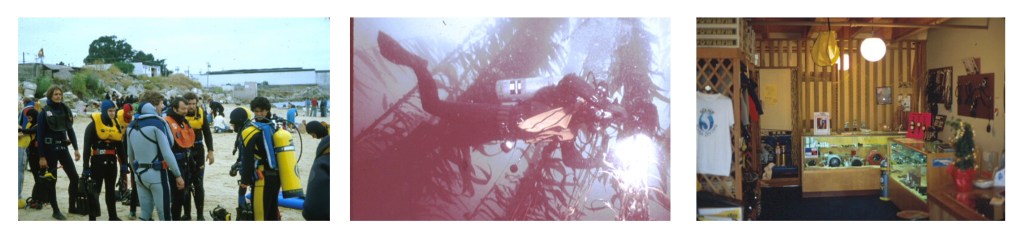
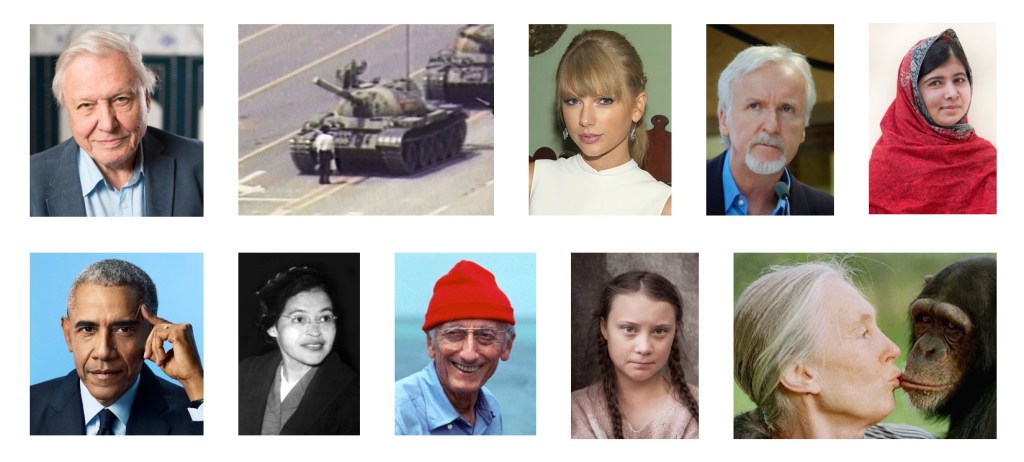


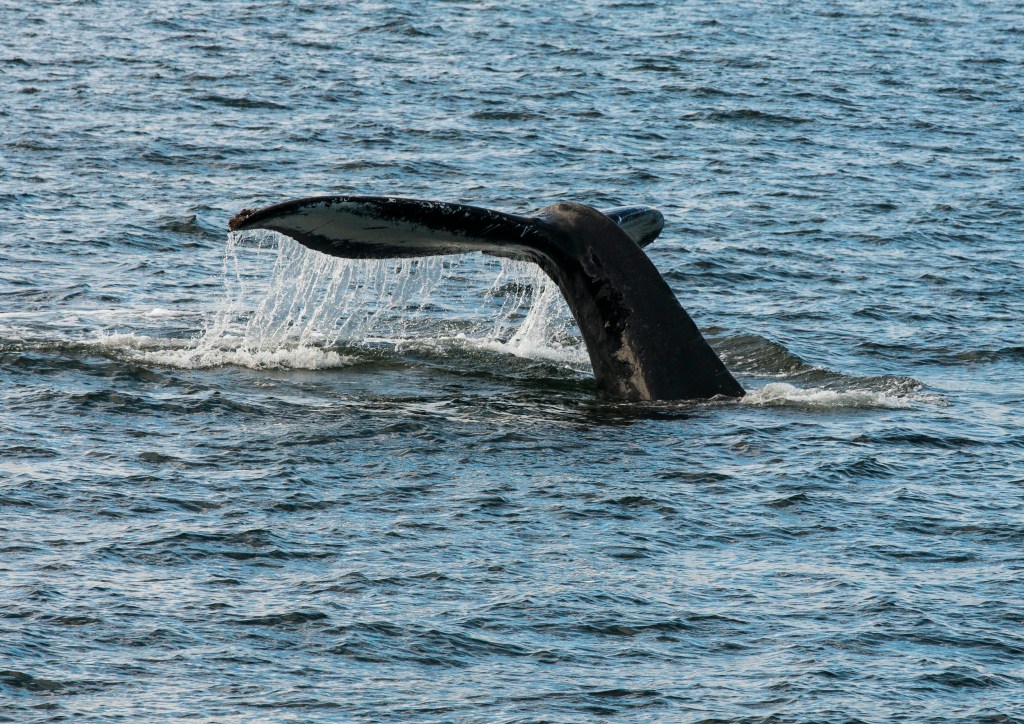
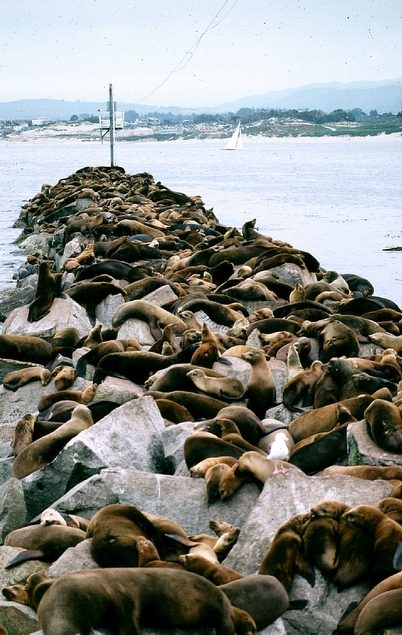
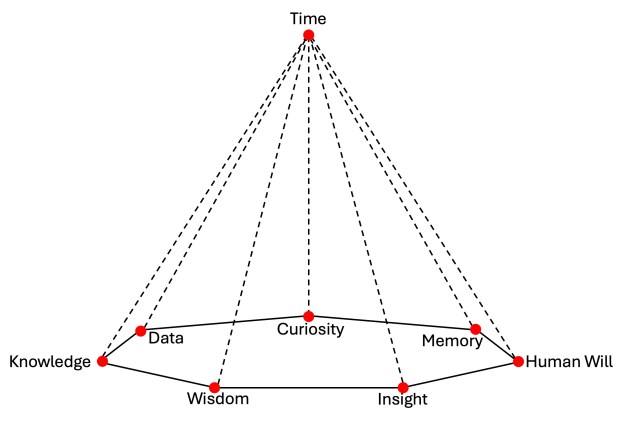
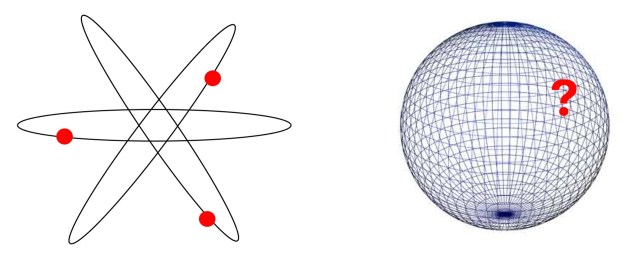
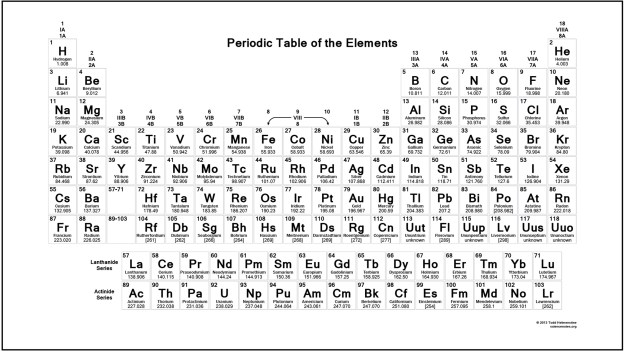

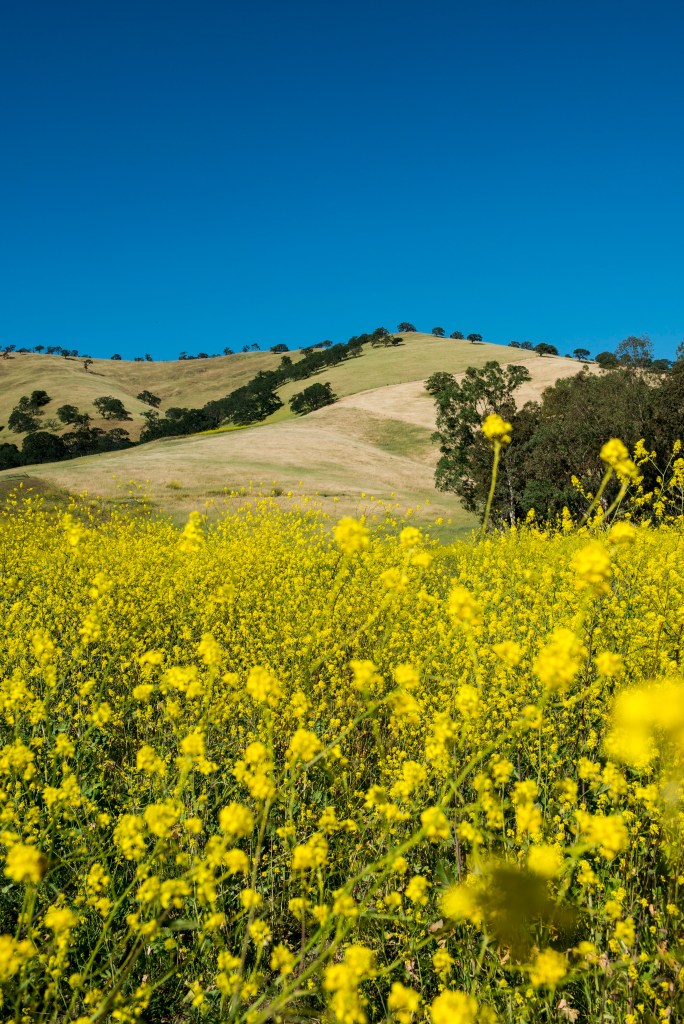

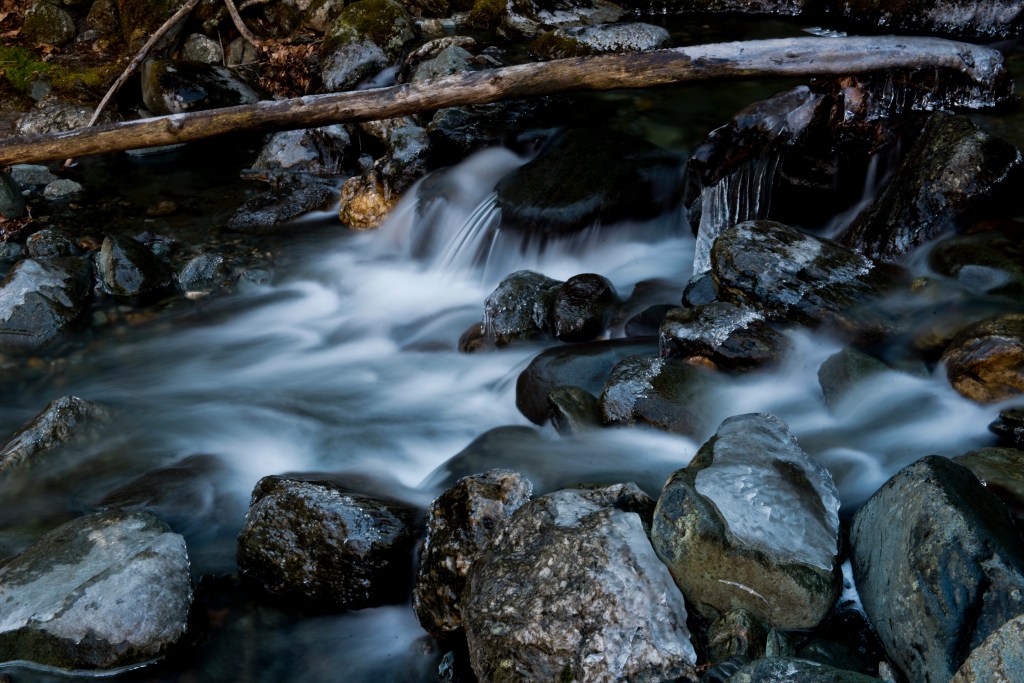
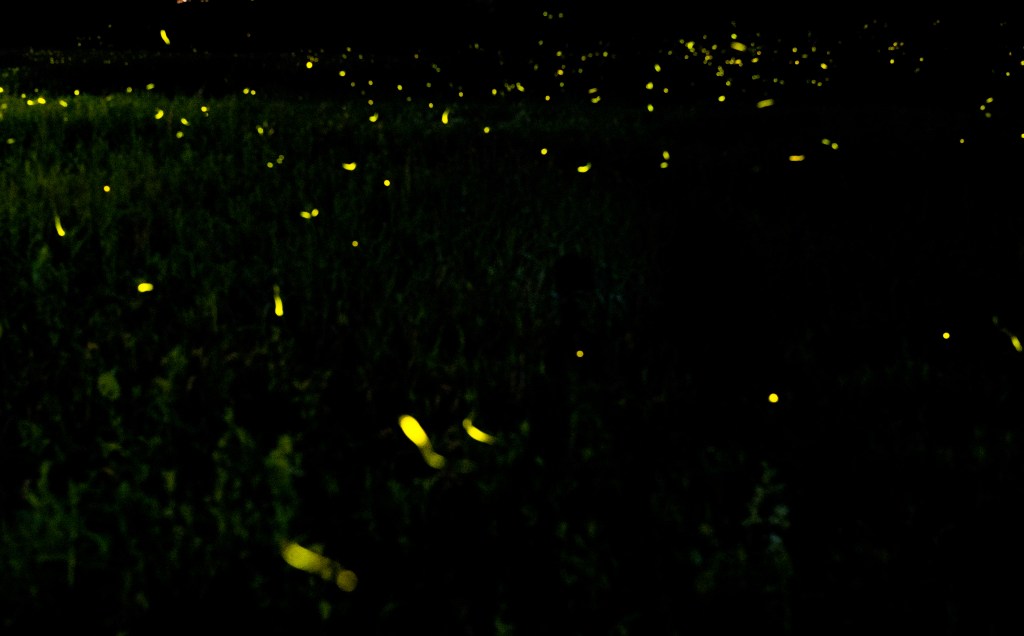


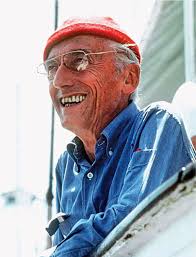




 Steven Shepard