A version of this essay was first released as an episode of The Natural Curiosity Project Podcast. You can find it here: https://podcasts.apple.com/us/podcast/the-natural-curiosity-project/id1443160082?i=1000424446274.
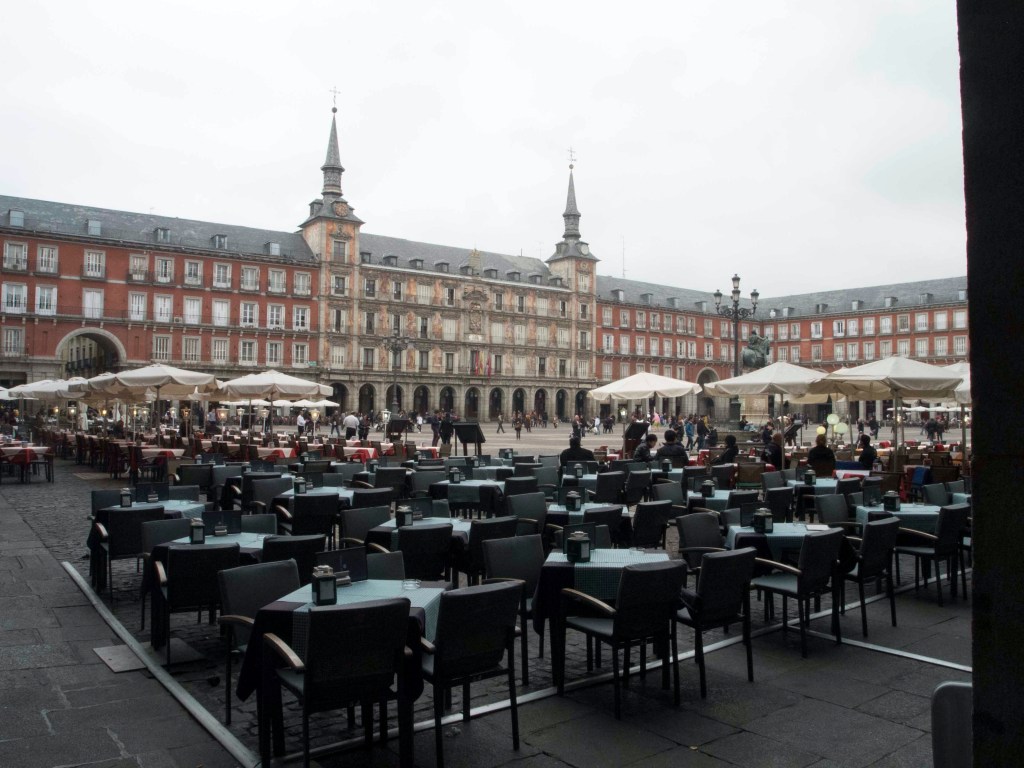
I grew up in Spain, from the time I was 13 until I graduated from the American School of Madrid. Thanks to my time there I developed a lifelong passion for culture and languages. I speak seven of them with reasonable levels of fluency, so nothing intrigues me more than someone in an elevator who’s speaking a language that I can’t even regionally place, much less understand.
Spanish, of course, doesn’t fall into that category. I speak it well enough that I am occasionally mistaken for a native speaker – which I guess I almost am. In fact, when the time came to go to college, I enrolled in the University of California at Berkeley and ended up getting an undergrad degree in a field that pretty much no one has heard of called ‘Romance Philology.’ Philology is the study of language structures and origins, so Romance Philology is specific to the Romance Languages, which include all the languages that derive from Vulgar Latin. The most common Romance Languages are Spanish, French, Portuguese, Romanian, and Italian; the least known include Catalan, Occitan, Romanch, Piedmontese, and Corsican. It’s a really interesting field that I use every single day of my life to identify words that I don’t know or to draw linkages between similar words in different languages.
One of the coolest things we learned was a phonetic alphabet that gave us the Harry Potter-like ability to write words exactly as they sound, so that a word that’s pronounced one way in Spain can be written differently than the way it’s pronounced in, say, Mexico. For example, consider the Spanish word for house. In Latin America, they say ‘casa, with a sibilant S (ssssssss…). In Spain, however, they pronounce it almost like ‘casha,’ using what is called an apicoalveolar S. Well, the phonetic alphabet allows me to write the same word differently, and therefore know exactly how to pronounce it in different regions—or, for that matter, to identify a person’s country of origin by the way they pronounce certain words.
Here’s another example. Think about the ‘TH’ sound in these two words: ‘thorn,’ and ‘weather.’ Well, there are symbols in the phonetic alphabet that allow me to identify them. They’re called eth and thorn. And there are LOTS more.
But even with that level of familiarity, there is one aspect of the Spanish language that still fascinates me, and that is the number of words that it has given to the English language. I’m not talking about Spanish words that are used in their native form as if they were English words, like enchilada, amigo, and Los Angeles. I’m talking about Spanish words that entered the English language because they were overheard and adopted – but typically transmogrified along the way (that’s a good word, by the way—transmogrified—go look it up). Here are a few of my favorites.
Alligator: This word came from the Spanish phrase el lagarto, which means ‘the lizard.’ Say it – sounds just like ‘alligator,’ doesn’t it?
Here’s another one: Hoosegow. You know, the old cowboy word for the jail. This is a corruption of the phrase, el juzgado which means ‘the court.’ Hoosegow is a slang English word for jail or prison (as in, “He’s in the hoosegow – we gotta go spring him.”)
OK, how about Key West. Who would have thought that the name of this popular resort comes directly from Spanish, and not from the fact that it’s a western Cay. Nope: It comes from the Spanish phrase, “Cayo Hueso,” which means “Bone Cay.” It turns out that 16th and 17th-century ships were constantly finding themselves wrecked on the poorly marked coral reefs down there, and because of the bones scattered about from unlucky sailors and shipboard livestock that drowned, it was given this name Cayo Hueso by the Spaniards, which was then misinterpreted by English-speakers as ‘Key West’ because that’s what it sounded like to the Anglo ear.
Lariat: Another great word that came from the Spanish. It derives from the phrase “la reata” which means a rope or strap. Similarly, “lasso” comes from “el lazo,” which is a noose or braided rope for tying things together.
Mustang: This Word comes from the Spanish word mesteño which means, in Spanish, “Pertaining to or derived from the Mesta.” The Mesta was an influential association of sheepherders in medieval Castile in Spain. Interesting fact: These people had so much power in Spain that to this day they are free to drive herds of sheep down the main streets of Madrid with impunity – the law protects them.
Palaver: In old western movies it was common to hear one character say to another, “We need to have a palaver,” meaning, “We need to chat.” This word derives from the Spanish word “palabra,” which means word—although it is also used in slang form to mean an extended conversation.
Rodeo: This word comes from “rodeado,” which means “to surround or encircle; a roundup.”
This is interesting, isn’t it? We use many of these words without even thinking about where they come from; it fascinates me to see how languages leak into each other. Here are a few more.
Ten-gallon (hat): Most of us (myself included) would conclude that the name “ten-gallon” refers to the size of the hat, like the one Hoss wore on the old TV show, Bonanza. But in fact, it comes from the Spanish phrase, “¡Tan galán!” which translates to “How gallant!”
Vamoose: From the Spanish word ¡Vamos! Which means “Let’s go!” Cool, huh?
OK, let me switch gears for a minute and talk about another of my favorite linguistic rabbit holes, which is pidgin. Now, this is not the kind of pigeon that leaves unpleasant white splotchy messages on your car; I’m talking about the language. It’s spoken all over the world in various forms. In fact, more than two million people speak it in Papua, New Guinea alone. Wikipedia lists almost fifty different Pidgin languages.
Pidgin is defined as a language that’s spoken between two groups of people who do not have a common language between them—so they create one. It usually comes about because of a need to do business between the two groups, so they create a simple, common language that they can both understand. And by the way, some people use Pidgin and Creole interchangeably, but they’re not the same thing. Creole is a complete language, with a well-developed grammar, vocabulary, and sentence structure, that in some cases may actually have its roots in some form of Pidgin. But Creole speakers are native speakers of that language—it’s the language they were born into and learned from childhood.
The cool thing about Pidgin is that you can learn it—the entire language—in about a week. OK, maybe not all the vocabulary, but certainly the structure and the ability to speak it. If you go to the Web, you’ll find all kinds of resources where you can listen to Pidgin spoken; there are even Pidgin dictionaries out there.
Now one thing you have to know about pidgin is that it is completely phonetic in its pronunciation. There are no complex sentence structures. What you hear is what you write.
So just to give you a sense of how it sounds, let me share a few phrases, starting with a simple one, and going to some more complex examples.
Win masin. Literally, ‘wind machine.’ This is the Pidgin phrase for a fan.
Nogat moni. Say it out loud. It means, I’m broke.
Maufgras. This is a good one. If you say it quickly a few times, you’ll figure out that it sounds like ‘mouth grass,’ which is the Pidgin phrase for a moustache. You know—the grass that grows on your mouth. How can you not love this.
Similarly, the phrase ‘Man I Katim gras bilong het’ means, ‘The man who cuts the grass that belongs to your head.’ He’s your barber.
Tokfas. Yep—now you’re starting to get it. ‘Talk fast.’
Namawan pikinini son missiskween. This is a hard one, because it requires that you have some knowledge of the colonial history of places like Papua New Guinea. I’ll give you this one. Say it out loud, and read this: ‘Number one pikinini son Mrs. Queen.’ This is the Pidgin phrase for Prince Charles. Number one makes sense; he’s the firstborn. Pikinini is a word stolen from upcountry Swahili in East Africa that comprises two words, piki and nini, which mean ‘small child.’ Son is son, and Mrs. Queen is—well, Mrs. Queen, the queen of England. Number one small child who is the son of the Queen. Hence, Prince Charles.
Pretty cool, huh? And you’d be amazed how easy it is to express very complex concepts using a language as simple as Pidgin.
Gutbai, Lukim yu bihain./ Kisim gutpela de! That means Goodbye, see you soon (Looking you behind), Get this day! (have a great day!).
Like I said, languages are amazing creatures.
 Steven Shepard