Tag Archives: environment

Of Fens, Mires and Bogs

I Just finished a terrific book called Following the Water by David Carroll. I’ve read all his books; he’s a New Hampshire-based naturalist who specializes in turtle ecology. That makes me smile, because there aren’t many animals that I like as much as turtles. Following the Water is a collection of reflections on his wanderings around the streams, ponds, forests and fields that surround his home. 

I’ve spent most of my career in the technology domain, telecom mostly, so I’m very familiar with the acronyms and unique terminology that every field creates for itself. For example, I don’t play bridge, but I love to read the bridge column in the newspaper, just because I don’t have the foggiest idea what they’re talking about. Here’s an example:

In today’s deal the situation in three no-trump is complicated by South’s desire to keep West off-lead. Declarer will have seven top tricks once he has knocked out the heart ace, so must find two more tricks from somewhere. Fortunately, there are lots of extra chances: the spade finesse, an additional heart trick, and an extra club winner or more. The key, though, is for South to combine his chances in the right order.

Say what? The spade finesse and an additional heart trick? I have no clue what the author’s talking about, but reading the column is like watching a linguistic train wreck. I can’t stop myself.

So, it’s no surprise that Carroll’s book has its own words that address the needs of the aquatic ecologist. As he describes the place where water and land meet to create complex ecosystems that each produce their own unique collection of living things, he draws on a poetic collection of words to describe the hidden world that he’s devoted so much of his life to. What is so interesting to me is that as I read his book, one mysterious word leads to another, causing me to spend way too much time in the dictionary. 

As we follow Carroll through a dense tangle of willows, he describes it as a carr. A carr, it seems, is a bog or a fen, where willow scrub has become well-established. That, of course, sent me back to the dictionary in search of bogs and fens (by the way, this was almost as much fun as actually getting muddy). A fen, it turns out, is one of six recognized types of wetland and one of two types of mire. The other is a bog. Fens tend to have neutral or alkaline waters, whereas bogs are acidic. A mire, by the way, sometimes called a quagmire, is the same as a peatland. Peatlands can be dry, but mires are always wet. Mires, by the way, are the same as a swamp, except that mires tend to be colonized by mosses and grasses, while swamps usually have a forest canopy over them.

Carroll also spends a lot of time describing vernal pools and the creatures that spawn in them. I love that term, vernal; it conjures something mysterious for me, a place of unknown creatures that rise from the depths at night. Think Dr. Seuss’ McElligot’s Pool. Anyway, vernal pools are temporary pools that provide habitat for specific species, although not fish. They tend to be temporary, and are often teeming with things like tadpoles, water striders and whirligig beetles. They’re called ‘vernal’ because they’re at their deepest in the spring (the word comes from the Latin, vernalis, the word for that season), and they’re typically found in low spots or depressions in grassland habitats.

Another word that comes up a lot is riparian. Riparian describes the transition zone that lies between the land and a river or stream that runs through it. Riparian areas are important, because they filter and purify water that runs off the land and enters the waterway. A biome, by the way, is a community of plants, animals or microorganisms that inhabit a particular climatic or geographic zone. So, a riverbank would be a riparian biome.

And what about the wetlands that Carroll refers to throughout the book? Well, a wetland is an area that’s eternally saturated with water, like the Everglades. They’re standalone environments, but they can also include swamps, marshes, bogs, mangroves, carrs, pocosins [puh-CO-sin], and varzea [VAR-zea].

By the way, because you’re dying to know, a pocosin is a palustrine [PAL-e-streen] wetland with deep, acidic peat soils, sometimes called a shrub bog. Palustrine, incidentally, comes from the Latin word palus, which means swamp. Palustrine environments include marshes, swamps, bogs, fens, tundra, and flood plains.

And since we mentioned it, a varzea is a seasonally-flooded woodland specific to Brazil’s Amazon rain forest. A marsh is a wetland dominated by herbaceous rather than woody plants – grasses, rushes and reeds, instead of shrubs and trees. It’s also a transition zone that’s marinated in stagnant, nutrient-rich water. By the way, swamps, like the Everglades, move water across their surfaces, while mires move water below the surface. Marsh plants tend to be submerged; mire plants are not.

Fens, swamps, mires and bogs: who would have thought there was so much diversity at the water’s edge.

Monitoring Biodiversity Through Sound

(If you’d prefer to listen to the Podcast version of this essay, with some wonderful embedded natural sounds, please go here).

I begin with a definition of biodiversity. 

Biodiversity measures the variety of life on Earth, including the richness of species, the genetic variation required for hybrid vigor, and the breathtaking variety of unique ecosystems. Biodiversity also includes the interactions between living things to create a self-sustaining, biologically balanced, healthy world. It’s why we have paramecia and pangolins, elephants and echidnas, orchids and owls, wheat and whales.

It doesn’t take much to get a sense of the extent of this biodiversity, especially in the warmer months. It’s literally everywhere. Get up early one morning, the hour before dawn, and go for a walk in the woods, or in the tall grasslands down the road, or across a dewy meadow, or along a stream. Find a place to sit. Be patient, and just listen to the dawn chorus. Or, do the same, but in the late evening. Walk near a marsh, or a lake, or a pond, find a place to sit, and listen to the evening chorus. The experience will feet you deeply, if you allow it to.

Biologists, especially ecologists, monitor biodiversity in various ways. Some monitoring is for academic reasons, the never-ending quest of science to know, to understand. 

Others monitor biodiversity, looking for places where we overstep, human canaries in the coal mine who speak out against chemical dumping, improper disposal of toxins, the hazard of forest clearcutting, greenhouse gas emissions, fertilizer runoff, and a hundred other ecological crimes against the planet and its inhabitants—including ourselves. 

Dr. Barry Commoner

Sometimes, the decision-makers who pay attention to these environmental watchdogs listen and act. DDT and other chemicals were effectively banned after Rachel Carson published Silent Spring in 1962. Barry Commoner, the father of the modern ecology movement, made the world pause when he published his four ecological laws: Everything is connected to everything else; Everything must go somewhere; Nature knows best; and There is no such thing as a free lunch. You know, those are so important that they’re worth repeating. Everything is connected to everything else; Everything must go somewhere; Nature knows best; and There is no such thing as a free lunch. 

Others, like Jacques Cousteau, Sylvia Earle, David Attenborough, EO Wilson, and Loren Eiseley, combine passion and logic, visual storytelling and compelling truths, to motivate us to be more thoughtful and responsible stewards. Even young people can be ecological heroes: Greta Thunberg brought a human and humane face to the impending climate change crisis. And while all of these efforts had impact, and often brought about changes in human behavior, hubris is a powerful motivator.

Jacques Cousteau

In the interest of growth-related profit, great swaths of enormously biodiverse landscapes—the Tallgrass Prairie, California’s San Joaquin Valley, the rolling hills of Washington’s Palouse—are cleared to make way for the short-term potential of mono-crops, such as palm oil, soy, wheat, corn, cotton, and sugar cane. The downside of this practice has been known since the early 20th century. When Henry Ford established Fordlandia, for example, his ill-fated American city deep in the Brazilian Amazon, he cleared the tropical forest to make way for the rubber trees he needed to produce latex for rubber tires. He planted the trees in ruler-straight rows, which quickly succumbed to infestations of pests in the now vulnerable, concentrated grid of trees. The hybrid vigor of the forest, the physiological firewall that originally protected everything in the biosphere, was gone, and as I described in an earlier program, not a single drop of rubber from the venture ever made its way onto a Ford automobile. Hubris.

Before the advent of modern farming techniques, there was no need for pesticides, or soil additives, or extensive crop watering infrastructure, or fertilizers, because nature took care of that for herself. But when mono-crop agriculture became the norm, it suddenly became necessary to force the land to produce. Gone was the elegant natural system that took care of itself; it was replaced by a system based on brute force. Man against nature, nature as the enemy, an enemy within which we are an integral part. Oops.

When the natural botanical ecosystem is disrupted or destroyed—forest, jungle, grassland, prairie, chaparral, seashore—the animal life that’s intertwined with the botanical diversity of the environment is equally disrupted. Everything from bacteria that help to keep the soil healthy to the largest mammals at the top of the food chain suddenly find themselves imperiled by the abrupt loss of habitat, their support framework, their life.

If you’re having trouble imagining or believing this scenario, let me offer an analogy of the human sort. Every morning, you wake up in your comfortable bed, in the warmth and safety of your home. You wash up in your well-appointed bathroom, then head down to your well-equipped kitchen where you brew a nice cup of designer coffee and prepare a hearty breakfast to keep you well-nourished until your next meal, which will happen sometime around midday, in a restaurant of your choosing.

But one morning, you wake up and find yourself inexplicably lying on the leeward side of a great sand dune, 120 feet high. Dazed, confused, sweating profusely in the growing heat of the morning, you stand up and trek to the top of the dune, where you see nothing but more dunes, marching off into the haze of distance in all directions. No home, no bedroom, no kitchen, no coffee shop, no grocery store, no pharmacy, no doctor—just sand dunes, sun, and the occasional tuft of silica-rich and entirely inedible desert grass. Welcome to your new home. Suck it up and make it work—or, more likely, don’t.

The naturally biodiverse web of life works because it has evolved over the eons as a balanced system, organically able to change and adapt as required, weaving and dodging to overcome the challenges of the biological lottery. Some individuals win; some lose. But the system survives, and each time it emerges stronger and more resilient, for having run the gauntlet. 

I’m telling you this story because biodiversity matters—not just to the scientific community, but to literally every living thing on this planet. Changes in the biodiversity of an ecosystem, changes that are all-too-often caused by humans, are equally all-too-often invisible to us. On June 22nd, 1969, the Cuyahoga River in Cleveland, Ohio caught fire. You heard that correctly: the river caught fire, shooting flames five stories into the sky. You’d think that a large river flowing through a major American city that was so polluted with industrial chemicals that a flare fired from a passing train ignited it, might have caused somebody to notice. The smell alone, never mind the lack of aquatic life, should have been a glaring clue. Nope. Sometimes we choose not to notice what’s right in front of us; other times we can’t notice, because we’re looking at the problem with the wrong set of senses.

Here’s an example. In the late 1980s, sound ecologist Bernie Krause recorded the rich and varied soundscape of an idyllic place in California called Lincoln Meadow. The air was filled with the joyous cacophony of birdsong. He recorded there for several consecutive years, always in the same place with the same gear.

At one point, a logging company negotiated an agreement to “selectively log” the forest at Lincoln Meadow—meaning, only remove some of the trees. Krause continued to record, during and for several years after the logging.

To the visual observer, nothing changed. The selective removal of some trees made no difference in the look of the forest. But the sound? It went from being sonically raucous and alive to sonically moribund. It went from the joyous voices of a diverse community to what I can only call the singular voice of loneliness. A comparison of the before and after soundscapes is one of the saddest things I’ve ever heard.

One of the saddest things I’ve ever heard. What an important word that is—Heard. After being selectively logged, the forest at Lincoln Meadow looked, smelled and felt the same. The resin-scented old growth air tasted exactly the same as it tasted before being logged. But it sounded different. Something about the biodiversity of the place had changed, something existentially important. But the only way to tell was through sound—or perhaps better said, the lack of it.

It would be easy to brush off Krause’s findings as anecdotal or coincidental. “The birds were having a bad morning when he recorded after the area was logged, so they weren’t singing that day.” Sure—except that he recorded in exactly the same place, using the same setup, year after year, always with the same melancholy result. The logging affected the biosphere, whether the impact was visible or not. Voices had disappeared, because species had disappeared. Bioacoustically, Lincoln Meadows was now a different place.

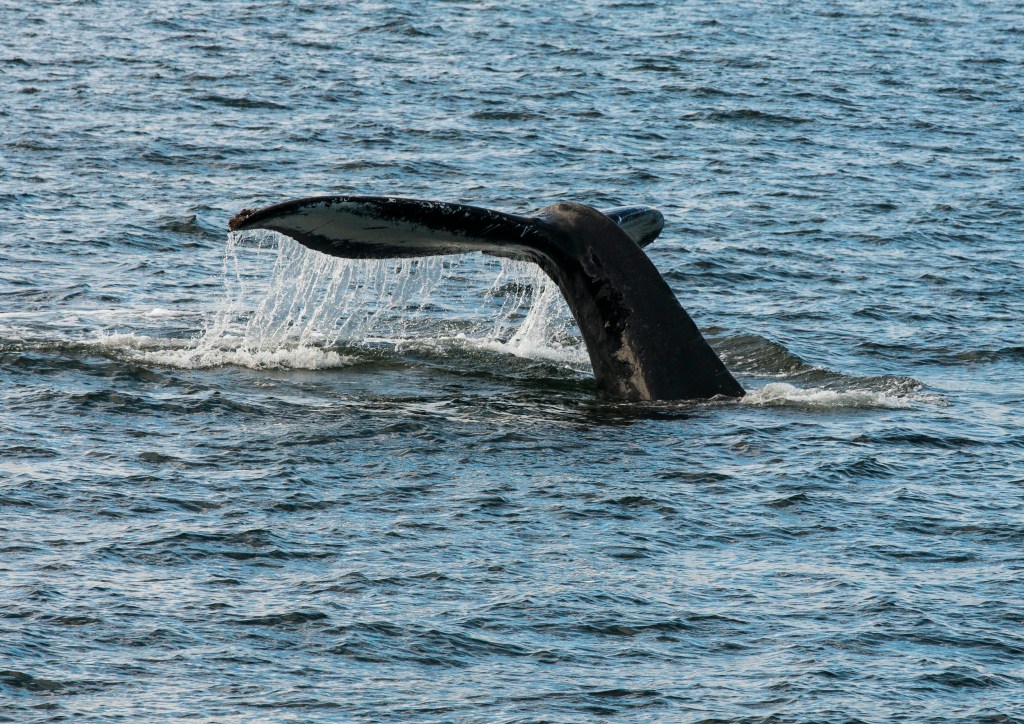
The use of sound as an indicator of ecosystem health—what we call bioacoustics—is not new, but it’s only in the last decade or so that it has become widely accepted as a scientifically reliable indicator. Dr. Krause’s work is one example, but there are others. During the 1960s, Roger Payne did seminal work on echolocation using bats, moths, and owls as his test subjects. He isn’t known very well for that work, but he IS known for his work with whales—specifically his study of the songs of the humpback whale, which resulted in the release of a massively popular album in 1970 and the beginnings of the global anti-whaling movement.

Jack Greenhalgh, whom I interviewed earlier on The Natural Curiosity Project, has done extensive work on the health and restoration of freshwater ponds, using non-invasive sound monitoring to create successful ecological recovery strategies.

My friend Dick Todd, based in rural Illinois, records the seasonal changes in the sounds of freshwater lakes, ponds and rivers to track the health of local insect species.

Sound Ecologist Gordon Hempton, who calls himself The Sound Tracker, has dedicated his career—no, make that his life—to the preservation of naturally quiet places around the world, places that are free of human-generated sound. Gordon defines a quiet place as a location where it’s possible to sit for a minimum of 15 minutes without hearing any human-generated noise. In the middle of the 20th century, there were thousands of these quiet places in the United States; today, there are 12. Noise matters. It pollutes the environment as much as chemical runoff does. When wildlife can’t vocalize or stridulate effectively because they’re drowned out by human-made noise, they can’t call to each other, they can’t find mates, they can’t locate prey, and they can’t hear predators approaching. 

In the southern hemisphere, where reefs are dying because of warming oceans brought about by a changing climate, researchers have come upon a remarkable discovery that they hope will help them save at least some of the planet’s reef ecosystems.

When the coral polyps and other reef-based species reproduce, they eject clouds of eggs and sperm, which combine to create vast numbers of tiny larvae. The larvae drift randomly in the water column, eventually settling down and establishing themselves as new colonies on or near the living reef.

But, there’s a problem. As the oceans warm, the mature reef polyps die. But they are important links in the food chain, because as they filter nourishment out of the water column with their feather-like gills, they also provide food for organisms like parrotfish, sea snails, and sea stars. So when the polyps die, the reef-dwelling animals that depend on them for food die off as well—or they leave. That includes parrotfish and snapping shrimp, animals that create the voice of a healthy coral reef. And when they depart, the reef … goes … silent.

But researchers wanted to test a wild hypothesis: what if those free-swimming, embryonic coral polyps don’t just wander randomly in the current? What if there is something invisible that guides them, in the same way that the electromagnetic lines of force that girdle the planet help birds and monarch butterflies and countless other species complete their semi-annual migratory journeys of thousands of miles?

For years, researchers have believed that sound plays a key role in maintaining reef health, but they had no way to prove it. But the dying reefs gave them the perfect opportunity to test their theory. They installed waterproof speakers on silent, dying reefs. Then, they played the sounds of a healthy reef through the speakers: the crunching of parrotfish jaws against coral, the frying bacon sound of thousands of snapping shrimp, the low-frequency crunching and scraping of sea stars, the distant sounds of whales. And here’s what they saw: those free-floating little larvae took notice, and deliberately followed the sound back to the reef and began to establish themselves as permanent residents in large numbers. Life returned, because of sound.

Now, before you say anything, yes, the warming waters may yet kill off the reef polyps, especially those that establish themselves in the shallower, warmer water near the top of the reef. But the polyps that settle in the cooler, deeper water may well survive. Time will tell.

The point is that sound, as an indicator and catalyst of biodiversity, is as valid a measure as any other, and may well prove to be more important than some. It’s a passive, non-invasive technique that can be carried on for long periods, providing researchers with trend data that can be used in concert with other insights to provide a richer, more meaningful, more nuanced understanding of the cause and effect criteria that affect biodiverse environments. 

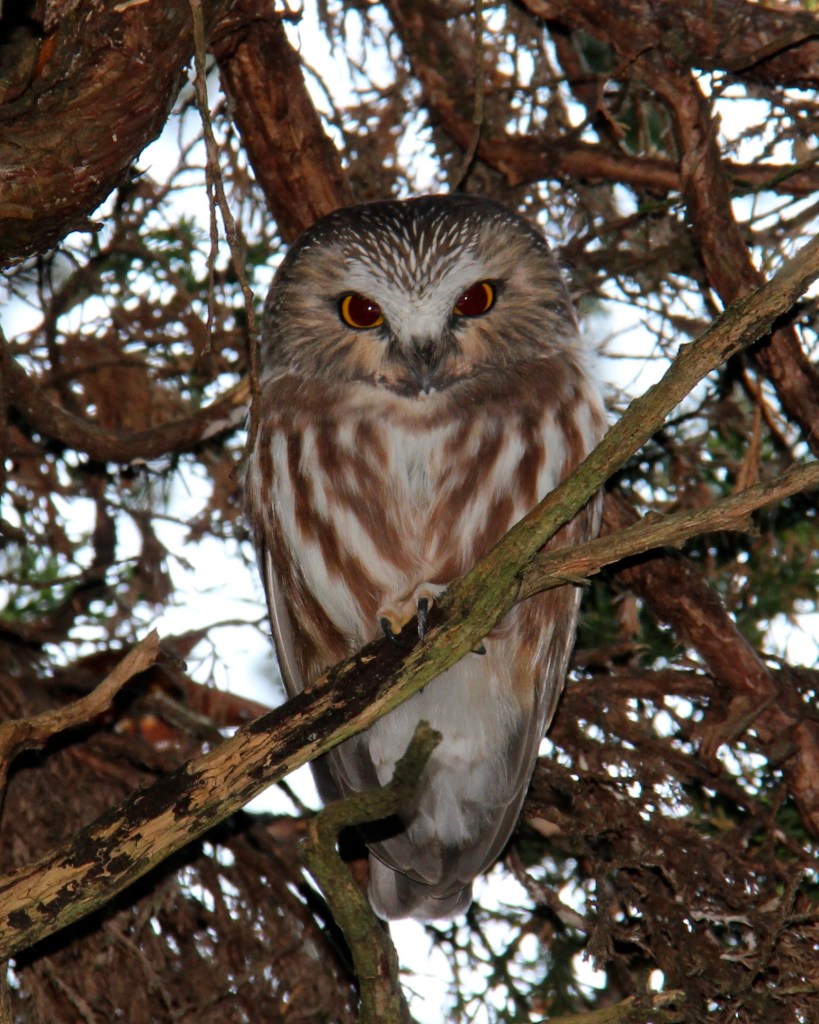
So, here’s my request to you, the listener. Consider this your homework assignment. Go outside and listen, and be deliberate about it. Go for a walk, and don’t just passively hear—really, really listen. You’ll soon become aware of how diverse the sounds are, when they happen, why they happen, who’s making them, and where. You’ll begin to understand the interactions among the animals making the sounds, and what those interactions mean. You’ll start to become a true practitioner of fieldcraft. When you see an entire flotilla of water birds suddenly lift off the lake as one, calling loudly and chaotically, you’ll automatically look straight up, because there will undoubtedly be a raptor—an eagle, an osprey, a peregrine, flying overhead, looking for a meal. You’ll see a flock of chickadees incessantly and aggressively flying in and out of a pine tree, caterwauling as only chickadees can, and you’ll know that there is almost certainly a northern saw-whet owl, the sworn enemy of the chickadee, sitting quietly on a branch of that tree. 

 But more than anything, you’ll find yourself filled with a growing sense of awe, wonder, and appreciation for this amazing thing that we call biodiversity—and, if you’re like most of us who take the time to listen to nature’s voice, you’ll become a sworn protector of it. 

Welcome to membership in the most important club on Earth.

The Nine-Million Club

If we can believe the work of the UN Environment Programme—and I do—we are in the middle of the next great extinction on Earth. According to their global research, 200 species go extinct on this planet every 24 hours. But anyone who has studied biology knows that species naturally die out if they can’t stand the heat in the genetic kitchen—that’s what Darwin was talking about when he wrote that ‘it is not the strongest of the species that survives, nor the most intelligent that survives. It is the one that is the most adaptable to change.’ 

So, yeah—species die out—it’s part of the natural selection process. But here’s what bothers me. 200 species every 24 hours is about a thousand times the rate at which species naturally disappear from the planet because they get kicked off of gene pool island. The biologists who study this phenomenon say that this disappearance rate is faster than anything we’ve seen since the dinosaurs disappeared, 65 million years ago. And we, humans, are playing a big role in their loss.

According to the latest estimates, there are around 8.7 million species on Earth. And even though 70% of the planet is covered by water, the majority of species live on land—about three-quarters of them. In fact, 86% of the plants and 91% of the animals on Earth haven’t even been named yet—which is ironic, since it appears that many will disappear before we even get to know them.

So, let’s face it. We’ve all grown weary of the dire reports about some kind of biological Armageddon headed our way. Every day, it seems, it’s something else. Global warming that leads to melting icecaps, which will raise sea levels enough to drown coastal cities. The loss of the planet’s “lungs” as farmers cut down the equatorial rainforest to make room for more palm oil plantations, resulting in more carbon dioxide buildup in the atmosphere, stronger greenhouse gas effects, and even warmer climate. The imminent extinction of alpha species like rhinos, elephants, orangutans, and codfish, because of human ignorance and greed. The potential loss of natural medicines as the planet’s herbal base dies off. The point is, the list goes on and on, and it distresses me. But I have to keep reminding myself to not let the warning fade into the background, just another droning non-message. 

In my heart of hearts, I am, and always will be, a biologist and a naturalist. I share this planet with a boatload of other creatures, and while we humans may occupy the apex position on the Earth’s pyramid of life, the top of that pyramid doesn’t have much room—that tip is pretty narrow, which means it wouldn’t take much to shrug us off. E.O. Wilson, the famous biologist and one of my personal heroes, once remarked that if all the insects on earth were to disappear, all life on the planet would end within 50 years. On the other hand, if all the humans disappeared, within fifty years, all life would flourish, and we wouldn’t even be a footnote in the grand scheme of things. 

There’s nothing special about us. Four billion years ago, the universe did a little experiment. It combined a few elements—nitrogen, sulfur, phosphorus, carbon, hydrogen—and then zapped them with lightning. Those elements shook it off, joined forces with their neighbors, and by pure random accident, grouped themselves into complex molecules that ultimately became what we now know as amino acids. Those amino acids went on to meet new neighbors, and somewhere along the way they found themselves in a complex biochemical dance that yielded even more interesting things, like nucleic acids, the basis of biological life. From that primordial soup came tiny microbial creatures, and over time, those little creatures metamorphosed and evolved in billions of different directions, some of which led down a long and winding road of biological diversity, while others dead-ended—game over, dude. We humans are among the lucky few.

So, there’s nothing special about us, or kangaroo rats, or elephant shrews, or freshwater jellyfish, or that paramecium that enchanted you the first time you saw it moving around in a drop of pond water under a microscope. But what IS special is the Nine Million Club, an organization that has the most stringent, unyielding membership requirements in the known universe.

Let me explain. Every creature that’s alive today ran the evolutionary gauntlet, accepted the biological challenge, agreed to run the great genetic race—and, unlike billions of others, made it to the finish line. Each one is the result of that great experiment that the universe ran four billion years ago, an experiment that yielded some really interesting results. Consider this: The organisms living on Earth today have one thing in common: they are all, without exception, the best problem-solvers that have ever existed. Faced with the greatest test imaginable, their very survival, they accepted the challenge, and they beat it. For that, they were allowed to live, like Katniss in the Hunger Games. Five billion applied to the club; nine million were granted membership.

Every time a species goes dark, we lose hundreds of thousands, if not millions, of years of experimentation and problem-solving. I think that should count for something, and I think we should do everything in our power to keep the lights on for the other species that made it this far. The interspecies dependencies on this planet are extraordinary, and we humans are one of not quite nine million card-carrying members of the Club. I can accept the fact that species occasionally get booted off the planet because they just can’t hack it anymore. I’d just rather not be one of them. A few simple acts on our part, driven by curiosity and education and awareness, might allow us to keep calling the planet home. It is, after all, a pretty cool club to belong to. But keep this in mind: membership is revocable at any time.

Take a Moment

Let’s talk for a moment about connectivity, about paying attention to the way systems, ecologies, species, habitats and environments engage along the way to some common endpoint, some mutually agreed-to goal. Let’s also include curiosity, awe, wonder, and reverence. 

I’ve been speaking about this theme for years through the nearly 300 episodes of my Podcast, The Natural Curiosity Project. Curiosity matters: I often refer to it as our sixth sense, the power that allows us to make sense of the multifaceted world in which we collectively operate—‘us’ being humans and the other nine million or so species that we share the planet with. 

I hear this all the time, the chanted meme: “We’re all connected.” And while that observation is true for all kinds of reasons, there’s a piece missing, and it’s a big one that no one in the environmental community seems to have really latched onto. So, let me take a swing at it.

I spent my 43-year professional career in the global telecommunications industry, as a consulting analyst. I’ve written dozens of books and hundreds of articles; I’ve taught countless courses on related topics; I’ve given keynotes and workshops all over the world (four million miles on United is the ugly proof); and I’ve consulted with many companies on the best way to get the most return for their technology investment. 

Telecom is complicated stuff, as anyone who has tried to configure their own router knows. But two concepts always float to the top when it comes to understanding how it all works: connectivity and interoperability. They are not the same, but they are equally crucial. And yes, I’ll bring this conversation back to Intertwingled and the environment shortly.

Imagine the following. I pack up my television here in Vermont and take it with me to Spain. I unpack it, set it up, and plug it into a power adapter, which I then plug into the wall.  I attach an external antenna, and turn on the set. It powers on. Perfect! I have connectivity.

However, as soon as the image resolves on the screen, I realize that I have a problem. The picture is distorted, like a funhouse mirror, and it’s black and white. Why? Because I may have connectivity, because I was able to physically plug the set into power and pull a signal down with my antenna. But I don’t have interoperability.

You see, the analog TV standard used in the US, Canada, Mexico, and a handful of other countries was created by an organization called the National Television System Committee, abbreviated NTSC. TV sets that use the NTSC standard “paint” the image on the TV screen using 525 interlaced lines, creating 30 frames every second, using local AC current that runs at 60 Hz. By the way, the NTSC standard is considered by many engineers to be rather sloppy, and they jokingly say that the letters actually stand for ‘Never Twice the Same Color.’ But I digress.

Meanwhile, the standard used in Spain, in Europe, in most of the world, is called PAL, which stands for ‘Phased Alternate Line.’ It assumes 50 Hz current, not 60, and paints 25 frames per second,  Not 30, using a 625-line brush. It doesn’t take an electrical engineer to figure out that NTSC and PAL are incompatible. In other words, we may have connectivity, but we can’t have interoperability.

‘We’re all connected’ is a rallying cry for the environmental movement, and it’s a good one. We all share the same earth, drink the same water, rely on many of the same metabolic processes to maintain life, process the same atmosphere, and take part in the great cycle of life. We have connectivity. Because we’re all connected to the planet.

What we don’t seem to have is interoperability. Or at least, for many of us, it’s a theme that we confidently ignore. Remember the guy holding onto the mattress on top of his car that I discussed in an earlier essay as an example of breathtaking human hubris? 

Think about it. Connectivity is about being physically linked. If I speak Spanish to someone whose only language is Farsi, and they speak back, we have connectivity—our ears receive the signals—but we understand nothing about what the other person is saying. We lack interoperability. Interoperability is about being able to intelligibly exchange information, to understand what the other side is saying. In the world of technology, It’s called protocol conversion. It’s much more complicated than connectivity, and requires significantly more effort, which means that it’s also inconvenient. But if Return on Inconvenience is a valid measure of effectiveness, as I believe it to be, then it’s a worthwhile undertaking.

So, what does that mean? Well, it means paying deliberate attention when you’re out there, engaging all six senses. Being present. It means engaging with the environment the way a four-year-old does. It means asking hundreds of questions every day that start with WHY, listening to the answers, and not being afraid to say, ‘I don’t know.’ It means getting comfortable with not knowing, and looking forward to fixing that. When you go for a walk in the field, or the forest, or the tallgrass, or the beach, engage. Don’t just walk through the environment; strive to be part of it. Walking through the forest with your earbuds in your ears is an exercise in connectivity; your feet do indeed touch the path. But if you return from a walk and you don’t have mud on your knees, or even better, on your chest, then you weren’t behaving interoperably. You may have seen that flash of color on the ground as you walked by, responding to a text on your phone, but you didn’t really get down there to see those amazing fruiting bodies growing out of that lichen, or the snails that were devouring that thumbtack-size mushroom, or the salamander eft hiding under the leaf litter. You weren’t engaged, and you never asked WHY things are the way they are.

Focusing on WHAT instead of WHY is a dangerous, dead-end practice. WHAT leads to blame; WHY leads to understanding and action. As I write this, Southern California burns. That’s the WHAT. Yeah, we know.  But WHY is it happening? Because if we can answer that, really answer that question, then we understand it and can formulate an effective, long-term response. 

Here’s an example. When environmentalists (and I count myself strongly in this camp) rally to point fingers at oil companies for polluting the air with fossil fuel byproducts, I note that they don’t generally arrive at the rally on horseback, in an oxcart, or on a bicycle. That’s a bit hypocritical. And when oil money-backed politicians sneer at environmentalists for wanting to save some tiny, inconsequential species that’s endangered by the warm effluent from a power plant, they’re missing the point. BOTH sides are missing the point. Why? No interoperability. No understanding, and not enough effort to create it.

Consider the timeless lyrics of Stephen Stills’ For What It’s Worth:

There’s battle lines being drawn,

Nobody’s right if everybody’s wrong,

Young people speaking their minds,

Getting so much resistance from behind.

Nobody’s right if everybody’s wrong. Listen up: Pointing out the WHAT does nothing useful, and is divisive. Asking WHY leads to the kinds of effective response that true leaders create. WHAT looks to the past; WHY looks to the future. We can’t change the past; that leaves only one option.

Fun with Geography

I just posted a new episode on the Natural Curiosity Project called “Fun with Geography.” It’s sort of an homage to my favorite TV show, the Big Bang Theory. You may recall that a recurring theme was a Web TV show produced by Sheldon Cooper and his then-girlfriend Amy Farrah-Fowler called “Fun with Flags.” It was silly, of course, but it was also interesting in a lot of ways. My own mini-obsession with geography isn’t all that different.

I love maps–I always have. I can sit for hours with a map. just following roads to see where they go, looking for the funniest place names (the subject of an earlier Podcast episode), identifying unusual landforms, and so on. I love the fact that if you follow the major north-bound roads in Canada all the way up, they ultimately just…stop. They peter out. They end. I want to go there. I want to stand at the end of the road and wonder, “Why here?”

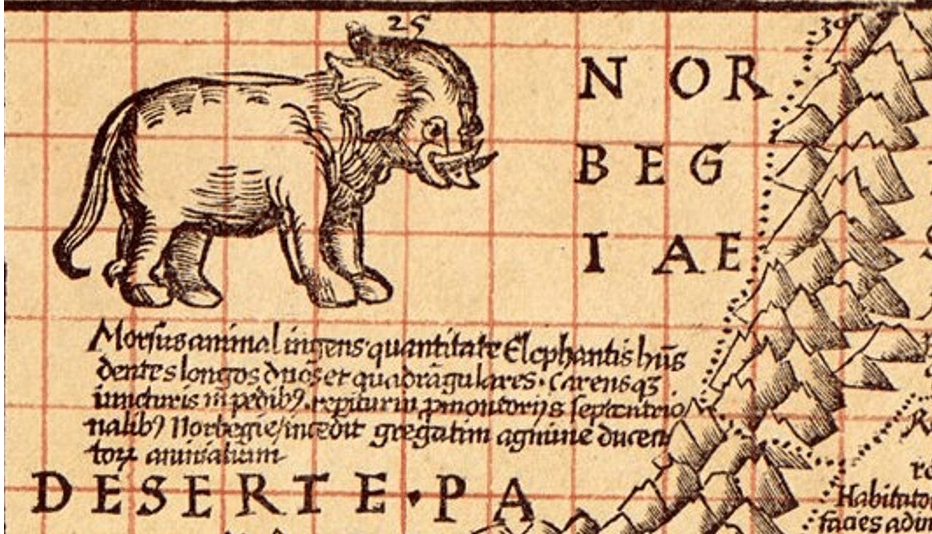
Early maps, those produced prior to the 15th century or so, had vast unknown areas that were often drawn showing them to be the homes of fantastic beasts. I don’t know about the fantastic beasts, but there are still places that are largely unknown–not as many as there used to be, but enough of them still exist to tantalize.

When I was in college, I found myself puzzled by friends who were getting degrees in geography, the same way I found it odd that there was a degree in library science. At the time they both seemed silly to me–the sort of “underwater basket weaving” majors that people used to joke about. Today, I can’t think of two fields of study more useful and applicable than these.

It was Mark Twain who wrote, “Travel is fatal to bigotry, prejudice, and narrow-mindedness, and most of our people need it sorely on al three counts.” Well, spending time with maps, taking the time to study a bit of geography, is a noble snd useful pursuit. Just listen to this new episode and you’ll see what I mean.

You can find the episode on Soundcloud or on all the standard Podcast platforms.

Things vs. Our Idea of Things

Things vs. Our Idea of Things

Steve Shepard 

A great silence is spreading over the natural world even as the sound of man is becoming deafening.               —Bernie Krause

My interest in the sounds of the natural world started when I went in search of information that would help me become a better interviewer and audio producer for my Podcast, The Natural Curiosity Project. What I discovered along the way was a treasure trove of audio knowledge, free for the taking. National Public Radio, for example, has an entire curriculum available to anyone willing to listen, comprising hundreds of hours of training and insight. I listened to every lesson, even those I didn’t need (best safety equipment for war zone reporters). The online resource Transom turned me on to Sound School, Rob Rosenthal’s Podcast about audio storytelling. And somewhere along the way, I discovered an obscure, UK-based organization called the Wildlife Sound Recording Society—WSRS to its friends.

The WSRS is a consortium of purists, the high priests and priestesses of nature’s voice. Their interest is the sound of the natural world, a world that decidedly does NOT include anthropogenic sounds—the noise created by humans. I’m not sure what English word is worse than anathema, or abhorrent, but to these folks, hearing the faint sound of a car or airplane in the background while listening to the recording of a dawn chorus is right up there with finding a large roach swimming in your breakfast cereal. 

Many members of the Society have been recording for more than 40 years, and fondly remember the days when editing involved reels of magnetic tape that were edited using razor blades to cut and splice, days when a recorder weighed 15 pounds with the 12 D-cell batteries required to power it—for about an hour. And talk about innovation: This was before the days of readily available audio gear for the serious hobbyist. Much of what they used was contrived, homemade. My friend Roger Boughton, one of the finest field recordists I know, has an attic filled with gear, including no fewer than six parabolic dishes, all made from various-sized salad bowls and other contrivances. You couldn’t easily buy parabolic microphones at the time; you had to make them. And because these folks knew their craft, their jury-rigged gear worked spectacularly well.

It’s easy to laugh at their expense, at their sometimes Rube Goldbergian approach to gear, but let me tell you what I’ve learned from my acquaintance with people like Roger. I’ve learned to listen, which, I now know, is not the same as hearing. Now, when I walk into a place to record, I feel myself consciously and deliberately slowing down as I transfer my attention from my eyes to my ears. I close my eyes. I sit down. I shut up. And I just—listen. I didn’t do this before I met people like Roger. There’s a reason we have a wonderful quote, often attributed to WSRS President Chris Watson: “I like radio better than television because the pictures are better.”

I’ve learned patience. Unlike photography, there’s no such thing as a ‘grab shot’ in the world of wildlife sound recording. As St. Augustine reportedly observed, “The reward of patience is patience.” Not long ago I sat in one place deep in a forest for two hours without moving. Had I been in photographer mode, I would have stomped away in frustration after maybe ten minutes of fidgeting. Photographs are captured during intervals of thousandths of seconds; nature’s voice is linear, captured in real-time. Patience, then, is not an option. It’s a requirement. And the fieldcraft required to do it is critical.

I’ve learned context. When I sit in a place with my recorder beside me, my headphones on, my microphone pointed over there, I’m taking in much more than the sound of that pileated woodpecker hammering on a decaying tree, 100 feet away. I also hear his claws on the bark as he moves about in search of food. His movements make me wonder what he’s looking for. I hear him call, that ratcheting sound that can only be a pileated woodpecker. I hear him hammer, multiple times in a single second, and wonder how he can do that without suffering a traumatic brain injury. And I listen to the gaps, the intervals between his calls, and wonder, why that interval? And who jumps in during that period of woodpecker silence to fill it with their own voice? 

I’ve learned about cooperation, the kind that goes on in the domain of wildness. This comes in two forms. The first is the human kind. For reasons that are a mystery to me, sound recordists have no problem—even the best of them, the ‘rock stars’ of the craft—answering questions for less experienced recordists. In fact, they go out of their way to respond to queries posted on the few blogs that are devoted to nature’s voice. 

But I’m also talking about a form of biological cooperation, for lack of a better term. I spent my career in telecommunications, where we learned to share the scarce but valuable resource known as broadband in two ways: the first, a technique called time division multiplexing, or TDM; and another called frequency division multiplexing, or FDM. No need for a degree in physics: in TDM, we give you all of the available frequency for some of the time. In FDM, we give you some of the available frequency for all of the time. In other words, in TDM, we tell each user, “You can holler as loud as you like, but only for this much time, and then you have to shut up because it’s somebody else’s turn to use the channel. Don’t worry, you’ll get another turn.” Think round robin. In FDM, we tell each user, “You can holler as long as you like, but only within this limited, dedicated channel we assign to you. Stay in your lane.” 

We think of ourselves as being such a technologically sophisticated species, yet nature has been using these techniques for eons. We’ve all heard birds calling back and forth in the forest, taking turns. One calls for a period of time, then passes the talking stick to another. That’s TDM. And years ago, legendary field recordist and acoustic ecologist Bernie Krause posited his ‘niche hypothesis,’ demonstrating using spectrograms that the natural world has been doing Frequency Division Multiplexing for—well, forever. Bullfrogs are way down here in the frequency domain, timberdoodles just above the bullfrogs, crickets and katydids are here, red-winged blackbirds and spring peepers, way up here. Everybody sings at once, but everybody stays in their lane. 

I witnessed a human example of this just the other day at the local coffee shop. A group of women had gathered to celebrate a birthday, and in their excitement at the arrival of the guest of honor, everybody was talking at once. One woman was trying to get everyone’s attention to let them know that the server had arrived to take drink orders, but to no avail. Without even thinking about it, she pitched her voice way down low, and with tone and timbre that made her sound like James Earl Jones amidst the cacophony of higher-pitched voices, she got their attention. 

Frequency Division Multiplexing.

These techniques have worked well for the non-human denizens of Earth for as long as they’ve been on the planet. At least they did, until humans came along. And what did we do? Through our cacophonous and indiscriminate use of cars and motorcycles and off-road vehicles and chain saws and logging and snow machines and propellers and ship sonar and two-cycle leaf blowers and airplanes, we stomped on all those frequencies. We overwhelmed them with noise. Not with mating calls, or threat warnings, or information about where the flowers are with the most pollen or nectar, but with industrial racket. Meanwhile, all those non-human residents suddenly find themselves in a world where their voices count for nothing. They can’t call for mates; they can’t hear the approach of a predator; they can’t hear shared information about food, or weather, or habitat availability. They can’t detect the approaching bulbous prow of a tanker, and they can’t get away from the flesh-rending blasts created by oil exploration, so they beach themselves to get away from the pain—and they die.

The fragile weave of natural sound is being torn apart by our seemingly boundless need to conquer the environment rather than to find a way to abide in consonance with it.           —Bernie Krause

We are always quick to point to the obvious biological indicators of climate change: Red tides and the mass die-offs of fish and other species that accompany them. Anoxic dead zones in the ocean. Massive mats of blue-green algae in large bodies of otherwise fresh water. Retreating glaciers, and sea level rise. Increasing prevalence of disease in wild and domesticated species. 

Yet, one of the best indicators of the overall health of the planet is the condition of its voice. The sounds of the non-human world are growing quieter, while the sounds of human activity are growing louder. A lot louder.

Many who read this will be quick to lash out by noting that humans are as much a part of the natural world as humpback whales, pangolins, houseflies, chickadees, birds of paradise, and koala bears. And, they would be correct. But the things that humans surround themselves with, those two-cycle chain saws, loud cars, gas-powered leaf blowers, snow machines, and undersea detonators, are not. It isn’t the buzz and rumble of human conversation that overwhelms the natural soundscape and makes it impossible for the other species to carry on with their lives and coexist; it’s our thoughtless and indiscriminate use of technology as the enabler of industry that can’t operate without making noise.

Soon silence will have passed into legend. Man has turned his back on silence. Day after day he invents machines and devices that increase noise and distract humanity from the essence of life, contemplation, meditation.                              —Jean Arp

So, where am I going with this audio essay? Probably not where you think.

I am many things, but naive is not one of them. I believe that we need to move away from petroleum-derived fuels as much as we can, because the carbon compounds created when they burn do, beyond a shadow of scientific doubt, contribute to the greenhouse effect that is warming the planet at an alarming rate. Notice that I said contribute—not cause. Human generation of greenhouse gas is one of many factors that lead to climate change and a warming planet. But it’s a big one. 

However, if you want to talk about cause, let’s do that. A warming planet causes weather patterns to change, and from the perspectives of things that live here, not in a good way. Increasingly violent weather, less predictable storms, and acceleration of the Niño/Niña effects are immediate and visible examples of an atmosphere that is increasingly incapable of venting planetary heat into space. 

And what about less visible effects? There are many, and they’re insidious. As the planet warms, the ice at the poles begins to melt. Feel free to doubt this cause-and-effect relationship, but it doesn’t take a degree in meteorology or geography to look at aerial photographs of the North and South Poles on Google that were taken in the 1960s, or the planet’s major glaciers, or Greenland’s massive ice cap, and compare them to the same images taken today. The difference is striking. 

Another factor is albedo, a measure of a surface’s ability to reflect heat. The ice at the planet’s poles reflects 90 percent of the sunlight that strikes it, serving as a cooling engine for the Earth. But as the ice cover shrinks, that reflectivity, that albedo, shrinks as well, and the heat is absorbed by the planet, rather than reflected by it. And yes, it bodes badly for charismatic species like polar bears and walruses and penguins, but it also bodes badly for us. Why? Because of that very same cause-and-effect relationship I mentioned earlier. The ice at the edges of the planet’s ice caps and floating sea ice is frozen fresh water, not sea water. It isn’t salty, because as polar seawater freezes, the salt is squeezed out, leaving behind pure ice that could be chopped up and dropped into a cocktail. Greenland’s icecaps and the world’s glaciers originated as snow, thousands of years ago—and were therefore freshwater to begin with.

As the ice melts, the salinity of the surrounding water goes down. And while this change in salinity can be bad for organisms that have adapted to a certain level of salt in the water, that’s not the biggest issue. The biggest issue is far more consequential.

Because of a number of related factors such as density differences between fresh and salt water (salt water is denser than freshwater), temperature gradients between deep and shallow ocean water, winds, and tides, ocean water is constantly moving. In the abyssal deep, cold water rivers flow, great currents that transport heat and nutrients throughout the world’s oceans. Some call these flows ‘liquid wind.’ Meanwhile, in the shallower depths, warmer waters flow. But as the warmer waters circulate to the poles, they chill, and then they sink, forcing colder, nutrient-rich waters to the surface, a phenomenon known as an upwelling. This constant exchange of warm and cold water results in colder climes at the poles and warmer climes at the equator, and relatively predictable global weather patterns. It also creates a consistent nutrient delivery engine for everything that lives in or near the oceans.

But: if the ice captured at the poles and in glaciers and atop Greenland melts, here’s what happens. The heat-based differential energy source that keeps oceanic currents circulating disappears, as warmer waters cool, and cooler waters warm. The temperature gradient-driven system of oceanic currents slows and stops; nutrients stop moving; and a mass oceanic die-off occurs as the food chain collapses, including the loss of a little-known bacterium called prochlorococcus, which captures roughly 50 percent of oceanic carbon and produces more than 40 percent of the world’s oxygen. Compare that to nine percent produced by the planet’s tropical rain forests. 

Meanwhile, the polar regions warm; the equator cools. Weather patterns become increasingly violent and unpredictable, as the moderating force of oceanic currents fades away. Sea level rises; coastal areas flood; island nations disappear beneath the waves. Kiribati, Palau, the Maldives, Fiji, the Marshall Islands—all are at high risk. Global average temperatures settle somewhere in the mid-50s Fahrenheit, 10 Celsius, as the liquid wind of the great oceanic rivers slows and ultimately stops.

 Meanwhile, changes in weather patterns lead to extensive, long-term drought in interior farmlands, while coastal communities deal with extreme flood events. Deep continental aquifers fail because of a combination of over-pumping and a lack of the rain that typically recharges them. Storms become more violent; crops are lost; farmland becomes unusable.

If there is magic on this planet, it is contained in water.    

—Loren Eiseley

Let’s talk about Greenland for a moment. It’s a massive island, a protectorate of Denmark, with a population of 57,000. It’s covered by a massive ice sheet—one of the largest on the planet. Its average thickness is 1.6 miles, and in terms of size, it’s 1,500 miles long, north to south, and 470 miles wide. Let me give you some perspective on those meaningless numbers. Imagine a slab of ice, a mile-and-a-half thick, that covers most of the United States east of the Mississippi River, from the Florida Keys all the way to Maine. It accounts for just shy of ten percent of the planet’s fresh water. If it were to melt, and all the evidence says that that’s already happening, sea level would rise 23 feet.

I know what you’re thinking: you’ve heard all this before. Another overwrought, handwringing, save-the-whales, Vermont-based liberal snowflake with a degree from the Republic of Berkeley, for god’s sake. Well, let me be clear. I do want whales to be protected. I do want to preserve old-growth forests in perpetuity. I do want to see a reduction in the global consumption of beef. I do believe in the humane treatment of livestock. I do believe that climate change and the ongoing warming of the planet are real, regardless of cause. I do believe in alternative energy production, solar and wind and hydro and tidal bore and yes, even nuclear. 

You know what else I believe? I believe that we should continue to drill for oil and natural gas. Yes, you heard correctly. But let me tell you why.

Every 42-gallon barrel of crude oil produces just shy of 20 gallons of gasoline. The other 20-plus gallons become vitamins, medications, synthetic rubber, a huge range of cleaning products, plastic, and asphalt. Asphalt: of the more than four million miles of roads in the U.S., almost three million miles of them are paved with asphalt. We can change to cement, you say? Yes, we can; just be aware that the production of cement is one of the two largest producers of carbon dioxide—greenhouse gas—in the world. 

And plastics? Yes, we should absolutely reduce our use of the stuff. Single use water bottles, single use plastic bags, individual apples wrapped in plastic, then packaged on a disposable plastic foam tray and wrapped again in plastic wrap? That’s just idiotic. But let’s be careful, here. We also use plastic polymers—long, strong molecular chains—to manufacture heart valves. Artificial knees and hips. Prosthetic limbs. Polyester, the stuff that many forms of clothing are made from (Yes, that’s plastic). And then we have cosmetics, toothbrushes, iPhones, contact lenses, glasses, paint, toilet seats, nail polish, and countless other products. 

So, no—I don’t believe we should stop sucking oil out of the ground. I do believe, however, that we have an obligation to think differently about how we use it once we refine it into its many derivatives. But here’s my question: will we? 

Al Gore coined the phrase, “An Inconvenient Truth.” He hit on something important with that. We (and we can argue about who ‘we’ are) have become a culture consumed by the avoidance, at all cost, of inconvenience. Personal effort is inconvenient. Food preparation is inconvenient. Walking to the store instead of driving is inconvenient. Picking up the phone and calling someone instead of sending a text is inconvenient. Writing a paper or article or personal letter instead of asking ChatGPT to do it—that’s inconvenient. Thinking about the possibility that an outlandish idea is wrong before sharing it on social media is inconvenient. Thinking in a deliberate way is inconvenient. 

What this leads to is a concept that I’ve been thinking about for a long time. I call it the difference between ‘things’ and ‘our idea of things.’ And I believe this idea is central to many of the challenges we face today.

Things vs. Our Idea of Things

Intelligent people tend to espouse theories of action that have little to do with actual behavior.                   —Peter Senghe

Imagine the following scenario. A town official is asked what she or he is going to do to cut unnecessary spending during a period of shrinking tax revenue. “Well, I have that all planned out,” the official says. “We’re going to lengthen road paving schedules to reduce materials cost; we’re going to limit snow removal to accumulations of four inches or more; we’re going to use less road salt; we’re going to put low-energy LED bulbs in all town buildings; and we’re going to close the town library.”

Say what? Close the library? Are you insane? No public official would ever dare do such a thing. Close the library. Please.

Yet, how many people actually use the town library? When’s the last time you went?

Our greatest obstacle, I believe, is the difference between things and our idea of things. The idea of a town without a library is ludicrous. Yet, usage of library services tends to be low among most towns’ residents. After all, it’s inconvenient to drive or, good grief, walk, down to the library to browse the stacks and check out a physical, digital, or audio book to read, when we can far more conveniently sit on our growing asses in the living room and download one from Amazon without moving anything other than an index finger. But get rid of the library? Never. What kind of community would we be if we didn’t have a library?

That quote you heard a moment ago, “Intelligent people tend to espouse theories of action that have little to do with actual behavior,” is attributed to many people, mostly to Peter Senghe, although Web searches are ambiguous as to its origin. But it captures the sentiment of what I’m trying to convey here. We, as human beings, will say something with great conviction (‘Now that I’ve gone through this workshop on work-life balance, I’m going to leave the office at 5 PM every day from now on and spend more time with my family!’), but after the obligatory week of being a demonstrably different person because of the workshop, we creep back to our old ways and do what we’ve always done, proving once again that the allure of the status quo is as powerful as a tractor beam, and that it controls our behavior far more than we realize. Why? Because making a change like that is hard. It’s disruptive. 

It’s inconvenient.

The idea of individually reducing carbon emissions by driving less and walking more, of deliberately using less plastic by bringing our own bags to the grocery store, of refilling dish soap and shampoo and hand soap bottles at the bulk product counter at the health food store, of buying cotton or hemp or wool clothing instead of polyester, of eating less meat and more vegetables, of buying local produce from the farm stand instead of tomatoes from Chile and kiwis from Israel at the grocery store, are all great ideas, because they’re our ideas of things, not the things themselves. Our willingness to change is indirectly proportional to the number of excuses we can come up with to worship the status quo. Walk to the store instead of drive? It’s a really good idea, but it’s not safe. It’s cold. It’s hot. It’s windy. It might rain. I have too much to buy this time, and I look silly pulling a wagon. I don’t have time. Maybe tomorrow. Go to the farm stand? It’s out of the way. And I always forget to bring my reusable bags, and I never remember those bottles. Next time.

It’s just not convenient.

The Oxford English Dictionary defines convenience as “Personally suitable to ease of action or performance.” Etymologically, it comes from the Latin convenientem, ‘to come together or gather.’ As someone who studied the arcane field of Romance Philology at university—the origins of Romance languages—this definition strikes me as a tear in the fabric of the space-time continuum. If my thesis is correct, we aren’t willing to come together to do the right thing, because it isn’t convenient. We aren’t willing to behave like a true community, coming together for the greater good, because it’s not convenient. We’ll talk about it loudly, we’ll vocally support it, we’ll even slap the bumper sticker on the car—just don’t expect us to actually do anything. How is that an act of convening, of coming together, of convenience? Isn’t it, by definition, precisely the opposite?

Not My Job, Man

There’s another factor that must be considered: personal accountability. Somewhere at the nexus of ‘Not my job,’ ‘Not in my back yard,’ and ‘You’re not the boss of me’ lies the source of the human behavior I’m talking about. All too often, we agree with great fervor that something should be done, some catalyst for changed behavior, but it’s ‘all those offenders out there’ who should do it, not me. Pick up a piece of trash on the road in my own neighborhood? I didn’t put it there; that’s not MY job. Of course, I want five bars of cellular service on my phone in every room in my house; but don’t even think about putting a mobile radio tower where I can see it. And when public figures exhort us to do something, or to behave differently, our response is sadly predictable: how dare they tell us what to do. I’m perfectly capable of behaving in a responsible and civilized fashion.

If that’s the case, why don’t we?

I started this essay with some observations about the impact that human sound—noise—has on the Earth’s non-human residents. I’m reluctant to say ‘impact on the natural world’ because humans are as much a part of that natural world as all the other living things with which we share the planet. Even human voice is natural. But mechanical sounds, industrial sounds, vehicles that are loud for no reason other than to be loud, are not part of the soundscape of the natural world. They’re damaging, they’re offensive, and they don’t have to be. In the same way that I believe that we should continue to drill for oil for the foreseeable future, I believe that the sound of industry is a necessary thing in modern society. I would never suggest that we all give up our lawn mowers and buy sickles and scythes instead—That’s ludicrous. But if you’re going to buy a new mower, buy an electric one. Same goes for leaf blowers and other traditionally gas-powered devices. Towns should enforce noise ordinances on loud vehicles. Police officers respond to loud parties; why not offensively loud vehicles? Not only is electric quieter, but it also contributes far less to the atmosphere’s carbon load. But suggest that someone do something different to make a difference for everybody? Please.

This is a contentious path that I’m walking. On one side, extreme thinking demands that we ban all fossil fuels immediately. On the other side, equally extreme thinking insists that we pave paradise and put in a parking lot for the people who work at the refinery. The truth is that neither group is correct—or incorrect—in their demands. Should we reduce our dependence on fossil fuels? Yes, we should—and right now. Should we issue a full stop on the production and use of fossil fuels? Yes, we should—but not until we can do so without having a negative impact on the global economy and without depriving ourselves of the benevolent products (other than gas and oil) that crude provides us. Should we aggressively and deliberately move toward alternative sources of energy that are more sustainable? Of course—but we should also recognize that each of those comes with a cost and a negative environmental impact of its own. Yes, oil exploration and extraction have a bad effect on the environment, but so does the mining of lithium and other trace elements for the batteries and semiconductors used in electric vehicles. Wind turbines are terrific green options for power generation, other than the fact that they kill somewhere between 100,000 and 700,000 birds every year, according to a study by Smithsonian. On the other hand, house cats kill four billion birds every year. Everyone fears nuclear power, but it may be the cleanest and most efficient form of power generation we have—other than that pesky waste problem.

The truth is, there is no perfect solution for any of the problems we face. Every action comes with a cost. 

I recently read a novel by science fiction writer Robert Heinlein called ‘Starship Troopers.’ It’s the book that the movie by the same name is loosely based on, and while some of the politics in the book are questionable, the story is thought-provoking. At one point in the narrative, an ethics teacher notes that whoever it was who said that ‘the best things in life are free’ was wrong. They aren’t free, he argues; they have no monetary value, yet they are priceless, with life itself the most valuable—and valueless—of all. The cost of having these things is not measured in terms of wealth, but in the effort, the toil, the sweat and the tears required to achieve them. The instructor notes that receiving a medal for placing fourth in a foot race is far more valuable and meaningful to the recipient than a medal for first place that they might buy in a pawn shop, because the fourth-place award required personal and perhaps inconvenient effort. 

So, my question is this: At what point did inconvenience become an accepted inverse measure of the relative value of doing the right thing? Because if our willingness to do the right thing is directly related to how convenient it is to do so, we’re in a lot of trouble. Bringing ‘the thing’ and ‘our idea of the thing’ closer together, expending the effort required to make them resemble each other as much as possible, is work, and is therefore inconvenient. The idea of city streets that have no trash is the idea of the thing; but the thing requires our direct involvement—that’s the inconvenient part. But isn’t the result worth the inconvenience, especially if it contributes to the development of a tighter-knit community fabric? Whether we’re talking about reducing greenhouse gases or the noise that humans generate that unfairly affects the planet’s non-human residents, or doing something reasonable about the social ills that fill our daily lives such as the unconscionable hollowing out of the middle class, or gun safety, or a social media fabric that is anything but social, or an out-of-touch, broken healthcare system, or a corrections system that corrects very little, or an imperfect immigration system, or any of the many challenges that define life today, isn’t the effort expended to make any one of them more effective worth the inconvenience? This is life: there is no easy button. Maybe we’re measuring the wrong thing. 

Instead of assessing the relative value of the thing, whatever the thing is, perhaps we should be measuring Return on Inconvenience. Would that lead to a change in human behavior for the better? Probably not. But it’s a start.