I’m a writer, which means that I’m also a serious reader. I like to say that writing is my craft; reading is my gym. And one author whose books have meant a lot to me—in fact, I’d consider him a mentor, even though we’ve never met—is a guy named John McPhee. If his books are any indication, he’s a ferociously curious guy. They all fall into the genre that I love, which is called creative nonfiction. It includes writers like William Least Heat-Moon, Bill Bryson, Annie Dillard, and of course, John McPhee. Creative nonfiction means writing about subjects that are real, but that incorporate storytelling into the narrative. In creative nonfiction, adjectives are legal.
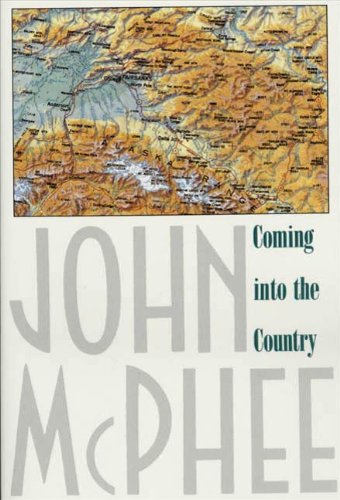
I first ran across McPhee’s work when I took a writing workshop back in the 90s from William Least Heat-Moon, the inspiring author of one of my all-time favorite books, Blue Highways. One of John McPhee’s books, Coming Into the Country, was required reading for the workshop. It’s about homesteaders in Alaska, back in the days when the Alaska government would give land to people in exchange for their agreement to homestead it. Boring, you say? Well, consider the story of the guy who drove an old school bus up there. When he got reasonably close to the land he had acquired as part of his homesteading agreement, he parked the school bus, took a cutting torch to it, and cut off the top. He then turned the former top upside down like an overturned turtle’s shell, and drove the school bus-turned-convertible onto it. Once there, he welded the two together, attached a long shaft with a propeller on one end to the drive shaft of the school bus, shoved his contraption into the river, started the engine, and motored a few hundred miles to his newly acquired homestead. See what I mean? Story. It’s everything.
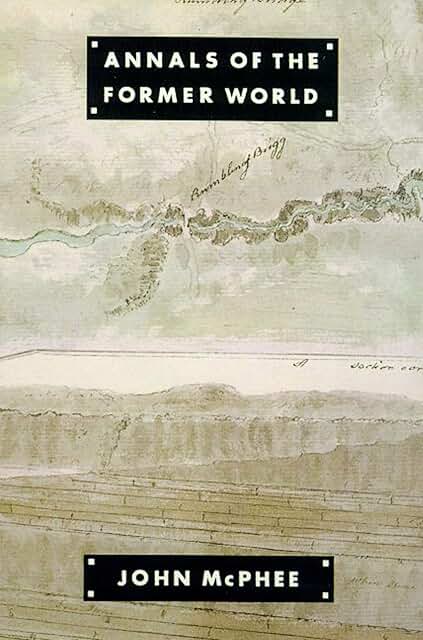
McPhee has written about a breathtaking range of topics. He wrote Annals of the Former World, in which he took a series of road trips across the United States with a geologist, looking at freeway roadcuts to understand the dynamic geology of North America, and in the process, writing a magnificent book about the geology of the continent. He wrote The Pine Barrens, the story of the great pine forests that cover most of southern New Jersey, and the people who live there. He wrote Uncommon Carriers, about the world of cargo carriers—all kinds—that form the basis of the global supply chain. He wrote Oranges, about the business of growing and selling them in Florida. He wrote Encounters with the Archdruid, about the interactions between conservationists and those they see as the enemy. And he wrote The Curve of Binding Energy, the story of Theodore Taylor, an early nuclear engineer who was also an anti-nuclear activist.
By the way, here’s a quote from Annals of the Former World that shows what kind of a writer McPhee is: “If by some fiat, I had to restrict all this writing to one sentence (and by the way, the book is two-and-a-half inches thick), this is the one I would choose: “The summit of Mount Everest is marine limestone.” Think about that.
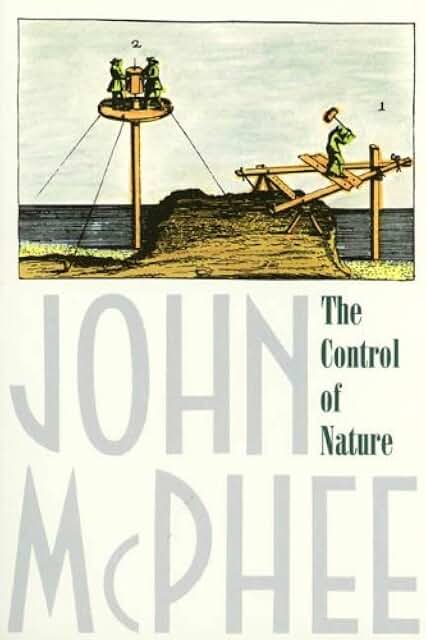
So far, John McPhee has written more than 30 books, and I’ve read them all. I can honestly say that each one has made me a measurably better writer and thinker. But the book that really stuck with me, more than of the others, is called The Control of Nature. That book has been in my head a lot lately as I watch what’s going on in California specifically with the damage caused by heavy rains and flooding, and in the country (or world in general), as climate change has its way with us.
The Control of Nature is divided into three sections: ‘Atchafalaya’; ‘Catching the Lava’; and ‘Los Angeles Against the Mountains’. Each section tells a story of human hubris, of our largely futile efforts to make nature do something that nature doesn’t want to do—like changing the direction of the Mississippi River, or trying to redirect lava flows in places like Hawaii and Iceland away from population centers (Iceland dumped cold water on one of their flows), or protecting Los Angeles infrastructure from damage caused by flooding by building flood canals, like the cement-bound LA River. How’s that working out?
Some of you may remember a quote that I toss out a lot. It’s from Loren Eiseley, another of my favorite writers. Back in the 60s, Loren said, “When man becomes greater than nature, nature, which created us, will respond.” Well, she’s responding. And one of the lessons we can choose to learn from her response is that this is not a time for head-to-head combat. I used to tell my SCUBA diving students that it doesn’t matter how strong a swimmer you are, or how good a diver you are, the ocean is always stronger. The ocean will win, every time. So don’t even try. Discretion is the better part of valor, and to ignore that fact can be fatal.
As I said, this is not a time for head-to-head combat. Nature vs. Humanity cannot be a boxing match, because the outcome is predetermined, whether we like it or not. News flash: We don’t win this one. This is more a time for martial arts, in which we use our opponent’s weight and strength to work in our favor. Nature is telling us what to do, every day. We just seem to have a problem listening. ‘You’re not the boss of me,’ we say. ‘No, actually, you have that backward,’ nature says. ‘Here—let me demonstrate.’
The other flaw in the logic is that we have this tendency to think in terms of ‘us vs. nature,’ of ‘humans vs. the natural world,’ when in fact, we’re as much a part of the natural world as blue whales and chickadees and earthworms and slime molds. We just don’t act like it. By viewing ourselves as something apart from nature, as something better than or superior to nature, we invoke Loren Eiseley again. Nature is responding to our abuse, to our attempt to dominate, and her response is swift, sure, and painful.
So, what’s the alternative? The alternative is to shift our thinking from ‘us vs. nature’ to ‘us as an integral part of nature.’ Nice words. But, what do they mean? How do they become real, or actionable, as people like to say in the business world?
The answer is simpler than most people realize, although it requires deliberate action. There’s that word again—deliberate. The answer isn’t one great, big thing, because if that were the case, nothing would ever change. Here’s an example for the techies. Think about it: What’s more powerful: a single mainframe computer, or hundreds of personal computers, or servers, networked together? The answer, of course, is the latter. Although instead of talking about computers here, we’re talking about one-person efforts on behalf of the environment of which we are a part, that, in aggregate, amount to enormously powerful results. The whole is greater than the sum of its parts. For example, if you live in a house, you probably have a yard, which means that you probably have grass, and shrubs, and trees, and flowering plants, and other things to make it look good. The problem is that most of those are non-native, which means that they’re not always good for local pollinators, like bees and moths and butterflies and even spiders, or other local wildlife. But if each of us were to set aside an area in the back corner of the yard the size of a typical walk-in closet, say, eight feet by ten feet, that’s eighty square feet that can be allowed to grow wild with local plants, which provide habitat, including food, for native pollinators. I guarantee that if you go down to your local nursery, or Audubon Center, you can buy a shaker bottle full of local plant seeds that you can take and shake over your designated area.
Here’s another one. We often use broad-spectrum insecticides to get rid of insect pests, which they do very well. But those nicotinoid-based compounds are indiscriminate—they also kill beneficial insects like bees, butterflies, moths, and spiders, and birds, and reptiles and amphibians, and potentially humans, if they leach into the water supply—and they do. So, why not switch to environmentally friendly compounds? They’re out there, and yes, they may cost a little bit more, but not enough to be a showstopper, especially when you consider the alternative. I don’t want to be yet another alarmist here—there’s more than enough of them already—but consider this: pollinators aren’t a nice-to-have thing. Bees, moths, butterflies, spiders, and even some birds move pollen from flower to flower, a process that’s required for the flower to give rise to fruit. No bees, no pollination. No pollination, no fertilization. no fertilization, no fruits or vegetables. So think twice, please, about using that insecticide.
Other things? There are lots of them. Buy soaps and detergents in bulk, and refill the same bottle over and over, to reduce plastic consumption. Buy one of those showerheads that allow you to turn down the water pressure to a warm trickle when you don’t need the full force of the blast. An efficient showerhead still puts out about two to two-and-a-half gallons of water per minute, which over the course of a year of showering can really add up, which means that any effort to conserve falls on the correct side of the environmental balance sheet. You don’t have to turn the shower off; just turn it down. It makes a huge difference.
What else? Set the thermostat in winter one degree cooler and buy a sweater or that cool hoodie you’ve been jonesing for. There’s your excuse! Think before you get in the car to run that errand. Are you close enough to walk instead? I do it every day, a few miles each way, and I feel so much better for it.
Another thing you can do is buy as much locally produced food as you can. I’m about to write a whole series of essays on the role that technology can play to help the environment, but just consider this. California can no longer feed the nation. They’ve depleted their deep-water aquifers to the point that the ground in the central valley is measurably sinking, and the drought is making it necessary for farmers to uproot fruit and nut trees and many crops, because of the great volumes of water they consume—water that’s no longer available, or if it is, it’s too salty to use. But even if California CAN ship produce across the country, we know that that takes its toll on the environment because of the trucks and planes required to do it, and freshness is a concern. We also know that there have been outbreaks of disease—salmonella and listeria—associated with large-scale farming.
Local produce, on the other hand, is much fresher, it tastes better, it’s safer, and it supports a local farmer. And yes, you’re probably going to pay a little more, but how much is your health worth?
I’m not channeling Chicken Little here. The sky isn’t falling, but it’s a lot lower than it used to be. And before the naysayers climb all over me, yes, I know that some of the current climate change effects we’re experiencing are happening as a matter of the natural course of things. But I also know, because the science proves it, that we’re doing a lot of things that are making it worse, things that, through minor but deliberate efforts, we could change without a whole lot of personal impact. But there’s that ‘deliberate’ word again—meaning, let’s stop talking, and wringing our hands, and putting the bumper sticker on the car that says ‘save the bees,’ or wearing the ‘May the Forest Be With You’ T-shirt. Those are all fine. But a bit more minimal effort combined with deliberate action would go a very long way.
In other episodes, and in my leadership workshops, I often talk about the danger and ineffectiveness of slogan leadership—you know, putting up those motivational posters that show a crew of people on a misty river at sunrise, in a rowing scull, with the word ‘teamwork’ across the bottom. Or a person standing on top of a mountain, arms raised in celebration, silhouetted against the sunset, with the word ‘commitment’ across the bottom of the poster. That’s slogan leadership, and while the pictures are pretty, it’s a form of responsibility abdication. So, let’s not abdicate—let’s do. It shows the other corners of the natural world that we’re willing to make an effort to play well with others, and it sends the right message to our kids and grandkids.
We can’t control nature, but we can harness her awesome power to help clean up our act, like a martial arts master does against a stronger opponent. As someone who spends an awful lot of time in the natural world, I’d much rather have nature as my ally than my enemy. It’s a choice. And it’s our move.
 Steven Shepard