I Just finished a terrific book called Following the Water by David Carroll. I’ve read all his books; he’s a New Hampshire-based naturalist who specializes in turtle ecology. That makes me smile, because there aren’t many animals that I like as much as turtles. Following the Water is a collection of reflections on his wanderings around the streams, ponds, forests and fields that surround his home.
I’ve spent most of my career in the technology domain, telecom mostly, so I’m very familiar with the acronyms and unique terminology that every field creates for itself. For example, I don’t play bridge, but I love to read the bridge column in the newspaper, just because I don’t have the foggiest idea what they’re talking about. Here’s an example:
In today’s deal the situation in three no-trump is complicated by South’s desire to keep West off-lead. Declarer will have seven top tricks once he has knocked out the heart ace, so must find two more tricks from somewhere. Fortunately, there are lots of extra chances: the spade finesse, an additional heart trick, and an extra club winner or more. The key, though, is for South to combine his chances in the right order.
Say what? The spade finesse and an additional heart trick? I have no clue what the author’s talking about, but reading the column is like watching a linguistic train wreck. I can’t stop myself.
So, it’s no surprise that Carroll’s book has its own words that address the needs of the aquatic ecologist. As he describes the place where water and land meet to create complex ecosystems that each produce their own unique collection of living things, he draws on a poetic collection of words to describe the hidden world that he’s devoted so much of his life to. What is so interesting to me is that as I read his book, one mysterious word leads to another, causing me to spend way too much time in the dictionary.
As we follow Carroll through a dense tangle of willows, he describes it as a carr. A carr, it seems, is a bog or a fen, where willow scrub has become well-established. That, of course, sent me back to the dictionary in search of bogs and fens (by the way, this was almost as much fun as actually getting muddy). A fen, it turns out, is one of six recognized types of wetland and one of two types of mire. The other is a bog. Fens tend to have neutral or alkaline waters, whereas bogs are acidic. A mire, by the way, sometimes called a quagmire, is the same as a peatland. Peatlands can be dry, but mires are always wet. Mires, by the way, are the same as a swamp, except that mires tend to be colonized by mosses and grasses, while swamps usually have a forest canopy over them.
Carroll also spends a lot of time describing vernal pools and the creatures that spawn in them. I love that term, vernal; it conjures something mysterious for me, a place of unknown creatures that rise from the depths at night. Think Dr. Seuss’ McElligot’s Pool. Anyway, vernal pools are temporary pools that provide habitat for specific species, although not fish. They tend to be temporary, and are often teeming with things like tadpoles, water striders and whirligig beetles. They’re called ‘vernal’ because they’re at their deepest in the spring (the word comes from the Latin, vernalis, the word for that season), and they’re typically found in low spots or depressions in grassland habitats.
Another word that comes up a lot is riparian. Riparian describes the transition zone that lies between the land and a river or stream that runs through it. Riparian areas are important, because they filter and purify water that runs off the land and enters the waterway. A biome, by the way, is a community of plants, animals or microorganisms that inhabit a particular climatic or geographic zone. So, a riverbank would be a riparian biome.
And what about the wetlands that Carroll refers to throughout the book? Well, a wetland is an area that’s eternally saturated with water, like the Everglades. They’re standalone environments, but they can also include swamps, marshes, bogs, mangroves, carrs, pocosins [puh-CO-sin], and varzea [VAR-zea].
By the way, because you’re dying to know, a pocosin is a palustrine [PAL-e-streen] wetland with deep, acidic peat soils, sometimes called a shrub bog. Palustrine, incidentally, comes from the Latin word palus, which means swamp. Palustrine environments include marshes, swamps, bogs, fens, tundra, and flood plains.
And since we mentioned it, a varzea is a seasonally-flooded woodland specific to Brazil’s Amazon rain forest. A marsh is a wetland dominated by herbaceous rather than woody plants – grasses, rushes and reeds, instead of shrubs and trees. It’s also a transition zone that’s marinated in stagnant, nutrient-rich water. By the way, swamps, like the Everglades, move water across their surfaces, while mires move water below the surface. Marsh plants tend to be submerged; mire plants are not.
Fens, swamps, mires and bogs: who would have thought there was so much diversity at the water’s edge.
(If you’d prefer to listen to the Podcast version of this essay, with some wonderful embedded natural sounds, please go here).
I begin with a definition of biodiversity.
Biodiversity measures the variety of life on Earth, including the richness of species, the genetic variation required for hybrid vigor, and the breathtaking variety of unique ecosystems. Biodiversity also includes the interactions between living things to create a self-sustaining, biologically balanced, healthy world. It’s why we have paramecia and pangolins, elephants and echidnas, orchids and owls, wheat and whales.
It doesn’t take much to get a sense of the extent of this biodiversity, especially in the warmer months. It’s literally everywhere. Get up early one morning, the hour before dawn, and go for a walk in the woods, or in the tall grasslands down the road, or across a dewy meadow, or along a stream. Find a place to sit. Be patient, and just listen to the dawn chorus. Or, do the same, but in the late evening. Walk near a marsh, or a lake, or a pond, find a place to sit, and listen to the evening chorus. The experience will feet you deeply, if you allow it to.
Biologists, especially ecologists, monitor biodiversity in various ways. Some monitoring is for academic reasons, the never-ending quest of science to know, to understand.
Others monitor biodiversity, looking for places where we overstep, human canaries in the coal mine who speak out against chemical dumping, improper disposal of toxins, the hazard of forest clearcutting, greenhouse gas emissions, fertilizer runoff, and a hundred other ecological crimes against the planet and its inhabitants—including ourselves.
Dr. Barry Commoner
Sometimes, the decision-makers who pay attention to these environmental watchdogs listen and act. DDT and other chemicals were effectively banned after Rachel Carson published Silent Spring in 1962. Barry Commoner, the father of the modern ecology movement, made the world pause when he published his four ecological laws: Everything is connected to everything else; Everything must go somewhere; Nature knows best; and There is no such thing as a free lunch. You know, those are so important that they’re worth repeating. Everything is connected to everything else; Everything must go somewhere; Nature knows best; and There is no such thing as a free lunch.
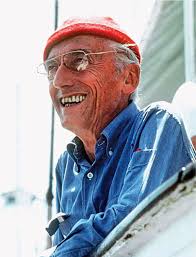
Others, like Jacques Cousteau, Sylvia Earle, David Attenborough, EO Wilson, and Loren Eiseley, combine passion and logic, visual storytelling and compelling truths, to motivate us to be more thoughtful and responsible stewards. Even young people can be ecological heroes: Greta Thunberg brought a human and humane face to the impending climate change crisis. And while all of these efforts had impact, and often brought about changes in human behavior, hubris is a powerful motivator.
Jacques Cousteau
In the interest of growth-related profit, great swaths of enormously biodiverse landscapes—the Tallgrass Prairie, California’s San Joaquin Valley, the rolling hills of Washington’s Palouse—are cleared to make way for the short-term potential of mono-crops, such as palm oil, soy, wheat, corn, cotton, and sugar cane. The downside of this practice has been known since the early 20th century. When Henry Ford established Fordlandia, for example, his ill-fated American city deep in the Brazilian Amazon, he cleared the tropical forest to make way for the rubber trees he needed to produce latex for rubber tires. He planted the trees in ruler-straight rows, which quickly succumbed to infestations of pests in the now vulnerable, concentrated grid of trees. The hybrid vigor of the forest, the physiological firewall that originally protected everything in the biosphere, was gone, and as I described in an earlier program, not a single drop of rubber from the venture ever made its way onto a Ford automobile. Hubris.
Before the advent of modern farming techniques, there was no need for pesticides, or soil additives, or extensive crop watering infrastructure, or fertilizers, because nature took care of that for herself. But when mono-crop agriculture became the norm, it suddenly became necessary to force the land to produce. Gone was the elegant natural system that took care of itself; it was replaced by a system based on brute force. Man against nature, nature as the enemy, an enemy within which we are an integral part. Oops.
When the natural botanical ecosystem is disrupted or destroyed—forest, jungle, grassland, prairie, chaparral, seashore—the animal life that’s intertwined with the botanical diversity of the environment is equally disrupted. Everything from bacteria that help to keep the soil healthy to the largest mammals at the top of the food chain suddenly find themselves imperiled by the abrupt loss of habitat, their support framework, their life.
If you’re having trouble imagining or believing this scenario, let me offer an analogy of the human sort. Every morning, you wake up in your comfortable bed, in the warmth and safety of your home. You wash up in your well-appointed bathroom, then head down to your well-equipped kitchen where you brew a nice cup of designer coffee and prepare a hearty breakfast to keep you well-nourished until your next meal, which will happen sometime around midday, in a restaurant of your choosing.
But one morning, you wake up and find yourself inexplicably lying on the leeward side of a great sand dune, 120 feet high. Dazed, confused, sweating profusely in the growing heat of the morning, you stand up and trek to the top of the dune, where you see nothing but more dunes, marching off into the haze of distance in all directions. No home, no bedroom, no kitchen, no coffee shop, no grocery store, no pharmacy, no doctor—just sand dunes, sun, and the occasional tuft of silica-rich and entirely inedible desert grass. Welcome to your new home. Suck it up and make it work—or, more likely, don’t.
The naturally biodiverse web of life works because it has evolved over the eons as a balanced system, organically able to change and adapt as required, weaving and dodging to overcome the challenges of the biological lottery. Some individuals win; some lose. But the system survives, and each time it emerges stronger and more resilient, for having run the gauntlet.
I’m telling you this story because biodiversity matters—not just to the scientific community, but to literally every living thing on this planet. Changes in the biodiversity of an ecosystem, changes that are all-too-often caused by humans, are equally all-too-often invisible to us. On June 22nd, 1969, the Cuyahoga River in Cleveland, Ohio caught fire. You heard that correctly: the river caught fire, shooting flames five stories into the sky. You’d think that a large river flowing through a major American city that was so polluted with industrial chemicals that a flare fired from a passing train ignited it, might have caused somebody to notice. The smell alone, never mind the lack of aquatic life, should have been a glaring clue. Nope. Sometimes we choose not to notice what’s right in front of us; other times we can’t notice, because we’re looking at the problem with the wrong set of senses.
Here’s an example. In the late 1980s, sound ecologist Bernie Krause recorded the rich and varied soundscape of an idyllic place in California called Lincoln Meadow. The air was filled with the joyous cacophony of birdsong. He recorded there for several consecutive years, always in the same place with the same gear.
At one point, a logging company negotiated an agreement to “selectively log” the forest at Lincoln Meadow—meaning, only remove some of the trees. Krause continued to record, during and for several years after the logging.
To the visual observer, nothing changed. The selective removal of some trees made no difference in the look of the forest. But the sound? It went from being sonically raucous and alive to sonically moribund. It went from the joyous voices of a diverse community to what I can only call the singular voice of loneliness. A comparison of the before and after soundscapes is one of the saddest things I’ve ever heard.
One of the saddest things I’ve ever heard. What an important word that is—Heard. After being selectively logged, the forest at Lincoln Meadow looked, smelled and felt the same. The resin-scented old growth air tasted exactly the same as it tasted before being logged. But it sounded different. Something about the biodiversity of the place had changed, something existentially important. But the only way to tell was through sound—or perhaps better said, the lack of it.
It would be easy to brush off Krause’s findings as anecdotal or coincidental. “The birds were having a bad morning when he recorded after the area was logged, so they weren’t singing that day.” Sure—except that he recorded in exactly the same place, using the same setup, year after year, always with the same melancholy result. The logging affected the biosphere, whether the impact was visible or not. Voices had disappeared, because species had disappeared. Bioacoustically, Lincoln Meadows was now a different place.
The use of sound as an indicator of ecosystem health—what we call bioacoustics—is not new, but it’s only in the last decade or so that it has become widely accepted as a scientifically reliable indicator. Dr. Krause’s work is one example, but there are others. During the 1960s, Roger Payne did seminal work on echolocation using bats, moths, and owls as his test subjects. He isn’t known very well for that work, but he IS known for his work with whales—specifically his study of the songs of the humpback whale, which resulted in the release of a massively popular album in 1970 and the beginnings of the global anti-whaling movement.
Jack Greenhalgh, whom I interviewed earlier on The Natural Curiosity Project, has done extensive work on the health and restoration of freshwater ponds, using non-invasive sound monitoring to create successful ecological recovery strategies.
My friend Dick Todd, based in rural Illinois, records the seasonal changes in the sounds of freshwater lakes, ponds and rivers to track the health of local insect species.
Sound Ecologist Gordon Hempton, who calls himself The Sound Tracker, has dedicated his career—no, make that his life—to the preservation of naturally quiet places around the world, places that are free of human-generated sound. Gordon defines a quiet place as a location where it’s possible to sit for a minimum of 15 minutes without hearing any human-generated noise. In the middle of the 20th century, there were thousands of these quiet places in the United States; today, there are 12. Noise matters. It pollutes the environment as much as chemical runoff does. When wildlife can’t vocalize or stridulate effectively because they’re drowned out by human-made noise, they can’t call to each other, they can’t find mates, they can’t locate prey, and they can’t hear predators approaching.
In the southern hemisphere, where reefs are dying because of warming oceans brought about by a changing climate, researchers have come upon a remarkable discovery that they hope will help them save at least some of the planet’s reef ecosystems.
When the coral polyps and other reef-based species reproduce, they eject clouds of eggs and sperm, which combine to create vast numbers of tiny larvae. The larvae drift randomly in the water column, eventually settling down and establishing themselves as new colonies on or near the living reef.
But, there’s a problem. As the oceans warm, the mature reef polyps die. But they are important links in the food chain, because as they filter nourishment out of the water column with their feather-like gills, they also provide food for organisms like parrotfish, sea snails, and sea stars. So when the polyps die, the reef-dwelling animals that depend on them for food die off as well—or they leave. That includes parrotfish and snapping shrimp, animals that create the voice of a healthy coral reef. And when they depart, the reef … goes … silent.
But researchers wanted to test a wild hypothesis: what if those free-swimming, embryonic coral polyps don’t just wander randomly in the current? What if there is something invisible that guides them, in the same way that the electromagnetic lines of force that girdle the planet help birds and monarch butterflies and countless other species complete their semi-annual migratory journeys of thousands of miles?
For years, researchers have believed that sound plays a key role in maintaining reef health, but they had no way to prove it. But the dying reefs gave them the perfect opportunity to test their theory. They installed waterproof speakers on silent, dying reefs. Then, they played the sounds of a healthy reef through the speakers: the crunching of parrotfish jaws against coral, the frying bacon sound of thousands of snapping shrimp, the low-frequency crunching and scraping of sea stars, the distant sounds of whales. And here’s what they saw: those free-floating little larvae took notice, and deliberately followed the sound back to the reef and began to establish themselves as permanent residents in large numbers. Life returned, because of sound.
Now, before you say anything, yes, the warming waters may yet kill off the reef polyps, especially those that establish themselves in the shallower, warmer water near the top of the reef. But the polyps that settle in the cooler, deeper water may well survive. Time will tell.
The point is that sound, as an indicator and catalyst of biodiversity, is as valid a measure as any other, and may well prove to be more important than some. It’s a passive, non-invasive technique that can be carried on for long periods, providing researchers with trend data that can be used in concert with other insights to provide a richer, more meaningful, more nuanced understanding of the cause and effect criteria that affect biodiverse environments.
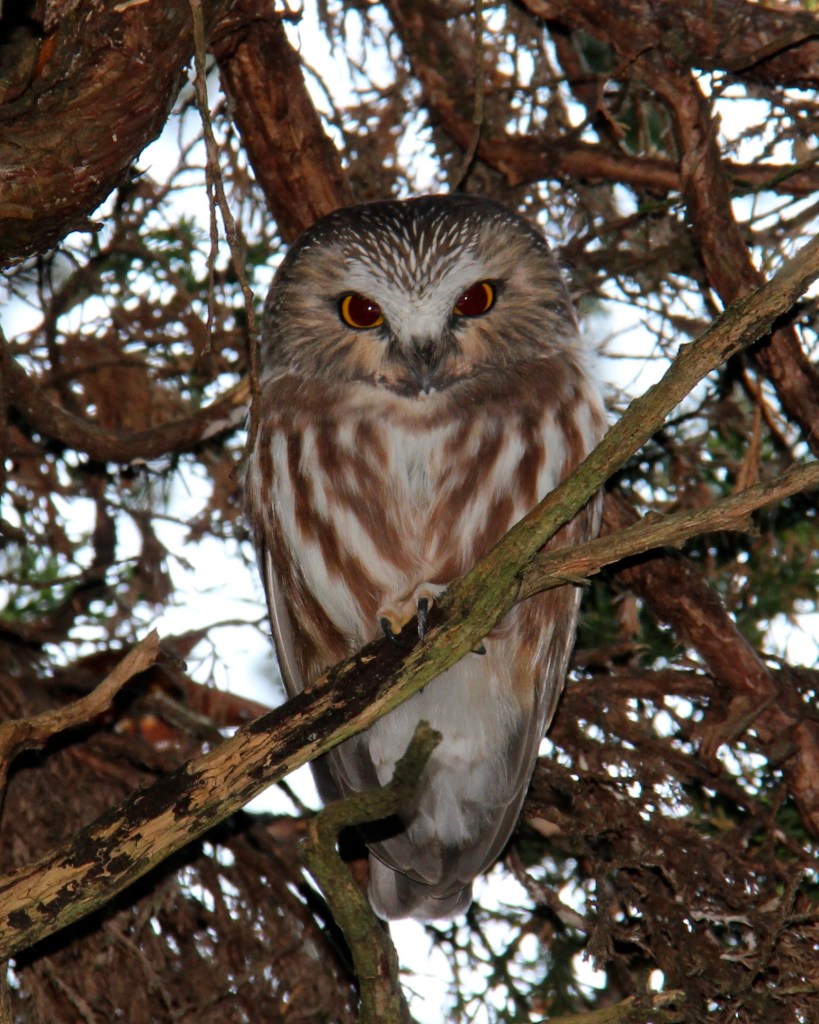
So, here’s my request to you, the listener. Consider this your homework assignment. Go outside and listen, and be deliberate about it. Go for a walk, and don’t just passively hear—really, really listen. You’ll soon become aware of how diverse the sounds are, when they happen, why they happen, who’s making them, and where. You’ll begin to understand the interactions among the animals making the sounds, and what those interactions mean. You’ll start to become a true practitioner of fieldcraft. When you see an entire flotilla of water birds suddenly lift off the lake as one, calling loudly and chaotically, you’ll automatically look straight up, because there will undoubtedly be a raptor—an eagle, an osprey, a peregrine, flying overhead, looking for a meal. You’ll see a flock of chickadees incessantly and aggressively flying in and out of a pine tree, caterwauling as only chickadees can, and you’ll know that there is almost certainly a northern saw-whet owl, the sworn enemy of the chickadee, sitting quietly on a branch of that tree.
But more than anything, you’ll find yourself filled with a growing sense of awe, wonder, and appreciation for this amazing thing that we call biodiversity—and, if you’re like most of us who take the time to listen to nature’s voice, you’ll become a sworn protector of it.
Welcome to membership in the most important club on Earth.
If we can believe the work of the UN Environment Programme—and I do—we are in the middle of the next great extinction on Earth. According to their global research, 200 species go extinct on this planet every 24 hours. But anyone who has studied biology knows that species naturally die out if they can’t stand the heat in the genetic kitchen—that’s what Darwin was talking about when he wrote that ‘it is not the strongest of the species that survives, nor the most intelligent that survives. It is the one that is the most adaptable to change.’
So, yeah—species die out—it’s part of the natural selection process. But here’s what bothers me. 200 species every 24 hours is about a thousand times the rate at which species naturally disappear from the planet because they get kicked off of gene pool island. The biologists who study this phenomenon say that this disappearance rate is faster than anything we’ve seen since the dinosaurs disappeared, 65 million years ago. And we, humans, are playing a big role in their loss.
According to the latest estimates, there are around 8.7 million species on Earth. And even though 70% of the planet is covered by water, the majority of species live on land—about three-quarters of them. In fact, 86% of the plants and 91% of the animals on Earth haven’t even been named yet—which is ironic, since it appears that many will disappear before we even get to know them.
So, let’s face it. We’ve all grown weary of the dire reports about some kind of biological Armageddon headed our way. Every day, it seems, it’s something else. Global warming that leads to melting icecaps, which will raise sea levels enough to drown coastal cities. The loss of the planet’s “lungs” as farmers cut down the equatorial rainforest to make room for more palm oil plantations, resulting in more carbon dioxide buildup in the atmosphere, stronger greenhouse gas effects, and even warmer climate. The imminent extinction of alpha species like rhinos, elephants, orangutans, and codfish, because of human ignorance and greed. The potential loss of natural medicines as the planet’s herbal base dies off. The point is, the list goes on and on, and it distresses me. But I have to keep reminding myself to not let the warning fade into the background, just another droning non-message.
In my heart of hearts, I am, and always will be, a biologist and a naturalist. I share this planet with a boatload of other creatures, and while we humans may occupy the apex position on the Earth’s pyramid of life, the top of that pyramid doesn’t have much room—that tip is pretty narrow, which means it wouldn’t take much to shrug us off. E.O. Wilson, the famous biologist and one of my personal heroes, once remarked that if all the insects on earth were to disappear, all life on the planet would end within 50 years. On the other hand, if all the humans disappeared, within fifty years, all life would flourish, and we wouldn’t even be a footnote in the grand scheme of things.
There’s nothing special about us. Four billion years ago, the universe did a little experiment. It combined a few elements—nitrogen, sulfur, phosphorus, carbon, hydrogen—and then zapped them with lightning. Those elements shook it off, joined forces with their neighbors, and by pure random accident, grouped themselves into complex molecules that ultimately became what we now know as amino acids. Those amino acids went on to meet new neighbors, and somewhere along the way they found themselves in a complex biochemical dance that yielded even more interesting things, like nucleic acids, the basis of biological life. From that primordial soup came tiny microbial creatures, and over time, those little creatures metamorphosed and evolved in billions of different directions, some of which led down a long and winding road of biological diversity, while others dead-ended—game over, dude. We humans are among the lucky few.
So, there’s nothing special about us, or kangaroo rats, or elephant shrews, or freshwater jellyfish, or that paramecium that enchanted you the first time you saw it moving around in a drop of pond water under a microscope. But what IS special is the Nine Million Club, an organization that has the most stringent, unyielding membership requirements in the known universe.
Let me explain. Every creature that’s alive today ran the evolutionary gauntlet, accepted the biological challenge, agreed to run the great genetic race—and, unlike billions of others, made it to the finish line. Each one is the result of that great experiment that the universe ran four billion years ago, an experiment that yielded some really interesting results. Consider this: The organisms living on Earth today have one thing in common: they are all, without exception, the best problem-solvers that have ever existed. Faced with the greatest test imaginable, their very survival, they accepted the challenge, and they beat it. For that, they were allowed to live, like Katniss in the Hunger Games. Five billion applied to the club; nine million were granted membership.
Every time a species goes dark, we lose hundreds of thousands, if not millions, of years of experimentation and problem-solving. I think that should count for something, and I think we should do everything in our power to keep the lights on for the other species that made it this far. The interspecies dependencies on this planet are extraordinary, and we humans are one of not quite nine million card-carrying members of the Club. I can accept the fact that species occasionally get booted off the planet because they just can’t hack it anymore. I’d just rather not be one of them. A few simple acts on our part, driven by curiosity and education and awareness, might allow us to keep calling the planet home. It is, after all, a pretty cool club to belong to. But keep this in mind: membership is revocable at any time.






 Steven Shepard