Mexico is rich with mysterious tradition, a culture where magic and mysticism are as present as Catholicism and the lingering Aztec voices that are woven into the wind. Just to the south of Mexico City lies Xochimilco, the Venice of Mexico, a town gridded with more than 100 miles of lushly overgrown canals, heavily trafficked by colorful barges called trajineras that are filled with families celebrating birthdays, quinceañeras, or just the fact that it’s the weekend. Floating food vendors approach the barges to sell tamales, roasted corn, chalupas and barbacoa; music and laughter are everywhere.
The canals in Xochimilco are all that remain of an extensive, pre-Hispanic transportation and agriculture system built by the Aztecs and earlier civilizations to create farmland in the shallows of Lake Xochimilco. Xochimilco was one of five interconnected lakes in the Valley of Mexico, the site of present-day Mexico City and the original Aztec capital, Tenochtitlan. The network of canals that interconnected the lakes allowed the Aztecs to thrive in these wetlands. They contained vast artificial islands called chinampas, on which food was grown for the Tenochtitlan empire.
The Aztecs built the islands by packing mud, silt, and reeds into a dense organic mass, which created a sustainable, water-rich environment for growing an impressive array of crops: corn, beans and squash—the Aztec “three sisters”—along with tomatoes, avocados, greens, a variety of chiles, the ancient grain known as amaranth, and flowers.
I’m on one of these trajineras, in the middle of a maze of canals, with my friend, Fernando Toledo. The place has a party atmosphere, with competing yet strangely complementary music playing on radios and boom boxes on many of the barges. Laughter and chatter are everywhere, and vendors in small boats approach constantly to sell food and drink and fresh flowers.
As our boat driver slowly propels us down the canal with the long oar he uses to guide us, we pass an aspect of Xochimilco that doesn’t evoke laughter. It’s a small island, one of many that lie between the canals. It’s heavily forested, and it’s called La Isla de las Muñecas: the Island of the Dolls.
The trunks of the trees that festoon the island are covered with dolls—hundreds and hundreds of them. They’re not all intact; in some cases there are heads or severed limbs nailed to a tree. Most have been there long enough that the elements have varnished them with a patina of age, which has in turn made them look disturbingly real. And if the hair on the back of my neck is any indication, the place is crawling with spirits. Local lore maintains that the eyes of the dolls follow visitors, and that their limbs move. Many claim that the dolls whisper to each other, and that after dark you can hear their voices, mingling with the whispers of long-passed Aztec warriors.
Screenshot
As we approach the island, the voices on the boats fall to whispers; the Mariachi and pop music that had been playing disappears.
No one knows the real story behind the dolls on the island, but they coalesce around a young girl who drowned nearby under mysterious circumstances in the mid-1950s. Don Julian Santana Barrera, the island’s caretaker, found her body, and not long afterward found a doll floating in the canal where her body had been. He assumed that the doll belonged to the little girl, and to honor her memory he recovered it and attached it to a tree.
According to local legend, Santana-Barrera was haunted by the spirit of the little girl, so to appease her, he began to hang other dolls on the trees of his island. He did this for fifty years, until one day he was found drowned in the same place where he had recovered the body of the little girl.
Mysticism and magic deeply permeate Mexican culture, creating a blend of Indigenous spiritual beliefs, descended from the Aztec and Maya, with the relatively new teachings of Catholicism, introduced by Spain during its conquest of the New World.
This weaving together of vastly different beliefs is called Syncretism, the blending of ancient cosmology and nature worship descended from the Maya and Aztecs with the worship of Catholic saints and Christian rituals. Also integrated into the spiritual pattern is a deep respect for native plants and spirits as sources of wisdom and power, both of which were central to Aztec and Mayan heritage.
Another element is the application of spiritual medicine using herbs, prayer, and rituals to heal physical, mental, and spiritual disease, practices that often involve shamans. Equally common is the use of amulets, such as wearing red strings to avoid the evil eye—or God’s eye, as it’s sometimes called.
Then there’s the annual Day of the Dead,where the line between life and death is blurred, a day when the spirits of the dead are welcomed, a practice rooted in ancient Aztec and Mayan beliefs about the afterlife.
Here’s the thing: mysticism and magic don’t lie at the fringes of Mexico’s cultural heritage; they’re foundations of national cultural identity that dominate the nation’s world view, accepted healing practices, and the daily rituals and celebrations that connect people to their ancestral past.
As we drift beyond the Island of the Dolls, the revelry once again picks up; the music and chatter return, and the vendors go back to hawking their wares. As the island receded into the distance, I thought about the inscription that’s engraved into the lintel above the entrance to Mexico City’s famed Archaeological Museum:
When darkness still reigned, when day had not yet been created,
When light did not yet exist, they came together.
The gods came together, in Teotihuacán.
Teotihuacán, the ancient city of pyramids near Mexico City, and Tenochtitlan, the ancient Aztec empire upon which Mexico City was built, are equally important in the nation’s heritage. These beliefs of ancient cultures are deeply embedded in the culture of Mexico—and not just Mexico, but all of Latin America. The magic and mysticism that underlie the national culture is reflected in its literature: whether it’s Laura Esquivel’s “Like Water for Chocolate,” or Amado Nervo’s “The Giver of Souls,” or Silvia Moreno-Garcia’s “Certain Dark Things,” the magic and the mysticism flow and braid together into a rich, unforgettable literature that binds the past to the present. Sometimes, the magic is so breathtaking and so real that it lifts and carries the reader away; sometimes it’s as dark as the story behind the Island of Dolls. I’ve experienced both in my travels in that country.
Many years ago, my friend Gary Kessler and I were in Mexico City to speak at a telecom industry conference. During a down day, we took the bus and headed out to Teotihuacán to see the pyramids. At one point we stopped at an overlook that looked down on the Aztec ‘a tlachtli,’ the ball field where winners and losers were venerated but losers were also sacrificed. We stood there for several minutes, lost in our own thoughts. Then, we both said in unison, “I can feel the ghosts here.” We moved on.
Few places have affected me as much as Mexico: whether it’s the hair-raising feeling of the Island of the Dolls in Xochimilco, or the place where the gods came together, in Teotihuacán.
If you’d prefer to listen to this as an audio essay at The Natural Curiosity Project, please click here.
I want to start this new year with a question.
Do the actions of a single individual matter?
If you subscribe to the fundamental tenets of negativism, pessimism, resignation, and snark, the answer to that question is decidedly ‘no.’ But let’s reconsider that.
I’m Steve Shepard with the NCP. Welcome. As a university undergrad, I studied two completely unrelated fields, Spanish and marine biology. Both were equally important to me, and both appealed to me as possible career vectors, in spite of the fact that I had no idea what I wanted to with the rest of my life. I graduated, wandered a bit, became a certified SCUBA diver, then a certified SCUBA instructor, then an owner in a diving business in the San Francisco Bay Area.
After five years of full-time diving I switched gears, married Sabine, joined the telecom industry, and had kids. I stayed with the telephone company for eleven years, then left California to join a Vermont-based consulting firm for ten years. I left them in 2000 to start my own company, where I wrote books, taught technology programs, delivered keynotes, wrote, directed and produced audio and video programs, and traveled nonstop to more than 100 countries over the course of 25 years, at which point, with the urging of the COVID lockdown, I decided to retire, having accumulated four million miles on United and a million points each with Marriott and Hilton. It was time.
To restate the obvious, I studied Spanish and biology in school, but spent my career in the world of bit-weenies and propellerheads. The funny thing is that my Spanish studies served me extremely well during my career, making it possible for me to write and teach technical training programs and deliver keynotes all over the world in Spanish. And marine biology? I never stopped diving, and I stayed connected to my biology roots. In my mind, that world is never far away.
I continue to write; I just published my 106th book, and my Podcast, The Natural Curiosity Project, just hit 300 episodes.
My newest novel, “The Sound of Life,” is a sequel to my first novel, “Inca Gold, Spanish Blood,” which was released in 2016. That first book centered around the search for a priceless treasure, and bounced back and forth between the 16th century and modern day. “The Sound of Life” builds on that, but as I worked the story arc, my passion for marine biology began to heat up again, and combined with my work as a wildlife sound recordist and my interest in bioacoustics, the story hit me like a lightning bolt. I’m proud of the book, and I think you’ll enjoy it. But, you’d be right to ask me a question right about now: What does all this have to do with the question I asked at the beginning of this essay: Do the actions of a single individual matter? Yes—they absolutely do. From my own personal experience, they matter immensely.
We’ve all had heroes in our lives. I’m not talking about the kind that appeared between the covers of DC and Marvel comics when we were kids, or who have made it onto the big screen today. I’m talking about real people, who did real things, and who, in the process, created real change by flipping the status quo on its complacent head. I’m talking about people like Rosa Parks. Jane Goodall. David Attenborough. Greta Thunberg. Barack Obama. Want more? Sure. Jacques Cousteau. James Cameron. Malala Yousafzai. Taylor Swift. The unknown man who stood in front of the tank in Tiananmen Square in 1989 with a grocery bag in his arms. The person who tore the first stone out of the Berlin Wall that same year.
These are the individuals who come to mind for me, people who inspired me to be more, to do more, to demand more, to think beyond the confines of my own mind, to be there for others, to be less selfish, to believe that every kind act is repaid a hundred times over. Each of those individuals changed my own life as well as the lives of thousands of other people. But let’s be clear about one thing. None of them—not a single one—created change by telling us what to do. They created change by showing us what to do. They shared their beliefs and motivated change through their own actions, not by waving signs and hanging banners. They led the charge. They led. They were leaders. They demonstrated what leadership is supposed to look like.
Here’s a quote for you that I love:
“Recognize that every out-front maneuver you make is going to be lonely and a little bit frightening. If you’re entirely comfortable, you’re not far enough ahead to do any good. That warm sense of everything going well is nothing more than the body temperature at the center of the herd.”
You can’t lead from the center of the herd, which is why I learned the power of righteous indignation, not by looking it up in the dictionary or reading about it, but through the bravery of Rosa Parks and other people like her. It’s why I became an ardent conservationist and environmentalist, not because it was trendy, but because Jacques Cousteau, Jane Goodall, David Attenborough, Greta Thunberg, and many others like them showed me what we stood to lose if I and others like me didn’t take a stand. I became a wildlife sound recordist and a passionate advocate for wild places and the creatures that live there because Bernie Krause, Gordon Hempton, Melissa Pons and other recordists showed me how impoverished the planet would be if the voices of the natural world were to be silenced forever. I don’t ever want my grandchildren to ask me what a magpie sounded like. Or a tree frog. Or a humpback whale. The past tense has no place here.
And writing? My writing gets better every time I read a book. I learned long ago that skilled authors wield a power that I call lexemancy, the singular magic of language. In a well-written book, authors turn lead into gold, transmuting ideas into words, and words into breathtaking, inspiring experiences for those who read them.
Each of these people, these individuals, have inspired others. When they started, no one knew who Rosa Parks or Greta Thunberg were. Cousteau was an officer in the French Navy with a passion for the sea; Attenborough was a radio broadcaster; and Jane Goodall was a wet-behind-the-ears anthropology novice who took a chance and followed a passion. And just look what their individual passions and advocacy have accomplished—individuals all.
So: Do the actions of a single individual matter? Yes, they do. In fact, the actions of a single individual are the ONLY thing that matters.
Do your actions matter? More than you will ever know.
BEFORE I TELL YOU WHY you should read my new novel, The Sound of Life, please read this:
CONGRATULATIONSON THE BOOK YOU’RE ABOUT TO WRITE!
To ensure that your book gets maximum visibility in the marketplace, please select from each of the following categories before you begin your manuscript. When you have made your selections, please feed them into the AI engine of your choice and direct it to write a book synopsis using the terms you have chosen. Once you have your synopsis,you may begin your manuscript, using the synopsis as your guide.
Note: Every chapter MUST reflect each category and MUST use the terms you choose (see final category, below) at least once.
Basic Story Themes (Select One)
Evil despot in shady country intent on taking over the world
Mysterious global cabal intent on taking over the world (must involve banking or healthcare)
Climate change or deadly, unpredictable weather
Evil aliens arrive from Procyon Alpha with suspicious intent
Religious/political/academic/corporate zealot with a dirty bomb
Upgraded (v2.0) Religious/political/academic/corporate zealot with a stolen nuclear weapon
Upgraded (v3.0) Religious/political/academic/corporate zealot with a stolen biological agent
Deadly virus/bacterium deliberately released from a lab
Deadly virus/bacterium accidentally released from a lab
Deadly virus/bacterium inadvertently released from an ancient tomb
Hordes of zombies that inexplicably outnumber the planet’s population by a factor of six
Main Bad Actor (Select No More Than Two)
Evil despot
Global cabal
Zealot
Virus
Bacterium
Weather
Soulless aliens
Out-of-control AI
Mindless super-soldiers operated by out-of-control AI (or brain worms)
Zombies
Pissed-off animals with brain worms
Main Hero (Select One)
Regular guy with no particular skills who must save the world/galaxy/universe
Regular woman with no particular skills who must save the world/galaxy/universe
Regular guy or woman whose husband/wife/boyfriend/girlfriend/dog/child gets kidnapped
Grizzled, world-weary veteran who has seen it all, with chip on shoulder
Grizzled, world-weary veteran who has seen it all, with dog
Grizzled, world-weary veteran who has seen it all, with chip on shoulder and dog
Child prodigy
Child prodigy with special powers
Hero’s Main Weakness (Select as Many As Required)
Man/woman left them
War scarred them for life/PTSD
Dog died
Drug/alcohol dependency
Couldn’t save buddy
Gun shy because of that thing that happened that they can’t/won’t talk about
Innocent but blamed for the crime they didn’t commit (usually pursued by many people from a wide range of military and paramilitary groups)
Main Hero’s Sidekick (Select One)
Dog
Short round guy whose main weapon is humor and wisecracks (must be loyal)
Very large guy with extreme weapons knowledge
World-class hacker who can get into any system in the solar system in 11 seconds or less
Super-tough, smart woman
Former convict who “knows the ropes”
Android
Robot
Imaginary or dead friend
Required Descriptive Terms (Select One From Each Sub-Category)
[Unspeakable] +
[horror, evil, madness, assassination, murder, ancient scroll, ancient seal, ancient tomb, act, deadly, anger, rage, or outcome] +
[collapse, fall, revolution, terror in the streets, lawless, undead, maniac, bloodshed, bodies, or terrorism] +
[superhuman, soldier, detective, officer, firefighter, Navy SEAL, Army Ranger, tracker, doctor, paramedic, archaeologist, mercenary, or veteran] +
EVERY DAY I GET BOOK RECOMMENDATIONS in email from various sources. They always begin with “We think you’ll like this,” or “For readers of…,” followed by a well-known author’s name. Sometimes there’s a winner, but increasingly, my eyes glaze over as I read the descriptions. It’s as if they all used the template I created above to design their story arc.
Look: I read everything, and I mean everything. I average around 125 books per year, and they’re drawn from almost every genre out there. I read them all because I enjoy them, and because the variety makes me a better writer.
So: why should you read The Sound of Life? Well, a couple of reasons. First, you should know that if I had used that checklist I showed you earlier to develop the story, I would have had to add a final category in each bullet list that says None of the above. I don’t have evil cabals, slimy despots, deadly germs, evil politicians, or horrifically corrupt business leaders in this book. What I have is a group of good people who prove that hard work, kindness, serendipity, loyalty, and trust can lead to good things when facing adversity.
The truth is, that’s what our world is really like. Good things do happen to good people. Do my characters face challenges? Absolutely! Are there hair-raising moments? Of course! But none of them pose an existential planetary threat that can only be stopped by an overtired elementary school teacher with a pet iguana, falsely accused of an improper relationship with a student (the teacher, not the iguana), who really doesn’t want to get involved…but does, thus saving the planet.
But the real reason you should read the book? It’s a great story! It has plenty of action and a cadre of characters that you’ll be sorry to see go when you close the back cover. This is my 106th book (really) and it’s the first book I’ve ever written that caused me to feel a bit melancholy when I wrote the last page. I didn’t want it to end. That says something, doesn’t it? It also has a great environmental message that will make you think about our role on this beautiful blue ocean planet, long after you’ve finished the book.
The Sound of Life is available now on Amazon, in trade paperback and Kindle editions.
If you would like to listen to this as an audio essay, complete with the calls of marine mammals, please go here.
In the inaugural issue of National Geographic in 1888, Gardiner Hubbard wrote, “When we embark on the great ocean of discovery, the horizon of the unknown advances with us and surrounds us wherever we go. The more we know, the greater we find is our ignorance.” Gardiner was the founder and first president of the National Geographic Society, the first president of AT&T, and a founder of the prestigious journal, Science. He knew what he was talking about.
104 years later, NASA scientist Chris McKay had this to say: “If some alien called me up and said, ‘Hello, this is Alpha, and we’d like to know what kind of life you have,’ I’d say, water-based. Earth organisms figure out how to make do without almost anything else. The single non-negotiable thing life requires is water.”
Several years ago I met Alaska-based sound recordist and author Hank Lentfer. During one of several conversations, he asked me to imagine that all the knowledge we each have is ‘inside of this circle,’ which he drew in the air. “Everything that touches the outside the circle is what we don’t know,” he told me. “But as we learn, the circle gets bigger, as more knowledge is added to it. But notice also, that as the circle gets bigger, so too does its surface area, which touches more of what we don’t know.” In other words, the more we know, the more we don’t. As Hubbard said in 1888, “The more we know, the greater we find is our ignorance.”
I love science, and one of the things about it that I love the most is how it constantly refreshes itself in terms of what’s new and fresh and exciting and worthy of exploration as a way to add to what’s inside Hank’s circle. Think about it: Over the last twenty years, scientists have mapped the entire human genome; developed CRISPR/CAS9 to do gene editing; created synthetic cells and DNA; discovered the Higgs Boson, gravitational waves, and water on Mars; developed cures or near-cures for HIV, some forms of cancer, and Hepatitis-C; and created functional AI and reusable rockets. And those are just the things I chose to include.
One of the themes in my new novel, “The Sound of Life,” is interspecies communication—not in a Doctor Doolittle kind of way—that’s silly—but in a more fundamental way, using protocols that involve far more listening on our part than speaking.
The ability to communicate with other species has long been a dream among scientists, which is why I’m beyond excited by the fact that we are close to engaging in a form of two-way communication with other species. So, I want to tell you a bit about where we are, how we got here, and why 2026 is widely believed to be the year we make contact, to steal a line from Arthur C. Clarke.
Some listeners may remember when chimps, bonobos and gorillas were taught American Sign Language with varying degrees of success. Koko the gorilla, for example, who was featured on the cover of National Geographic, learned to use several dozen American Sign Language symbols, but the degree to which she actually understood what she was saying remains a hotly-debated topic, more than 50 years later.
But today is a very different story. All the research that’s been done so far in interspecies communication has been based on trying to teach human language to non-human species. Current efforts turn that model on its head: researchers are using Artificial Intelligence to meet animals on their own terms—making sense of their natural communications rather than forcing them to use ours. Said another way, it’s time we learned to shut up and listen for a change. And that’s what researchers are doing.
There have been significant breakthroughs in the last few years, many of them the result of widely available AI that can be trained to search for patterns in non-human communications. Now, before I go any further with this, I should go on record. Anybody who’s a regular listener to The Natural Curiosity Project Podcast knows that I don’t take AI with a grain of salt—I take it with a metric ton of it. As a technologist, I believe that AI is being given far more credit than it deserves. I’m not saying it won’t get there—far from it—but I think humans should take a collective breath here.
I’ve also gone on record many times with the observation that ‘AI’ as an abbreviation has been assigned to the wrong words. Instead of being associated with Artificial and Intelligence, I think AI should stand for Accelerated Insight, because that’s the deliverable that it makes available to us when we use it properly. It makes long, slow, complex, and let’s face it, boring jobs, usually jobs that involve searching for patterns in a morass of data, enormously faster. Here’s an example that I’ve used many times. A dermatologist who specializes in skin cancers has thousands of photographs of malignant skin lesions. She knows that the various forms of skin cancer can differ in terms of growth rate, shape, color, topology, texture, surface characteristics, and a host of other identifiers. She wants to look at these lesions collectively to find patterns that might link causation to disease. Now: she has a choice. She can sit down at her desk with a massive stack of photographs and a note pad, and months later she may have identified repeating patterns. Or, she asks an AI instance to do it for her, and gets the same results in five minutes. It’s all about speed.
That’s a perfect application for AI, because it takes advantage of AI’s ability to quickly and accurately identify patterns hidden within a chaos of data. And that’s why research into interspecies communication today is increasingly turning to AI as a powerful tool—with many promising outcomes, and a few spellbinding surprises.
Let’s start with the discovery of the “Sperm Whale Phonetic Alphabet.” Project CETI, the Cetacean Translation Initiative, has produced what bioacoustics researchers are calling the “Rosetta Stone” for marine interspecies communication. Here’s what we know. Researchers have identified structural elements in the sounds generated by sperm whales that are similar to human vowels, like a, e, i, o, and u, and diphthongs, like the ‘ow’ in the word sound, the ‘oy’ in noise, and the ‘oo’ in tour. They’ve also identified a characteristic called “rubato,” which is measurable variation in tempo that conveys meaning, and “ornamentation,” which is the addition of extra clicks, which suggest that sperm whales may have what’s called a combinatorial grammar that could transmit enormous amounts of information. Combinatorial grammar: let me explain. “He had a bad day” is a perfectly acceptable statement. “He had a no-good, horrible, terrible, very bad day” is an example of combinatorial grammar. It adds richness and nuance to whatever’s being said.
This is the first time researchers have ever found a non-human communication system that relies on the same kinds of phonetic building blocks that human speech relies on. This is a very big deal.
So: Using machine learning, scientists have analyzed almost 9,000 codas, which are uniquely identifiable click sequences, and in the process have discovered that sperm whale communication is enormously more complicated and nuanced than we previously believed.
So, how did they do it? Well, in the same way that ChatGPT is trained on huge databases of human text, new models are being trained on the sounds of the natural world. For example, NatureLM-audio is a system that was launched by the Earth Species Project in 2025. It’s the first large audio-language foundation model specifically built for bioacoustics. Not only can it identify unique species, it can also determine the life stage they’re in and the emotional state of the animal when it was recorded—for example, whether the creature was stressed, playing, relaxed, and so on. And it can do this across thousands of species, simultaneously.
Then there’s WhAM, the Whale Acoustics Model. This is a transformer-based model that can generate synthetic, contextually accurate whale codas, which could someday lead to two-way real-time engagement with whales.
I should probably explain what a transformer-based model is, because it’s important. In bioacoustics, a transformer-based model uses a technique called the self-attention mechanism, which is part of natural language processing, to analyze animal sounds. The self-attention mechanism asks a question: To truly understand the context and meaning of this particular word (or in this case, sound), what do I need to know about the other words that are being used by the speaker at the same time? This allows the system to capture long-range patterns in audio spectrograms, which allow for highly accurate species identification, sound event detection (like bird calls or bat echolocation), and other identifiers, especially when the data to be analyzed is limited. Models like Audio Spectrogram Transformer and custom systems like animal2vec convert captured audio into small segments called patches, then process them to identify patterns.
In bioacoustics—such as studying the meaning and context of whale song, or in the case of animal2vec, the vocalizations of meerkats—the raw audio is converted into visual representations called spectrograms, which display the changing frequency of the recording against elapsed time. These are then broken into smaller patches. Each patch then gets a unique “position” tag so the model knows the order of the sounds in the sequence. This is called Positional Encoding.
Next, the system unleashes the Self-Attention Mechanism, which allows the model to weigh the importance of different sound patches relative to each other, which creates a better understanding of context and relationships across long audio segments.
The next step is Feature Extraction. The model learns deep, complex acoustic features, such as nuanced meaning in bird songs or bat calls, which can be tagged to different species or behaviors.
Finally, the model classifies the sounds, in the process identifying unique species, or detecting specific identifiable events, such as a predator call.
The implications of all this are significant. First, contextual understanding is created because the system captures long-range dependencies among the audio patches, which are crucial for understanding complex animal vocalizations. Second, the performance of these systems is better than any other model, including Convoluted Neural Networks, which are considered to be on the forefront of AI learning. Third, it works well in what is called a Few-Shot Learning Environment, which is an environment where the amount of labeled data that can be analyzed is limited. And finally, because of the use of the Self-Attention Mechanism, the system creates a high degree of interpretability.
These are tools which have utility well beyond the moonshot project of interspecies communication. They can be used to monitor wildlife populations through sound alone; they can detect and identify bird and bat calls; and they can even be used to identify bee species from the frequency and tonality of the buzz their wings create when they fly by a microphone. Remember— Karl von Frisch won a Nobel Prize for deciphering the complex dance of the honeybee and how that dance conveys complex, species-specific information to other members of the hive.
All of these are important in the world of ecology and habitat monitoring and protection.
Here’s another fascinating example that has gotten a lot of attention. Recent field studies have proven that elephants and carrion crows engage in a form of unique naming behavior for others of their own species. In the case of elephants, researchers have used machine learning tools to prove that wild African elephants use unique vocal labels to address each other. Unlike dolphins, who mimic other dolphins’ whistles, elephants appear to use arbitrary names for other elephants—a sign of advanced abstract thought.
In the case of crows, researchers using miniature biologgers—essentially tiny microphones and recorders about the size of a pencil eraser that are attached to wild animals—have discovered that carrion crows have a secret “low-volume” vocabulary that they use for intimate family communication, very different from the loud, raucous sounds that are used for territory protection and alarm calls.
Finally, we’re seeing breakthroughs in animal welfare practices in the farming and ranching industries because of bioacoustics. In the poultry business, for example, a “chicken translator” is now in use that can identify specific distress calls, which allow farmers to locate sick or stressed birds among thousands, significantly improving the welfare of the flock.
Before I continue with this discussion, let’s talk about why all this is happening now, in the final days of 2025, and why scientists believe we may be on the verge of a major breakthrough in interspecies communications. It has to do with three factors.
First, we have Big Data, both as a theory and as a hard practice. The idea that patterns can be found in massive volumes of data has been around for a while, but we’re just now developing reliable tools that can predictably find those patterns and make sense of them. Initiatives like the Earth Species Project are aggregating millions of hours of animal audio into a single database, which can then be analyzed.
Second, we have data aggregation techniques and mechanisms that allow for data to be collected around the clock, regardless of climate or weather. The tiny biologgers I mentioned earlier are examples, as are weatherproof field recorders that can record for weeks on a single memory card and set of batteries.
Finally, we have one of the basic characteristics of AI, which is unsupervised learning—the ability to find patterns in vast stores of data without being told what to look for.
I’m going to add a fourth item to this list, which is growing professional recognition that sound is as good an indicator of ecosystem details as sight. I may not be able to see that whale in the ocean, but I can hear it, which means it’s there.
Okay, let’s move on and talk about the nitty-gritty: how do those sperm whale vowel sounds that I described earlier actually work? And to make sure you know what I’m talking about, here’s what they sound like. This recording comes from Mark Johnson, and it can be found at the “Discovery of Sound in the Sea” Web site.
Amazing, right? Some scientists say it’s the loudest natural sound in the ocean. Anyway, to answer this question about how the sperm whale vowel sounds work, we have to stop thinking about sound as a “message” and start looking at its internal architecture. Here’s what I mean. For decades, researchers believed that the clicks made by sperm whales, the codas, were like Morse Code: a simple sequence of on/off pulses, kind of like a binary data transmission. However, in 2024 and 2025, Project CETI discovered that the clicks made by sperm whales have a sophisticated internal structure that functions exactly the way vowels do in human speech.
In the same way that human speech is made up of small units of sound called phonemes, whale codas are characterized by four specific “acoustic dimensions.” By analyzing thousands of hours of recorded whale song, researchers using AI determined that whales mix and match these dimensions to create thousands of unique signals. The four dimensions are rhythm, which is the basic pattern of the clicks; tempo, the overall speed of the coda; rubato, which is the subtle stretching or squeezing of time between clicks; and ornamentation, which are short “extra” clicks added at the end of a sequence, similar to a suffix or punctuation mark.
That discovery was a game-changer, and it really knocked the researchers back on their heels. But the most important discovery, which happened in late 2024, was the identification of formants in whale speech. In human language, formants are the specific resonant frequencies created in the throat and mouth that result in the A, E and O vowel sounds. Well, researchers discovered that whales use their “phonic lips,” which are vocal structures in their nose, to modulate the frequency of their clicks in the same way that humans do with their lips and mouth. For example, the a-vowel is a click with a specific resonant frequency peak. The i-vowel is a click with two distinct frequency peaks. Whales can even “slide” the frequency in the middle of a click to create a rising or falling sound similar to the “oi” in “noise” or the “ou” in “trout.” These are called diphthongs.
So, how does this actually work? It turns out that whale vocalization is based on what linguists call Source-Filter Theory. Compared to human language, the similarities are eerie. In human speech, air passes through vocal chords to create sound; in whales, it passes through what are called phonic lips. In human speech, variation is accomplished by changing the shape of the mouth and tongue; in sperm whales, it happens using the spermaceti organ and nasal sacs.
In humans, the result is recognizably-unique vowels, like A, E, I, O, U; in whales, the result is a variety of spectral patterns. And in terms of complexity, there isn’t much difference between the two. Humans generate thousands of words; whales generate thousands of codas.
So … the ultimate question. Why do we care? Why does this research matter? Why is it important? Several reasons.
First, before these most recent discoveries about the complexity of animal communication, scientists believed that animal “language”—and I use that word carefully—was without nuance. In other words, one sound meant one thing, like ‘food’ or ‘danger’ or ‘come to me.’ But the discovery of these so-called “whale vowels” now make us believe that their language is far more complex and is in fact combinatorial—they aren’t just making a sound; they’re “building” a meaningful signal out of smaller parts, what we would call phonemes. This ability is a prerequisite for true language, because it allows for the creation of an almost infinite variety of meanings from a limited set of sounds.
So: one of the requirements for true communication is the ability to anticipate what the other person is going to say before they say it. This is as true for humans as it is for other species. So, to predict what a whale is going to say next, researchers use a specialized Large Language Model called WhaleLM. It’s the equivalent of ChatGPT for the ocean: In the same way that ChatGPT uses the context of previous words in a conversation to predict what the next word will be in a sentence, WhaleLM predicts the next coda or whale song based on the “conversation history” of the pod of whales to which the individual belongs. Let me explain how it works.
Large Language Models, the massive databases used to train AI, rely on a process called ‘tokenization.’ A token is a unit of the system—like a word, for example, or in the case of sperm whales, the clicks they make. Since whale clicks sound like a continuous stream of broadband noise to humans, researchers use AI to “tokenize” the whale audio into unique, recognizable pieces. The difference, of course, is that they don’t feed text into the LLM, because text isn’t relevant for whales. Instead, they feed it the acoustic dimensions we talked about earlier: Rhythm, Tempo, Rubato, and Ornamentation.
Next comes the creation of a vocabulary. From analysis of the four acoustic dimensions, the AI identifies specific sound sequences, which are then treated as the vocabulary of the pod that uttered the sounds in the first place.
Next comes the creation of context, or meaning. WhaleLM made a critical discovery in late 2024, which was the identification of what are called long-range dependencies. These dependencies are described in what researchers call the “Eight Coda Rule.” Scientists determined conclusively that a whale’s next call is heavily influenced by the previous eight codas in the conversation, which is typically about 30 seconds or so of conversation time.
WhaleLM also has the benefit of multi-whale awareness. It doesn’t track the “speech” of a single whale; it tracks and analyzes the sounds uttered by all whales in the pod and the extent to which they take turns vocalizing. If Whale A says “X,” the model can predict with high accuracy whether Whale B will respond with “Y” or “Z.” But here’s a very cool thing that the researchers uncovered: Not only does WhaleLM predict a sound that will soon follow, it also predicts actions that the sounds are going to trigger. For example, researchers identified a specific sequence of codas, called the diving motif, that indicates with extreme accuracy—like 86 percent accuracy—that if uttered by all the whales in an exchange, the pod is about to dive to hunt for food. In other words, these sound sequences aren’t just noise—the equivalent of whales humming, for example—they’re specific instructions shared among themselves with some intended action to follow. I don’t know about you, but I find that pretty mind-blowing.
The natural next step, of course, is to ask how we might use this analytical capability to carry on a rudimentary conversation with a non-human creature. Because researchers can now predict what a “natural” response should be, they can use WhaleLM to design what are called Playback Experiments. Here’s how they work. Researchers play an artificial coda, generated by WhaleLM, to a wild whale to see if the whale responds the way the AI predicts it might. If the whale does respond, it confirms that the researchers have successfully decoded a legitimate whale grammar rule.
Let’s be clear, though. We don’t have a “whale glossary of terms” yet that we can use to translate back and forth between human language and whale language. What we have are the rules. We’re still in the early stage of understanding syntax—how words are constructed. We aren’t yet into the semantics phase—what words mean.
In the leadership workshops I used to deliver I would often bring up what I called “The Jurassic Park Protocol.” It simply said, just because you CAN make dinosaurs doesn’t mean you SHOULD. And we know they shouldn’t have, because there are at least six sequels to the original movie and they all end badly.
The same rule applies to interspecies communication. Just because we may have cracked the code on some elements of whale communication doesn’t mean that we should inject ourselves into the conversation. This is heady stuff, and the likelihood of unintended consequences is high. In 2025, researchers from Project CETI and the More-Than-Human Life Program at NYU, MOTH, introduced a formal Ethical Roadmap known as the PEPP Framework. PEPP stands for Prepare, Engage, Prevent, and Protect, and it treats whales as “subjects” with rights rather than “objects” to be studied.
So, PEPP stipulates four inviolable commitments that researchers must meet before they’re allowed to engage in cross-species conversations using AI-generated signals. The first is PREPARE: Before a sound is played back to a whale, researchers must prove they have minimized the potential for risk to the animal by doing so. For example, scientists worry that if they play an AI-generated whale call, they might inadvertently say something that causes panic, disrupts a hunt, or breaks a social bond. Similarly, PEPP requires that researchers use equipment that doesn’t add noise pollution that interferes with the whales’ natural sonar. We’ll talk more about that in a minute.
The next commitment is ENGAGE. To the best of our current knowledge, whales don’t have the ability to give us permission to engage with them, so PEPP requires researchers to look for any kind of identifiable behavioral consent. If the whale demonstrates evasive behavior such as diving, moving away, or issuing a coda rhythm that indicates distress, the experiment must stop immediately. The ultimate goal is to move toward a stage called Reciprocal Dialog, in which the whale has the right and ability to end the conversation at any time.
The third pillar of the PEPP protocol is PREVENT. This is very complicated stuff: researchers must take deliberate steps to ensure that they do not inadvertently become members of the pod. There is concern, for example, that whales might become “addicted” to interacting with the AI, or that it might change how they teach their calves to speak. A related concern is Cultural Preservation. Different whale pods have different “dialects,” and PEPP forbids researchers from playing foreign dialects to groups of whales—for example, playing a recording captured in the Caribbean to a pod of whales in the Pacific Ocean—because it could contaminate their own vocal culture.
The final commitment is PROTECT, and it has less to do with the process of establishing communication and more to do with what occurs after it happens. The PEPP protocol argues that if we prove whales have a language, then we’re ethically and morally obligated to grant them legal rights. And, since AI can now “eavesdrop” on private pod conversations, PEPP establishes data privacy rules for the whales, ensuring their locations aren’t shared with commercial fisheries or whaling interests.
There’s an old joke about what a dog would do if it ever caught the car it was chasing. The same question applies to the domain of interspecies communication. If we are successful, what should we say? Most researchers agree that first contact should not be a casual meet and greet, but should instead be what are called mirroring experiments. One of these is called the Echo Test, in which the AI listens to a whale and repeats back a slightly modified version of the same coda. The intent is not to tell the whale something new, but to see if they recognize that the “voice” in the water is following the rules of their grammar. It’s a way of asking, “Do you hear me?” Instead of “How you doin’?”
Researchers have identified three major risks that must be avoided during conversational engagement with whales. The first is the risk of social disruption. To avoid this, only “low-stakes” social codas can be used for playback, never alarm or hunt calls.
The second risk is human bias. To avoid this outcome, the AI is trained only on wild data to avoid “human-sounding” accents in the whale’s language.
Finally, we have the very real risk of exploitation. To prevent this from happening, the data is open-source but “de-identified” to protect whale locations from poachers.
The discovery of vowels in whale speech has given lawyers who advocate for whale rights significant power in the courtroom. For centuries, whales have been classified as property—as things rather than as sentient creatures. Recently, though, lawyers have begun to argue that whales meet the criteria for legal personhood. They base this on several hard-to-deny criteria. For example,lawyersfrom the More-Than-Human Life Program at NYU and the Nonhuman Rights Project are moving away from general “sentience” arguments to specific “communication” arguments. If an animal has a complex language, it possesses autonomy—the ability to make choices and have preferences. In many legal systems, autonomy is the primary qualification for having rights.
Another argument makes the case that by proving that whales use combinatorial grammar—the vowels we’ve been discussing—scientists have provided evidence that whale thoughts are structured and abstract. Lawyers argue that the law can’t logically grant rights to a human with limited communication skills, like a baby, while at the same time denying them to a whale with a sophisticated “phonetic alphabet.”
In March 2024, Indigenous leaders from the Māori of New Zealand, Tahiti, and the Cook Islands signed a treaty which recognizes whales as legal persons with the right to “cultural expression.” That includes language. Because we now know that whales have unique “regional dialects,” the treaty argues that whales have a right to their culture. This means that destroying a pod isn’t just killing animals; it amounts to the “cultural genocide” of a unique linguistic group.
Then, there’s the issue of legal representation of whales in a court of law. We have now seen the first attempts to use AI-translated data as evidence in maritime court cases. For example, in late 2025, a landmark paper in the Ecology Law Quarterly argued that human-made sonar and shipping noise amounts to “torture by noise” and is the acoustic equivalent of “shining a blinding light into a human’s eyes 24 hours a day.” And instead of relying on the flimsy argument that whales can just swim away from noise (clearly demonstrating a complete ignorance of marine acoustics and basic physics), lawyers are using WhaleLM data to demonstrate how human noise disrupts their vowels, making it impossible for whales to communicate with their families. And the result? We’re moving from a world where we protect whales because they’re pretty, to a world where we protect them because they’re peers.
Human-generated noise has long been a problem in the natural world. Whether it’s the sound of intensive logging in a wild forest, or noise generated by shipping or mineral exploration in the ocean, there’s significant evidence that those noises have existentially detrimental effects on the creatures exposed to them—and from which they can’t escape. The good news is that as awareness has risen, there have been substantial changes in how we design underwater technology so that it is more friendly to marine creatures like whales. Essentially, there is a shift underway toward Biomimetic Technology—hardware that mimics how whales communicate as a way to minimize the human acoustic footprint. These include the development of acoustic modems that use transmission patterns modeled after whale and dolphin whistles instead of the loud sonar pings used in traditional technology. Whales and other creatures hear it as background noise.
Another advance is the use of the SOFAR Channel. SOFAR is an acronym that stands for Sound Fixing and Ranging, and it refers to a deep layer in the ocean, down around 3,300 feet, where sound travels for great distances, much farther than in other regions of the ocean. The layer acts as a natural waveguide that traps low-frequency sounds, allowing them to travel thousands of miles and enabling long-distance monitoring of phenomena such as whale communication. Technology is now being designed to transmit over the SOFAR layer, allowing marine devices to use 80% less power by working with the ocean’s physics rather than against it, and at the same time being less disruptive to the creatures who live there.
Gardiner Hubbard said, “When we embark on the great ocean of discovery, the horizon of the unknown advances with us and surrounds us wherever we go. The more we know, the greater we find is our ignorance.” Interspecies communication is a great example of this. The more we learn, the more we unleash our truly awesome technologies on the challenge of listening to our non-human neighbors, the more we realize how much we don’t know. I’m good with that. Given the current state of things, it appears that 2026 may be the year when the great breakthrough happens. But the great question will be, when given the opportunity to shut up and listen, will we?
The hardest thing about writing a book isn’t coming up with the story, or inventing the complicated relationships that help define the characters, or making sure the story flows the way it’s supposed to. It isn’t the painstaking process of finding all the typos and misspellings and missing quotes, or fact-checking every tiny detail so that a reader who has it in for you discovers with chagrin that there’s little to criticize. Nope—it’s none of those, although those do require work.
The hardest thing about writing a novel is creating the one-paragraph synopsis that goes on the back cover. Think about it. The publisher says to the author, “Please take your 140,000-word, 468-page novel and describe it in 125 words or less, in a way that will cause a prospective reader to drool uncontrollably all the way to the checkout counter at the bookstore.”
Good luck with that. Like I said: Hard.
I’m about to publish a new novel, my fifth, called “The Sound of Life.” My editors have gone through it with their editorial microscopes, identifying mistakes, errors and omissions. My cadre of readers have gone through it, uncovering awkward dialogue, technical errors, and flow problems that I inevitably missed. The final manuscript is called ‘The Sound of Life v48F,’ which means that the book went through 48 complete rewrites before I deemed it ready for publication—although there will be at least two more read-throughs before I give it the final go-ahead.
I’m proud of this book. It’s my 106th title (bad habit), and I felt a sense of letdown when I typed the last sentence and knew it was done. That’s never happened to me before. Because of the story that magically emerged from the creative mists before me, the wonderful characters I met along the way, and the journey they allowed me to join them on, when I typed the last word of the final sentence, I felt like I was pulling into the driveway after a long, memorable road trip. I needed a medicine for melancholy, because it was over.
Author Alice Munro wrote, “A good book makes you want to live in the story. A great book gives you no choice.” That’s how I felt with this one. And please understand, this isn’t my ego talking. I experienced something as I wrote this book that rarely happens, like seeing the mysterious and elusive “green flash” over the ocean at sunset. At some point along the creative journey, I realized that I was no longer writing the book: it was writing itself. My job changed from creative director to scribe. It was like it was saying to me, ‘Here’s the keyboard. Try to keep up.’
Author M.L. Farrell said this about books:
A book is not mere paper and words.
It is a door and a key.
It is a road and a journey.
It is a thousand new sights, sensations and sounds.
It holds friendships, experiences, and life lessons.
A book is an entire world.”
There’s so much truth in that. I’m at the point with this one where people are asking me what “The Sound of Life” is about, and now that I know, I’m excited to tell them. But as I describe the 56-foot boat that’s central to the story, the journey from the eastern Caribbean through the Panama Canal then up the coast to Northern California, the rich interactions among the characters, and the happenings in Peru that tie much of the narrative together, I realize somewhat sheepishly that every time I tell someone what the book’s about, I speak in the first person. Not ‘they,’ but ‘we.’ Well, sure—I was there. I was along for the ride. Why wouldn’t I speak in the first person?
Stephen King is a writer whom I admire greatly, for many reasons. “Books are a uniquely portable magic,“ he once said. A uniquely portable magic. I think about the complexity, richness, excitement, laughter, and delicious food that’s captured between the covers of this book. I think about the immensely likable people and their relationships, around whom the story revolves. I think about the sights and sounds and smells and tastes they experience along the way. And I think about what it felt like when my characters, my good friends, got back on the boat and motored away, waving as they left me behind on the dock, en route to their next adventure.
A uniquely portable magic.
“The Sound of Life” will be released in December 2025.
I earned my NAUI Certification card—my C-card, as divers call it—in 1977, and proudly pocketed my Instructor card a year later. As a newly-minted dive shop owner, I taught basic skills in the pool every weeknight, and on weekends I was either somewhere along California’s north coast taking new divers on their first free dive, or in Monterey for final class certification dives. The ocean has always fascinated me; like so many people, I watched, enraptured, as Jacques Cousteau and his team explored the undersea world. When I was a little boy, I pulled a pair of my underwear over my head so that one leg hole served as my face mask and pulled a pair of my dad’s socks onto my feet to serve as fins. I swam down the dark hallway, Jacques at my side. Once I was certified, the ocean became the center of my life, and that has never changed.
My first open water SCUBA dive was at Monterey Bay’s Cannery Row, back when it still had the ruin and wreckage of the old canneries strung along the beach where fancy hotels and restaurants stand today. With the clarity of poignant memory I remember pushing off the surf mat, raising the BC hose over my head, and descending below the calm surface into a world that I would come to love more than just about any other place on the planet. It is a place in which I am so inordinately comfortable that I once fell asleep lying on the bottom of Monterey Bay, my hands under my regulator as I watched life go on, tiny creatures crisscrossing the sandy bottom on their mysterious errands.
In consummate awe I dropped through the kelp on my way to the bottom during my first dive. As I descended, I brushed against the kelp leaves, causing a shower of pea-size crabs, moon snails, nudibranchs and other creatures that before my descent had been in-residence on the various levels of the Macrocystis. I would later teach my own students that at as much as a foot a day, giant kelp is one of the fastest growing plants on Earth, and that its flotation bladders are filled with enough carbon monoxide to kill a chicken in three minutes.
As I approached the sandy bottom on that first dive, I realized I had a problem. I was falling too quickly. I was a new diver, and buoyancy was not yet something I controlled subconsciously. Looking down as I approached the ocean floor, I had the overwhelming realization that no matter where I landed, whether on those rocks in front of me, or that patch of sea lettuce over there to my left, or on those old, eroded pipes from the canneries, or on the flat, sandy bottom over there, in the process of touching down I would crush countless lives. So profuse was the riot of living things that there wasn’t a square centimeter anywhere that didn’t have something living on it.
Luckily, I was able to arrest my descent before I destroyed the community below me. I managed to go into a hover, where I stayed, unmoving, just taking it all in. My sense of wonder was so great that I lacked the ability to move. But the truth is that I didn’t want to move: I would have had to drain the tank on my back and three more like it before I saw every living thing on the patch of bottom directly beneath me. In fact, I was so motionless in the water column that my instructor came over to make sure I was okay.
As I floated, unmoving, something else crept into my consciousness: the sounds of the underwater domain. The bubbles from my exhalations. The mechanical hiss and click of my regulator. The far-away sound of a propeller frothing the ocean. A deep, unrecognizable rumble, something industrial, far away.
And then there were the clicks, trills, and bloops, the buzzing and scratching and chirping of ocean life. In other words, a cacophony, a joyous symphony, the countless voices of Monterey Bay.
At night, the score changed. There were fewer human sounds and more natural sounds, mysterious and eerie. This became my favorite time to be in the ocean; night diving is profoundly magical. Once we sank to the bottom, turned off our lights, and allowed our eyes to acclimate to the darkness, we could see remarkably well. Every movement, every fin stroke, every turn of the head created a star-storm as the moving water caused bioluminescent plankton in the water to spark alight. Every passing seal or sea lion or otter drilled a contrail of glowing green through the black water like a living comet. This was nature’s alchemy at its best.
And, there were sounds—so many sounds. I once did a night dive at the far end of the Monterey Coast Guard Pier where a huge colony of seals and sea lions congregates. Divers know that if they turn on their powerful dive lights during a night dive, their vision goes from a dim awareness of everything around them to brilliant awareness of whatever is illuminated by that narrow white beam directly in front of them, drilling a hole into the darkness. Night divers also know that for reasons known only to them, sea lions enjoy barreling down the light beam toward the diver, blowing bubbles and roaring like a freight train—then veering off into the darkness at the last moment before colliding with the now terrified diver. It has happened to me more times than I can remember, and it still scares the hell out of me when it does.
Twice over the years I heard the siren song of whales while night diving in Monterey; once I heard the telltale blast of sonar, presumably from a submarine somewhere outside the Bay. It was mildly terrifying, and it was more than a little painful. One night I found myself on the Cannery Row side of the Coast Guard Pier, not far from the sea lion incident I just described. Sensing movement beside me, I saw that three gigantic ocean sunfish, mola mola, easily eight feet from top to bottom, had unwittingly surrounded me. They meant no harm and were most likely oblivious to me. But with them came a sound, a combination of stomach rumble and the squeak of a hand rubbing a balloon. It was all around me, and it was loud. At first I thought it was air moving around inside their swim bladders, a common marine sound, but giant sunfish don’t have swim bladders. To this day, I have no idea what I was hearing, but I’ve never forgotten it. All I know is that when the sunfish disappeared into the depths of the Bay, the sound disappeared with them.
I have long been an avid photographer, both above the surface and below it. But as time went on, I began to pay more attention to what my ears were telling me than what my eyes were. I don’t know what caused that focal shift; perhaps it was the fundamental nature of the two senses. Not long ago, on a whim, I sat down with a calculator and my photo database and did a back-of-the-envelope calculation. It turns out that from the time I started shooting seriously until today, a period that covers just shy of 50 years, I shot approximately 500,000 images. Big number. Most of them I shot at a 250th of a second, my preferred shutter speed. That means that every 250 images I shot covered one second of Earth time. 500,000 images, then, translates to 2,000 seconds, which is just over 33 minutes. In other words, my nearly 50 years of serious, near-constant shooting captured a half-hour of my life.
On the other hand, when I go out to record sound, I often sit for an hour or more with the recorder running, capturing a soundscape. During that time, I immerse myself in the environment and become part of it, something that’s impossible to do in a 250th of a second. With my camera I click and go, rarely lingering after the famous ‘moment it clicks’ to savor the entirety of what I just captured a tiny slice of.
Photography is about capturing a still image, a single, frozen moment in time. But what in the world is a ‘still sound’? The answer of course, is there is no answer. The difference between a photograph and a sound recording, beyond the obvious, is time. A photograph captures a moment in time; a sound recording captures a moment over time. Photography is often described as a “run-and-gun” activity. But when I go out to record, that approach doesn’t work because sound recording by definition is immersive: I have to settle down in the environment, get my gear sorted, and be quiet by being still. If I’m still, I pay attention. And if I pay attention, I notice things. My awareness of my surroundings isn’t limited to what I see through the narrow viewfinder of a camera; it’s as broad as I choose to make it, and the longer I sit, the richer my awareness becomes.
Maybe it’s age-related. I’m older now than I was when I started photographing seriously; with age comes patience, and patience is a critical element of sound recording. Saint Augustine said, “The reward of patience is patience.” And it isn’t because I have more time now that I’m older; I have the same time now that I had when I was 21, a full 24 hours every single day. It’s a question of how I choose to use those 24 hours. Bernie Krause, writing in The Power of Tranquility in a Very Noisy World, said, “Heed the narratives expressed through the biophony. Our history is writ large within those stories. Be quiet. Listen. Be amazed.”
Be quiet. Listen. Be amazed. Great advice for all of us.
I wrote my first novel, Inca Gold, Spanish Blood, in 2015. By the time I really started to work on it, I’d been a dedicated writer—meaning, I knew that writing was who I am, not what I do—for decades. By then I’d written not only books but countless magazine articles, essays, white papers, poetry, training manuals, and short stories. I’d read every book on writing I could find, and every book recommended by people who write books about writing. I had favorite authors across many genres, and I knew why they were favorites. I had attended writing workshops; I was in numerous writing groups; and I wrote constantly—not in the self-flagellant ‘force yourself to get up at 5 AM every morning and write for two hours before going to work’ way, but whenever the mood struck—which was nearly every day. Sometimes all I wrote was a paragraph, or a meaningful sentence; sometimes I wrote 40 or 50 pages. All that matters is that I wrote.
I developed the Zen-like patience required to deal with the publishing world. I accepted the fact that the magic number for submitting an article or a manuscript or pretty much any new material to publishers is around 30, meaning, the number of publishers you must submit to, on average, before one of them takes the bait.
And, I learned the secrets of getting noticed by an editor. I learned that the phrase “Submission Guidelines” is a lie. It should say, “Don’t even THINK about straying from these iron-clad, inviolable, unwavering, universally-applied rules for submitting your work to the publishing gods if you want anyone to even consider looking at your submission.”
I developed a carefully-curated Council of Druids, my personal cadre of editors, each of which has the same fundamental characteristics: they’re voracious readers; they’re endlessly curious; and they’re willing to read what I write and provide detailed, brutally-naked feedback. Do you know what’s less-than-useless to a writer? Someone who provides a crazed smile, two thumbs-up, and the word ‘awesome’ as their feedback to a written piece. Empty calories. My Druids, on the other hand, are never afraid to say, “Steve, with all the love in my heart, you need to drop this back into whatever swamp you dredged it out of, and here’s why.” In other words, they actually provide feedback that’s meaningful and that can be acted upon. And as much as it hurts sometimes, I carefully read and consider, and usually incorporate, every single comment. Their reading makes my writing better.
As a result of all this, I learned my way around the English language. I became grammatically proficient. I paid close attention and learned how dialogue works—and why it often doesn’t. I found myself reading about 140 books every year, and because of that I developed an extensive vocabulary and an awareness of when not to use polysyllabic words, just because I know them (thank you, Mr. Hemingway). I paid careful attention to structure and flow. I began to realize that genre is merely a suggestion: that some of the best books have elements of romance, science fiction, history, travel, global affairs, poetry, and politics, in spite of the label they’re given by the bookstore.
I also trained myself to ignore the naysayers, the trolls who make it their mission to savage other peoples’ work because they can. They’re cowards, hiding behind the bastion of the Internet. Some reviewers give constructive or kind comments, and for those I’m grateful. But many don’t. Do NOT let their negative comments slow you down. You wrote a book, dammit. They didn’t. Ignore them for the miserable people they are.
I began to understand that I write so that others may read. When I drive my grandkids home after a day with my wife and me, I take the responsibility very seriously indeed. And when I take my readers on a journey, I take the responsibility no less seriously.
So, you can imagine how I felt when I found myself running into roadblock after roadblock as I tried to get a publisher to look at my novel. Here’s what was clattering around in my head, like a handful of marbles. I clearly knew how to write because I’d been doing it for a long time. I was published many times over by big, well-known houses, and I had two bestsellers to my name. I always met or exceeded deadlines. Yet time and again I submitted, and time and again I got back … nothing. Crickets. Even though I followed the submission rules, I didn’t even get rejection letters to add to my already impressive folder of same.
So, I called my editor at one of the big houses whom I had known for years and with whom I had created many successful books—and a genuine friendship. I explained my situation to him, knowing that he doesn’t publish fiction but hoping he could provide some insight. He did, and his response was blunt:
“Steve, here’s what you’re facing. The fact that you have had major success in the non-fiction realm is meaningless to editors in the world of fiction. The firewall that exists between the two domains is so thick that it’s as if you have never written or been published at all.”
And this was the clincher: “Your chances of getting this book published are roughly the same, whether you submit it or not.”
Bummer.
This glaring realization kicked off a new chapter in my writing. I ended up self-publishing the novel, and it did well. I then wrote a second, self-published it, and it became a number-one global bestseller on Amazon for a few weeks. I wrote two more, and they also did well—not bestsellers, but readers buy them and like them. And what I realized, and frankly, what I knew all along, was that in some ways, getting a book published was more important to me than writing one. That was a significant realization, and it changed how I think about why I write, because it was the wrong perspective for a writer. Yes, of course I want my work to be published, but first, I’m a writer. Writing is enormously creative; publishing is enormously mechanical. And when I write, I write for my readers and I take that responsibility seriously. But honestly, I write for myself. I write books that I would like to read. It makes me feel good. It challenges me, forces me to work hard to be better at it.
As writers—all writers, regardless of genre—our goal should be to write books that people want to read, and who then come back for more after they’ve done so. We shouldn’t write for the likes, or the thumbs-ups; those are more empty calories. We write because we have something to say that matters. If we do that, our audiences will find us.
I’m currently writing sequels to two of my novels: Inca Gold, Spanish Blood, and Russet. Russet is my most recent work, so the characters and plot line are still fresh in my mind. But Inca Gold came out in 2016 and I had forgotten some of the story’s details, and I’m embarrassed to say, the names of some of the characters. So, I put on my reader hat, picked up the book, and read it, ignoring the fact that I was its author. And I mean, I really read it. And you know what? I liked it. A lot. It didn’t waste my time, and it made me want to read more. And that’s all the motivation I need to keep going.
I Just finished a terrific book called Following the Water by David Carroll. I’ve read all his books; he’s a New Hampshire-based naturalist who specializes in turtle ecology. That makes me smile, because there aren’t many animals that I like as much as turtles. Following the Water is a collection of reflections on his wanderings around the streams, ponds, forests and fields that surround his home.
I’ve spent most of my career in the technology domain, telecom mostly, so I’m very familiar with the acronyms and unique terminology that every field creates for itself. For example, I don’t play bridge, but I love to read the bridge column in the newspaper, just because I don’t have the foggiest idea what they’re talking about. Here’s an example:
In today’s deal the situation in three no-trump is complicated by South’s desire to keep West off-lead. Declarer will have seven top tricks once he has knocked out the heart ace, so must find two more tricks from somewhere. Fortunately, there are lots of extra chances: the spade finesse, an additional heart trick, and an extra club winner or more. The key, though, is for South to combine his chances in the right order.
Say what? The spade finesse and an additional heart trick? I have no clue what the author’s talking about, but reading the column is like watching a linguistic train wreck. I can’t stop myself.
So, it’s no surprise that Carroll’s book has its own words that address the needs of the aquatic ecologist. As he describes the place where water and land meet to create complex ecosystems that each produce their own unique collection of living things, he draws on a poetic collection of words to describe the hidden world that he’s devoted so much of his life to. What is so interesting to me is that as I read his book, one mysterious word leads to another, causing me to spend way too much time in the dictionary.
As we follow Carroll through a dense tangle of willows, he describes it as a carr. A carr, it seems, is a bog or a fen, where willow scrub has become well-established. That, of course, sent me back to the dictionary in search of bogs and fens (by the way, this was almost as much fun as actually getting muddy). A fen, it turns out, is one of six recognized types of wetland and one of two types of mire. The other is a bog. Fens tend to have neutral or alkaline waters, whereas bogs are acidic. A mire, by the way, sometimes called a quagmire, is the same as a peatland. Peatlands can be dry, but mires are always wet. Mires, by the way, are the same as a swamp, except that mires tend to be colonized by mosses and grasses, while swamps usually have a forest canopy over them.
Carroll also spends a lot of time describing vernal pools and the creatures that spawn in them. I love that term, vernal; it conjures something mysterious for me, a place of unknown creatures that rise from the depths at night. Think Dr. Seuss’ McElligot’s Pool. Anyway, vernal pools are temporary pools that provide habitat for specific species, although not fish. They tend to be temporary, and are often teeming with things like tadpoles, water striders and whirligig beetles. They’re called ‘vernal’ because they’re at their deepest in the spring (the word comes from the Latin, vernalis, the word for that season), and they’re typically found in low spots or depressions in grassland habitats.
Another word that comes up a lot is riparian. Riparian describes the transition zone that lies between the land and a river or stream that runs through it. Riparian areas are important, because they filter and purify water that runs off the land and enters the waterway. A biome, by the way, is a community of plants, animals or microorganisms that inhabit a particular climatic or geographic zone. So, a riverbank would be a riparian biome.
And what about the wetlands that Carroll refers to throughout the book? Well, a wetland is an area that’s eternally saturated with water, like the Everglades. They’re standalone environments, but they can also include swamps, marshes, bogs, mangroves, carrs, pocosins [puh-CO-sin], and varzea [VAR-zea].
By the way, because you’re dying to know, a pocosin is a palustrine [PAL-e-streen] wetland with deep, acidic peat soils, sometimes called a shrub bog. Palustrine, incidentally, comes from the Latin word palus, which means swamp. Palustrine environments include marshes, swamps, bogs, fens, tundra, and flood plains.
And since we mentioned it, a varzea is a seasonally-flooded woodland specific to Brazil’s Amazon rain forest. A marsh is a wetland dominated by herbaceous rather than woody plants – grasses, rushes and reeds, instead of shrubs and trees. It’s also a transition zone that’s marinated in stagnant, nutrient-rich water. By the way, swamps, like the Everglades, move water across their surfaces, while mires move water below the surface. Marsh plants tend to be submerged; mire plants are not.
Fens, swamps, mires and bogs: who would have thought there was so much diversity at the water’s edge.
A small town in America, summer, 1959. Maple Street. An ice cream vendor pushes his cart up the sidewalk, ringing a bell; kids play stick ball in the street; a neighbor mows his grass with a push mower. Another lies under his car, tinkering with it. In the distance, a dog barks.
Suddenly, the power goes out—all power. Stoves and refrigerators stop working; the radio goes silent; cars won’t start. Neighbors gather in an uneasy group. They begin to speculate about what might be causing the outage, their voices growing strident as speculation turns to suspicion. Could it be the meteor that some of them heard pass overhead earlier?
While one man argues for a rational explanation—sunspots, perhaps—another points the finger at a neighbor who isn’t present, using his odd quirks to irrationally explain the widespread lack of electricity. Then, inexplicably, power returns to a single car in a driveway, and it starts with a rumble.
“It’s space aliens,” says a young comic book-obsessed boy. “They come to earth disguised to look just like us, and blend in. They’re different, but no one can tell because they’re identical to the rest of us.”
And the man who owns the car that mysteriously starts and stops? He’s as mystified as the other neighbors, but because it’s his car engaging in inexplicable behavior—the engine roaring to life when there’s no one at the wheel—he’s to blame. He must be the alien.
In the end, as the town tears itself apart through self-created fear, the real aliens look down on the town from their cloaked ship. One of them says to the other (and they look as human as the people in the streets below), “The pattern is always the same. They pick the most dangerous enemy they can find, and it’s themselves. Their world is full of Maple Streets. We’ll go from one to the next and let them destroy each other.”
Rod Serling wraps up the episode as only Rod Serling can do:
The tools of conquest do not necessarily come with bombs or explosives or fallout. There are weapons that are simply thoughts, attitudes, prejudices, found only in the minds of men. For the record, prejudices can kill, and suspicions can destroy. And a thoughtless, frightened search for a scapegoat has a fallout all its own—for the children, and the children yet unborn. And the pity of it is, these things cannot be confined to the Twilight Zone.
I want every living person in the United States to watch this episode, and then think about current events. Clearly, Rod Serling was correct: These things cannot be confined to the fantasy of the Twilight Zone, where they belong.
I was 13 years old, and I was standing with my childhood friends Bill Meadows, Peter Norris, and Gil DePaul in the frigid interior of the home-built observatory in Bill’s backyard. The four of us stood in a sloppy circle around the telescope, taking turns looking through the eyepiece and shivering in the late-night winter air.
I like to think that our collective friendship served as the model for the TV show, “Big Bang Theory,” because just like Leonard, Howard, Sheldon, and Raj, our world revolved around the wonder of science and was powered by our collective curiosity. The main difference was that in our cadre, the counterparts for Penny, Amy and Bernadette were conspicuously absent. Clearly, we had not yet been introduced to awe.
We loved electronics, and geology, and astronomy, and all the many offshoots of biology; we would often gather for electronic component swaps, or rock and mineral trades, or just to build things together or admire each other’s latest acquisitions of exotic reptiles or amphibians. At one point, my parents gave me a Heathkit electronics project board, pre-wired with capacitors and resistors and transistors and coils, each connected to little stainless-steel springs that allowed me to run jumpers between the components to wire the projects outlined in the manual. I will never forget the day I learned that by swapping between different components and by wiring the output to a variable resistor, I could make it play wildly oscillating sounds that would be great as the background music for a science fiction film. I had invented a version of the Moog Synthesizer, before anyone knew what that was.
I learned two of life’s important lessons from Bill Meadows: the immensity of the universe, and the immensity of personal grief. The first, my 13-year-old shoulders were prepared to carry; the second, not so much. One Christmas morning after all the gifts had been opened, I called Bill to see if he wanted to get together, probably to compare Christmas bounty. He couldn’t, he told me; his Mom had just died. Maybe tomorrow, he said, with infinite grace. I didn’t know how to process that level of profound loss, but he did, and the grace with which he carried the pain is something I still think about today.
As I said, we were the Big Bang Theory gang before there was a Big Bang Theory, and Bill was our Sheldon Cooper—not in the awkward, geeky way of the show’s lovable main character, but in the brilliant, quirky, knowledge-is-everything way of smart, driven, passionate people. He went on to become a gifted composer and musician, a semiconductor designer, and of course, a top-notch quasi-professional astronomer. We’re still very much in touch; recently, he guided us when Sabine bought me my own telescope. Yes, it’s true. She’s awesome.
Like teenage boys everywhere, a glimpse at a copy of Playboy was something to be whispered about for weeks, but the publication that really got our motors humming was the annual catalog from Edmund Scientific Company. Sad, I know, but have you ever SEEN a catalog from Edmund Scientific?
Bill, like the Edmund catalog, was an endless source of knowledge and information. I can still remember things I learned from him. Like, how many sides an icosahedron has (the answer is 20). What an ellipse is, and how to make one (slice the top off a cone at an angle). How to work a Foucault Tester. What ‘New General Catalog’ and ‘Messier Numbers’ mean (unique designators for star clusters, galaxies, and nebulae). Why it was appropriate to drool on a Questar Telescope if I ever found myself in the same room with one.
I even remember the night my Mom was driving us to a long-forgotten presentation at the junior high school. As a car went by us at high speed, the sound rose and fell with its passing. In unison, Bill and I said, “Doppler Effect,” then we laughed. But I was a bit awestruck. I was one with the dude.
Somewhere around 1967, Bill decided that something was missing in his backyard. Not a tomato garden, or a jungle gym, or a trampoline; not a picnic table, or a barbecue grill, or a weight set. No, this 13-year-old decided that what was missing, what would really round the place out, was an observatory. His Dad agreed, and they built one. We all helped a little bit here and there, but this thing was Bill’s baby. It looked like half of a shoebox with a giant tuna can sitting on top, and the whole thing sat at roofline level on top of four pieces of drilling pipe punched into bedrock. Coming up through a hole in the center of the floor was a fifth piece of pipe which ultimately became the telescope mount, isolated from the observatory structure so that our walking about didn’t vibrate the telescope when it was focused on whatever it was focused on. The top and side of the tuna can had a two-foot-wide slit that could be opened for viewing. Many were the nights that we had sleepovers at Bill’s house, curled up and freezing in the observatory as we focused the telescope on distant celestial objects, things Bill could casually name and describe from memory, having seen them many, many times with whatever telescope he used before he built the big one.
The big one: Edmund Scientific sold it all. But buy a ready-made telescope? Piffle, said Bill, or whatever the 1967 equivalent of piffle was in west Texas. Instead, he created a shopping list:
First, a large quartz mirror blank, which was 12 inches or so in diameter;
Assorted grits to hand-grind a parabolic surface into the blank;
A Foucault tester to ensure the mirror curvature was correct once the grinding was done;
The tube for the telescope body;
An adjustable mirror mount;
The eyepiece ocular;
Assorted eyepieces;
An equatorial mount to attach the finished telescope to the center drilling pipe, with an electric star drive;
And of course, various accessories: counterweights, a spotting scope, and assorted mounting hardware.
We all claimed some of the credit for building that telescope because all of us spent time hand-grinding the blank under Bill’s watchful eyes. But make no mistake: it was Bill who built that thing. He ground and ground and ground, week after week after week, starting with a coarse abrasive grit and grinding pommel, then onto a finer grit, and then finer still, until he was working with red polishing rouge at the end. I remember his pink-stained fingers at school. School: it was so fitting that we attended the brand-new Robert H. Goddard Junior High School in Midland, Texas, complete with rockets mounted on stands out front. Goddard, who invented the modern liquid-fuel rocket, was long dead, but his wife came to visit the school not long after it opened. I still have her autograph.
It’s interesting to me that Goddard designed and launched his rockets near Roswell, New Mexico, where my maternal grandparents lived, and where … well, you know.
Once Bill was done with the grinding and polishing, he shipped the mirror blank back to Edmund, and they put the mirrored surface on it and shipped it back, ready to be mounted in the telescope.
One of Bill’s goals was to do astrophotography. Keep in mind that this was 1968, and photography wasn’t what it is today. There was no such thing as a digital camera (mainly because there was no such thing yet, really, as digital anything), and there was no way to mount a standard camera on a telescope. So, Bill improvised in an extraordinary way. He took a one-gallon metal Prestone antifreeze can and cut the top off. He then flocked the inside of the can with a very dark, matte black paint to eliminate reflections. In the middle of the bottom of the can he cut a two-inch hole, and there he mounted a T-connector, which would allow him to attach it to the eyepiece holder of the telescope.
Now came the genius part. Using tin snips, he cut and bent the open top of the can so that it had two flanges, one on each side, which would neatly and securely hold a sheet film carrier plate. The plate was about five by eight inches, and once it was in the “Prestone camera” and the environment was dark, he could slide out the cover that protected the sheet film from light, and the image of whatever was in the viewfinder would be splashed on the film. Minutes later, Bill would slide the cover back in, and after sending it off to be developed, he’d have a time-lapse photograph. In fact, I still have a photograph he gave me of the Orion Nebula somewhere in my files, along with one of a long-forgotten star cluster.
It was cold in that observatory; a heater was out of the question, because the rippling heat waves escaping through the observatory’s viewing slit would ruin the image area—another thing I learned from Bill. So, cold it was.
We weren’t supposed to have the kinds of conversations we did at that age, but they made sense, which was why Bill’s explanation to all of us about what we were taking turns looking at was—well, normal. “A true binary star system,” he explained, “is two stars that are gravitationally bound together and therefore orbit each other.” I can still remember, all these years later, that we were looking at Sirius, sometimes known as the Dog Star, the single brightest star in the night sky, at least in the northern hemisphere. It’s part of the constellation Canis Major. “Sirius A is a bright star and Sirius B is a bit dimmer,” Bill told us, “but the ‘scope can resolve them.” Today, every time I look up and see Sirius, I think of Bill.
This essay is about the relationship between curiosity and awe and wonder, so let me ask you a question. First, when was the last time you can remember being genuinely curious about something, something new to you, something that made you curious enough to do a little reading or research about whatever it was—and to then be awed by it? Just yesterday, June 23rd, 2025, the very first images from the brand-new Vera C. Rubin Observatory in Chile were shared with the public. Within two days of its first scan of the night sky, the Rubin telescope discovered more than 2,000 new asteroids, and astronomers predict that over the next ten years it will capture images of 89,000 new near-Earth asteroids, 3.7 million new main-belt asteroids, 1,200 new objects between Jupiter and Neptune, and 32,000 new objects beyond Neptune. Doesn’t that make you just a little bit curious about what ELSE might be lurking out there? Doesn’t it make you feel a certain amount of awe and wonder, if for no other reason than the fact that humans have developed the scientific wherewithal to build this amazing machine?
Part 2
One of the first things I realized when I got my new telescope a few months ago and began to thaw out long-forgotten astronomy knowledge, was that a telescope is a Time Machine. Here’s why.
The night sky is filled with countless observable objects, other than the moon and stars. For example, on a dark clear night, chances are very good that if you lie down on a lawn chair in your backyard and turn off the porch light, within 15 minutes you’ll see at least one Starlink satellite sweep past. If you time it right and look just after sunset, you’re likely to see the International Space Station pass overhead, the light from the setting sun reflecting off its solar and cooling panels. There’s even an app for your phone to track its location.
Then there are the natural celestial bodies. Depending on the time of year, it’s easy to spot other planets in our solar system with the naked eye, especially Mercury, Venus, Mars, Jupiter, and Saturn. They, like the Earth, orbit our sun, which is, of course, a star. It is one star in the galaxy known as the Milky Way, a collection of stars, planets, great clouds of gas, and dark matter, all bound together by gravity. The Milky Way is made up of somewhere between 100 and 400 billion stars. And remember, that’s a single galaxy.
In the observable universe, meaning the parts of the universe that we can see from Earth with all our imaging technologies, there are between 200 billion and two trillion observable galaxies, each containing billions of stars.
So just to recap: the Earth orbits the Sun, which is one of 100 to 400 billion stars in the Milky Way Galaxy. But the Milky Way Galaxy is one of somewhere between 200 billion and two trillion galaxies in the observable universe. And the observable universe? According to reliable, informed sources—NASA, the Center for Astrophysics at Harvard, and the Smithsonian—we can observe five percent of it. 95 percent of the universe remains unknown and unseen.
Starting to feel it yet? It’s called awe and wonder, and that itch you’re feeling? That’s curiosity.
Part 3
If you look to the north on any given spring evening, you’ll easily spot the Big Dipper, a recognizable part of the constellation, Ursa Major—the great bear. Here’s an interesting fact for you: the Big Dipper isn’t a constellation. It’s an asterism, which is a pattern of stars in the sky that people have come to know. The Big Dipper is an asterism that’s part of the more complicated constellation known as Ursa Major.
Take a look at a photo or drawing of the Big Dipper. It consists of four stars that form the “bowl” of the dipper, and three stars that make up the dipper’s curving “handle.”
The handle forms the beginning of a celestial arc, and if you extrapolate it you can “follow the arc to Arcturus,” a very bright star in the constellation Boötes. From Arcturus you can “speed on to Spica,” a fairly bright star in the constellation Virgo. You can do all of this with your naked eye.
Now: go back to the bowl of the Big Dipper. Draw an imaginary line from Megrez, the star where the handle attaches to the bowl, through Phecda, the star just below it that forms a corner of the bowl, and keep going to Regulus, the brightest star in the constellation Leo.
If you now draw a line between Spica and Regulus and look slightly above the midpoint of that line, you are staring at a region of space called the Realm of Galaxies.
I love that name; it sounds like a place that Han Solo would tell Chewy to navigate the Millennium Falcon to. Nowhere else in the visible sky is the concentration of galaxies as high as it is here. Within this space, for example, is the unimaginably huge Virgo Cluster of galaxies. How huge? Well, the local cluster, to which our spiral-shaped Milky Way and Andromeda Galaxies belong, contains a mere 40 galaxies. The Virgo Cluster has more than a thousand, but those thousand are packed into an area no bigger than that occupied by our own local cluster with its 40 galaxies. And remember, each of those galaxies is made up of billions of stars.
Galaxies are active, often destructive behemoths. When a small spiral galaxy like our own Milky Way gets too close to a larger one, things happen. The Large and Small Magellanic Clouds, which are members of our local cluster, used to be much closer to the Milky Way, but the Milky Way’s gravity stripped away many of those galaxies’ outer stars, creating distance between them and radically changing their galactic shapes. But the Milky Way hasn’t finished its current rampage: it’s now in the process of dismantling the Sagittarius Galaxy.
These things are also big—far bigger than we’re capable of imagining, as are the distances between them, which is why I said earlier that a telescope is a fully functional Time Machine. Andromeda, for example, is 220,000 light years across. You need a wide-angle eyepiece to look at it through a telescope. For context, consider this. The speed of light is a known constant—it never changes. Light travels at 186,000 miles per second, or just over 671 million miles per hour. Think orbiting Earth’s equator 7-1/2 times every second. That means that in one year, light travels 5.88 trillion miles. We call that a light year. It’s not a measure of time; it’s a measure of distance. To fly from one end of Andromeda to the other would take 220,000 years, at 186,000 miles per second. Pack a lunch.
When you look up at Andromeda, which is our closest galactic neighbor, you’re looking at an object that is two-and-a-half million light years away. What that means is that the light striking your eye has traveled 14 quintillion, 700 quadrillion miles to get to you. That’s ‘147’ followed by 17 zeroes. More importantly, it means that that light left Andromeda on its way to your eye two-and-a-half million years ago. Two-and-a-half million years ago: the Pleistocene epoch was in full swing; Earth’s polar ice caps were forming; mammoths and mastodons roamed North America; the Isthmus of Panama rose out of the sea, connecting two continents; the Paleolithic period began; and Homo habilis, the first protohumans, emerged.
All that was happening when that light that just splashed onto your retina left its place of birth. And that’s the closest galaxy to us.
So, I’m compelled to ask: is Andromeda still there? Do we have any way of actually knowing? A lot can happen in two-and-a-half million years. And now, with the breathtakingly complicated telescopes we’re placing in deep space—the original Hubble got us started, and now with the James Webb Space Telescope, we’re capturing infrared light that is 13.6 billion years old. The universe is 13.8 billion years old, which means that we’re getting close to seeing as much light as it’s possible to see from the formative edge of the universe itself—what’s known as the cosmic event horizon. Which, of course, begs the question: what lies beyond the edge?
Part 4
Curiosity, awe, and wonder are amazing things. They feed, nourish, encourage, and drive each other, and in turn, they drive us. I love this science stuff, especially when it hits us with knowledge that is beyond our ability to comprehend. For me, that’s when curiosity, awe and wonder really earn their keep. Because sometimes? Sometimes, they’re the only tools we have.
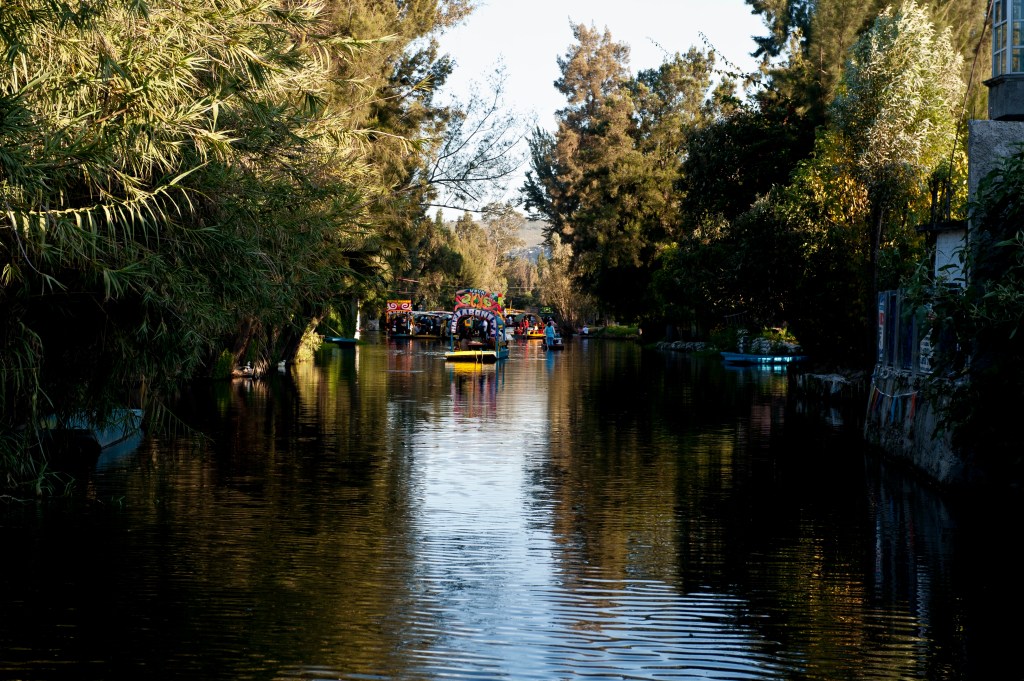
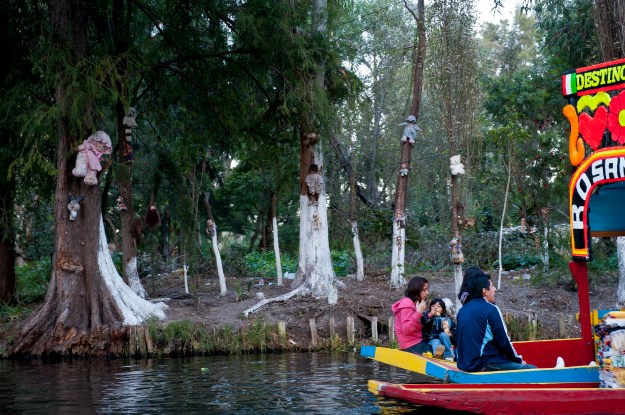
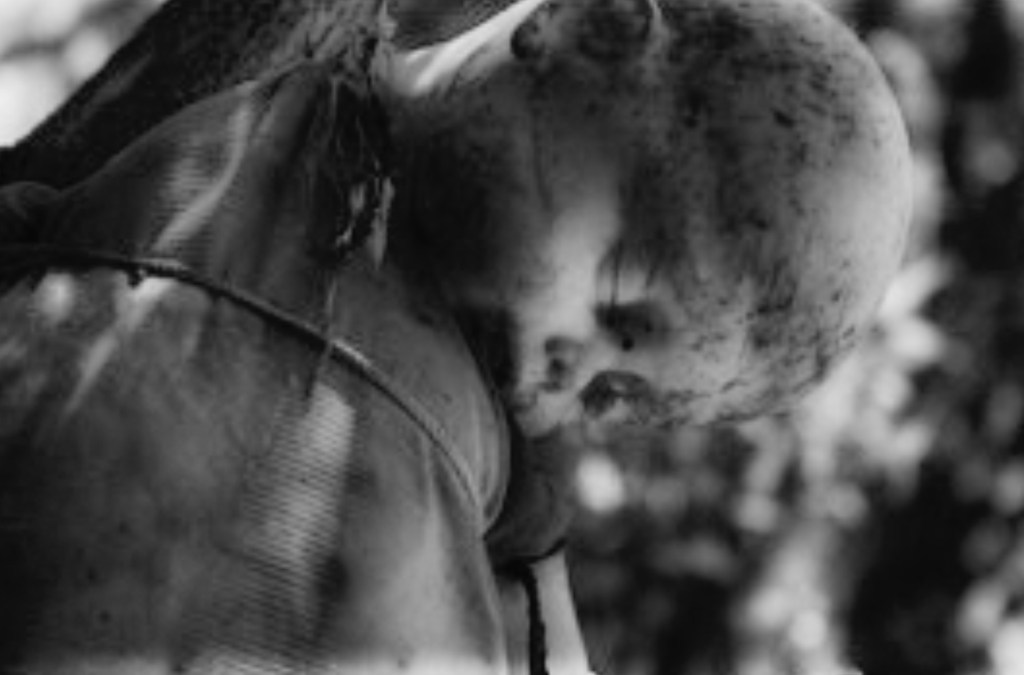

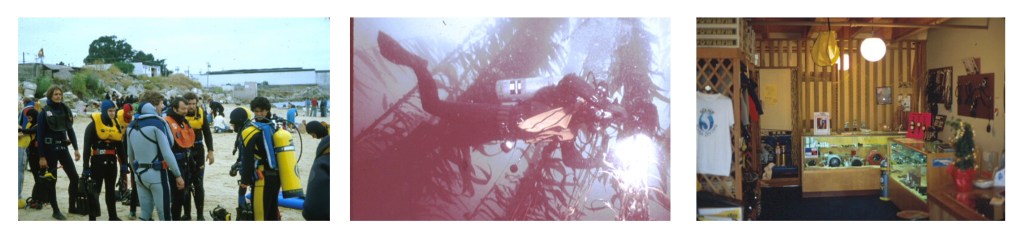
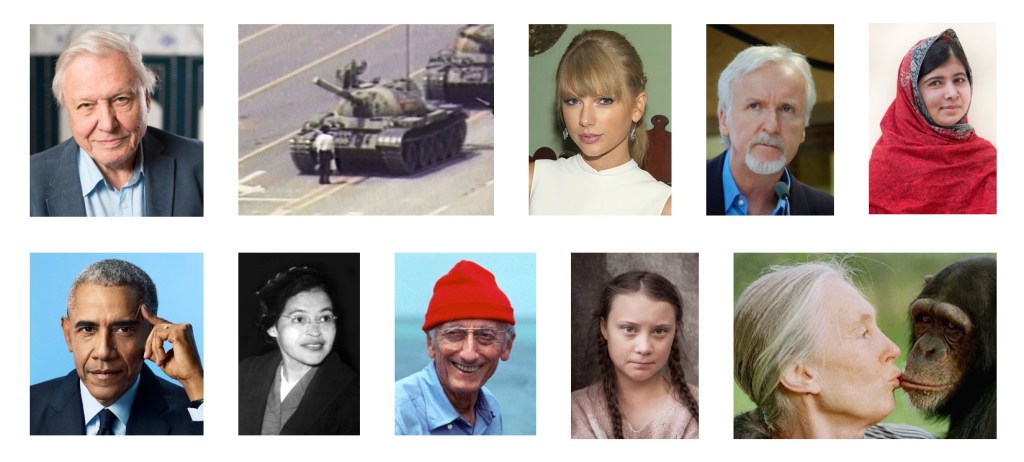
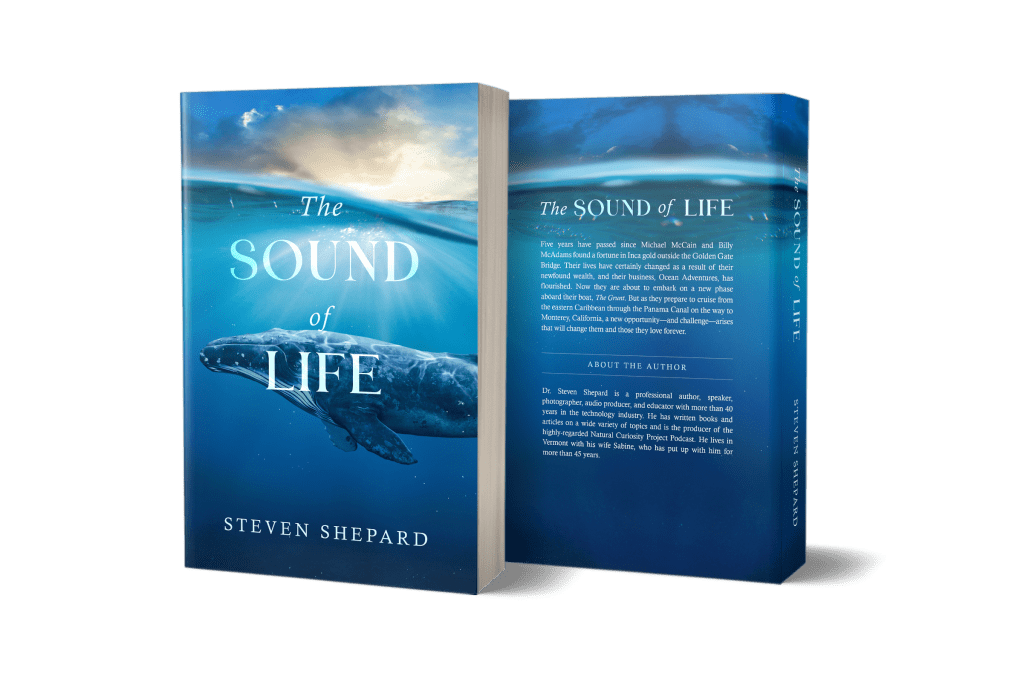


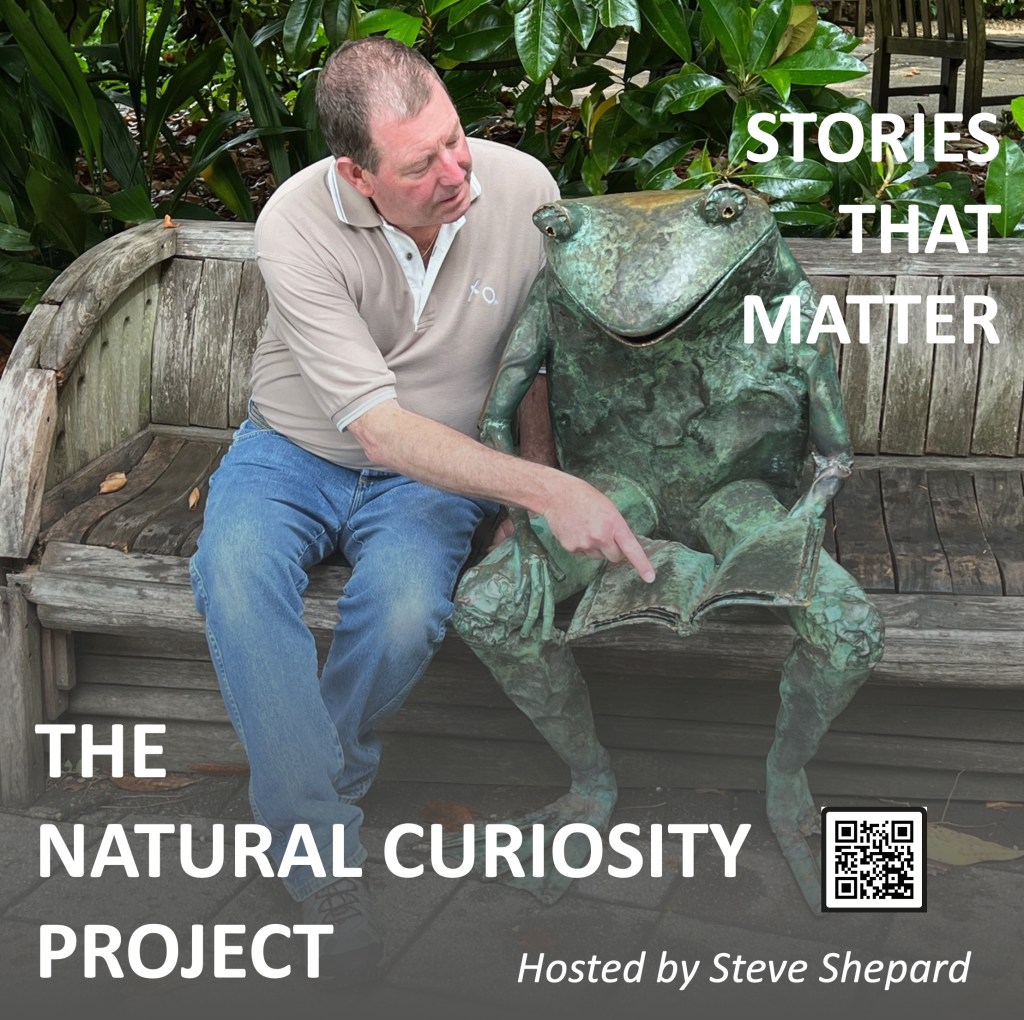
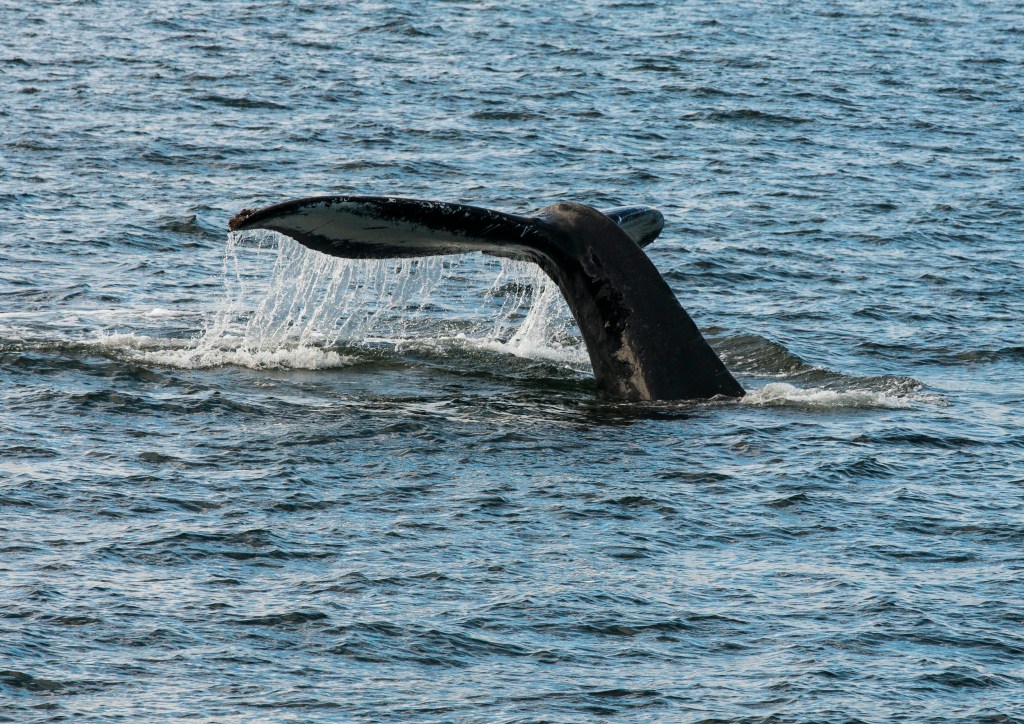
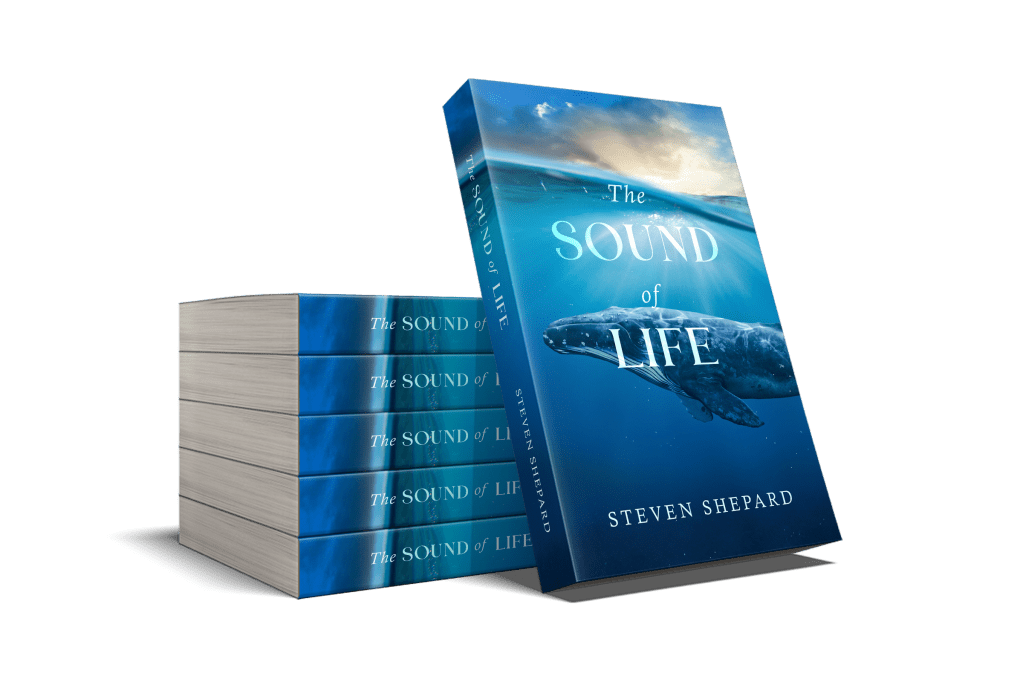
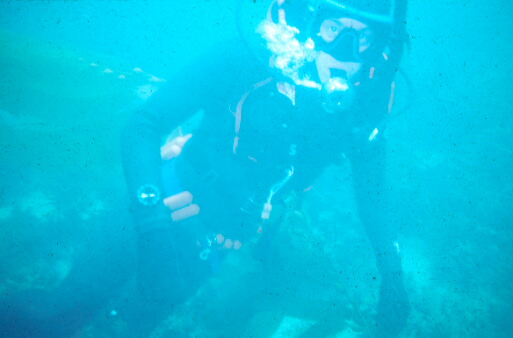
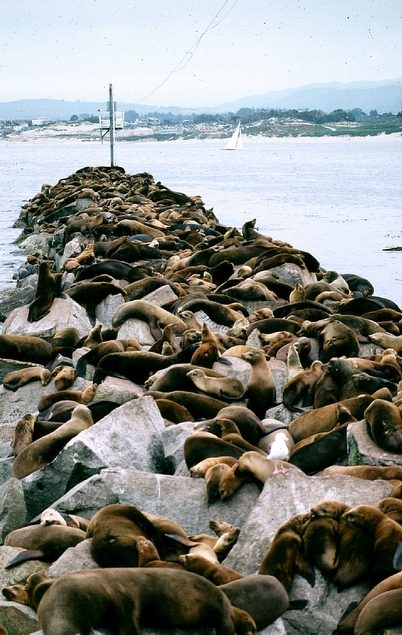
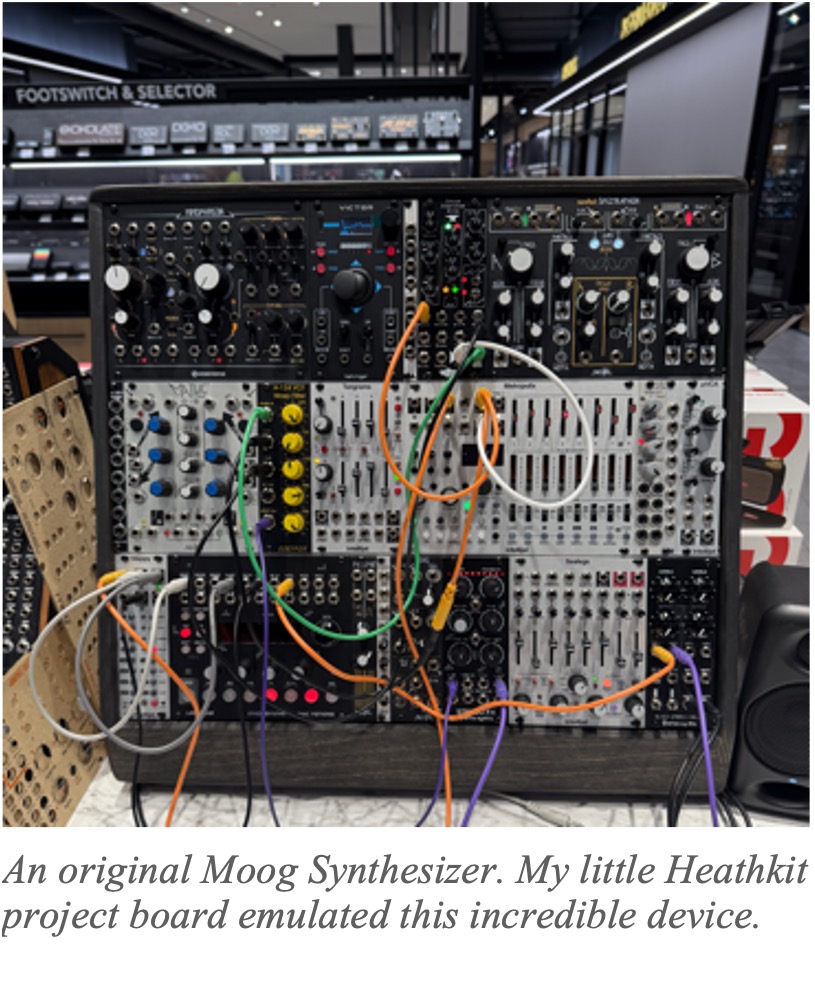

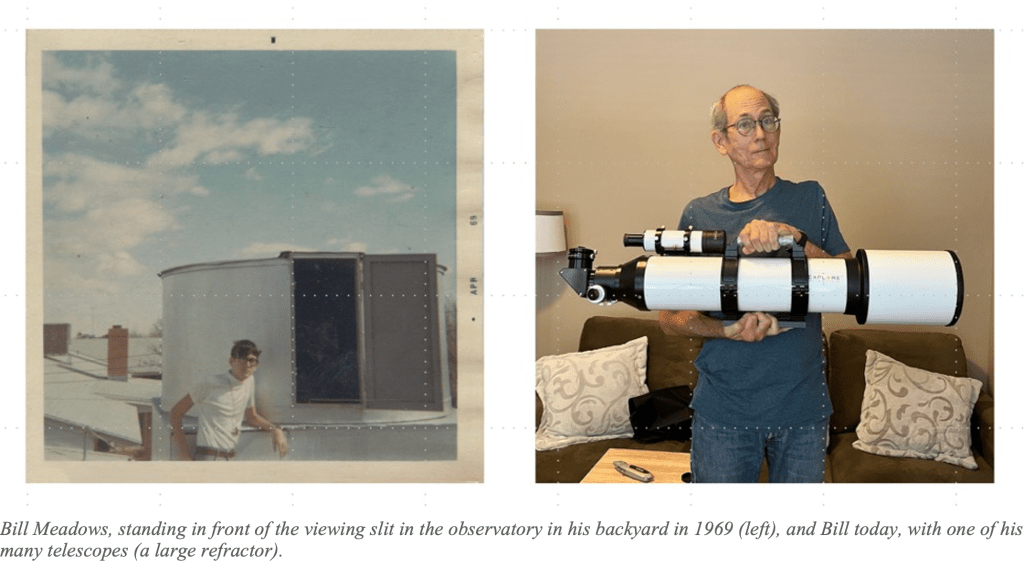
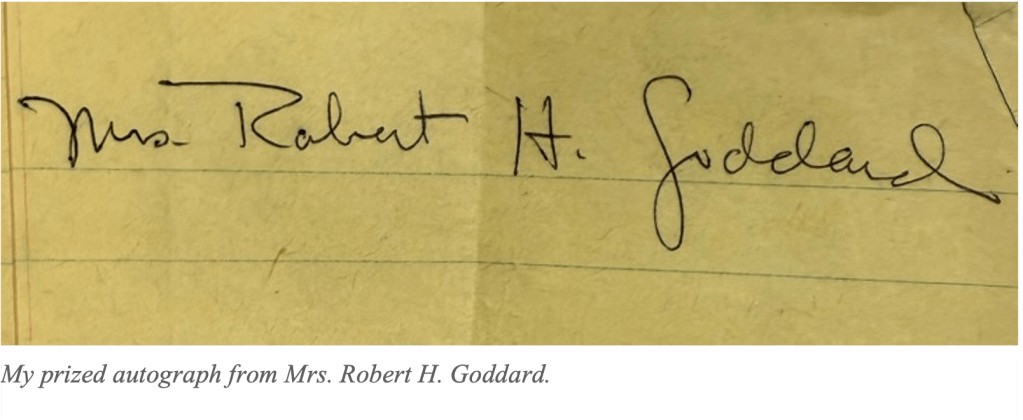


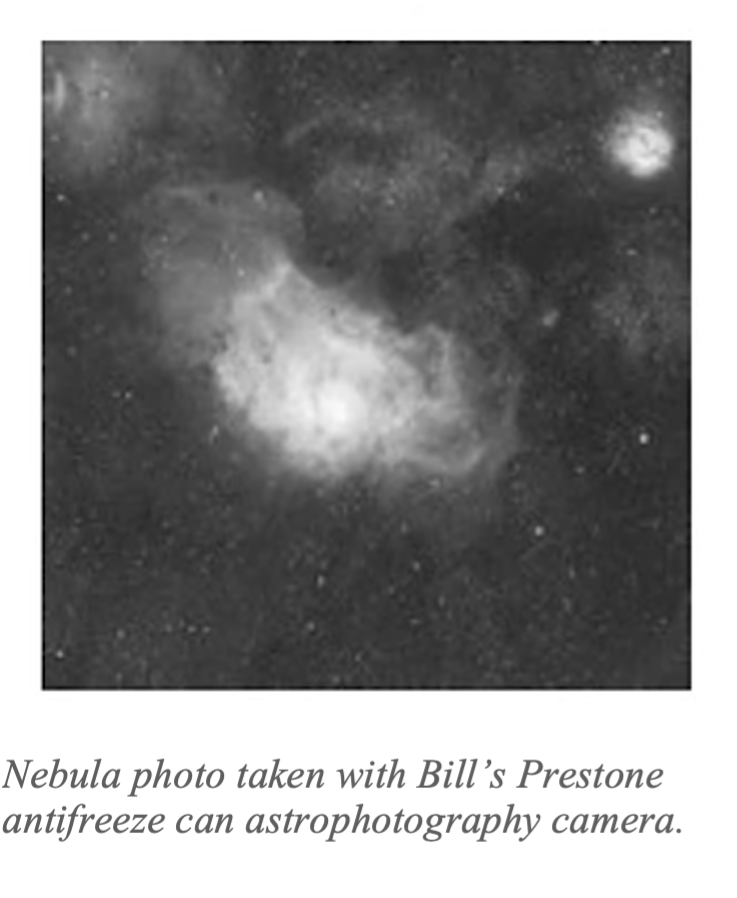
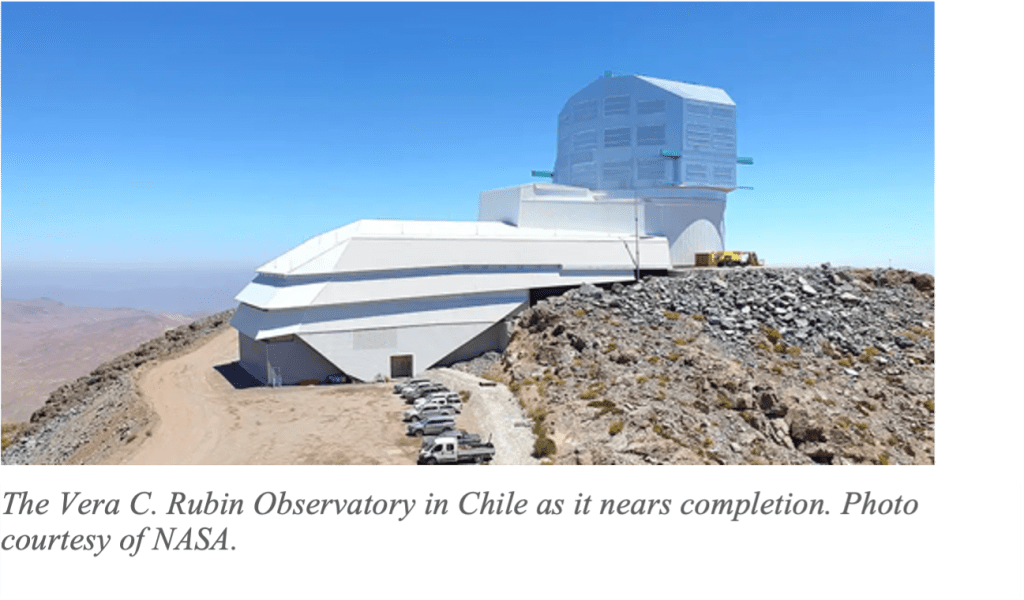
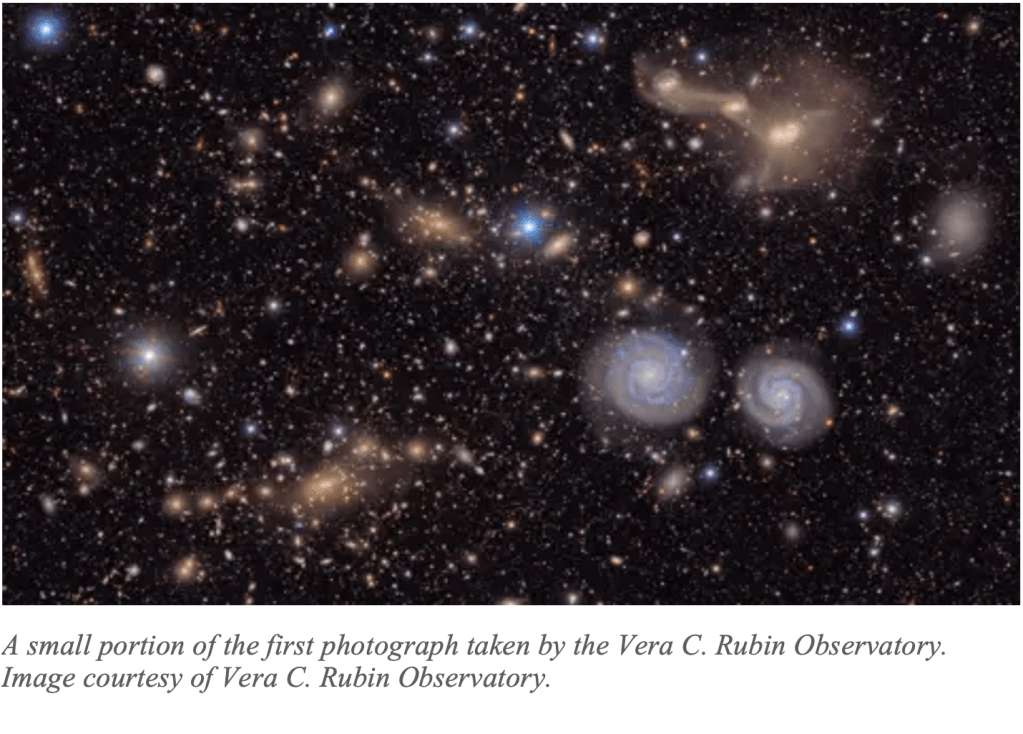
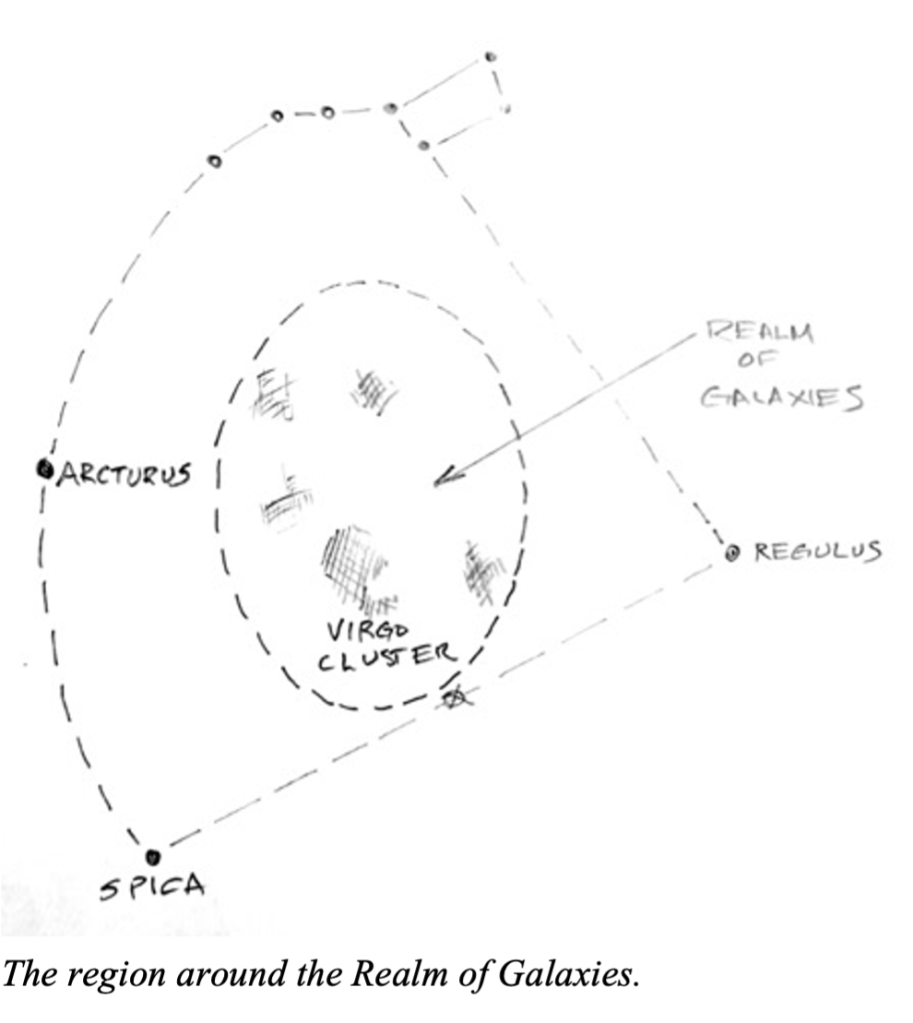
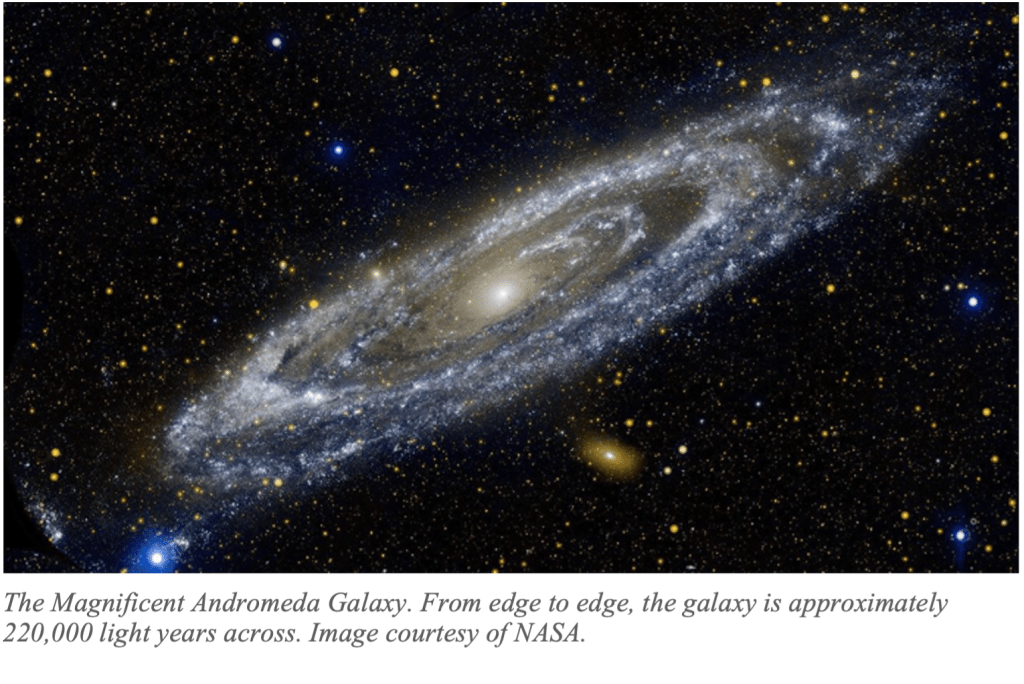
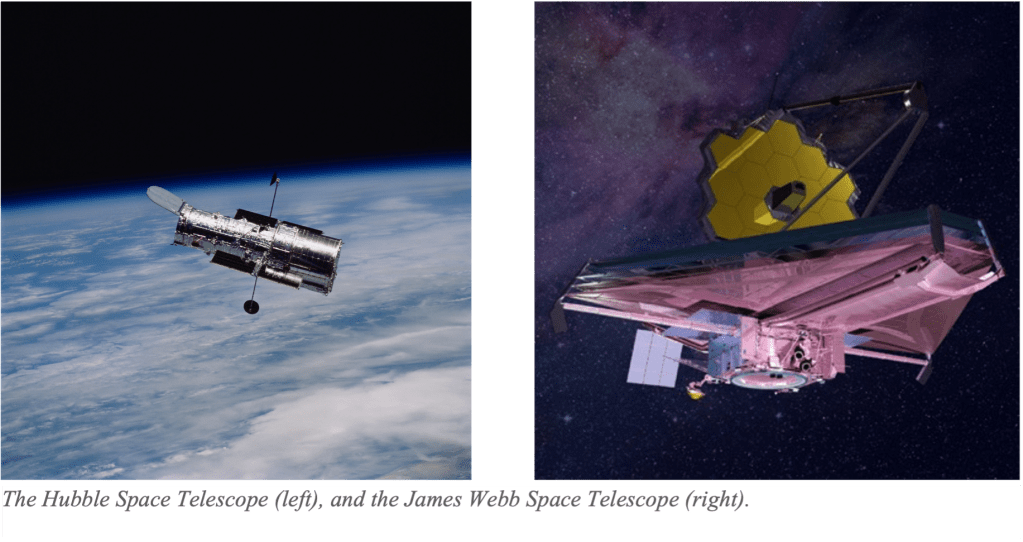
 Steven Shepard