The Dubious Value of Interspecies Communications

Like most young 19th-century boys, Hugh Lofting liked animals and playing outdoors. Born in 1886 in Maidenhead, in England’s Berkshires, he had his own little natural history museum and zoo when he was six years old. The fact that it was in his mom’s bedroom closet wasn’t a problem until she found it there.

The point is, Hugh loved nature, and everyone who knew him was convinced that he’d become a naturalist, or biologist, or something in a related field, when he grew up. So, everybody was surprised when he decided to study civil engineering. He started at MIT near Boston and completed his degree at London Polytechnic. When he graduated, he got work in the field: prospecting and surveying in Canada, working on the Lagos Railway in west Africa, then on to the Railway of Havana in Cuba. After traveling the world, he decided that a career change was in his future. He married, settled down in New York City, had kids, and began to write articles for engineering magazines and journals about topics like, ‘building culverts.’

In 1914, World War I, ‘The Great War, The War to End All Wars,’ broke out, and Hugh was commissioned as a lieutenant in the Irish Guards. He fought in Belgium and France, and the horrors of war affected him deeply. In fact, his feelings about the natural world once again came to the surface, as he witnessed the treatment of draught animals in the war. Their suffering affected him as much as the suffering of his fellow soldiers. 

To help himself deal with the emotional trauma of war, he returned to his writing. He began to compose letters to his two children about a mythical, magical doctor who took care of animals, curing them of whatever malady had beset them.

In 1918, Hugh was badly wounded when a piece of shrapnel from a hand grenade shredded his leg. He left the military and after recovering from his injuries in England, returned to his family in New York.

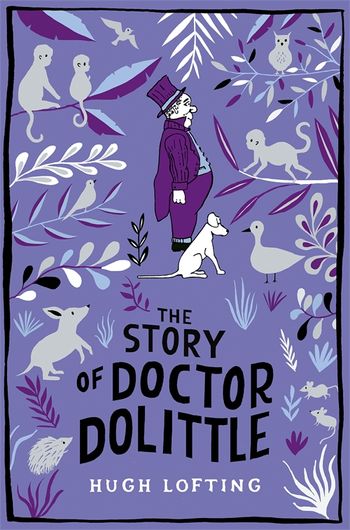
Serendipity definitely played a role in the direction of Hugh Lofting’s life. His wife, charmed by the letters he wrote to his children while he was deployed, had kept them, and suggested he turn them into a book. He did. It was called, “The Story of Doctor Dolittle: Being the History of His Peculiar Life at Home and Astonishing Adventures in Foreign Parts.”

The book was an immediate bestseller, and between 1922 and 1928, he wrote a new Doctor Doolittle book every year, along with other titles. 

Interesting story—it’s always fun to hear how a writer finds the track that defines their life’s work. But that’s not what I want to talk about here. I just finished re-reading Doctor Doolittle for the first time in a long time (I love children’s books), but I also just finished reading Ed Yong’s “An Immense World: How Animal Senses Reveal the Hidden Realms Around Us.” I didn’t plan it that way; they just happened to pop up in my reading stream, and much like Hugh Lofting, serendipity kicked in. Doctor Doolittle could talk to animals; Ed Yong writes extensively in his book about the extraordinary ways that non-human species communicate. In fact, there’s been a lot of chatter in the press lately about advances in interspecies communication and our soon-to-be-available ability to translate what our non-human neighbors are saying. That’s quite a breakthrough, considering how much trouble I often have understanding what other HUMANS are saying.

Before I get too far into this, let’s lay down some basics. We are NOT the only species that communicates, nor are we the only species that uses body language. Lots of animals do that. Orangutans, for example, often use pantomime with each other, and even with their human caregivers in orangutan rescue centers. And after recording thousands of hours of sound and observing the behavior of herds of elephants over a long period, researchers have determined that elephants have a specific call that means, ‘Bees—Run!!!’ In fact, there may be a form of interspecies communication going on here. When African wild dogs show up, one of the fiercest and most dangerous predators in all of Africa, elephants have a specific warning call which also causes other animals, like gazelle and impala, to take notice and run. But when elephants bellow about bees or other things, calls that sound just as urgent, they don’t even flinch. They just keep grazing, entirely unconcerned.

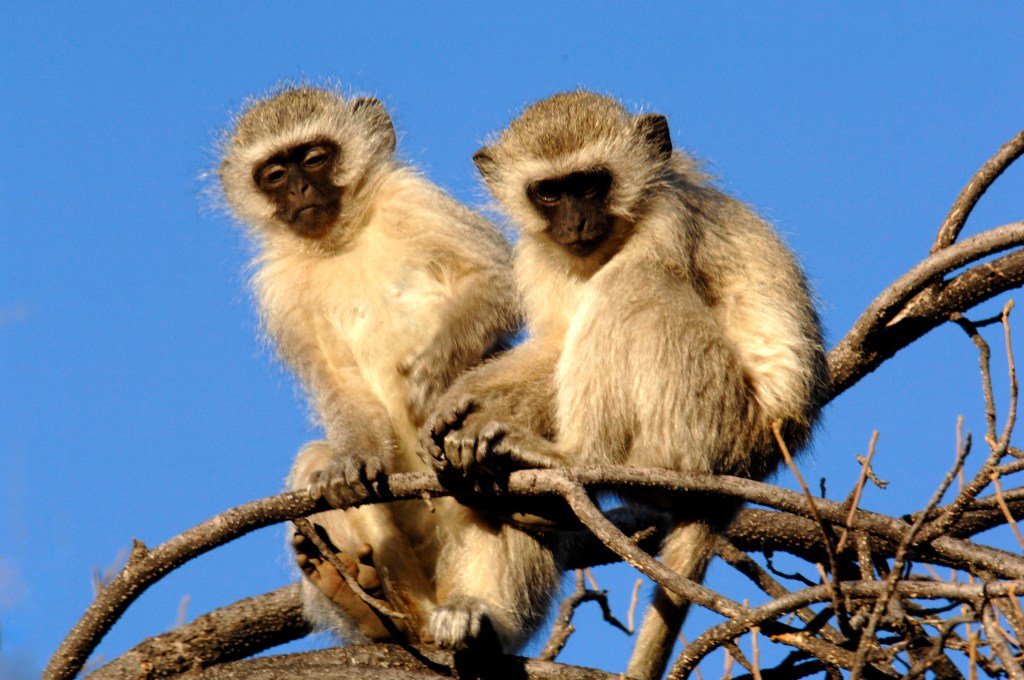
Monkeys do similar things. Vervets, the annoying little monkeys that once invaded and destroyed my room at an African game preserve in search of the sugar packets that had been left for coffee, have distinct calls for distinct scenarios. If one of them sees a land-based predator, like a leopard, they issue a specific call and everybody takes to the trees. If they see an aerial predator, like a crowned eagle, a distinctly different call sends the troop into the safety of ground cover. 

Some species even add nuance and meaning to their calls by changing the order of the sounds they make. For example, if west African Campbell’s monkeys begin their threat calls with a deep booming sound, it means that whatever threat they’re seeing is still far away, but pay attention—be aware. If they start the call without the booming sound, it means that the threat is close and that whoever hears it should take cover immediately. 

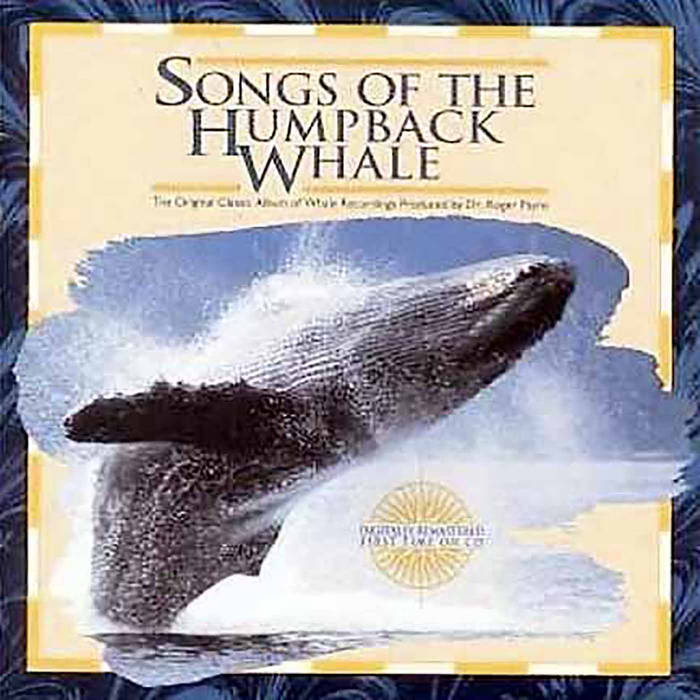
Sixty years ago, Roger Payne, a bioacoustics researcher at Tufts University who spent his time listening to the calls of moths, owls and bats, met a naval engineer who monitored Soviet submarine activity using hydrophones scattered across the sea floor. The engineer told Payne about sounds he had recorded that weren’t submarines, and after playing them for him, Payne was gobsmacked. He asked for and was given a copy of the sounds, which turned out to be made by humpback whales, and after listening to them over and over for months, he began to detect that the sounds, which were extremely diverse, had a structure to them. He loaded the audio files into a software package capable of producing a spectrogram, which is a visual representation of a sound, using time on the X-axis and frequency on the Y. By the way, this required a partnership with IBM to get access to a mainframe computer to do the analysis. Anyway, what his analysis confirmed was that whales call in a very specific order of unique vocalizations. Sometimes a call lasts 30 seconds, sometimes thirty minutes, but the sequence is always the same—identifiable sequences that he called songs. In fact, in 1970, Payne published his recordings as an album called Songs of the Humpback Whale. It went multi-platinum, selling more than 125,000 copies and catalyzing the effort to end commercial whaling around the world. Some of its tracks were included on the gold album attached to Voyagers 1 and 2 when they were launched into deep space in 1977.

Most recently, researchers have taken their analysis of animal sounds even farther, using AI to identify more complex patterns. Shane Gero is a Carleton University researcher who for the last 20 years has studied the vocalizations of sperm whales. After analyzing hundreds of hours of recordings, he and his team identified specific characteristic patterns that he called codas. It appears that the whales use these unique sounds to identify each other. He and his team are now feeding the sounds they’ve captured into a large language model that they will then unleash AI against in an effort to enhance our understanding of whale speak.

That’s remarkable—stunning, in fact. But speaking for myself, I feel inclined to invoke what I call the Jurassic Park Effect: Just because you can doesn’t mean you should. In the movie, researchers re-created dinosaurs from the DNA found in dinosaur blood in the stomachs of Jurassic mosquitos that were trapped in amber. They did it because they could, ignoring whether or not they should, and it didn’t end well. In fact, none of the sequels did—for humans, anyway. Creating a large language model to translate other species’ languages into human language strikes me as the same thing. Because when it happens, the conversation might go something like this:

‘Hey—nice to meet you! We’re the creatures who violently kick you out of your homes and then tear them down because we want to live there instead; we destroy your food sources; we blast loud noises into your marine homes 24 hours a day; we capture and eat huge numbers of you; we pour countless toxins into your air and water and soil; we build huge dams on your rivers to prevent you from migrating home as you’ve done for thousands of years; we do all kinds of things to help to make the environment hotter and unpredictably violent; and we make your terrestrial habitat so noisy that you can’t hear predators coming or mates calling. So with that introduction, how ya doin’? What shall we talk about?’

I don’t know. Maybe it’s just me, but I don’t think we’re gonna like what they have to say. 

The Pleasure of Fecundity

There is a word in the English language that I have come to love. It is onomatopoeic in a way, a word that, when pronounced, sounds like what it describes. The word is fecundity. Something that exhibits the qualities of fecundity is said to be fecund. It means prolific, and its origins are entirely feminine: rooted in old Dutch and Middle English words for the adjective feminine, the verb suckle, the noun nipple. It’s all encompassing. 

For me it defines a seasonal intermezzo: a short movement between the two longer sections of a major work. In this case, the major work is summer. In my mind it has two movements: the first, when winter fades and spring finally lets go and full-blown summer begins; the second, when the summer begins to grow tired from the feverish pace of the annual re-ignition of life. The intermezzo is the period that’s happening now, in mid-July. It’s used as a setup, an indicator of the beginning of the long slide once again toward bittersweet fall and melancholy winter.

I am sitting in a chair on my deck, trying to read a book while being unrelentingly ambushed by a multi-species land and air attack force. Ants of diverse sizes swarm the deck, the railings, and all the furniture, including the chair I’m sitting in. They don’t bite, but they send a message: don’t mind us, just passing through, but don’t get in the way of progress. 

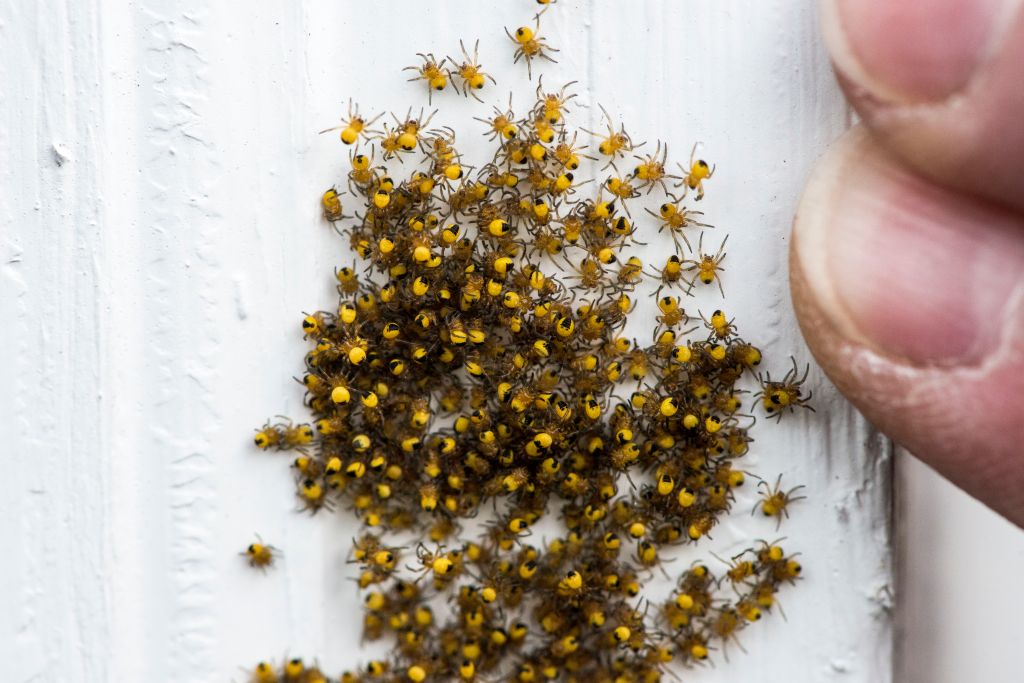
Cobwebs and sheet webs are everywhere—on the ground, between the deck rail balusters, connecting the post lights to the rails in great gossamer sheets of webbing, barely visible filaments waving in the air with spiderlings attached, tiny paratroopers on their telltales, off to colonize anything standing still, ballooning, kiting off. Contrary to the oft-stated belief that these were the webs found in corn cribs, cob comes from the Middle English coppe, meaning ‘spider.

I stand and peer over the railing at the flowerbed below. Weeds have profoundly grown out of control overnight, as if there was a countdown clock that zeroed at midnight last. GO-GO-GROW! Yesterday, a lone grass blade among the daylilies; today, an occasional daylily among the grass hummocks. 

But it isn’t just the weeds that have mounted an invasion. The plantings in the garden redefine unruly, all fighting each other suddenly for center stage. A week ago, a walk among the hostas and daylilies and columbines was easy, the path we carved clear. Today, my mind turns to machetes.

Meanwhile the bugs and the birds grow weary of the manic pace of summer’s onset. The birds seem slower, less exuberant when they call; the bugs grow clumsy, with far more collisions and near-misses now than earlier in the season. The F35s have become Zeppelins. The fireflies, once staccato in their flashings, grow occasional, intermittent. The only exception seems to be the mosquitos. The black flies are gone, deer flies and horseflies make only half-efforts to land and bite, but the mosquitos are renewed, born-again assholes. They seem spawned from the humidity, a form of aquatic parthenogenesis, taking evil form from the very air. What a name: in Spanish, “little fly.” Who would give such an unpleasant and annoying—and in malarial miasmas, deadly—insect such a harmless name? And Spanish, for God’s sake—a language famous for stringing together extraordinarily colorful syllabic sequences for things far less annoying. Here, let me try: Hijo de puta gillipollas insecto cabrón. There. That’s better.

Another intermezzo phenomenon is that insects seldom seen suddenly appear in numbers: earwigs, grasshopper nymphs, potato beetles, and creatures I fail to identify. A second wave. 

The weather is different during the intermezzo. Different descriptors apply. Sullen. Sultry. Torrid. Dank. Muggy. The sky boils with evil black thunder bumpers that rise to the stratosphere before flattening in great anvils, but then tease without dropping rain. 

And water? It feels thicker somehow. I drop a hydrophone in a pond, intent on recording stridulating aquatic insects, and instead of the usual kerplunk I’m accustomed to, it comes back with more of a schloop, as if I were dropping a stone into Jello. Water moves more slowly, passing along the stream bed under protest. It doesn’t splash; it globs. It doesn’t flow serenely into back channels and eddies; it gets squished into them. 

The second act of summer begins slowly and secretly. It’s stealthy, sneaking up on us. The plants of summer, Joe Pye Weed and poison parsnip, Queen Anne’s lace and milkweed, rye grass and cattails and goldenrod, all start to look unkempt and sullen, brown and torn around the edges, ragged and uncared for. They droop and fall over as nature gets sloppy in the second act. Vernal ponds dry and disappear, streams shrink to trickles and mud flats, and there, in mid-trail, a red leaf, a maple’s announcement of things to come.

Enjoy it. The intermezzo is nearing its end.

Vermont’s Second Crop

Spring is a special time in Vermont: the long, dark winter begins to release its hold on things; the ground begins to thaw and soften; and suddenly, we can smell things again during our morning walks in the countryside. Birds call; people emerge from hibernation; kids ride around on bicycles, the first time since November.

Spring also heralds the arrival of two special and unique harvests in Vermont. First, of course, is maple sugaring. All over the state, sugarhouses light the fires beneath their boilers, and soon, the air is redolent with the rich, thick smell of maple, as thousands of gallons of clear sap are converted into the golden amber elixir of maple syrup. It’s a rare commodity: the rule of 86 tells us how much sap we need to make a gallon of syrup, a rule based on the percentage of syrup in the harvested sap. At the beginning of the season, that number hovers around two percent sugar. Divide that number into 86 and we know how much sap we need to create that gallon we take home from the store. That’s a lot of sap.

Marshmallum dazekiae

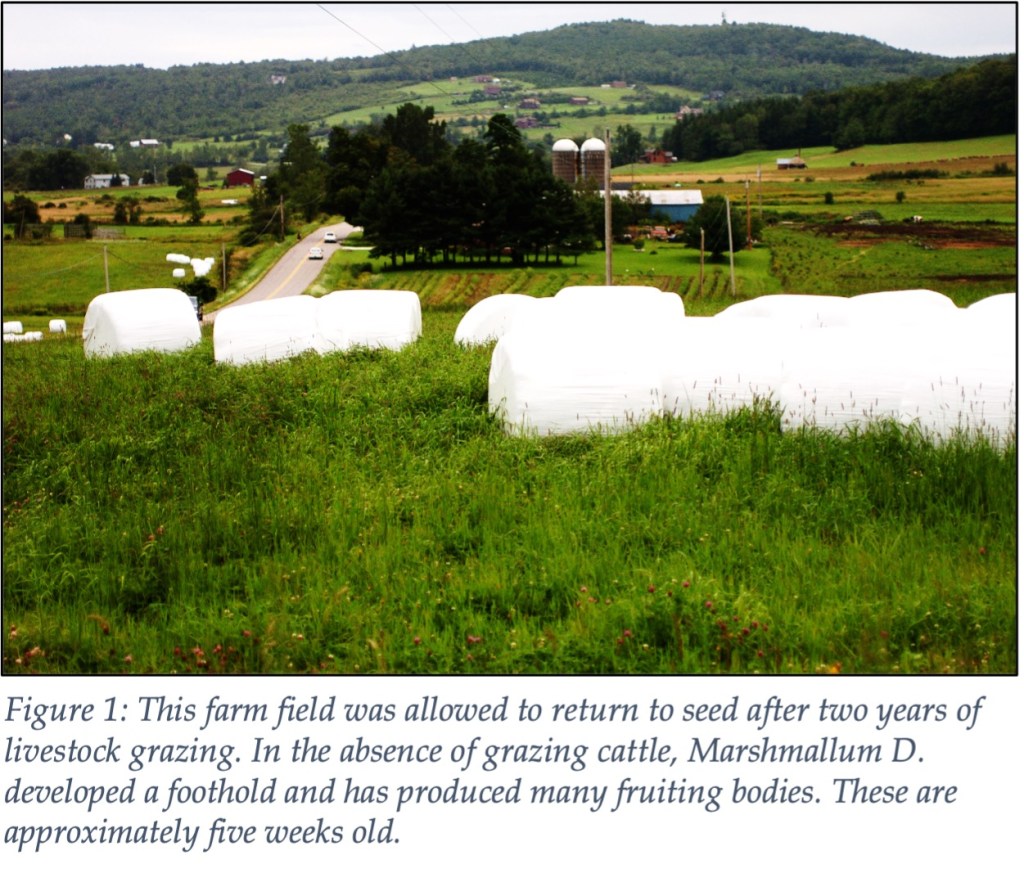
The second harvest is equally important, but less well-known. Across the state, in farm field after farm field, bulbous, snow-white growths emerge from the fallow mud and ice. At first, they go unnoticed, because they are hidden in plain sight atop extensive snowfields. But as the snow melts, and as the fruiting bodies of Marshmallum dazekiae develop and grow, they become far more conspicuous as they rise above the field. Harvesters across the state take notice and prepare for the feast: It is nearing time for the annual Vermont marshmallow harvest.

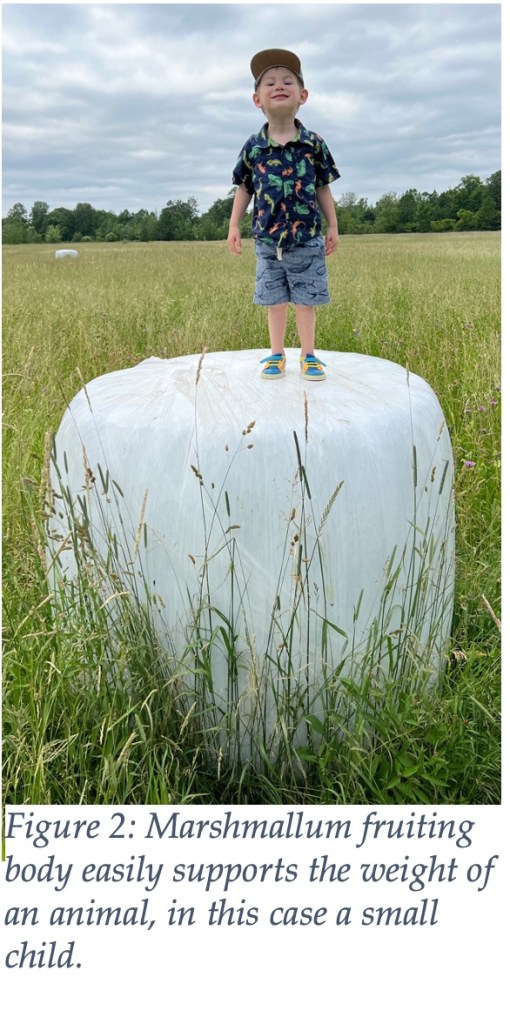
The fruiting bodies of Marshmallum d. are quite large, sometimes growing to heights of four feet and weighing more than 500 pounds. They are roughly cylindrical in shape. When they first form, the fruiting bodies lie on their sides, but as the large stem that anchors them to the plant dries, it twists as fibrous proteins in the outer sheath of the stem dry and shrink, twisting the fruiting body until it stands more or less upright on one of its flatter ends. At this younger stage of its life cycle, the fruits of Marshmallum are still quite firm, easily supporting the weight of a small animal, as shown in Figure 2. 

Another defining characteristic of the Marshmallum fruiting body is the thick skin that protects the cascade of embryos developing inside. The skin, characteristically a brilliant white color, is thick and difficult to tear, almost leather-like in its toughness. It resists all but the strongest claws, and while a black bear could penetrate the membrane, they typically don’t. Researchers that dissect the fruiting bodies for anatomical study have found that the easiest way to open them is with a large-bladed carpet knife; smaller, more common dissecting tools are typically insufficient for the task and dull quickly.

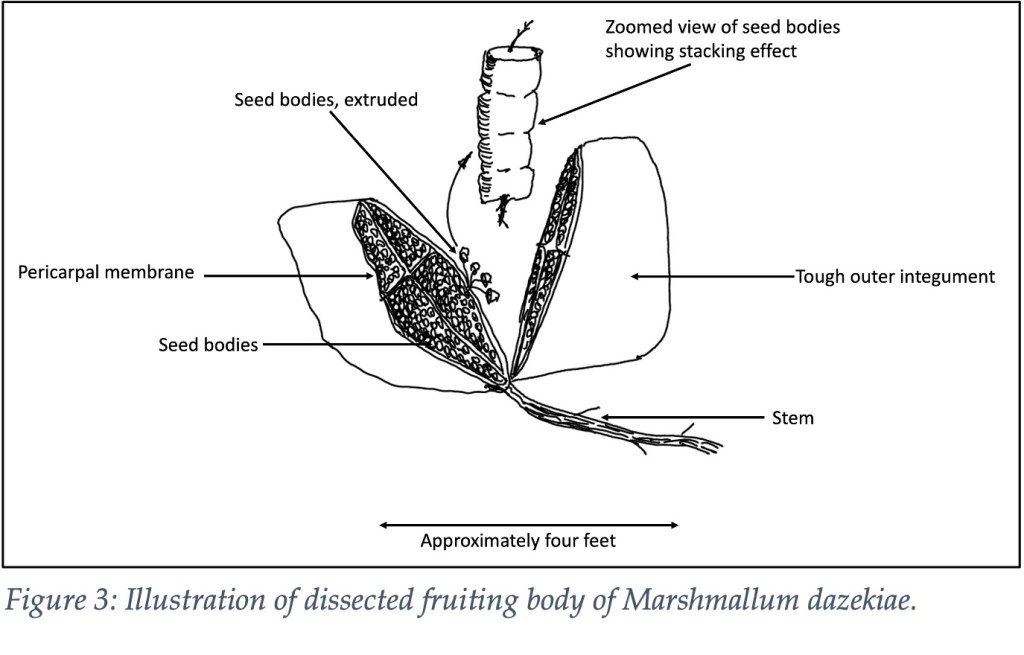
The fruiting body of Marshmallum d. is morphologically analogous to those of pomegranates or tomatoes, in which individual seeds within the fruiting body are nestled in protective jellylike chambers. In cross section, the fruiting body of Marshmallum (which as we noted earlier is remarkably difficult to cut) contains four main chambers, separated by tough integumental membranes, each about a quarter-inch thick. Each chamber is filled with 200-300 rows of seeds, clustered in stalks, that are protected by white, sticky flesh. The seeds are tiny—smaller than a mustard seed—and difficult to spot within their white protective covering. 

A fruiting body cross-section is shown in Figure 3. 

Botanical Variation

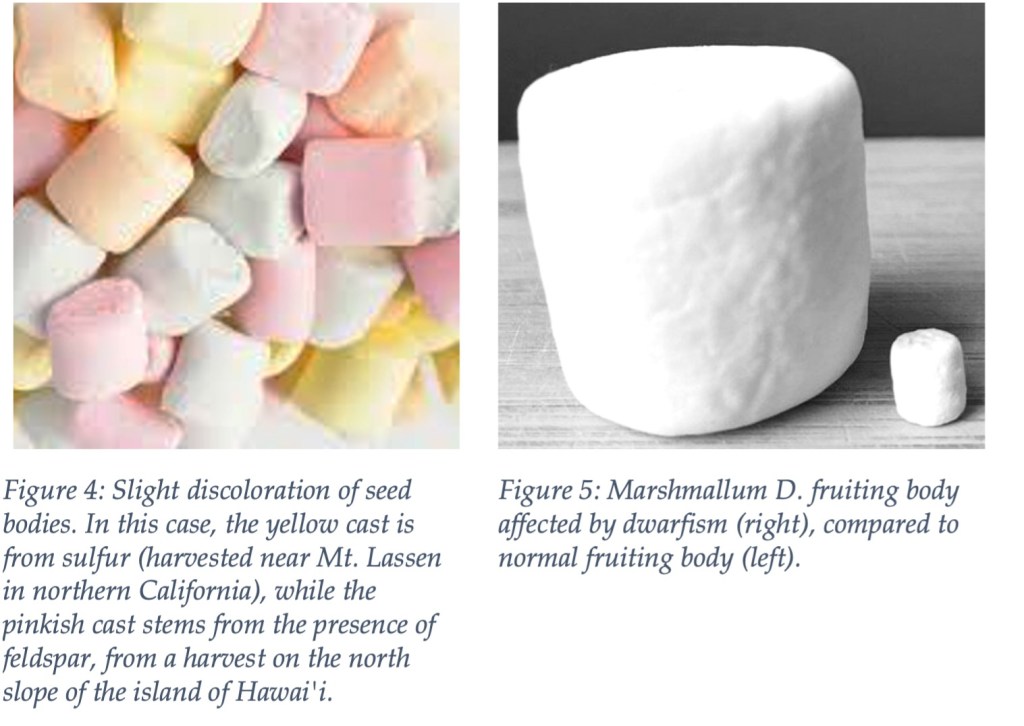
Morphologically, there is little variation in Marshmallum d. However, it has been shown that soil composition plays a role in pigmentation, particularly when certain minerals are present. Sulfur and feldspar, typically found in soils that have some degree of volcanic origin, can result in a slight color shift of the seed bodies, in particular a light yellow or pinkish cast, as shown in Figure 4. This is unusual, however; it is rare in Vermont, occurring most frequently in the smaller fields of northern California and Hawai’i.

Another variant that can occur in addition to discoloration of the normally white seed bodies is dwarfism. Typically (but not always) related to a lack of manganese in the soil, the seed bodies within the pericarpal membrane become stunted, reaching a size that is about one-eighth normal. These are shown in Figure 5.

Conclusions 

Commercial opportunities for Marshmallum d. are now beginning to emerge, although large-scale production and market opportunity remains elusive. There is evidence to suggest that earlier societies may have harvested and roasted the seed pods over open fires [Kraft et. Al.] and occasionally combined them with other plant-derived substances such as raw sugars, cocoa [Hershey, 221-223] and thin crackers made from whole grains [ibid]. Perhaps insights gained from archaeological studies will yield opportunities for modern commercialization.

An Open Letter to America’s Young Adults

Once more unto the breech, dear friends, once more. It probably won’t surprise you to know that William Shakespeare wrote that; it’s the opening line from Henry V.

The United States is deadlocked over supposed ideologies that offer no leadership. None. Zero. Zip. Nada. Why do I say that? Because neither side is offering a scintilla of what leadership is supposed to deliver, which is a vision of a better place in the future than the place where we find ourselves today. Instead, what we get is juvenile, playground bully diatribe: ‘Oh, you think I’m bad? Well, look at the other side. He’s worse.’ 

Just once, I’d like to see a leader in Washington who is willing to actually lead. To describe a tangibly better future for the nation, in some degree of detail. To explain how we’ll get there, and why it will be better when we do. Just once, without an overlay of the political badgering that adds no value.

Just once, I’d like to see a leader put nation before party, future before ideology, goal before winning at all costs. Just once. Just once I’d like to see a leader dispense with political rhetoric and speak plain English. Just once.

Just once, I’d like to see a candidate dispense with trying to sell me swag and instead of trying to sell me on a vision of a desirable future. Just once. Just once I’d like to see a candidate who speaks with the people, not at the people.

Just once I’d like to see a candidate reach across the aisle without an agenda, other than to make things better for some group of people in the country. Just once I’d like to see actions from a political leader that are undertaken for reasons other than vote-gathering. Just once.

Just once, I’d like to see a candidate for president take the phrase, “Of the people, by the people, and for the people” seriously. And on that note, just once, I’d like to see a candidate who is actually elected by the people—not by the electoral college, but by the people, because the people came out in large numbers to vote. It is a right, and it is a privilege, and it is a responsibility. And the majority of eligible voters in the country discard it as a meaningless waste of time. What a travesty, and what a tragedy.

There is a quote I like to use when I teach leadership workshops: 

‘If you want something different, you have to do something different. Hope is not a strategy.’

Both of the geriatric would-be leaders (and I use that word skeptically) want the presidency, and one of them will get it. Yet neither of them SHOULD get it. We don’t need another out-of-touch person setting the direction of the United States. I’m 70 years old and I don’t want either one of them in that position. I want someone younger, brighter, more dynamic, full of ideas, looking to heal the worthless scar tissue that divides the country. I’m old enough to have seen this country at its best, when we were revered as a people and as a nation. So please, Millennials and Plurals—take a stand. Show the gerontocracy in Washington that you are far and away more mature than they are. Send someone to the White House next time who is worthy of the street address. 

Abdication is also not a strategy. Edmund Burke wrote, “All that is required for evil to prevail is for enough good men to do nothing.” Do nothing, and you reward bad behavior. Do nothing, and you get what you deserve. Do nothing, and you have no right to complain about the outcome.

So please: Do something. Speak up. Vote. Write to your local, state and national representatives. Contribute opinion pieces to your local newspaper. Start a Podcast. Start a blog. Let yourselves be heard. Because to do nothing is not a protest: it is an abdication. I understand that you’re disgusted with the current state of things. You should be: So am I. But remember what I said earlier: If you want something different, you have to do something different, because hoping for change is equal to doing nothing. And when nothing is done, evil prevails.

You are too good, too valuable to the future to squander this opportunity to make a difference for yourselves and your children. So, step up and let yourselves be heard. Your voice is orders of magnitude more important than the collective voices of those older than you. Yes, we have wisdom to share that is valuable, and we will freely share it with you. But wisdom informs change; action leads to it. So please: Act. The country needs you. There are far more of you than there are of us: Make those numbers count for something.   

Fun with Geography

I just posted a new episode on the Natural Curiosity Project called “Fun with Geography.” It’s sort of an homage to my favorite TV show, the Big Bang Theory. You may recall that a recurring theme was a Web TV show produced by Sheldon Cooper and his then-girlfriend Amy Farrah-Fowler called “Fun with Flags.” It was silly, of course, but it was also interesting in a lot of ways. My own mini-obsession with geography isn’t all that different.

I love maps–I always have. I can sit for hours with a map. just following roads to see where they go, looking for the funniest place names (the subject of an earlier Podcast episode), identifying unusual landforms, and so on. I love the fact that if you follow the major north-bound roads in Canada all the way up, they ultimately just…stop. They peter out. They end. I want to go there. I want to stand at the end of the road and wonder, “Why here?”

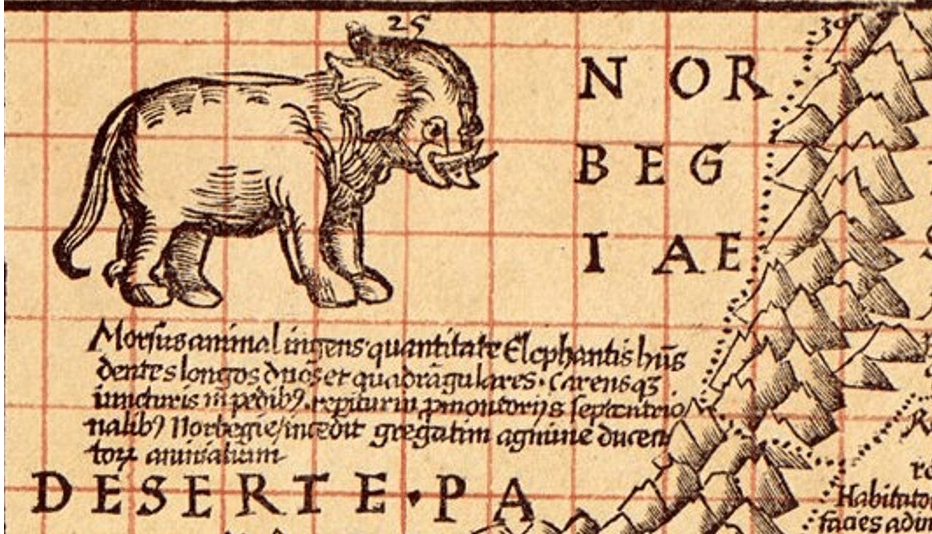
Early maps, those produced prior to the 15th century or so, had vast unknown areas that were often drawn showing them to be the homes of fantastic beasts. I don’t know about the fantastic beasts, but there are still places that are largely unknown–not as many as there used to be, but enough of them still exist to tantalize.

When I was in college, I found myself puzzled by friends who were getting degrees in geography, the same way I found it odd that there was a degree in library science. At the time they both seemed silly to me–the sort of “underwater basket weaving” majors that people used to joke about. Today, I can’t think of two fields of study more useful and applicable than these.

It was Mark Twain who wrote, “Travel is fatal to bigotry, prejudice, and narrow-mindedness, and most of our people need it sorely on al three counts.” Well, spending time with maps, taking the time to study a bit of geography, is a noble snd useful pursuit. Just listen to this new episode and you’ll see what I mean.

You can find the episode on Soundcloud or on all the standard Podcast platforms.

A Few Words of Career-related Wisdom

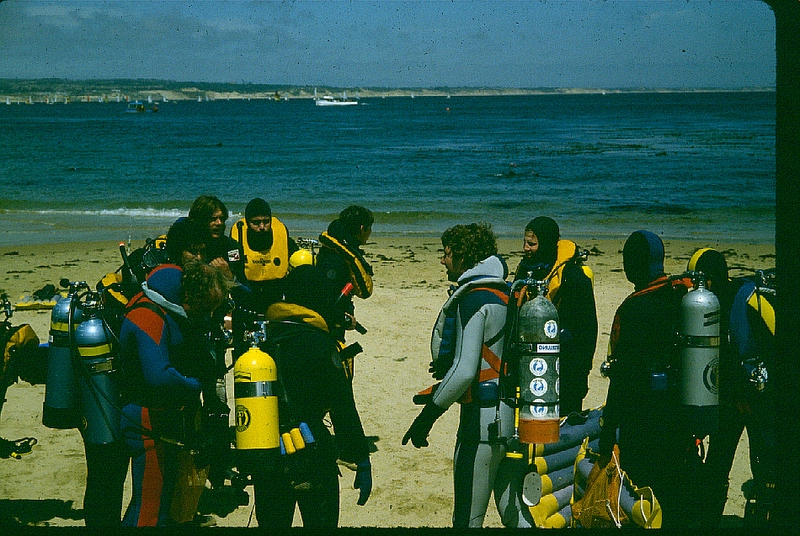
That’s me in the silver suit with a class at Cannery Row in Monterey.

How many times during your career has someone said to you, ‘Do what you love. The money will follow.’ I know I’ve heard it, many times. And while it’s a wonderful sentiment, it isn’t entirely true. Not entirely. I’ll come back to that in a minute. But throughout our lives and careers, well-meaning people share advice with us—aphorisms, for lack of a better word—intended to keep us on the straight and narrow path to success. Some of them are true; some of them are partially true; and some of them are decidedly wrong.

I find myself in an interesting place: I’m retiring. There—I said it. I’m leaving behind the carefully planned, strategically executed career I’ve had in telecommunications that began in 1981. And if you believe that part about ‘carefully planned and strategically executed,’ then I suggest you ask your physician about an update on your meds.

I’ve been lucky throughout my career to have had friends and mentors, villains and heroes, and inspirational, quirky characters along the journey who showed me the way forward—or perhaps better said, different ways forward. I took something away from all of them, something valuable, even when the recommendation or suggestion or advice was ill-advised. I know people are supposed to say those kinds of things at their retirement party, the one where the company used to give you the gold watch. But I’m not going to have one of those. For me, retirement happens to coincide with my birthday later this year, so instead of a gold watch, I’m giving myself the gift of time. And as for all those characters I’m supposed to mention? They were real for me, and I’m grateful to all of them for the many things they taught me along the way. So: As a gift to all my friends and colleagues, as a form of paying it gratefully forward, I want to share some of those things I learned with you. I hope you find them helpful.

By the way, retirement, for me anyway, doesn’t mean sitting in a rocking chair on the front porch waiting to keel over. It means doing more of the things I want to do—spending more time with family and friends, and devoting more time to writing, a bit of speaking, and recording audio.

My career and the way it coincided—collided? —with my passions was an exercise in the purest form of serendipity. Serendipity: ‘a happy accident,’ according to various dictionaries. Like many kids during the Shiftless Seventies, I had no idea what I wanted to do with the rest of my life once I graduated from high school. Granted, I was a special kind of screwed up, because I went to high school overseas as a result of my dad’s work—an incredible, priceless experience—but when I came back to the States for university, I went through what at the time were the poorly understood reentry challenges that people have when they return to their home country after an extended period abroad. I couldn’t fit in, and I had a very hard time making friends because I had so little in common with my peers. I listened to different music, spoke multiple languages, watched different sports, dressed differently, and was acculturated to living under the dictatorship of Generalísimo Franco. What could I possibly have to talk with them about? It wasn’t until much later that I began to understand what I was dealing with and how to handle it; I even wrote a book about it to help others who were facing the same challenge. A big part of my initial independent consulting work was with companies that needed to build reentry strategies for their returning expat employees.

All that to say that I was personally and culturally discombobulated. I went to Cal Berkeley and got a degree in Spanish because it kept me emotionally connected to Spain, the place that was now the home that I identified with more than any other. I also earned a minor in marine biology because I’ve been a biology geek since I was nine years old, and I love the water and everything in it.

So, upon graduation, armed with a degree that qualified me to teach sea otters how to speak Spanish, I became a SCUBA diving instructor, then became a part-owner of a diving business in the San Francisco Bay Area that did underwater photography, commercial diving, sold dive gear, and certified new divers by offering eight-week classes that took place in the classroom, the pool, and the ocean. 

Of all the things I did as part of that job, teaching was what I loved the most. In fact, I got a commendation from the certification agency for certifying more new divers in a single year than any instructor ever had before. I loved it—I loved seeing the wonder bloom on the face of a new diver as they took their first apprehensive breath from the regulator with their face in the water, and saw the wonder that lay below the surface. I also loved the moment when they came close to drowning, as they attempted to inhale from the regulator while smiling broadly. Bad combination.

One of the aphorisms or lessons that was pounded into me early on by quite a few people was this: ‘Do everything you can to get into management. That’s where the money is. And once you get there, be tough. Soft managers are bad managers.’ Okay. Let’s talk about that, because it’s patently false and has misled a lot of people—me included.

In 1981 I left the diving business behind, and with quite a bit of trepidation, joined the high-falutin’ corporate ranks of the telephone company in California. In 1981, AT&T was still three years away from being broken up by the divestiture mandate, which meant that (1) they were a monopoly, and (2) they had a license to print money. They were rolling in it. And I was one of the beneficiaries, because upon joining Pacific Telephone, fully qualified to do so with a degree in Spanish and a single resume entry that said something like ‘jumped in the ocean every day for five years wearing a rubber suit and carrying a tank full of high-pressure air on his back,’ the company deemed me telco-worthy and put me into the first ever Computer Communications Systems Management Training course, or CCSMT to those of us who had the privilege of being selected to participate. 

It was a seven-and-a-half month, full-time intensive training program, during which we learned to troubleshoot every analog and digital circuit out there; learned how to operate the mainframes and minicomputers in the data center and how to deal with the dreaded outages that cost the company hundreds of thousands of dollars a minute while the machine was down; learned sophisticated protocol analysis tools and techniques; learned how the telephone network worked (43 years later, it’s still magic to me); and a thousand other technical things that I can’t remember now. They sent us to Bell Labs and Bell Communications Research and the Bell System Center for Technical Education. We went to countless vendor schools. And, we learned about unions, and labor relations, and human resources, and time management, and how to calculate overtime for a union-represented employee who has already worked 48 hours on day shift for the current week of this pay period but has now been called in on night shift to work an additional eight hours on a Saturday because someone is sick, but Saturday is Christmas Eve, so which part of all that is paid at triple time-and-a-half?  The landing of the Eagle on the Moon in 1969 was less complicated.

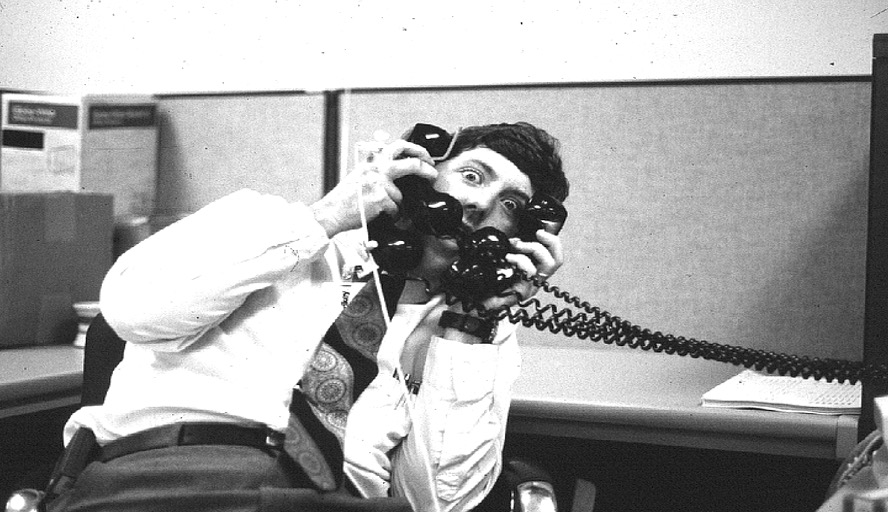
This is how it sometimes felt during outages in the data center.

I hated that part. Give me a bad repeater under the raised floor, or a failed hard drive on the mainframe, or a 2,500-pair cable in the field that’s failing because earth movement from a recent earthquake caused the hard plastic sheath to crack and water’s leaking into it, any time. Timecards? Employee rating and ranking? Just shoot me now. That was work for managers.

I’ll admit it now; I didn’t  want to go into management, because I liked the hands-on stuff. Manage the diving business? Okay, but I’d much rather be in the ocean certifying divers. Run a computer room? If I have to, but I’d rather be on my hands and knees under the raised floor, looking for the bad cable or determining which component is creating that nasty smell of burning electronics. So, when they finally dragged me into management, I wasn’t good at it. I tried, but my heart wasn’t in it—it wasn’t the least bit inspiring to me. It left me cold. I did it because I had to, as part of the advancement track that everybody talks about. And don’t get me wrong: I learned a great deal being a manager, and I definitely appreciated the pay bump, given that Sabine and I had two little kids, but I know beyond doubt I wasn’t one of those managers who inspire people. I simply wasn’t good at it. And you know what? That’s okay.

Here’s the lesson to walk away with. I learned pretty quickly that success, especially in a corporate setting, is about knowing your own limitations and accepting them with grace, and being good at delegating things to people who are better at them than you are. That means you get to focus on the things you’re good at, and they get rewarded by being recognized for what they’re good at. Oh—and a nice by-product? The job gets done well. It’s called division of labor, and it has worked since the first time two people decided to plant a field together in the Fertile Crescent, 5,000 or more years ago.

Some of you have heard me mention, in previous episodes, my friend and mentor Tom Vairetta. Tom was one of the best managers I ever met—ever. I used to say that the best boss I ever had was a man who worked for me at the phone company. That was Tom. To this day, if I’m facing a difficult challenge, I always ask myself, ‘What would Tom do here?’ 

One thing Tom taught me was to pretend that every single person I encounter throughout the day, whether they were my own employees or people from other work groups, is wearing a sign around their neck that says, “Make Me Feel Important.” That’s all people want. Everybody matters. Make them feel as if they do and you will have fulfilled 90 percent of the mandate of a good manager. The other part is that timecard thing from hell. That’s NASA stuff.

Here’s another lesson I learned along the way that had significant personal impact that will become obvious to you through the telling. I was often advised by hardcore, career corporate types that ‘Whatever you do, don’t allow the company to EVER move you into training. That’s the dead end of death. Trainers are the walking dead.

Wrong thing to say to someone whose favorite job so far was being a diving instructor. But it occurred to me at some point that if you put the walking dead in charge of engendering in your employees the skills and capabilities that are required to move the company forward, then how can trainers and educators be the walking dead? Seems to me that that’s a pretty important role. And given that I spent the majority of my career in various forms of education, and I’m still standing, it’s pretty clear that the advice was ill-placed. 

Here’s a corollary to that last one. ‘If you love what you do, you’ll never work another day as long as you live.’ 

Actually, that’s backwards. If you love what you do, you’ll work every single day of the year, and you’ll put in long hours, but you’ll have a smile on your face all day long and at the end of the day you’ll feel energized, not exhausted. I know this to be true from personal experience. In 1991, I left Pacific Bell and went to work for a small but highly respected consulting company based in upstate Vermont. I was recruited to the company by its founder, and man, I was walking on air. Talk about an ego boost! This was a company where we’d walk down the hall of a customer location and after passing a group of employees, they would whisper, ‘Those are Hill Associates people!’ What a buzz.

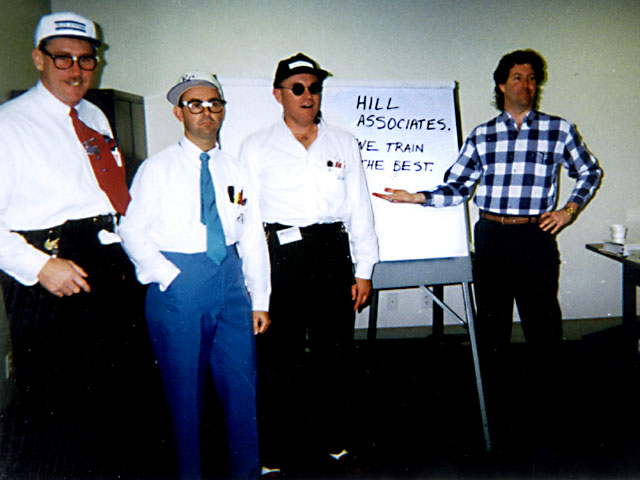
The sign says, “Hill Associates. We Train the Best.” The “geeks” were some of my students, playing the part.

Working for that company was one of the greatest opportunities of my life, and I’ll be grateful to the founder, Dave Hill, for the rest of my life for taking the chance he did on me. I often described the place as a repository of the smartest people on Earth. Most of them had forgotten more about technology than I would ever know. In fact, I was one of the only people in the company who didn’t have a degree in electrical engineering, computer science, or robotics. I would work so hard to learn a new technology—new to me, anyway—and when I had, when I felt like there was nothing else to learn from reading the standards, when I knew that I was the universe’s expert on that topic, I would make the mistake of having a conversation with someone in the company who actually hadlearned everything there was to know about that particular technology. 

Here’s an example. One of my colleagues, who is still a close friend, was once teaching packet switching at Bell Labs. If you don’t know what packet switching is, it’s the basis for how data moves around the Internet—and for that matter, most other modern networks, as well. Anyway, one of the most important algorithms to know about in terms of how data is uniformly and fairly distributed across a network where multiple paths exist between a piece of data’s source and its destination is called Chu’s Algorithm. It’s complicated stuff. My friend was teaching Chu’s Algorithm to a group of propellerheads at the Labs as part of the packet class. During the class, a guy kept sticking his head in the door, listening for a bit, taking a few notes, nodding, and then abruptly leaving. This happened quite a few times. Finally, my friend asked the class why the guy who kept interrupting didn’t just come in and sit down. The class told him that he’s too busy—that’s Dr. Chu. You know, the guy who wrote the algorithm. 

That’s what I was up against. But I was a good writer and teacher, and they needed those skills as much as they needed people like my friend who could explain the market implications of Chu’s Algorithm to Dr. Chu. 

Anyway, after ten years, I left the consulting firm to start my own business. I had written a book called Telecommunications Convergence, which had become a bestseller, followed up quickly by another book, the Telecom Crash Course, which ALSO became a bestseller. I wanted to write more books and pursue more international work, especially in Latin America. So, in 2000, I left and started the Shepard Communication Group, where I’ve been ever since.

All that to say, here’s another aphorism for you: ‘Find a career and stick with it. If you change careers, or companies, hiring managers will think you’re a dilettante and they won’t hire you.’ Well, that’s outdated advice today. Sure, there’s much to be said for staying with a company, year after year, but only if it gives you as much as you give it. And demographic behaviors are changing. 

Interesting word, career: it comes from the Medieval Latin word carraria, which means a road. Isn’t that what a career is? A road? A path to some destination? That’s something to think about.

Here’s a final quote for you that I took under advisement, early on: ‘Anyone can get a job, but your goal should be to find a career.’  Okay—or, you can find a job you love and turn it into a career. What’s wrong with that?

I’ve had the most non-linear career anyone could possibly imagine: dive shop operator, dive instructor, commercial diver, telecom analyst, IT data center manager, telecom educator and advisor, consulting analyst, writer, public speaker, and audio and video producer. Was that a career, or a string of unrelated jobs? I’d love to say that I planned this career, but I’m not that smart, and no one would believe me, anyway. When I think back on the last (wow) 48 years, and reflect on what I’ve already written here, I’d like to share a few things with you, especially if you’re reading or listening to this and you’re in the early stages of your career. Consider this a summary.

I started this essay with the aphorism, ‘Do what you love. The money will follow.’ That’s partially true. There are plenty of things that we all love to do that don’t pay the mortgage, but that doesn’t mean we should walk away from them, because in this life, we get paid in two ways. The salary we earn for doing the job we’re paid to do feeds the bank account; the passion projects we take on, what people used to call hobbies, feed our soul and our sense of personal well-being. Both are valuable, necessary currencies, and a focus on one at the expense of the other does us considerable harm. For example, I produce the Natural Curiosity Project Podcast because I love to do it and because people enjoy the topics I talk about and the interviews I do with interesting people. It doesn’t pay the bills; it feeds my soul, and makes me smile. But the paid audio work I do for clients, often because they’ve heard the Podcast and want something similar for their own purposes, that work contributes to paying the bills in a very nice way. And one more thing: I’m as busy now as I ever was when I was flying and working all the time, because I have lot of things to do that make me happy. But I know many, many people for whom their life is their job. What will they do when they retire? Please don’t fall into that trap. Keep both currencies flowing—you’ll thank yourself later.

Whatever you do, get into management’ was the next lesson that older, more experienced corporate types told me. And yes, there’s something to be said for that, if it calls to you—and for many, it does. It just didn’t call to me. I didn’t like it, I wasn’t good at it, and I went in another direction. The message here is this: listen to what others have to say but follow your heart. Is it important for everyone to have management skills? Absolutely! Is it important for everyone to be a manager? Definitely not.

Avoid training like the plague.’ Training and education aren’t a job; they’re a calling. If they call, answer. Agreeing to join the Advanced Technologies Training division at Pacific Bell was the decision that put me on the path to what became my amazing, wonderful career. That was how I met Dave Hill, who hired me away from the phone company and moved my family to Vermont; Hill Associates was where I became proficient and comfortable with technology; and Hill Associates was where I wrote my first two technology books, both of which became bestsellers and gave me the confidence to set out on my own in 2000. 

And I don’t mean to imply that this advice only applies to training and education. There’s an old and worn-out aphorism that says, ‘Those that can, do; those that can’t, teach.’ Well, somebody had to teach those who do, HOW to do! So, listen to your own advice, and with both eyes open, make your own decision. Your heart and your mind will talk to you; listen to both, but really listen. The heart knows what it wants.

If you love what you do, you’ll never work another day as long as you live.’ I’ve lost track of the number of people who have said to me, “You’re so lucky to be independent and work for yourself. You can work whenever you want to.” True: and it’s a good thing I want to work every freaking day of the year, because that’s what happens. Independence does not translate to work-free, or less work. It means that everything is on your shoulders, and while the model worked for me very well, that’s not true for everyone. Be honest with yourself if you should ever entertain the idea of going independent. If you’re okay working long hours alone in your office, traveling alone, staying alone in a hotel, eating alone, and in general just spending a lot of time with yourself, go for it! But if you’re the kind of person who needs to have lots of people around all the time, think twice. I’m not saying don’t do it—I’m simply saying, think about it, and discuss it with those around you who will be affected by the decision.

Find a career and stick with it. If you change careers, or companies, hiring managers will think you’re a dilettante and they won’t hire you.’ There was a time when this was good advice, but today, not so much. Between the culture of the gig economy, elements of which have crept into the traditional workplace, the lingering work-at-home effects of the COVID lockdown, and shifts in workplace priority and balance caused by generational change, the practice of routinely changing jobs and companies has become common. But let me make a point here. Companies hire employees because they bring value to the workplace, and that value, more often than not, comes in the form of a well-developed, monetizable skill. Whether you call it a career, a job, or a calling, what matters is that you bring a well-developed differentiable capability that creates value for the company looking to hire you. 

And that brings me back to my first point, which is also my last point. ‘Do what you love. The money will follow.’ It has taken me more than fifty years to realize that above all else, I’m a storyteller. Whether I’m standing in front of a classroom, or writing a book, or crafting an article, or assembling a video script, or creating a white paper, or shooting photographs, or producing a Podcast, or directing a video, ultimately, I’m telling a story. I’m creating context for an intended audience. That’s my gift, and I use it to earn a paycheck. Writing, recording, photographing—all of those are paving stones in the road of my career. But let me remind you: I also have many years of expertise in the arcane field of telecommunications, which means that I use my varied storytelling skills to create value for my telecommunications clients. I don’t love telecom; I love telling stories about telecom as a way to convey content and context in the form of communications. That’s the essence of good storytelling.

In my case, the money follows because I have expertise in my chosen field. My passion, the craft of the well-told story, is my differentiator. So, I have the ability to engage in my passions, to do the things I love—writing, speaking, recording, photographing—because I’ve figured out how to use them as delivery vehicles for the things I do that earn me a living. That’s the magic formula. 

Do you know the word amateur? In French, it means, ‘a lover of.’ I am a lover of writing, speaking, recording, and photographing, which means that I am an amateur at all of them. And those are the things that make me good at what I do, professionally. 

So that phrase should be re-written as follows: ‘Do what you love. It will make you better at doing the things that make the money follow. And, it will prevent you from resenting the work you HAVE to do because you’re also doing the work you WANT to do.

So, take the advice of Mark Twain, who is my answer to the question, ‘What famous person would you most like to have dinner with’: 

“Twenty years from now you will be more disappointed by the things that you didn’t do than by the ones you did do. So, throw off the bowlines. Sail away from the safe harbor. Catch the trade winds in your sails. Explore. Dream. Discover.” 

A few thoughts that I hope you find useful. Stay in touch!

It’s a Thing

“Here’s a quote you’re going to like.”

Seconds later, my phone vibrated, and in my inbox was the following message from my wife:

A fact is information minus emotion. 

An opinion is information plus experience. 

Ignorance is an opinion lacking information. 

And stupidity? Stupidity is an opinion that ignores a fact.

As we once again prepare to enter the soul-sucking, hysteria-ridden, social media-driven, high emotion, largely fact-free presidential election cycle in the United States, it behooves us—ALL of us—to consider those words.

I spent a quarter-of-a-century of my career sparring with the construct of leadership: what it means, how it manifests, how it’s developed and demonstrated, where it leads when it’s executed correctly. I’ve seen breathtakingly bad leadership, and I’ve seen leadership that was so good it took my breath away. 

Simple fact: leaders are leaders because others follow them. Those that follow are called followers. It’s a two-party ecosystem. Back in the 1980s, I saw a sign on the wall of a cubicle at the phone company where I worked. I made a copy of it. It said, ‘WHERE ARE THEY? WHICH WAY DID THEY GO? I HAVE TO FIND THEM, I’M THEIR LEADER!’ 

Nope.

Followers follow because the perceived leader offers something they desire. As many of you know, my definition of leadership is bone-headedly simple: leaders create a vision of what could be, not what is. They provide the mechanism to escape the status quo, and therefore the mechanism to avoid complacency, which if ignored leads to irrelevance and the competitive death spiral. Good leaders show their followers a better future than the one they currently envision, and then enroll them to help the leader achieve the vision. That is leadership at its very best. Leaders lead with a vision; followers engage to help make the vision real. Ecosystem.

It’s a Thing

That’s the current jargon for something that’s trending, usually on one or more social media platforms. 

It’s a thing.

If you’ve read any of my research or papers or blogs over the last couple of years, you may have run across one or more of them that take social media to task. I admit it: I have a problem with social media, because of the platforms’ corrosive tendencies to widely propagate bad data, outright lies, and misinformation, and then hide behind the power of the First Amendment when the prospect of being responsible for their actions inconveniently comes up. 

Social media derives its power from two groups of people: followers, as in, “How many followers do you have?” and the other group, the influencers. Some influencers do good things; I wish their voices were louder. I wish they had a stronger signal-to-noise ratio.

Social media has an outsized voice, particularly among the younger end of society, those who are most easily influenced by misinformation. This morning I did a search on the top ten topics trending on social media platforms. They included the apparently life-changing impact of snail slime on wrinkles, one of the Kardashians talking about drinking her own breast milk for a quick pick-me-up, the it-will-never-go-away trend of swallowing laundry pods, and apparently, rough sex among children as young as 12, including asphyxiation as part of the sex act. 

I have no words. Except these.

A fact is information minus emotion. Correct. And information is data plus context. As Walter Cronkite, the revered newscaster, might have said, “Here’s what we know. Here are the facts. This is what actually happened today. You’re smart enough to think about the facts and decide what the implications are for yourself and your community.”

An opinion is information plus experience. The implication? “I’ve been around long enough to have seen this before, which means that I know what most likely comes next. I suggest the following action.”

Ignorance is an opinion lacking information. My friend Anthony Contino likes to say, “It must be wonderful to go through life, mercifully unencumbered by the terrible burden of intelligence.” Experience is only as good as the breadth of the knowledge landscape that generates it.

And stupidity? Stupidity is an opinion that ignores a fact. Never let the truth get in the way of a well-formed lie.

To return to the construct of leadership for a moment, I’d like to offer an observation. If we apply the leadership model to the social media landscape, a chilling parallel emerges. As I noted, leadership is a two-party construct—the leader, whether good or bad, and the leader’s followers. Social media also has followers, which implies that those they follow are the leaders. You know—the ones who drink their own breast milk, swallow laundry pods, let snails crawl on their faces, and choke young girls during sex. Maybe it’s me, but those aren’t the kinds of leadership role models I want ANYONE exposed to, especially children. 

When I was a kid, my dad told me a joke that I’ve never forgotten. Two kids are walking in a field, and one of them surreptitiously bends down and scoops up a handful of rabbit droppings. Later he shows them to the other kid.

“What are those?” the kid asks.

“Those are smart pills,” he replies.

“What do they do?”

“You swallow them and they make you smart. Here, try some.”

Suspiciously the kid takes a few and chews them carefully. He grimaces. “These things taste like shit!” He exclaims to the other kid. 

The other kid responds, “See? They work! Now you’re getting smart.”

Dad also told me a story about a guy from the east who was visiting a relative in the west. The two were out walking in the barnyard, and the easterner was complaining about how dry the air was, and that his lips were badly chapped.

“I can fix that,” the grizzled farmer replied. With that he bent over and scooped up a blob of chicken poop and without warning, smeared it on the guy’s chapped lips.

“What the hell is that supposed to do?!?” The guy replied, disgusted.

“The main reason your lips get chapped is because you lick them too much. That will keep you from licking your lips.”

I should post that. I could become a wealthy influencer.

Fact? Opinion? Ignorance? Stupidity? We all have a choice.

The None-Too-Soon Demise of Social Media

Dr. Steven Shepard

DR. KENN SATO, CHIEF OF NEUROSCIENCE AT CEDARS SINAI, stared in frustration—and no small degree of exhaustion—at the brain scan on the screen in front of him. Rubbing his eyes in the dim light of the viewing room, he muttered to no one in particular, “This just doesn’t make sense.”

Rocking back in his chair, he stared at the ceiling. The room was quiet, one of the few places in the hospital right now that was.

The frustration he deservedly felt was due to his inability to diagnose a widespread neuro-physiological malady that was rippling through societies across the globe. There was little

rhyme or reason to it; it affected young and old, healthy and infirm, men and women. The only discernible patterns were that it seemed to be focused largely, though not exclusively, on developed industrial nations; and, the symptoms were identical, regardless of age, ethnicity, gender, overall health, or race. Physicians and researchers had so far failed to identify an organic cause for what they had taken to calling Hysterical Catatonia, or ‘HysCat.’

But the name didn’t go far enough in its attempt to describe the condition. Symptoms of those suffering from HysCat ranged from extreme anxiety, to bursts of uncontrolled anger, to periods of profound, debilitating sadness, to incoherent mumbling and hand twitching, to a full-blown catatonic state in which patients stared off into space, apparently neither seeing nor hearing, their hands twitching and jerking uncontrollably. At first, they suspected something organic, like an amoebic brain infection; then, they considered Tourette’s; some thought it might be from some external inorganic cause, like ingestion of mercury (‘Mad Hatter syndrome’). But none of those panned out. Medically, it was a frustrating mystery—and it was intensifying. Whether it was organic or environmental, no one knew. But the symptoms were spreading rapidly, and nothing was slowing them down.

Sato’s reverie was broken by the buzzing of his mobile. An incoming text from his colleague, Rafael Santoro, the head of Emergency Medicine. 

NEED YOU HERE STAT, UP TO MY ASS IN CASES.

Sato looked once again at the ceiling. This long day just got longer, he muttered. Pushing himself out of the chair, rolling his neck and shoulders to work out the kinks, he headed for the door and the ER. 

SANTA CLARA, CALIFORNIA (AP) The world awoke this morning to an incomprehensible reality:  all forms of social media had disappeared from computers, laptops, tablets, smart watches, immersive reality headsets, smart TVs, and mobile devices. 

Initial speculation was that a widespread failure within the great, Byzantine machinery of the Internet had caused the applications to become temporarily unavailable, or that hackers had somehow blocked access to the vast sea of servers that housed the code that enabled the social magic. 

That was not the case, however. The Internet itself was working perfectly, as were standard applications—email, search, office automation, database, storage—but the social applications were gone, disappeared without a trace. No Facebook; no Twitter; no Instagram; no Snapchat, no WhatsApp, no TikTok; no Clubhouse, no Reddit, no Signal. It was as if they had never existed. Calls to the parent companies of these services went largely unanswered; ‘We’re … working on it’ was the only response given by an ashen-faced Facebook employee who was cornered in the parking lot by a journalist and who agreed to speak off-the-record. 

As a sign of the severity of the situation, reporters monitoring the various headquarters of social media companies reported that no one had left the buildings—not a single employee—in four days. The only people who had entered were food delivery drivers and a few members of the clergy. One DoorDash employee who agreed to speak on condition of anonymity said that he couldn’t wait to get out of there. “People are yelling and crying all over the place. And it smells like a high school gym in there. It’s gross.” A GrubHub employee on a Vespa nodded vigorously in agreement.

Internet security specialists dove in, attempting to find the source of the disruption. But every time they thought they had discovered the cause of the bizarre disappearance, they found themselves at a digital dead end. Nothing like this had ever happened before. Applications had certainly failed in the past; data centers had suffered power outages and gone offline; hackers had scrambled the brains of computers and made data unavailable. But never had an application with so many global users actually disappeared, much less all of them. This, if the tabloids were correct, was technological Armageddon. 

One senior security professional in northern Vermont who asked not to have his name revealed, reported that he had discovered an anomaly a few hours into the initial outage, which began with Facebook. 

“I can’t be sure,” he reported, “but based on what I’m seeing, there’s a pattern. Don’t quote me on this—at least not yet—but it seems as if somebody has inserted some kind of character filter, deep within the source code, that invalidates certain key text and executable strings. As near as I can tell, anything that gets transmitted—whether it’s a message between users, or a piece of parsed application code—that has certain specific words in it, is getting permanently and irretrievably deleted. If it’s a message between users, it just disappears. If it’s part of application source code, it gets deleted and the app quits working, which explains why all of these applications have gone bye-bye.”

When asked what, specifically, was being deleted, or was serving as the trigger for deletion, Joe responded that it appeared to be a fairly narrow collection of digital items. 

“Here’s what I’ve found so far,” he began. “Any occurrence of the words ‘friend’ or ‘friends,’ or ‘like’ or ‘likes,’ or the word ‘following,’ triggers immediate deletion, as do certain phrases or letter combinations: LOL, BFF, BRB, BTS, BTW, DYK, IMO, IRL, LMK, AF, GOAT, LMAO, MFW, OMG, and TMI are the ones I’ve found so far that get vaporized, although my list keeps growing. Look here— FOMO and ICYMI just popped up. I’m also finding that certain images or symbols cause transmissions to disappear: the symbols—you know, emojis—for thumbs-up, waving hands, piles of dog poop, and a variety of facial expressions cause immediate and permanent deletion.” 

Joe’s admiration for the elegance of the attack showed. “What’s brilliant about this hack is that the code is scattered all over the distributed servers that make up the Internet, so there’s no single place it can be fixed. We’re talking hundreds of millions of devices out there, all owned by different people. I’ve also discovered that there may be an AI element to this thing. It seems that it’s doing video analysis, and going after specific video sequences. If the AI algorithm sees a character in a video that stares at the camera and pulls on their clothing three or more times, or if the star of the video has lips that look like they were stolen from a carp, or if the person in the video’s face is less than two inches from the camera when the video starts, the video is trashed. Also, anything that involves cats or politicians seems to be targeted, although for some weird reason, videos with Bernie Sanders are left alone as long as he’s wearing those mittens.”

Within hours, emergency rooms began to fill with frantic patients suffering from symptoms of dopamine withdrawal caused by the sudden disappearance of likes in their lives. Medical personnel were forced to tell each patient how great they were, how valuable they were to society, and were strongly encouraged by psychiatric staff to give every patient two thumbs-up every time they walked past a treatment room or gurney-bound patient in the hallway. It was exhausting.

“It takes a lot of extra time, but it’s what they need. Otherwise, they quickly descend into a dark depression that we can’t pull them out of,” said Dr. Kenn Sato, department head of Neuroscience at Cedars Sinai Hospital. “It’s just a panacea, but it’s the only thing we have at the moment that seems to have any effect at all. But it has to be done consistently. And I mis-spoke there. Let me be clear: we haven’t pulled anybody out of this yet, whatever ‘this’ is.”

THE BOARDROOM TABLE IN FRONT OF WALT HARRINGTON was a work of art, inlaid with precious stone and wood inlay. On it were plates of fruit and cookies, pitchers of water, and carafes of coffee, all laid out for the 16 people who sat around the table. Seated in their expensive Recaro chairs, they looked at him silently. They all looked as if they had eaten bad shrimp. 

“I’m sorry about that,” Walt told them in a quiet voice, trying unsuccessfully to look contrite, his palms raised toward them in contrition. He had spent the last five minutes pounding the table with his fists, Khrushchev-like, as if abusing the table would give his words more impact. 

“I’m not directing my anger at you” (he was), and I’m not being overly dramatic (he was), but I need to drive home just how bad this is (they already knew). We’ve lost access to our most accurate indicator of market performance.”

He turned to face the windows behind him and ran his hands through his thinning hair. His jacket spread out like butterfly wings. He turned to face the people in the room. His mouth opened, closed, opened again. He looked like a trout in a stream. He was at a loss for words. He dropped his arms to his sides, which apparently dislodged something, once again giving him the ability to speak. 

“Our entire market strategy—shit, our entire customer engagement strategy—is based on

Measured Return on Likes. You all know that. We’ve spent years perfecting it. And now the likes that feed it have fucking disappeared! We’ve got nothing. I feel like we’re sailing in the fog. Unicorns and rainbows don’t cut it, people—come on, you’re the senior leadership team! How do we get around this? How do we get insights on customers without social media feeds?” 

The people gathered around the table looked at each other uncomfortably, but no one spoke. Most just stared at their uncontrollably twitching hands. Then, a single arm went up. It was attached to Ed Adams, the firm’s Chief Counsel. His suit was expensive; his tan was perfect; his silver hair perfectly complemented his leonine face.

“Ed?” Walt Harrington gestured, yielding the floor to his colleague. 

Adams drank from his coffee cup before responding. He smiled, his hands folded across his stomach. “Why don’t we call them?” he asked. 

Harrington looked at him, his face puzzled. 

“Who? Call who? What the hell for?” His frustration was beginning to well up again. 

“Why, customers, of course,” Ed responded, “Why don’t we just call them, and ask them how happy they are with the product?” 

Titters around the room. Harrington stared at the inlaid tabletop and sighed deeply. 

Looking up, fixing the attorney with a steely gaze, he asked the room, “Does anyone have any realistic ways to get us out of this mess, or are we just pulling suggestions out of our collective asses?” 

A SECONDARY IMPACT OF THE DISAPPEARANCE OF SOCIAL MEDIA was that the global supply chain was reeling. One economist, who couldn’t stop giggling during the interview, said, “Well, of course it’s in trouble! Don’t you see? Without social media, people have no way of knowing what their ‘friends’ are wearing, thinking, eating, drinking, playing, or doing, and since social media makes it impossible for people to make their own decisions about what they want to wear, think, eat, drink, play, or do, they’ve stopped spending money, because they’re not seeing hyper-targeted ads that tell them how and where to spend it. Large pieces of the global economy have just come to a halt. It’s the end of everything! Without the influence of—you know, social media influencers—the world has no compass to drive it forward!” 

Sociologists were quick to point out that this could mean the end of civilization as we know it. One authority, who agreed to speak on condition of anonymity, observed that the disappearance of social media could lead to societal breakdown for two main reasons. First, he said, a significant number of multinational corporations base their growth strategies and revenue projections on MROL—Measured Return on Likes. Without powerful performance indicators like Yelp, he told the reporter, there are no likes, which means that there is no success indicator available against which to benchmark—well, anything. Some organizations have already gone so far as to indicate that they may have to fall back on outdated legacy measures, like delivering on the promise of customer experience and baseline profitability. Some have intimated that they may have to start hiring people on a full-time basis, paying them well and giving them legitimate benefits as a way to create employee loyalty, which some studies from the 90s indicate leads to employee loyalty and therefore higher levels of customer engagement and stickiness, although all queries regarding such intentions were quickly dismissed as groundless rumor. ‘We’re a long way from something that extreme,’ most company representatives were quick to say. 

The second reason cited was far more sinister. For years, people have forged what they believe to be strong, heartfelt friendships on social media platforms. “Those were my people!” one teen cried as she collapsed to the ground, her phone clutched tightly in her hand, its screen displaying a quaint address book application that said, ‘NO ENTRIES.’ “They were my everything! What am I supposed to do now?!?!?” Aid workers helped the girl to her feet before hustling her off to a crisis center. As she was loaded into a waiting ambulance, she could be seen mindlessly swiping the screen of her phone, but she wasn’t looking at it. As the ambulance attendant closed the rear doors of the vehicle and gave the driver a thumbs-up, the girl smiled broadly.

ROGER BOUGHTON EMERGED FROM THE BASEMENT carrying a dusty, dented cardboard box, on which someone, probably him, had written with a black marker, ‘OFFICE.’ He placed it on the kitchen table in front of his son who sat there, glassy-eyed. He could hear his 16-year-old daughter upstairs, crying, his wife trying to console her. 

This is a serious Hail Mary, he thought. It’s crazy, but I can’t think of anything else

He pulled a steak knife from the knife block on the island and proceeded to cut open the now-brittle tape that barely held the box closed. He set the knife aside and folded back the flaps.

Reaching into the box, he began to remove the annals of a former life: a black, two-tray plastic inbox; a pile of long out-of-date technical papers, now faded to pale yellow; his Franklin Planner, the leather cover cracked and stiff; a handful of number two pencils from the Blackfeet Indian Writing Company; a stack of business cards, the rubber band holding them together long since gone brittle and broken; a sheet of 17-cent First Class stamps; his desk dictionary; the coffee cup given to him by his team years ago, during a difficult time, with the legend, ‘NON ILLEGITIMI CARBORUNDUM’ (DON’T LET THE BASTARDS GRIND YOU DOWN) printed on it, in fake Latin; a paper-clipped pile of Xeroxed office humor, pulled from his cubicle walls, the paper clip creating a rusty palimpsest of itself on the top page; his HP 12c calculator; a VHS tape with who-knows-what recorded on it; his college slide rule; a stack of plastic stenciling templates; a sheet of camera-ready clip art; and finally, at the bottom of the box, his 2500 set, still connected to its long, gray, RJ-11 tether.

“What the hell is that?” his 13-year-old son asked. 

Roger ignored the question from his son as he undid the twist-tie that kept the coiled gray cable from expanding, then bent over and plugged the clear plastic clip into the long-ignored outlet on the kitchen wall with a satisfying click. He picked up the handset, held it to his ear, and smiled. “Oh yeah…” he said.

Pulling the ancient desk phone over to the kitchen table, he placed it in front of his son. “There you go—call Devin,” he said, referring to his son’s best friend. 

“How?” his son asked. 

“Just punch in his number.” 

“What number?” 

WITHIN A FEW DAYS OF THE ONSET OF THE CRISIS, first responders began to intervene sporadically but effectively with tools and techniques to help the most afflicted deal with the trauma of anonymity. Fire stations across North America marshaled resources to gently teach people how to use the telephone function on their mobile devices, and in one extraordinary case, taught them how to use sheets of paper and pens or pencils to draft and mail letters through the U.S. post office. Most such efforts were illegible, but the act of licking the stamp and envelope seemed to calm many of the afflicted. 

Some scientists have taken to calling the behavior that has resulted from the disappearance of social media ‘the Ptolemy Rebound,’ referring to the fact that when under the thrall of social media, individuals rapidly begin to believe that they are at the center of the universe, in the same way that Ptolemy’s followers, including the Catholic Church, believed that the Earth was at the center, until Copernicus, Galileo, and Newton proved otherwise. Clinicians have begun to refer to the ‘deprogramming protocol’ they have developed as the ‘’Defamation Process,’ referring to the slow but gradual process of weaning people off the fantasized sense of individual fame and galactic importance that social media use creates. 

I’ve seen ERs in Beirut that looked better than this, he thought. 

RAFAEL SANTORO LOOKED OUT ACROSS THE HOSPITAL GEOGRAPHY that was his responsibility—the Cedars-Sinai Emergency Department. At the best of times, he had 51 beds available for walk-ins, but these weren’t the best of times. This was somewhere on the other side of Code Black. Gurneys, cots, and makeshift litters covered every square foot of space, and every one of them was occupied.

Demographically, the patients were all over the map, although the population of the afflicted leaned more toward a younger audience. Some lay on gurneys, staring glassy eyed into the distance. Some sat upright, rocking back and forth as if they were praying at the Wailing Wall, their fingers twitching in their laps. All of them randomly slapped their hips with hands every couple of minutes, responding to phantom vibrations caused by imaginary incoming social media notifications. It was as if a body part had been amputated—phantom limb pain.

Santoro walked out into the hallway, which had been converted into a triage area. He watched as a nurse took a patient’s clunky shoes from their bag of personal belongings under the gurney and wedged them under the patient’s pillow. What the hell?

Walking over, he accosted the nurse, asking what she was doing.

“We don’t have a choice,” she replied. “We’ve run out of extra pillows, so we’re using whatever we can find to prop their heads up.” 

“But she has a pillow,” Santoro replied.

“It’s not enough. All these people need at least two pillows, because they can’t put their heads down that far when they’re lying on their backs.”

He was mystified, but just for an instant felt a ray of hope that quickly vanished. “Why? Are they showing signs of meningitis?” 

“No, no, nothing like that. They’ve spent so much time with their heads tipped forward looking at their phones that their necks don’t tip back anymore without severe pain. We figure they must all sleep on their bellies or sides. So, we have to prop ‘em up any way we can, or they’re in pain and want meds.”

“Rafa!”

He turned at the sound of his name and saw Kenn Sato walking toward him. Sato passed a young woman lying on a gurney in the hallway and gave her an exaggerated smile and two thumbs-up, before looking at Rafael and rolling his eyes.

“How’s it going?” Sato asked. 

“Shitty, thanks,” he replied. They walked over to the staff lounge to help themselves to steaming cups of hot coffee, the one amenity in the hospital that was never in short supply.

“This is the shit show of shit shows,” Santoro groused. “All these parents are bringing their kids in for help. Problem is, they’ve all gone online and looked up symptoms in the online PRG, and

half of ‘em are convinced their kids are jonesing for coke.”

Sato shook his head. “Nope. It’s withdrawal, alright, but not cocaine. It’s Dopamine Agonist withdrawal. Same symptoms. “I’m pretty sure—” 

They both went quiet as the ER intercom clicked to life with a scratch of static.

”Dr. Sato, Psych consult, exam 4. Dr. Sato, Psych consult, Exam 4.” 

“To be continued,” Sato said, slugging down the coffee. Turning, his hands in the pockets of his lab coat, he walked back onto the floor and headed across to the treatment room area, where a bevy of nurses in Exam 4 surrounded a young girl and her anxious parents. Even from the other side of the ER, he picked up on the stress in the room. Walking over, he stood at the door, took a deep breath, mentally calmed his voice, and called to the Charge Nurse who was standing at the head of the bed, speaking quietly to the girl in the bed as she gently rubbed her forehead. He could hear some of what she was saying: “…of course they remember you … you’re not going to miss out on anything … of course they still like you …”

The girl whimpered and mewled at her touch.

At the sound of her name being called, Deb Long looked up at him and smiled, her face wan and drawn from exhaustion. “This is Dr. Sato,” she said, turning to the girl’s parents. He’s one of our … specialists.”

They turned to him as all parents did in times of crisis, glomming onto him like a drowning swimmer trying to climb to safety atop an approaching lifeguard. He picked up the chart from the slot at the foot of the bed, perused it, put it back. He sat down on the foot of the bed, smiled at the young girl, and asked, “How are you feeling, Amber?” 

CAROL BORGHESI, CRISIS RESPONSE LEADER FOR WESTERN CANADA, was quick to point to another phenomenon that she was watching with great interest.

“People are crawling the walls over activities they think they’re missing out on because of the disappearance of social media,” she observed. “It seems to be an irrational Fear of Missing Out that has people reacting this way—they call it FOMO. Apparently, when they’re chatting with their friends online, they think they’ve been transported to some alternate universe where stuff they talk about actually happened. One group of teenagers couldn’t shut up about the day they all saw a whale jump out of the water and land on a fishing boat, when I know for a fact that they’ve never—not a one of them—ever been more than five miles from Kelowna. You know about the madness of crowds? I’ve been putting out fires like this for a very long time, but for the life of me I can’t figure out what activities it is that they’re apparently missing out on. Their minds are just making shit up and convincing them they were there the day they found a real mummy in a Wal-Mart in Seattle. It’s mystifying to me.” 

“IT’S NOT ‘DEFAMATION’ AS IN, CONDEMNATION,” said Doctor Kenn Sato, head of clinical neuroscience at Cedars Sinai, one of the hospitals that had had early success in at least treating the symptoms of HysCat. “It’s ‘de-famation,’ meaning to de-fame—weaning people off the false sense of fame that they all seem to have, this Messianic behavior that makes people believe they’re more famous, have more friends, are better known, and are more influential than they actually are. One of the techniques we’re using—and let me go on record here to say that we’re doing this with extreme caution, under very carefully controlled clinical conditions—is to slowly—let me repeat that, very, very slowly—show them an occasional downward-pointing thumb. It’s a radical step, and it’s potentially dangerous, but extreme situations call for extreme measures.”

“HELP ME UNDERSTAND THIS, BOB. One minute we’re up to our assholes in loudmouth, extremist dipshits, yammering that the planet is circling the drain, and then it’s all sweetness and light and unicorns farting rainbows and glitter. What gives?” 

The question came from Carl Potter, a high-ranking presidential advisor who prided himself on his deep understanding of both domestic politics and foreign affairs, and the places where the two touched. The fact that he was asking the question spoke volumes about the magnitude of the current situation. Carl was one of those guys who always had all the answers—and if he didn’t, he made some shit up with such flair and certitude that no one ever questioned him. And, even when he was pulling answers out of his ass, he was usually right. And, even when he was wrong, he was so confidently wrong that he sounded right. He was an extraordinarily gifted politician.

“Yes, it is weird, isn’t it?” Bob replied. Bob Catella was a White House consultant on societal affairs, with a background in sociology and industrial psychology. “I’ll be the first to admit it, but things are weirdly calm, politically. Ever since 2016, we’ve watched the extreme ends of the sociological and political bell curves in countries with access to social media become the tail wagging the dog,” he explained. “There was a time not all that long ago when the extreme thinkers—what we professionally call the whackadoodles—had voices that, from a loudness point-of-view, were in keeping with their percentage of the overall population. Then social media arrived, and suddenly those tiny factions had megaphones, which gave them outsized voices, far bigger and louder and, let’s face it, scarier than their owners actually were. They became the 21st century equivalent of The Mouse That Roared” —referring to Leonard Wibberley’s 1955 satirical novel in which the tiny Duchy of Grand Fenwick defeats the world’s superpowers. “I call it the Wizard of Oz effect,” he continued. “Now, with social media gone, those groups out there at the edge still have a voice, but it’s gone back to being an inconsequential whisper in keeping with the size and actual relevance of the groups supporting their fringe messages. They’ve gone back to being the ‘Who’ in ‘Horton Hears a Who.’”

PEOPLE ACROSS THE SPECTRUM have slowly, gradually, haltingly begun to engage in bizarre rituals, heralds of a bygone age. Thanks to support programs that were quickly thrown together at the community level by legacy, face-to-face organizations like Rotary, Kiwanis, and Lions Club, they’ve met their neighbors and, in some cases, have actually gotten to know the names of their neighbors’ children. People have been spotted going for walks with people to whom they are not related, and in an inexplicable turn of events, few wear noise-cancelling ear buds or headphones—they’re actually engaged in conversation with other people. And while it took some time, people have learned how to carry on a conversation over dinner without inviting their mobile devices to join them. 

Another odd thing that has surfaced—or, re-surfaced, as one older wag was quick to point out—is the Welcome Wagon. “We’ve started to see them in neighborhoods again,” one woman told a reporter from her front porch. “It was the strangest thing—we just moved into the neighborhood, and the day after the movers left a car pulled into the driveway and a woman got out with a big basket of flowers and kitchen stuff. It was pretty wonderful. And get this—as she was leaving, one of our neighbors from across the street came over and handed me a casserole. A casserole! I love casseroles! I haven’t had a casserole in years!”

TIM COOK SAT AT THE HEAD OF THE TABLE inside the cramped Secure Compartmentalized Information Facility, or SCIF, on the top floor of the great Apple doughnut in Cupertino. The room was basically a room within a room, acoustically and electronically isolated from the world to ensure that eavesdropping on conversations carried on within the space was not possible. It floated above the floor on vibration-dampening isolators and was wrapped in a copper mesh skin to prevent signals from entering or leaving the SCIF. As an extra precaution, mobile devices were not allowed inside. Only a few people at the company were aware of its existence—including those who were there today. 

“This is an all-hands-on-deck moment, people,” he told them. Nine faces looked at him expectantly, the nine most senior and creative people in all of Apple. “We have an opportunity here to capitalize on a once-in-a-lifetime event that might change the face of this company in profound ways and uncover opportunities for us that no one else is looking at, if our market analysis is correct—and I have every reason to believe it is. The disappearance of social media has been painful for much of the world’s population, but there are some things we can do to reduce the pain, things that will have our logo all over them. We’re going to have to do some acquisitions—I know, that hasn’t traditionally been a big part of our history—but thinking different certainly has.” 

He paused to look up at the framed photo of Steve Jobs on the wall. “I’m going to walk you through my thinking, and I want solid pushback wherever you think I’m off base. This is not a time for humility, shyness, or fear—if I’m wrong, tell me, because I’m not going to bet the ranch on a half-baked idea. So: here goes. The first thing I want to do is …”

 IN A SERIES OF DEFT MANEUVERS THAT MANY WOULD LATER CALL STEALTHY, and in some cases reckless, Apple engaged in a series of bold acquisitions that no one saw coming, because no one else saw the genius in what they were building. It went far beyond a newly introduced product or product line; it was almost a philosophy. 

iAm

Over a period of 48 hours, Apple closed in on and acquired, in Blitzkrieg fashion, eight organizations: Faber-Castell; Ticonderoga; Paper Mate; Visconti; Mohawk Paper; Strathmore; the pen division of Mont Blanc GmbH; and in what many suspected was driven by hallucinogenic mushrooms, the U. S. Postal Service. After negotiating an agreement to use the name with a national pet food company, they called the organization that resulted from the merging of the newly acquired companies, iAm. 


At Cook’s urging, and in concert with the Vermont-based Emily Post Foundation, Apple also commissioned the creation of an app designed to provide on-demand social skills that would help people through the awkward moments associated with carrying on a person-to-person conversation, in real-time.

“QUIET DOWN, PEOPLE, QUIET DOWN, PLEASE.” Dr. Kyle Mayer exhorted his classroom to settle down. His was a medium-size lecture hall that sat about 250 students, but right now, it was packed, standing room only. Insane.

This had happened ever since he announced his new course in the Communication Arts Department, “Applications of Non-Electronic Communications Media.” At first it had been a joke, but he’d said something about it to another professor in the cafeteria one day a bit too loudly, and one of his students overheard. 

“I think that would be a great course, Professor M.,” he effused. “That’s like lost art stuff—ink-stained fingers, leather elbows, linen paper, and licking stamps. I am so in.”


They spoke about it for some time, and a few other students joined the conversation. Kyle came away with the idea that there just might be something to this. He floated the concept at the next department meeting, and the response was cautiously positive. So, he put together a course description and syllabus.

Media Studies MS117 Course Syllabus:

Applications of Non-Electronic Communications Media

Professor Kyle Mayer

Barrows 221

The purpose of this course is to introduce students to a variety of non-electronic interpersonal communications modalities that were popular in the late 20th and early 21stcenturies, and that continue to offer potential in both personal and business settings. Participants will learn about the origins of these techniques, how they evolved to electronic alternatives, why some of these media failed, and how to use these legacy solutions effectively. Topics covered include:

  • Loss of social media and its Sociological, Cultural, and Economic Impact
  • Electronic Communication Tools that Remain Relevant
    • Email
    • Telephony
    • Zoom et al.
    • Computer-based voice applications
  • Legacy Tools—Applications and Insights
    • Telephone (i.e., voice calls)
    • The Written Word
  • Telephone Protocols
    • Rotary Dialing
    • Touch-Tone Dialing
    • Effective Voicemail Techniques
    • Proper Telephony Etiquette
    • How to have a conversation: the fine and deliberate art of listening
  • Letter-Writing Protocols
    • Envelope Addressing Techniques and Options
    • Stamp Selection and Application
  • Lessons in Patience and Altered Immediacy
    • Rewards of delayed gratification
    • Slow composition
  • Fact Verification Techniques and Effective Research Skills
    • Developing Healthy Skepticism
    • Recognizing Truth and Falsehoods
  • Social Engagement and Healthy Disagreement
    • Debate
    • The inalienably important role of reverence
    • Knowing Your Facts
    • Dealing with Confirmation Bias
    • Active Listening vs. Passive Hearing
    • Blind Spot Management
    • Civics

RICHARD DREYFUSS WASN’T SURE WHY HE HAD BEEN SUMMONED, but he had an idea. In the early 2000s, he had spent time at Oxford University as a research fellow to study Civics, which he defined as ‘an individual’s involvement as a citizen in the political activity of their nation and maintaining civility and civic discourse.’ He had gone on to teach classes and workshops on the subject, because of his strong conviction that the subject matter, which had begun to disappear from school curricula in the 1970s, was critical to a healthy society. 

He was pulled from his musings by a voice calling his name.

 “Mr. Dreyfuss? The President will see you now.” He rose and accompanied her through the thick door into the Oval Office.

“Richard—may I call you Richard?” the President asked. 

He nodded, assenting to be called by—well, his name. The President nodded back.

“We’re at a watershed moment, Richard,” the President said, earnestly. “Whatever it is that killed social media has done us a huge favor. People are running around like a pen of Thanksgiving butterballs without any life guidance. They have no idea what to do right now, so I want to strike while the iron is hot, as they say, and I need your help to do it.”

Dreyfuss swallowed. “What is it, exactly, that you want me to do?” He asked.

“I need a chief protocol officer,” the President replied, “Someone who can help me restore some degree of decorum to society. We need to get a few things back into the classroom and get them rooted in peoples’ heads, like civics, debate, geography, and history, and we need to start a national conversation about why they matter. Hell, I’m thinking about starting National Term Paper Day and National Debate Day. Social media started this belief that if somebody thinks differently than I do, then they’re wrong, they’re an idiot, and they’re my enemy. What a crock. I need to get people thinking again about the power and richness of diverse ideas. Can you help? Are you my guy?”

THE ENVELOPE THAT SHE PULLED EXCITEDLY FROM THE MAILBOX was hefty. Walking back up the driveway, Anna MacTavish tore at the hand-addressed envelope from her daughter, Ella. She knew what was inside, and she knew it was coming. And now, finally, it had arrived. The wait had been deliciously infuriating. 

Pulling the bundle from the envelope, along with the accompanying letter, she made it as far as the porch before she succumbed to curiosity and sat down. The stack of photos, a quarter-inch thick, was of her new granddaughter, Jonnie-Laura. She was every bit as precious as her own daughter had said she was, a smiling, round little baby, with perfect fingers and toes. They’d spoken on the phone, and they’d had a couple of unsatisfying Zoom calls, but Jonnie-Laura was either asleep or unwilling to cooperate with the camera.

Dear Mom, 

Sorry this took so long to get to you, but as you can imagine, things have been a little crazy around here. Tom and I are still not getting much sleep, but hey—that’s what we signed up for, right? We’ve only had this little girl for a week, but I already understand everything you’ve always said about how having a child changes you forever. I was on the phone this morning with my friend Rae—you remember her, she lives in Oklahoma City…

ST. AUGUSTINE IS REPORTED TO HAVE OBSERVED THAT “The reward of patience is patience.” John Comiskey thought about the quote, which his girlfriend had shared with him, as he waited for the bus that would take him to campus. He knew that it would be along in about a half-hour, so he had time to get a little reading in. There was no hurry; if he got bored, he’d do a little journal writing on his ReMarkable tablet. 

“I DON’T CARE—GO OUTSIDE AND PLAY!”

Andrea Mills had had it up to here with her two boys. As her husband liked to say, she had one nerve left, and they were getting on it with their incessant fighting, arguing, and whining. After a long day at work, all she wanted was to fix dinner (which she enjoyed if she was uninterrupted) and nurse a Bees Knees while she did so, the gin and honey leaving her mellow and relaxed. 

Looking up from the cookbook on her iPad, she saw that the boys were pulling on their shoes. 11-year-old twins, they did everything together, including squabbling. But it would be a couple of hours before dinner was ready, so they had time to go outside for a while. She knew that most of the kids in the neighborhood would be out playing while their own parents fixed dinner and relaxed.

Rushing the door, they called out, “See you later, Mom!”

“Be back by 6:30!” she yelled back. The door slammed; she knew they had heard her, which meant that she would have to holler at least three times to get them to come back inside to eat. It’s pretty wild, she thought. Ever since social media shit the bed, it’s like some kind of imagination gene has kicked in. The electricity-free wasteland outside the front door actually offered some interesting things to do that didn’t require gadgets, and the kids had discovered them. Miraculous. She knew they wouldn’t wander off; lately, they hadn’t gone any farther than the dirt under the shrubs in the front yard, where they had constructed a metropolis of roads using popsicle sticks as graders and stockades made of twigs cut with their pocketknives.

“JOHN!”

John Comiskey looked up from the book he was reading to see his girlfriend standing in front of him, staring down with a half-smile on her face, her arms crossed over her chest. 

“Oh—hi. Sorry, I was reading.”

She smirked. Yeah, I can see that,” pointing at the book in his lap. Listening to the Continent Sing, she saw. “I only called your name three times. And you just missed your bus.”

His mouth opened, then closed. “Sorry—this is really good,” he said, holding up the book. “It really sucked me in. I can’t believe how much time I read now. Speaking of that, are we still going to the bookstore tonight after class? It’s apple pie day in the café, and I’m planning to get there early to stake out our favorite table…”

TIM COOK STARED OUT THE WINDOW OF HIS OFFICE at Apple Headquarters in Cupertino. His gamble, risky though it might have been, had paid off. Even though email and texting were still active and working around the world, the loss of social media had left a void that Apple had filled with iAm. Yes, people still lusted after the latest mobile device, but it was mainly for calling each other and taking pictures and videos. But they had become equally lustful for the latest retro Apple mechanical pencil, or for those with money, the first to own a beautiful fountain pen from any of Apple’s newly acquired subsidiaries. In fact, ‘cool’ was now defined by a pad of paper (jokingly referred to as the new iPad) and a couple of yellow number two pencils sticking jauntily out of a shirt pocket. And thanks to their relationship with the U.S. Post Office, which they were now in the process of privatizing, one of Apple’s most popular apps was ‘iStamp,’ with which users could create custom postage stamps and mailing labels that matched their personalities and interests. 

So strange, he mused. Email and text were still in widespread use for businesses, and while they still had their place for interpersonal communications, their use was way, way down in favor of analog communications—phone calls, notes, letters. He smiled as he thought about 3M’s recent announcement of a 600 percent increase in demand for post-It notes, driven largely by kids wanting to leave surreptitious messages for each other in secret places. There had also been an uptick in demand for the geocaching apps on the Apple App Store, as kids looked for things to do outside.

SAN RAMON, CALIFORNIA WAS A BEDROOM COMMUNITY, an East Bay outgrowth of the greater San Francisco metroplex. Originally the site of endless walnut orchards, in the late 1970s developers began to acquire the land to turn it into relatively low impact business parks. What they didn’t count on (but were quite happy about) was the mass exodus of large-scale businesses that fled San Francisco during the 1980s because of a lack of adequate public transportation, clogged freeways, a dire lack of affordable parking, and out-of-control taxes. Most of them reestablished themselves in San Ramon and Dublin, the town just to the south of San Ramon—or SRV, as its residents and workers soon began to call it.

But San Ramon was now known for something else: its public library. At 50,000 square feet, it was one of the largest municipal public libraries in the state, perhaps in the country, and its community programs were renowned. The library had become the gathering place for children and adults alike, and while they offered what all libraries offered—books, audio books, and music to check out, computing and computer application classes, as well as robotics kits and theater paraphernalia, they also ran workshops on public speaking, storytelling, writing, reading, Podcasting, geography, history, and travel, and they were giddy to announce that there were waiting lists for almost all of them. The San Ramon Community Library had, in many ways, reconstituted itself as the town’s Community Center, in the truest sense of the phrase. 

“IS ANYBODY ELSE SEEING WHAT WE’RE SEEING?” the head of the Chamber of Commerce of Weirton, West Virginia asked of the assembled group. The meeting was a gathering of eastern state Chamber of Commerce leaders, all intent on improving the lot of their communities. “Are we alone in this?”

A buzz went around the room before a hand went up, this time, the head of the Chamber in Plattsburgh, New York. 

“Nope, we’re seeing it, too,” she told the group. “At first, we didn’t track it, but then, because it got so weird, we just had to. Want to compare notes?”

They did—all of them. At ten-person round tables, they discussed what they were collectively seeing in their towns, and while it was all over the map, it wasn’t. Downtowns, which in many cases were suffering from post-COVID morbidity, were suddenly lighting up as demands for retail space following the disappearance of social media went through the roof. “They want to open an ice cream parlor!” said one delegate. “Bowling alley!” said another. “I’ve got three investors who want to turn the old mall into a roller-skating rink!” said a third. The news bits got tossed about the room like shrapnel. 

“What about the bookstore thing?” yelled the person from Staunton, Pennsylvania. “We went from nothing to three bookstores in a year, and they’re busy. They all have coffee shops that just serve coffee and espresso and iced tea and cookies, and the lines are out the door.”

“And did you hear about the kinds of books they’re selling?” asked another delegate. There’s a scramble on to update and revive the old series books. I just read in Publishers Weekly that Random House is scrambling to round up a stable of writers who can crank out words, because suddenly there’s demand for Cherry Ames, and the Hardy Boys, and Tom Swift, and Doc Savage. Kids are asking for the Happy Hollisters, for Christ’s sake!”

In the back of the room, an attendee sat quietly and patiently, his hand in the air. When a lull in the conversation finally happened, the chair of the meeting acknowledged him.

“I’m not from a Chamber of Commerce,” he said, “but I’m a manufacturer’s representative for a lot of the companies that supply your retailers. What I’d like to know is what you’re seeing in the way of purchasing trends. What are people buying, and what are they asking for that you don’t have? What message can I take back to the companies I represent that will help them be ready for coming demand? Is that something you can tell me?”

The group agreed to work at their tables to come up with lists of the things that they were suddenly and unexpectedly seeing demand for. The list was—weird.

Roller skates

Pocket knives

Yo-Yos

Office supplies

Silly Putty

Matchbox Cars

Walkie-Talkies

Slinkies

Tetherballs

Model airplanes

Balsa Wood

WASHINGTON’S BRAHMINS HAD NO PLACE TO GO. With the disappearance of social media, their ability to control the messages they wanted delivered to their constituencies had no outlet—the conduit of control was gone. Social media had made it possible for them to deliver exquisitely targeted messaging that would instill just the right amount of fear and discontent, and to receive, in near real time, feedback telling them how well their micro-campaigns were doing their jobs so that their people could engage in the endless bit-twiddling that needed to be done to keep messaging on-track. And, social media gave them access to the tool that shall not be named: the careful spread of just the right amount of carefully crafted misinformation to create anger, frustration and fear. But now, that mechanism was defunct. Their world has gone dark; they were whistling in the political graveyard. 

But then, strange things began to happen in Washington. An invitation to attend a barbecue in the back yard of a Republican staffer went out to the entire Senate—Senators and staff alike. Only about 40 of 100 elected officials showed up, but they were pretty much evenly matched in terms of their political leanings. 

“Welcome everybody!” said the host to the collected but awkward group, raising a can of beer and gesturing toward the green expanse of the back yard. “Anybody want to play cornhole?”

Other invitations followed; soon, whichever Senate members stayed in Washington over any given weekend began to attend the gatherings as a matter of course. During one particularly vexing game of Twister, during which Lindsay Graham memorably tore his gluteus maximus, a staffer from Kentucky made a rather insightful observation. “Other than the unfortunate lawn dart incident which had happened early on (and which everyone now claimed to have been an accident), attendees from opposite sides of the aisle hadn’t even raised their voices at each other. Sure, there was the standard ribbing and gamesmanship that came with the job, and that one politically awkward evening of pin the tail on the donkey and the elephant-shaped piñata that someone anonymously brought to a gathering, but, she noted, “Everybody gets along pretty well—and I don’t know about the rest of you, but I’ve learned a lot coming to these things.” At that, she smacked Jon Ossoff on the ass and took off across the yard, yelling, “Tag—you’re it, Jon-Boy!” 

Without hesitating, Jon-boy took off after her.

“WELCOME TO CIVICS 101,” KYLE MAYER SAID, as he greeted his other class (he had already taught the non-electronic media class that morning and was surprised to see many of the same faces in this one) on the first day of school. Another room full of the great unwashed masses, he thought, eager to learn. Wait a minute: was that a Big Chief Tablet on that kid’s lap?

“This course is about the craft of civic engagement,” he began. “It’s about the peaceful coexistence of disagreement and understanding. A famous person once observed that one of the most difficult things for humans to do is to hold two conflicting ideas in their minds at the same time—like disagreement and understanding. For example, we’re going to learn that it’s possible for two people to fundamentally disagree on an important issue, an issue that might be national or even international in its scope, and still like each other—still want to go out for coffee after disagreeing. We’re going to learn that it’s possible to listen to an idea that contradicts what you fundamentally believe, but after listening to the other person explain their idea—the one that you thought was so terribly wrong—perhaps you change your mind about the ‘rightness’ of your own idea. 

“We’re going to explore the idea that it’s possible to use conflicting concepts to catalyze change that in the end, both disagreeing parties can support. We’re going to spend time with the idea that it’s possible to understand that a belief proposed by someone else, a belief you completely disagree with, isn’t necessarily wrong. And we’re going to learn that being wrong is not a sign of weakness—to be wrong is to be strong. And finally, we’re going to learn about inoculation.”

Hands went up all over the lecture hall. He pointed to a student in the second row.

“Isn’t that biology?” the student asked.

“Maybe,” he replied. “But it also applies here. Let me be very clear about something, and I want you to listen very carefully to what I’m about to say. In this class, and in college, and throughout your lives, you’re going to hear things—sometimes shocking things—that you don’t agree with. When that happens, and it will, and frankly, it should, the experience shouldn’t send you screaming from the room, triggered to go blubber in a corner somewhere, looking for somebody to blame for the fact that you don’t feel comfortable because somebody floated an idea in your direction that contradicts what you believe to be true. This is how the world works. Over the course of the next nine weeks, I hope to get you all to a point where, when you hear something that you don’t agree with, something that rocks your world and disrupts your thinking, you’ll sit back and say, hey, that’s an interesting idea! I don’t happen to agree with it, but it’s an interesting position. Now, what can I learn from it?”

A wave of murmur washed over the room like a spring tide. “How is that a good thing?” the same student asked, bewildered.

“It’s a good thing for two reasons,” he explained. Careful, here…don’t want them to run screaming to the Dean on the first day of class. “First, if you disagree with what you hear, that’s great. In fact, it’s your right, and in many ways, as a responsible citizen and certainly as a responsible thinker, it’s an obligation. But the best way to think of it is as an opportunity to test what you do believe. If your idea can stand up to a challenge from a conflicting idea, then after careful analytical analysis, what we call ‘critical thinking’ in this class, then your idea not only survives, but it’s stronger.”

“And the second reason?” the student asked, furiously writing in her tablet.

“What if you’re wrong?” he proposed.

The room fell silent. All writing stopped—the scratching of pens and pencils, the turning of pages. The same student looked up, opened her mouth. Nothing came out.

“Look, your thinking isn’t always going to be right,” he gently explained. 

Careful, here…don’t push it…

Sometimes you’re going to discover that what you think you know, what you believe, is just—wrong. It happens to me all the time. And while that may make you uncomfortable, or embarrass you, wouldn’t you rather endure a bit of discomfort than go through life being wrong? An encounter with different thinking is an opportunity to test the validity of your ideas. It isn’t a threat to them. And it certainly isn’t a threat to you personally.”

More hands went up. He pointed to the girl with the Big Chief tablet in her lap, now filled with scrawlings.

“I’m still confused about you mention of inoculations.”

Mayer smiled. “When we get vaccinated for something, whether it’s COVID, the measles, polio, smallpox, flu, chickenpox, or whatever, what’s actually happening there?”

Nobody spoke.

“Well, what’s happening is that your body is being introduced to something it doesn’t agree with—in this case some kind of a biological agent that, if ignored, will make us sick. What the vaccines do is try to understand the disease agent, whether it’s a bacterium or a virus, and create an effective response to the threat. 

“So, if you think about it, isn’t that what we’re doing here? The only way to be able to respond to an idea that we disagree with is to understand where the person tossing out the idea is coming from, so that we can craft an effective response. That’s why I use the analogy of inoculations: I’m going to teach you how to inoculate yourselves with curiosity and knowledge, which are two of the most powerful disease agents ever created.”

He could hear the silence in the lecture hall fade as pens and pencils once again scraped across paper, as the students sucked up what he was saying. Dodged a bullet.

A hand went up.

“Question?”

The hand went down. “Professor, will we get into debate techniques in this class?” The student asked.

Mayer smiled. “Oh yeah—debate lies at the heart of civic engagement. Debate is where we’re going to show you how two conflicting ideas can be worked through so that everybody wins. In fact, we’re going to take a field trip in March to observe Town Meeting in Vermont, where they still gather in the school auditorium to decide important issues…”

“MOM, WHERE’S—” Jordan looked down at the red and blue air mail envelope in his hand— “Bratislava?”

Kathy looked up from the book she was reading. “Bratislava? I think it’s the capital of Czechoslo—oops, I mean, Slovakia. Why?”

Jordan looked down at the envelope in his hand and smiled shyly, the grin spreading across his ten-year-old face. “Because I just got a letter from there,” he explained. He actually jumped up and down a little bit.

“Why are you getting a letter from Slovakia?” Kathy asked, mildly alarmed.

“It’s a letter from my friend Danko,” Jordan replied. “He lives there, and he’s my pen pal. I met him through my library program. He’s really cool—he plays soccer—he calls it football—and he speaks six languages! He sent me some stamps and a dollar from his country and told me that they still have castles there—look, he even sent me a picture of one!” He held out the baseball card-sized photograph. “Is it okay if I call him sometime? But I have to wait until after lunch because it’s six hours later there than it is here which means that while I’m eating lunch, he’s eating dinner. And we want to Zoom so that I can show him our house and he can show me his apartment. He lives downtown in the city! And his dad drives a city tram, which is like a train, so he gets to ride for free! That is so cool!” 

IT WAS LIKE THE ISLAND OF MISFIT TOYS. Except, it was more like the island of misfit social media executives. Zuck, Musk, Durov, Mozeri, Chew, Davison, Marlinspike—the names around the table read like the partner list of a Bulgarian law firm. They were in a back room at Burkes in Santa Clara. Zuckerberg was gesturing earnestly with his hands and talking passionately, an Oculus headset on his forehead, making him look like a mutant skin diver. “It’s not too late,” he was saying. “If we use the power of the metaverse—” 

“Lyubitel!” Durov spat into his Red Bull and vodka, interrupting Zuck’s earnest plea by slamming the glass onto the table. “There is no metaverse, you ass! Don’t you get it? The reason people were supposed to retreat to your goggle world was to get away from this one, and now that they’re in charge of the real world again, in charge of their own lives, making their own decisions, they don’t need us anymore. They don’t want to go there, even if they could!” Indeed. Ever since the great disappearance, the Metaverse had gone dark. Durov rose abruptly, knocking over his chair.

Musk stood in the corner with a handful of Waverly Wafers, tearing at the cellophane and mumbling to himself, stuffing them in his mouth, one at a time, looking at the others, a slight smile on his face.

ED ADAMS RE-ENTERED THE CONFERENCE ROOM after being unceremoniously asked to leave the day before by CEO Walt Harrington. Since then, Harrington had also been asked to leave, but his invitation to return wasn’t in the cards.

“Ed.” The board secretary rose to greet him, albeit awkwardly. Same way he’d greet a homeless guy on the street, I suspect, thought Ed. He ignored the proffered hand.

“Sorry about the kerfuffle yesterday.” The guy was nervous: he looked like a pigeon in traffic. “Harrington had his back up, and we were wrestling with—” 

“Why am I here?” Adams interrupted. “I’m missing a date with my grandson, so I hope you have a good reason for me to be here—especially after yesterday’s ‘kerfuffle,’ as you call it.”

The secretary nodded like a bobbing timberdoodle. “Oh yes, oh yes,” he replied, falling all over himself. “You offered some ideas yesterday about how to measure our market performance without social media, but Walt shut you down (conveniently ignoring the board’s failure to shut Walt down) before you had a chance to fully explain. We’d like you to do that, please.” 

The man was just this side of pleading—perhaps it even qualified as mewling. And Adams was enjoying every second of it. It reminded him of a scene from Roger Rabbit: P-p-p-leeeeeese, Eddie…

And to think that I’m the damn lawyer, he mused. 

“What did we do before social media came along?” he asked abruptly.

The board members around the table looked at each other. Some stared at the wood grain of the tabletop. The chief marketing officer studiously poured himself a glass of water. No one spoke.

“Seriously? Kim, look at me. You’re the head of marketing; I’m a bloodsucking lawyer. You should be telling me how to do this, not the other way around.”

Kim Reynolds drank from his waterglass, at the same time nodding vigorously, causing narrow runnels of water to leak out between the glass and the corners of his mouth and creep down his cheeks and neck, soaking his shirt collar. 

“Kim! Put down the damn glass and talk to me. You’re Marketing—what did you do before social media?”

Kim wiped his mouth on the sleeve of his jacket. “Well, we…we…we did surveys; and we placed ads in magazines and on TV and radio; and we called customers to talk with them about products,” he stammered. “We also did some email advertising and a bit of Web site placement.”

“And how well did those work?” Ed asked him. 

“Well, they worked pretty well, I guess. But we had to be a lot more careful with the message when we put them out there—”

“Meaning, I assume, that the ad copy actually had to represent the characteristics and quality of the product, and how it would do good things for the customer, rather than subliminally telling customers and would-be customers what losers they were if they didn’t use the product, and then reinforcing that message of shame with social media?”

“Well…yeah,” Kim replied, looking at something very interesting on the tabletop. He still stood at his place, scared to sit. 

“Kim. Sit. Social media’s gone. It no longer works. That train has left the station. Turn out the lights, the party’s over. I can play the aphorism game all day long. But here’s the drill: If you people want to stay employed, if you don’t want a shareholder revolt on your hands, if you want to create and maintain customer loyalty, then get ahead of this mess and start doing your jobs. This stuff we make doesn’t sell itself.”

“What do you propose?” asked the timberdoodle.

“Go full retail. Take advantage of the fact that people have come to expect slow service from the mail. Even though Apple owns it now, it will still be some time before they can ramp things up with their new delivery strategy. Fill the stores: fill ‘em with stock and fill ‘em with people. Do what Apple has never stopped doing: offer a customer experience that’s better than anybody else. Do what Carol Borghesi, the leadership visionary who now runs crisis response for western Canada that everybody’s talking about, said: “Just do what you said you’d do, when you said you’d do it, for the price you said you’d do it for.” It’s actually that easy.”

“Apple?” one of the women at the end of the table asked, the Comptroller, from behind the safety of her Windows Surface. 

“Ed looked down and sighed. “Have you ever been in an Apple Store in a mall?” he asked the collected group. 

Nobody had.

“You need to take a field trip. On the way home, I want every one of you to swing by the mall and walk into the Apple Store. You don’t have to buy anything, although I suspect you all will. Just walk in and pay attention. The first thing you’ll notice is that the store is jammed with very happy customers—you’re going to feel like you’re crashing a cocktail party that you weren’t invited to. Within seconds of walking in, somebody will approach, introduce themselves, and ask how they can help you. They may even stick an iPad in your hands to play with and walk away. If you say you’re just looking, they’ll leave you alone. Just wander around and watch the engagement. The last time I went into an Apple Store I counted 57 employees on the floor, all of them busy, and that didn’t count the people behind the scenes doing stock or inventory or whatever. That is the model we have to follow.”

AROUND THE WORLD, THINGS BEGAN TO SHIFT. The number of pedestrians struck by cars dropped precipitously as drivers left their mobile devices in their bags and purses while driving. Chiropractors specializing in neck disorders began to seek other fields of specialization, as people stood tall and straight for the first time in years. Bookmobiles began to appear once again in neighborhoods, and bookstores saw a renaissance in interest and demand. People began to gather in-person, often going on long walks together, increasingly combining their ambles with shopping excursions. Road traffic declined; as more people walked, towns began to repurpose oversized parking lots as partial green space. In one interesting case, Wal-Mart put croquet lawns in the middle of their formerly vast parking lots.

Meanwhile, as people walked more, the incidence of diabetes and obesity declined. Kids increasingly played outdoors as part of their daily routine.

Over time, the jonesing for social media that so many craved began to fade, as the metaverse faded away and the universe faded back in. Along the way, the mantra changed from ‘look-at-me look-at-me look-at-me’ to ‘talk-to-me talk-to-me talk-to-me.’ Civility grew; there was talk of a grassroots Curiosity Party taking shape in Washington. A new reality show appeared on broadcast TV; it was called, “Who Has the Richest Imagination?” 

ON FEBRUARY 17TH, Twitter was acquired by Western Union; there were rumors that the company intended to turn it into a basic telegram service. Instagram was acquired from Meta by Hudson News, the owner of the National Inquirer. Facebook quietly shut down; its name was acquired by Brigham Young University. 

Nobody noticed.

Things vs. Our Idea of Things

Things vs. Our Idea of Things

Steve Shepard 

A great silence is spreading over the natural world even as the sound of man is becoming deafening.               —Bernie Krause

My interest in the sounds of the natural world started when I went in search of information that would help me become a better interviewer and audio producer for my Podcast, The Natural Curiosity Project. What I discovered along the way was a treasure trove of audio knowledge, free for the taking. National Public Radio, for example, has an entire curriculum available to anyone willing to listen, comprising hundreds of hours of training and insight. I listened to every lesson, even those I didn’t need (best safety equipment for war zone reporters). The online resource Transom turned me on to Sound School, Rob Rosenthal’s Podcast about audio storytelling. And somewhere along the way, I discovered an obscure, UK-based organization called the Wildlife Sound Recording Society—WSRS to its friends.

The WSRS is a consortium of purists, the high priests and priestesses of nature’s voice. Their interest is the sound of the natural world, a world that decidedly does NOT include anthropogenic sounds—the noise created by humans. I’m not sure what English word is worse than anathema, or abhorrent, but to these folks, hearing the faint sound of a car or airplane in the background while listening to the recording of a dawn chorus is right up there with finding a large roach swimming in your breakfast cereal. 

Many members of the Society have been recording for more than 40 years, and fondly remember the days when editing involved reels of magnetic tape that were edited using razor blades to cut and splice, days when a recorder weighed 15 pounds with the 12 D-cell batteries required to power it—for about an hour. And talk about innovation: This was before the days of readily available audio gear for the serious hobbyist. Much of what they used was contrived, homemade. My friend Roger Boughton, one of the finest field recordists I know, has an attic filled with gear, including no fewer than six parabolic dishes, all made from various-sized salad bowls and other contrivances. You couldn’t easily buy parabolic microphones at the time; you had to make them. And because these folks knew their craft, their jury-rigged gear worked spectacularly well.

It’s easy to laugh at their expense, at their sometimes Rube Goldbergian approach to gear, but let me tell you what I’ve learned from my acquaintance with people like Roger. I’ve learned to listen, which, I now know, is not the same as hearing. Now, when I walk into a place to record, I feel myself consciously and deliberately slowing down as I transfer my attention from my eyes to my ears. I close my eyes. I sit down. I shut up. And I just—listen. I didn’t do this before I met people like Roger. There’s a reason we have a wonderful quote, often attributed to WSRS President Chris Watson: “I like radio better than television because the pictures are better.”

I’ve learned patience. Unlike photography, there’s no such thing as a ‘grab shot’ in the world of wildlife sound recording. As St. Augustine reportedly observed, “The reward of patience is patience.” Not long ago I sat in one place deep in a forest for two hours without moving. Had I been in photographer mode, I would have stomped away in frustration after maybe ten minutes of fidgeting. Photographs are captured during intervals of thousandths of seconds; nature’s voice is linear, captured in real-time. Patience, then, is not an option. It’s a requirement. And the fieldcraft required to do it is critical.

I’ve learned context. When I sit in a place with my recorder beside me, my headphones on, my microphone pointed over there, I’m taking in much more than the sound of that pileated woodpecker hammering on a decaying tree, 100 feet away. I also hear his claws on the bark as he moves about in search of food. His movements make me wonder what he’s looking for. I hear him call, that ratcheting sound that can only be a pileated woodpecker. I hear him hammer, multiple times in a single second, and wonder how he can do that without suffering a traumatic brain injury. And I listen to the gaps, the intervals between his calls, and wonder, why that interval? And who jumps in during that period of woodpecker silence to fill it with their own voice? 

I’ve learned about cooperation, the kind that goes on in the domain of wildness. This comes in two forms. The first is the human kind. For reasons that are a mystery to me, sound recordists have no problem—even the best of them, the ‘rock stars’ of the craft—answering questions for less experienced recordists. In fact, they go out of their way to respond to queries posted on the few blogs that are devoted to nature’s voice. 

But I’m also talking about a form of biological cooperation, for lack of a better term. I spent my career in telecommunications, where we learned to share the scarce but valuable resource known as broadband in two ways: the first, a technique called time division multiplexing, or TDM; and another called frequency division multiplexing, or FDM. No need for a degree in physics: in TDM, we give you all of the available frequency for some of the time. In FDM, we give you some of the available frequency for all of the time. In other words, in TDM, we tell each user, “You can holler as loud as you like, but only for this much time, and then you have to shut up because it’s somebody else’s turn to use the channel. Don’t worry, you’ll get another turn.” Think round robin. In FDM, we tell each user, “You can holler as long as you like, but only within this limited, dedicated channel we assign to you. Stay in your lane.” 

We think of ourselves as being such a technologically sophisticated species, yet nature has been using these techniques for eons. We’ve all heard birds calling back and forth in the forest, taking turns. One calls for a period of time, then passes the talking stick to another. That’s TDM. And years ago, legendary field recordist and acoustic ecologist Bernie Krause posited his ‘niche hypothesis,’ demonstrating using spectrograms that the natural world has been doing Frequency Division Multiplexing for—well, forever. Bullfrogs are way down here in the frequency domain, timberdoodles just above the bullfrogs, crickets and katydids are here, red-winged blackbirds and spring peepers, way up here. Everybody sings at once, but everybody stays in their lane. 

I witnessed a human example of this just the other day at the local coffee shop. A group of women had gathered to celebrate a birthday, and in their excitement at the arrival of the guest of honor, everybody was talking at once. One woman was trying to get everyone’s attention to let them know that the server had arrived to take drink orders, but to no avail. Without even thinking about it, she pitched her voice way down low, and with tone and timbre that made her sound like James Earl Jones amidst the cacophony of higher-pitched voices, she got their attention. 

Frequency Division Multiplexing.

These techniques have worked well for the non-human denizens of Earth for as long as they’ve been on the planet. At least they did, until humans came along. And what did we do? Through our cacophonous and indiscriminate use of cars and motorcycles and off-road vehicles and chain saws and logging and snow machines and propellers and ship sonar and two-cycle leaf blowers and airplanes, we stomped on all those frequencies. We overwhelmed them with noise. Not with mating calls, or threat warnings, or information about where the flowers are with the most pollen or nectar, but with industrial racket. Meanwhile, all those non-human residents suddenly find themselves in a world where their voices count for nothing. They can’t call for mates; they can’t hear the approach of a predator; they can’t hear shared information about food, or weather, or habitat availability. They can’t detect the approaching bulbous prow of a tanker, and they can’t get away from the flesh-rending blasts created by oil exploration, so they beach themselves to get away from the pain—and they die.

The fragile weave of natural sound is being torn apart by our seemingly boundless need to conquer the environment rather than to find a way to abide in consonance with it.           —Bernie Krause

We are always quick to point to the obvious biological indicators of climate change: Red tides and the mass die-offs of fish and other species that accompany them. Anoxic dead zones in the ocean. Massive mats of blue-green algae in large bodies of otherwise fresh water. Retreating glaciers, and sea level rise. Increasing prevalence of disease in wild and domesticated species. 

Yet, one of the best indicators of the overall health of the planet is the condition of its voice. The sounds of the non-human world are growing quieter, while the sounds of human activity are growing louder. A lot louder.

Many who read this will be quick to lash out by noting that humans are as much a part of the natural world as humpback whales, pangolins, houseflies, chickadees, birds of paradise, and koala bears. And, they would be correct. But the things that humans surround themselves with, those two-cycle chain saws, loud cars, gas-powered leaf blowers, snow machines, and undersea detonators, are not. It isn’t the buzz and rumble of human conversation that overwhelms the natural soundscape and makes it impossible for the other species to carry on with their lives and coexist; it’s our thoughtless and indiscriminate use of technology as the enabler of industry that can’t operate without making noise.

Soon silence will have passed into legend. Man has turned his back on silence. Day after day he invents machines and devices that increase noise and distract humanity from the essence of life, contemplation, meditation.                              —Jean Arp

So, where am I going with this audio essay? Probably not where you think.

I am many things, but naive is not one of them. I believe that we need to move away from petroleum-derived fuels as much as we can, because the carbon compounds created when they burn do, beyond a shadow of scientific doubt, contribute to the greenhouse effect that is warming the planet at an alarming rate. Notice that I said contribute—not cause. Human generation of greenhouse gas is one of many factors that lead to climate change and a warming planet. But it’s a big one. 

However, if you want to talk about cause, let’s do that. A warming planet causes weather patterns to change, and from the perspectives of things that live here, not in a good way. Increasingly violent weather, less predictable storms, and acceleration of the Niño/Niña effects are immediate and visible examples of an atmosphere that is increasingly incapable of venting planetary heat into space. 

And what about less visible effects? There are many, and they’re insidious. As the planet warms, the ice at the poles begins to melt. Feel free to doubt this cause-and-effect relationship, but it doesn’t take a degree in meteorology or geography to look at aerial photographs of the North and South Poles on Google that were taken in the 1960s, or the planet’s major glaciers, or Greenland’s massive ice cap, and compare them to the same images taken today. The difference is striking. 

Another factor is albedo, a measure of a surface’s ability to reflect heat. The ice at the planet’s poles reflects 90 percent of the sunlight that strikes it, serving as a cooling engine for the Earth. But as the ice cover shrinks, that reflectivity, that albedo, shrinks as well, and the heat is absorbed by the planet, rather than reflected by it. And yes, it bodes badly for charismatic species like polar bears and walruses and penguins, but it also bodes badly for us. Why? Because of that very same cause-and-effect relationship I mentioned earlier. The ice at the edges of the planet’s ice caps and floating sea ice is frozen fresh water, not sea water. It isn’t salty, because as polar seawater freezes, the salt is squeezed out, leaving behind pure ice that could be chopped up and dropped into a cocktail. Greenland’s icecaps and the world’s glaciers originated as snow, thousands of years ago—and were therefore freshwater to begin with.

As the ice melts, the salinity of the surrounding water goes down. And while this change in salinity can be bad for organisms that have adapted to a certain level of salt in the water, that’s not the biggest issue. The biggest issue is far more consequential.

Because of a number of related factors such as density differences between fresh and salt water (salt water is denser than freshwater), temperature gradients between deep and shallow ocean water, winds, and tides, ocean water is constantly moving. In the abyssal deep, cold water rivers flow, great currents that transport heat and nutrients throughout the world’s oceans. Some call these flows ‘liquid wind.’ Meanwhile, in the shallower depths, warmer waters flow. But as the warmer waters circulate to the poles, they chill, and then they sink, forcing colder, nutrient-rich waters to the surface, a phenomenon known as an upwelling. This constant exchange of warm and cold water results in colder climes at the poles and warmer climes at the equator, and relatively predictable global weather patterns. It also creates a consistent nutrient delivery engine for everything that lives in or near the oceans.

But: if the ice captured at the poles and in glaciers and atop Greenland melts, here’s what happens. The heat-based differential energy source that keeps oceanic currents circulating disappears, as warmer waters cool, and cooler waters warm. The temperature gradient-driven system of oceanic currents slows and stops; nutrients stop moving; and a mass oceanic die-off occurs as the food chain collapses, including the loss of a little-known bacterium called prochlorococcus, which captures roughly 50 percent of oceanic carbon and produces more than 40 percent of the world’s oxygen. Compare that to nine percent produced by the planet’s tropical rain forests. 

Meanwhile, the polar regions warm; the equator cools. Weather patterns become increasingly violent and unpredictable, as the moderating force of oceanic currents fades away. Sea level rises; coastal areas flood; island nations disappear beneath the waves. Kiribati, Palau, the Maldives, Fiji, the Marshall Islands—all are at high risk. Global average temperatures settle somewhere in the mid-50s Fahrenheit, 10 Celsius, as the liquid wind of the great oceanic rivers slows and ultimately stops.

 Meanwhile, changes in weather patterns lead to extensive, long-term drought in interior farmlands, while coastal communities deal with extreme flood events. Deep continental aquifers fail because of a combination of over-pumping and a lack of the rain that typically recharges them. Storms become more violent; crops are lost; farmland becomes unusable.

If there is magic on this planet, it is contained in water.    

—Loren Eiseley

Let’s talk about Greenland for a moment. It’s a massive island, a protectorate of Denmark, with a population of 57,000. It’s covered by a massive ice sheet—one of the largest on the planet. Its average thickness is 1.6 miles, and in terms of size, it’s 1,500 miles long, north to south, and 470 miles wide. Let me give you some perspective on those meaningless numbers. Imagine a slab of ice, a mile-and-a-half thick, that covers most of the United States east of the Mississippi River, from the Florida Keys all the way to Maine. It accounts for just shy of ten percent of the planet’s fresh water. If it were to melt, and all the evidence says that that’s already happening, sea level would rise 23 feet.

I know what you’re thinking: you’ve heard all this before. Another overwrought, handwringing, save-the-whales, Vermont-based liberal snowflake with a degree from the Republic of Berkeley, for god’s sake. Well, let me be clear. I do want whales to be protected. I do want to preserve old-growth forests in perpetuity. I do want to see a reduction in the global consumption of beef. I do believe in the humane treatment of livestock. I do believe that climate change and the ongoing warming of the planet are real, regardless of cause. I do believe in alternative energy production, solar and wind and hydro and tidal bore and yes, even nuclear. 

You know what else I believe? I believe that we should continue to drill for oil and natural gas. Yes, you heard correctly. But let me tell you why.

Every 42-gallon barrel of crude oil produces just shy of 20 gallons of gasoline. The other 20-plus gallons become vitamins, medications, synthetic rubber, a huge range of cleaning products, plastic, and asphalt. Asphalt: of the more than four million miles of roads in the U.S., almost three million miles of them are paved with asphalt. We can change to cement, you say? Yes, we can; just be aware that the production of cement is one of the two largest producers of carbon dioxide—greenhouse gas—in the world. 

And plastics? Yes, we should absolutely reduce our use of the stuff. Single use water bottles, single use plastic bags, individual apples wrapped in plastic, then packaged on a disposable plastic foam tray and wrapped again in plastic wrap? That’s just idiotic. But let’s be careful, here. We also use plastic polymers—long, strong molecular chains—to manufacture heart valves. Artificial knees and hips. Prosthetic limbs. Polyester, the stuff that many forms of clothing are made from (Yes, that’s plastic). And then we have cosmetics, toothbrushes, iPhones, contact lenses, glasses, paint, toilet seats, nail polish, and countless other products. 

So, no—I don’t believe we should stop sucking oil out of the ground. I do believe, however, that we have an obligation to think differently about how we use it once we refine it into its many derivatives. But here’s my question: will we? 

Al Gore coined the phrase, “An Inconvenient Truth.” He hit on something important with that. We (and we can argue about who ‘we’ are) have become a culture consumed by the avoidance, at all cost, of inconvenience. Personal effort is inconvenient. Food preparation is inconvenient. Walking to the store instead of driving is inconvenient. Picking up the phone and calling someone instead of sending a text is inconvenient. Writing a paper or article or personal letter instead of asking ChatGPT to do it—that’s inconvenient. Thinking about the possibility that an outlandish idea is wrong before sharing it on social media is inconvenient. Thinking in a deliberate way is inconvenient. 

What this leads to is a concept that I’ve been thinking about for a long time. I call it the difference between ‘things’ and ‘our idea of things.’ And I believe this idea is central to many of the challenges we face today.

Things vs. Our Idea of Things

Intelligent people tend to espouse theories of action that have little to do with actual behavior.                   —Peter Senghe

Imagine the following scenario. A town official is asked what she or he is going to do to cut unnecessary spending during a period of shrinking tax revenue. “Well, I have that all planned out,” the official says. “We’re going to lengthen road paving schedules to reduce materials cost; we’re going to limit snow removal to accumulations of four inches or more; we’re going to use less road salt; we’re going to put low-energy LED bulbs in all town buildings; and we’re going to close the town library.”

Say what? Close the library? Are you insane? No public official would ever dare do such a thing. Close the library. Please.

Yet, how many people actually use the town library? When’s the last time you went?

Our greatest obstacle, I believe, is the difference between things and our idea of things. The idea of a town without a library is ludicrous. Yet, usage of library services tends to be low among most towns’ residents. After all, it’s inconvenient to drive or, good grief, walk, down to the library to browse the stacks and check out a physical, digital, or audio book to read, when we can far more conveniently sit on our growing asses in the living room and download one from Amazon without moving anything other than an index finger. But get rid of the library? Never. What kind of community would we be if we didn’t have a library?

That quote you heard a moment ago, “Intelligent people tend to espouse theories of action that have little to do with actual behavior,” is attributed to many people, mostly to Peter Senghe, although Web searches are ambiguous as to its origin. But it captures the sentiment of what I’m trying to convey here. We, as human beings, will say something with great conviction (‘Now that I’ve gone through this workshop on work-life balance, I’m going to leave the office at 5 PM every day from now on and spend more time with my family!’), but after the obligatory week of being a demonstrably different person because of the workshop, we creep back to our old ways and do what we’ve always done, proving once again that the allure of the status quo is as powerful as a tractor beam, and that it controls our behavior far more than we realize. Why? Because making a change like that is hard. It’s disruptive. 

It’s inconvenient.

The idea of individually reducing carbon emissions by driving less and walking more, of deliberately using less plastic by bringing our own bags to the grocery store, of refilling dish soap and shampoo and hand soap bottles at the bulk product counter at the health food store, of buying cotton or hemp or wool clothing instead of polyester, of eating less meat and more vegetables, of buying local produce from the farm stand instead of tomatoes from Chile and kiwis from Israel at the grocery store, are all great ideas, because they’re our ideas of things, not the things themselves. Our willingness to change is indirectly proportional to the number of excuses we can come up with to worship the status quo. Walk to the store instead of drive? It’s a really good idea, but it’s not safe. It’s cold. It’s hot. It’s windy. It might rain. I have too much to buy this time, and I look silly pulling a wagon. I don’t have time. Maybe tomorrow. Go to the farm stand? It’s out of the way. And I always forget to bring my reusable bags, and I never remember those bottles. Next time.

It’s just not convenient.

The Oxford English Dictionary defines convenience as “Personally suitable to ease of action or performance.” Etymologically, it comes from the Latin convenientem, ‘to come together or gather.’ As someone who studied the arcane field of Romance Philology at university—the origins of Romance languages—this definition strikes me as a tear in the fabric of the space-time continuum. If my thesis is correct, we aren’t willing to come together to do the right thing, because it isn’t convenient. We aren’t willing to behave like a true community, coming together for the greater good, because it’s not convenient. We’ll talk about it loudly, we’ll vocally support it, we’ll even slap the bumper sticker on the car—just don’t expect us to actually do anything. How is that an act of convening, of coming together, of convenience? Isn’t it, by definition, precisely the opposite?

Not My Job, Man

There’s another factor that must be considered: personal accountability. Somewhere at the nexus of ‘Not my job,’ ‘Not in my back yard,’ and ‘You’re not the boss of me’ lies the source of the human behavior I’m talking about. All too often, we agree with great fervor that something should be done, some catalyst for changed behavior, but it’s ‘all those offenders out there’ who should do it, not me. Pick up a piece of trash on the road in my own neighborhood? I didn’t put it there; that’s not MY job. Of course, I want five bars of cellular service on my phone in every room in my house; but don’t even think about putting a mobile radio tower where I can see it. And when public figures exhort us to do something, or to behave differently, our response is sadly predictable: how dare they tell us what to do. I’m perfectly capable of behaving in a responsible and civilized fashion.

If that’s the case, why don’t we?

I started this essay with some observations about the impact that human sound—noise—has on the Earth’s non-human residents. I’m reluctant to say ‘impact on the natural world’ because humans are as much a part of that natural world as all the other living things with which we share the planet. Even human voice is natural. But mechanical sounds, industrial sounds, vehicles that are loud for no reason other than to be loud, are not part of the soundscape of the natural world. They’re damaging, they’re offensive, and they don’t have to be. In the same way that I believe that we should continue to drill for oil for the foreseeable future, I believe that the sound of industry is a necessary thing in modern society. I would never suggest that we all give up our lawn mowers and buy sickles and scythes instead—That’s ludicrous. But if you’re going to buy a new mower, buy an electric one. Same goes for leaf blowers and other traditionally gas-powered devices. Towns should enforce noise ordinances on loud vehicles. Police officers respond to loud parties; why not offensively loud vehicles? Not only is electric quieter, but it also contributes far less to the atmosphere’s carbon load. But suggest that someone do something different to make a difference for everybody? Please.

This is a contentious path that I’m walking. On one side, extreme thinking demands that we ban all fossil fuels immediately. On the other side, equally extreme thinking insists that we pave paradise and put in a parking lot for the people who work at the refinery. The truth is that neither group is correct—or incorrect—in their demands. Should we reduce our dependence on fossil fuels? Yes, we should—and right now. Should we issue a full stop on the production and use of fossil fuels? Yes, we should—but not until we can do so without having a negative impact on the global economy and without depriving ourselves of the benevolent products (other than gas and oil) that crude provides us. Should we aggressively and deliberately move toward alternative sources of energy that are more sustainable? Of course—but we should also recognize that each of those comes with a cost and a negative environmental impact of its own. Yes, oil exploration and extraction have a bad effect on the environment, but so does the mining of lithium and other trace elements for the batteries and semiconductors used in electric vehicles. Wind turbines are terrific green options for power generation, other than the fact that they kill somewhere between 100,000 and 700,000 birds every year, according to a study by Smithsonian. On the other hand, house cats kill four billion birds every year. Everyone fears nuclear power, but it may be the cleanest and most efficient form of power generation we have—other than that pesky waste problem.

The truth is, there is no perfect solution for any of the problems we face. Every action comes with a cost. 

I recently read a novel by science fiction writer Robert Heinlein called ‘Starship Troopers.’ It’s the book that the movie by the same name is loosely based on, and while some of the politics in the book are questionable, the story is thought-provoking. At one point in the narrative, an ethics teacher notes that whoever it was who said that ‘the best things in life are free’ was wrong. They aren’t free, he argues; they have no monetary value, yet they are priceless, with life itself the most valuable—and valueless—of all. The cost of having these things is not measured in terms of wealth, but in the effort, the toil, the sweat and the tears required to achieve them. The instructor notes that receiving a medal for placing fourth in a foot race is far more valuable and meaningful to the recipient than a medal for first place that they might buy in a pawn shop, because the fourth-place award required personal and perhaps inconvenient effort. 

So, my question is this: At what point did inconvenience become an accepted inverse measure of the relative value of doing the right thing? Because if our willingness to do the right thing is directly related to how convenient it is to do so, we’re in a lot of trouble. Bringing ‘the thing’ and ‘our idea of the thing’ closer together, expending the effort required to make them resemble each other as much as possible, is work, and is therefore inconvenient. The idea of city streets that have no trash is the idea of the thing; but the thing requires our direct involvement—that’s the inconvenient part. But isn’t the result worth the inconvenience, especially if it contributes to the development of a tighter-knit community fabric? Whether we’re talking about reducing greenhouse gases or the noise that humans generate that unfairly affects the planet’s non-human residents, or doing something reasonable about the social ills that fill our daily lives such as the unconscionable hollowing out of the middle class, or gun safety, or a social media fabric that is anything but social, or an out-of-touch, broken healthcare system, or a corrections system that corrects very little, or an imperfect immigration system, or any of the many challenges that define life today, isn’t the effort expended to make any one of them more effective worth the inconvenience? This is life: there is no easy button. Maybe we’re measuring the wrong thing. 

Instead of assessing the relative value of the thing, whatever the thing is, perhaps we should be measuring Return on Inconvenience. Would that lead to a change in human behavior for the better? Probably not. But it’s a start.

New Book!

Here’s a quiz for you. 

Let’s imagine that you have a car that can fly. Let’s also imagine that the cab of your car is pressurized and has a good heater.

Now, imagine that you’ve decided that you’d like to hop in the car and fly to the International Space Station to drop off some cookies. How long would it take you to get there at standard freeway speed, assuming you time it right so that you can rendezvous with the ISS when it orbits overhead? The answer might surprise you. At freeway speed, say, 65 miles-per-hour, you’ll arrive at the ISS in about three-and-a-half hours. You don’t even have to pack a lunch.

Now: how about the Moon? That’s a different story. The Moon is roughly 239,000 miles away, which means that at freeway speed, well, let’s just say that you’re going to want to pack a lunch. In fact, at freeway speed, it’s going to take you five months to get there. Big lunch.

So now, let’s talk Mars. Mars is, on average, 140 million miles from Earth. At 65 miles per-hour, it’s a 2,991-month journey. That’s just shy of 250 years. You’re going to have to pack a lunch for your great-great-great-grandkids.

That’s why we don’t drive to Mars.

But humans are going to Mars, in a reasonable amount of time, and I’ve figured out how. I have a new book coming out soon, and it’s a great story. Stay tuned!