I’ve been writing for a long time, and I love every second of the process. My first book came out in 1980; my 104th came out two months ago. All but seven of my books were released through traditional publishers; the others I self-published for a variety of good reasons that aren’t important. I also teach writing workshops, which I love.
I’ve gotten a passel of questions about writing over the last few weeks that I’ve decided to answer in this post, because the answers might be helpful to others. So, with your indulgence, I’m going to quickly cover two topics:
Why we write: Writing vs. publishing
The pleasant schizophrenia of writing across genres (fiction and non-fiction)
WHY WE WRITE
IN RESPONSE TO THE QUESTION, “Why do you write?” a serious writer responds, “Because I can’t NOT write,” or something to that effect. Writing isn’t something we do; it’s something we are, at least, that’s the case for me and most of the committed writers I know. If I miss a day of writing, I feel the same unease as when I miss a day of walking.
Anne Lamott, the author of Bird by Bird, makes a seminal point in that book. She observes that for many would-be writers, the goal is to get published, not to write a book. I know that sounds off, but it isn’t. Many writers want to have written a book so that they can fondly remember the process as they regale others about the experience and bask in the afterglow. In other words, they want to get published—BE published—more than they want to take the long writing journey. There’s a reason Ernest Hemingway’s description of writing, apocryphal though it may be, is so accurate: Writing a book is easy. All you have to do is sit down at your typewriter and stare at the paper until drops of blood form on your forehead.
It’s very, very hard and disciplined work to write a book.
Self-evident though it may sound, though, it’s an inviolable rule of the universe that you must write the book (or article, white paper, essay, poem) before you can publish it. The one necessarily begets the other.
Look: we all want to be published, because we see it as a third-party nod to our skill and prowess as a writer. It’s not enough for us to think our own work is good; we want the confirmation from others that we’re right. There’s absolutely nothing wrong with that. But consider this. The long and storied (yes, that’s deliberate) journey from an idea percolating in your mind to opening the box of author copies when it arrives on the porch, delivered by your new favorite friend, the UPS driver, is one of the greatest experiences you’ll ever have. And why is that? Well, several reasons. First, the only map for the journey ahead is in your mind. In fact, the territory that the map describes and through which you will journey doesn’t even exist yet, and it won’t until you set out to explore it by creating it. Second, you are the only person on the entire planet who knows your story as you bring it to life. And third, writing a book imbues you with the absolute and incalculable power of creation and destruction. You are free to create worlds, civilizations, fantastical beasts, people; and just as easily, with a swipe of the pen (or keyboard), you can make them vanish. In fact, every fiction writer I have ever known has told me that at some point in their writing career, they had a breathtaking moment of indescribable terror. It happened when they realized that the fate of the people who had been living rent-free in their heads for years was entirely, ineluctably in their hands. With great power, as Peter Parker admonishes us, comes great responsibility.
So, yes, think about getting published. It’s an important part of being a writer. But remember, that book sitting on the shelf is the end of the road, the finish line. When you get there, the journey ends, and trust me, even though there will be miles of rough gravel and strut-busting potholes along the way, more than a few times when you’ll lose control and careen into the ditch, and plenty of moments when you’ll feel that you’re hopelessly lost and will never get to the end of the journey, when all is said and done, two things will happen: you’ll feel a profound sense of letdown; and you’ll feel an enormous sense of accomplishment. Why? Because you did what Bilbo Baggins did in The Hobbit: you went there and back again.
A singular focus on ‘getting published’ denies you the exquisite joy of the journey required to get there.
WRITING ACROSS GENRES
Screenshot
I WRITE BECAUSE I AM A STORYTELLER. I write because it makes me feel good. I write because it pisses me off, forces me to struggle, is an enormously creative pursuit, and because the effort can yield magical things.
My first book was called Commotion in the Ocean, and it was a SCUBA diving manual. My second book was called Managing Cross-Cultural Transition, and it spoke to the challenges that expatriates face when they return to their home country after an extended stay abroad.
My next I-have-no-idea-how-many books (25? 30?) were all books about communications technologies, written for non-technologists. That’s the field where I spent my career. Two of those books became bestsellers.
Then, interspersed among the bit-weenie books, I wrote books about storytelling, photography, and history. Under contract, I wrote the biography of a renowned Canadian telecom executive. I wrote a handful of children’s books, and I wrote books about writing, leadership, wildlife sound recording, strategy, cybersecurity, and the natural world. And, I ghost-wrote quite a few books for other writers about topics that I can’t talk about.
Then, fiction began to call to me, and over the course of ten years or so I wrote four novels, one of which briefly became a global bestseller, holding the number one position in political fiction at Amazon for a couple of weeks.
All of these books are rectangular and they all have covers, but that’s where the similarity ends. Weird, right? And this is why I am often queried about my writing, because most writers work within a single genre. They write poetry. They write mysteries and thrillers. They write science fiction, or bodice rippers, or historical fiction, or crime procedurals, or children’s books, or any of a thousand thousand non-fiction topics.
But me? When I’m asked what I write, I sometimes reply, “Well, words, mostly.” That’s snarky, but it’s accurate. I’m not in love with any particular genre, you see; I’m in love with writing. It’s like whittling a stick of wood with a pocket knife. The pleasure doesn’t lie with whatever I end up carving; the pleasure lies in the carving itself. That’s one of the two reasons I can and do write across diverse genres.
THE OTHER REASON, and it’s important, has to do with specific skills. Everybody has them; we all have one or more things that we do really well, as true for writing as it is for carpentry, photography, oil painting, car repair, or surgery.
I am, above all else, a storyteller. That’s my skill. It’s the way my mind works. It’s the technique I rely on to create context for whatever topic I’m writing about, and to create context for whatever I’m trying to understand. One of my technology books that became a bestseller, The Telecom Crash Course, explains how telecom technologies work, but it’s written for an audience of non-technical business decision-makers. The book’s Preface begins with me, standing at a dusty, bustling crossroads in a small African village, watching as life happens there. It ends with me standing amongst a surgical team in that same village who are removing a woman’s gall bladder in an operating room that has been set up inside an old shipping container. Outside, goats and chickens and local kids run around, laughing and playing. Inside, the medical team assists with the procedure—‘assists’ because the surgeons who are actually performing the cholecystectomy are at a hospital in the U.S., seven thousand miles away, operating on the patient using a robotic surgery machine connected to them via a blazingly fast optical cable that winds across the seafloor from North America to Africa. The procedure is done laparoscopically; the surgeons in Maryland precisely control the three arms of the machine, inserting pencil-thin probes and instruments and cameras into three small incisions in the woman’s belly. The procedure takes 40 minutes, open to close; the woman goes home an hour later with six stitches, three band-aids and a bottle of painkillers.
Look: I could have told my readers that optical networking is important and really fast and deserves their attention and investment. Booooooooring…But, I decided to show them instead, by taking them on a storytelling journey, all true, by the way, and letting them see for themselves.
A group of kids in Africa surround me, looking at their photo on the back of my camera.
I need to make something clear here. I’ve written dozens of books about extremely technical topics, but I’m not a computer scientist or electrical engineer. My undergraduate degree is in Spanish, to be honest. But as I said, I spent my career in and around the telecom industry, speaking about and teaching technology to people who had a need to understand its implications. I know the subject well, but much more to the point of this essay, I’ve worked hard to develop the ability to explain complex topics, complex themes, through storytelling, by using the story to create context. and that is true, regardless of what I’m writing about.
Storytelling is my specific skill. What’s yours? If you’ve never thought about this, you should. What is the one thing that makes your work stand out above the rest? What do you incorporate in your writing that allows your creative signal to rise above the competitive noise? I spent most of my career working with people who had forgotten more about technology than I would ever know. I’m proud to admit that. But I had something they didn’t: the crucial ability to make complicated, off-putting topics understandable and—dare I say it? Interesting and entertaining. After all, isn’t that what writing is all about in the first place? Creating a bridge between your story and the reader? I think so. Otherwise, what’s the point?
Let’s talk for a moment about connectivity, about paying attention to the way systems, ecologies, species, habitats and environments engage along the way to some common endpoint, some mutually agreed-to goal. Let’s also include curiosity, awe, wonder, and reverence.
I’ve been speaking about this theme for years through the nearly 300 episodes of my Podcast, The Natural Curiosity Project. Curiosity matters: I often refer to it as our sixth sense, the power that allows us to make sense of the multifaceted world in which we collectively operate—‘us’ being humans and the other nine million or so species that we share the planet with.
I hear this all the time, the chanted meme: “We’re all connected.” And while that observation is true for all kinds of reasons, there’s a piece missing, and it’s a big one that no one in the environmental community seems to have really latched onto. So, let me take a swing at it.
I spent my 43-year professional career in the global telecommunications industry, as a consulting analyst. I’ve written dozens of books and hundreds of articles; I’ve taught countless courses on related topics; I’ve given keynotes and workshops all over the world (four million miles on United is the ugly proof); and I’ve consulted with many companies on the best way to get the most return for their technology investment.
Telecom is complicated stuff, as anyone who has tried to configure their own router knows. But two concepts always float to the top when it comes to understanding how it all works: connectivity and interoperability. They are not the same, but they are equally crucial. And yes, I’ll bring this conversation back to Intertwingled and the environment shortly.
Imagine the following. I pack up my television here in Vermont and take it with me to Spain. I unpack it, set it up, and plug it into a power adapter, which I then plug into the wall. I attach an external antenna, and turn on the set. It powers on. Perfect! I have connectivity.
However, as soon as the image resolves on the screen, I realize that I have a problem. The picture is distorted, like a funhouse mirror, and it’s black and white. Why? Because I may have connectivity, because I was able to physically plug the set into power and pull a signal down with my antenna. But I don’t have interoperability.
You see, the analog TV standard used in the US, Canada, Mexico, and a handful of other countries was created by an organization called the National Television System Committee, abbreviated NTSC. TV sets that use the NTSC standard “paint” the image on the TV screen using 525 interlaced lines, creating 30 frames every second, using local AC current that runs at 60 Hz. By the way, the NTSC standard is considered by many engineers to be rather sloppy, and they jokingly say that the letters actually stand for ‘Never Twice the Same Color.’ But I digress.
Meanwhile, the standard used in Spain, in Europe, in most of the world, is called PAL, which stands for ‘Phased Alternate Line.’ It assumes 50 Hz current, not 60, and paints 25 frames per second, Not 30, using a 625-line brush. It doesn’t take an electrical engineer to figure out that NTSC and PAL are incompatible. In other words, we may have connectivity, but we can’t have interoperability.
‘We’re all connected’ is a rallying cry for the environmental movement, and it’s a good one. We all share the same earth, drink the same water, rely on many of the same metabolic processes to maintain life, process the same atmosphere, and take part in the great cycle of life. We have connectivity. Because we’re all connected to the planet.
What we don’t seem to have is interoperability. Or at least, for many of us, it’s a theme that we confidently ignore. Remember the guy holding onto the mattress on top of his car that I discussed in an earlier essay as an example of breathtaking human hubris?
Think about it. Connectivity is about being physically linked. If I speak Spanish to someone whose only language is Farsi, and they speak back, we have connectivity—our ears receive the signals—but we understand nothing about what the other person is saying. We lack interoperability. Interoperability is about being able to intelligibly exchange information, to understand what the other side is saying. In the world of technology, It’s called protocol conversion. It’s much more complicated than connectivity, and requires significantly more effort, which means that it’s also inconvenient. But if Return on Inconvenience is a valid measure of effectiveness, as I believe it to be, then it’s a worthwhile undertaking.
So, what does that mean? Well, it means paying deliberate attention when you’re out there, engaging all six senses. Being present. It means engaging with the environment the way a four-year-old does. It means asking hundreds of questions every day that start with WHY, listening to the answers, and not being afraid to say, ‘I don’t know.’ It means getting comfortable with not knowing, and looking forward to fixing that. When you go for a walk in the field, or the forest, or the tallgrass, or the beach, engage. Don’t just walk through the environment; strive to be part of it. Walking through the forest with your earbuds in your ears is an exercise in connectivity; your feet do indeed touch the path. But if you return from a walk and you don’t have mud on your knees, or even better, on your chest, then you weren’t behaving interoperably. You may have seen that flash of color on the ground as you walked by, responding to a text on your phone, but you didn’t really get down there to see those amazing fruiting bodies growing out of that lichen, or the snails that were devouring that thumbtack-size mushroom, or the salamander eft hiding under the leaf litter. You weren’t engaged, and you never asked WHY things are the way they are.
Focusing on WHAT instead of WHY is a dangerous, dead-end practice. WHAT leads to blame; WHY leads to understanding and action. As I write this, Southern California burns. That’s the WHAT. Yeah, we know. But WHY is it happening? Because if we can answer that, really answer that question, then we understand it and can formulate an effective, long-term response.
Here’s an example. When environmentalists (and I count myself strongly in this camp) rally to point fingers at oil companies for polluting the air with fossil fuel byproducts, I note that they don’t generally arrive at the rally on horseback, in an oxcart, or on a bicycle. That’s a bit hypocritical. And when oil money-backed politicians sneer at environmentalists for wanting to save some tiny, inconsequential species that’s endangered by the warm effluent from a power plant, they’re missing the point. BOTH sides are missing the point. Why? No interoperability. No understanding, and not enough effort to create it.
Consider the timeless lyrics of Stephen Stills’ For What It’s Worth:
There’s battle lines being drawn,
Nobody’s right if everybody’s wrong,
Young people speaking their minds,
Getting so much resistance from behind.
Nobody’s right if everybody’s wrong. Listen up: Pointing out the WHAT does nothing useful, and is divisive. Asking WHY leads to the kinds of effective response that true leaders create. WHAT looks to the past; WHY looks to the future. We can’t change the past; that leaves only one option.
Thomas Young was born in 1773 and lived until 1829. And while living to the ripe old age of 56 may have counted as being in his dotage in the 18th century, he certainly used his time well. The things that Young accomplished are beyond words.
Young was a medical doctor and for a while, a college professor. But he also made huge (as in, change-what-the-world-knows huge) discoveries in physics, energy, optics, vision, physiology, language, music, and Egyptology. He was referenced admiringly by such people as William Herschel, who built the world’s first large telescopes; Hermann von Helmholtz, who was a pioneer in fields as diverse as physiology, psychology, physics, and philosophy; James Clerk Maxwell, who figured out how electromagnetism works; and Albert Einstein, who figured out everything else.
Here’s Young’s story. He studied medicine in London, and later went to Göttingen, Germany, where he received the degree of Doctor of Medicine in 1796. In 1797 he inherited a huge estate that belonged to his grand-uncle, Richard Brocklesby. That inheritance made him financially independent, which is probably why he was able to become a true polymath.
In 1801, Young was appointed professor of natural philosophy (what we’d call physics today) at the Royal Institution. Over the course of two years, he delivered 91 lectures on a staggering plethora of topics.
In 1811, he became a physician at St George’s Hospital, and in 1814 was elected to a committee that was created to study the dangers of installing natural gas lighting throughout London. Five years later, he was elected secretary of a commission charged with determining the exact length of a pendulum whose period is exactly 2 seconds. This was extremely important for time-keeping, but it was also crucial for maritime navigation. No surprise, in 1818, he became secretary to the Board of Longitude, which was convened to come up with an answer to the vexing problem of calculating longitudinal position, which unlike latitude, can’t rely on star and planet positions relative to the horizon to do that.
That’s a pretty healthy academic resume. But why is he called “The Last Man Who Knew Everything?” The answer is, well, he apparently was the last man to know just about everything—at least, for his time.
My brain hurts just reading the list of this guy’s accomplishments. Young believed that his most important contribution to the world’s store of knowledge was his creation of the wave theory of light. This is important on many levels, not the least of which is that it put him at odds with Sir Isaac Newton, who was a science rock star, but believed that light was a particle (today, of course, we know that it behaves like both). He demonstrated his wave theory by crafting what came to be known as the double slit experiment, considered to be one of the most important contributions to physics ever made.
But he didn’t stop there. He went on to publish Young’s Modulus, a mathematical principle that related the pressure on a body to the amount of strain that the body is experiencing, regardless of the shape of the object—all that mattered, he concluded, is the nature of the material itself. This became fundamentally important for engineering problems, like bridge and building construction.
The next thing on Young’s to-do list was to create the science of physiological optics—in other words, to do what no one had yet done—to understand how the eye works. In 1793, he explained how the eye automatically changes the curvature of its lens, based on the distance of the object being viewed.
This, of course (of course), led to his development of the fundamental theories that related vision to color. That theory, called the Young-Helmholtz theory, concludes that color perception is based on the presence of three different kinds of nerves in the retina, each “tuned” to a different range of light frequencies.
Once he checked that off his list, he moved on to the theory of capillary phenomena and its relationship to surface tension. I was just talking about this last night over dinner—yeah, sure I was. This led to the creation of the Young-LaPlace equation, which explains to us why soap bubbles can form, among other things.
At this point, Young apparently got bored with physics, so he moved on to other fields. He came up with a rule of thumb for doctors to determine the correct dosage of a drug for a child, based on their age and weight. He wrote an article for the Encyclopedia Britannica at the beginning of the 18th century, in which he compared the grammar and vocabulary of 400 distinct languages, pointing out the similarities and differences, work that would later lead to the creation of such fields as phonetics, philology and linguistics. He also proposed a universal phonetic alphabet that allowed linguists to write down the correct pronunciation of any word in any language by using the universal symbols that he created. I am very familiar with this language of his, because I used it in my undergraduate studies at Berkeley. For example, the Spanish word for house, ‘casa,’ is pronounced differently in different parts of the Spanish-speaking world. In Latin America, they say ‘casa.’ But in Spain, they say something that sounds like ‘Casha.’ You can actually write the word differently using Young’s phonetic alphabet: ‘casa’ vs. ‘caša.’
And then, there are Young’s contributions to Egyptology (of course). When he was 40 years old, in 1813, he decided to study and decipher Egyptian hieroglyphics. He started with the existing translations of the demotic alphabet, and along the way found numerous errors. By 1814, he translated the Rosetta Stone. I think that was on a Saturday.
Finally, Young developed what came to be known as Young’s temperaments, which were very sophisticated methods for tuning musical instruments.
You know what I like about this guy? First, that curiosity leads to good things; and second, that I shouldn’t get too impressed with myself when I do something that I think might be impressive. Holy cow. This guy DESERVES the title of the Last Man Who Knew Everything.
What a world. And what a guy—Thomas Young. Curiosity, man—it rocks.
ack in my diving days, my fellow instructors and I used to take groups of divers down to Monterey for their checkout dive. This is the first dive they do in the ocean with full SCUBA gear, during which they have to demonstrate all the skills they’ve learned in class before we certify them as divers. Typically, I’d send the assistant instructors down to the bottom with the students, and they’d run them through all the drills and skill demonstrations to make sure they knew their stuff. I’d stay on the surface, sitting on an inflatable surf mat and nibbling on kelp, ready to deal with any students that came to the surface and needed assistance.
One day, while sitting there watching a pod of sea lions circle the mat (something they did all the time), I spotted something bobbing on the surface a few yards away. I couldn’t tell what it was, so I paddled over and grabbed it. It turned out to be a bottle, sealed with wax, and yes, it had a note inside. I pulled it out, and it was a message from a college student at Cal Poly, who had dropped it into the water nine months before as an experiment to see how far the bottle might go. It included a telephone number (this was before email was common (hell, we barely had electricity), so I called him. He was very grateful and told me that he had dropped it in the water in Morro Bay near San Luis Obispo, which meant that it had traveled almost 150 miles to get to Monterey. I agreed to seal it back up and drop it in the water again so that it could continue its journey, which I did. I never heard back from him, but I assume it continued northward.
Years later, after I had left my professional diving days behind and become a telecom analyst, I was teaching a program in Dallas, where I met an old cowboy who worked part-time in one of the hotels as a greeter. His name was Bud. We chatted every day, sometimes for hours when it was quiet at the hotel, and one day he confided to me that he had a very strange hobby. Not one to ignore that kind of comment, I asked him what it was. He smiled, and, looking around to make sure no one was within earshot, he told me that he drives out into the desert and ties notes to tumbleweeds. He then releases the tumbleweeds, to let ‘em continue rolling across the plains. The notes have the location, date and time that he released them, along with a brief message asking whoever finds the note call him and tell him where and when they found the tumbleweed and the note. He told me that he had released more than 600 tumbleweeds (technically, Russian thistles) and had heard back from over 150 people. He said that he figured that most of them ended up stuck on fence lines or run over by road traffic. One of them, he told me, he released just south of Waco, and it was found in Lampasas. That’s about 90 miles away. He also said that that particular tumbleweed was huge—almost five feet across. Those things really get around.
Everybody thinks of tumbleweeds as having an iconic presence in old westerns. Unless there’s one or two blowing through the streets of that old western town, it just isn’t realistic—although I have to say that I worked on a movie set once where we had a tumbleweed wrangler who used a leaf blower to move them down the street, since the wind wasn’t cooperating.
Anyway, as I mentioned earlier, tumbleweeds are officially known as Russian thistle, and they originated in Ukraine. Most likely, the seeds got mixed into a shipment of flax seeds that came over from Europe back in the 1800s, took root, and never left. Now, they’re pretty much everywhere, especially in the southwest. And they can be a real problem. Back in 2018, a windstorm came up that was howling at about 60 MPH. For some bizarre reason, the wind funneled hundreds of thousands of tumbleweeds into the California town of Victorville. There were so many that they piled up in huge mounds, in some cases actually burying houses. Go look it up—the pictures are amazing.
But here’s what else is amazing. A typical tumbleweed has 250,000 seeds nestled down inside its dried, thorny leaves. In the summer, the plant, which starts out as a green bushy ball, dries out. A layer of specialized cells right at the base of the plant, called the abscission layer, snaps off, and the wind blows the plant across the prairie, scattering seeds everywhere it goes. It’s a hardy plant, so wherever the seeds fall, they typically, eventually sprout, which is why they’re considered such a nuisance. Not only do they infest crop fields, they also collect along fences, sometimes knocking them down due to their sheer weight. They also have a nasty tendency to blow across roads at the most inopportune times. I’ve had it happen: there’s something pretty unnerving about a six-foot diameter ball suddenly rolling in front of your car from out of nowhere on the highway. They also carry insect pests that hitch a ride and can be widely dispersed across an agricultural area. Not a good thing.
It turns out that plants are a lot smarter than we give them credit for. In fact, they’ve developed a handful of techniques for spreading themselves far and wide. One is by harnessing the wind, which is what tumbleweeds do, as well as maple trees, dandelions, and lots of others. They swim; the reason that coconut trees are on almost every island in the south Pacific is because coconuts fell into the ocean and floated thousands of miles until they landed somewhere. Some explode; there are plants with seed pods that explode with such seed-scattering force that the seeds fly over 300 feet (we’re talking about the length of a football field!) at 160 MPH.
Next, we have the seeds that have to be eaten to be scattered. In fact, some of them actually MUST be eaten to germinate, because the hard shell that protects the embryo inside has to be abraded away by the grinding action of a bird’s gizzard before they’ll sprout.
Then we have those seeds that count on a rodent of some kind collecting them and burying them in the ground, where at least some of them sprout, and seed becomes tree. And then we have the cling-on approach—and no, I’m not making a Star Trek joke. Seed pods from the burdock plant, what we call a cocklebur, are covered with natural Velcro (in fact, it’s what gave the inventor the idea in the first place). When an animal brushes against them, they get tangled in the animal’s fur, and hitch a ride to wherever the animal’s going.
I know this is a pretty geeky topic, but hey, consider the source. I find it remarkable how different species adapt to whatever they’re given to work with. I’ll tell you what—I bet you look at tumbleweeds a little differently from now on.
By the way, one more thing before I go. Sabine and I watched a pretty good movie a few years ago called “Conagher.’ It’s an adaptation of a Louis L’Amour novel, and it stars Sam Elliott alongside his wife, Katherine Ross. It’s a love story, set in the old west, and it has a great theme. Sam Elliott is this grizzled, lonely cowboy who keeps finding poems tied to tumbleweeds on the prairie. He doesn’t know who’s writing them, but he wants to. I’ll bet you can figure out what happens.
Over the course of the last three months, I’ve taught a writing workshop at our local library here in Vermont. My audience was people interested in becoming better writers. Interestingly, a significant proportion of them weren’t interested in getting published; they just wanted to be better at the craft of writing. Refreshing!
I’m embarrassed to say that I hadn’t spent much time in our library since our kids were growing up. Being the lover of books that I am, my library became Amazon, as I assembled my own cherished library at home. It’s funny: I recently did a quick survey of our house and was pleased to discover that there are books in every single room of the house—except for the dining room and bathrooms! Go figure.Anyway, the library we had back when the kids were in school and the library we have today are worlds apart. It has expanded, both physically and in terms of what it offers. The Dorothy Alling Memorial Library, situated on the Williston town green in front of the Williston Central School and adjacent to the town gazebo where the town band (the Williston Wheezers) plays on the 4th of July, still has books, but now offers a computer room with available instruction for those looking to develop their digital skills; a massive media collection; Internet access; loads of learning programs; and after-school activities for kids, which are well-attended.But they’re not unique in this, as it turns out. According to information published in The Atlantic, 84% of libraries in the country offer some form of software training, while 90% teach basic Internet skills. In fact, in 2019, 130 million people enrolled in programs offered by their local libraries, including digital literacy. In other words, libraries have gone from being passive repositories of dusty books to active educational institutions. And the value of the investment is returned handsomely: In Ohio, for every dollar spent on public libraries, the state received $5.48 in added economic value. Not a bad return on investment.
These libraries have morphed into learning centers, digital community centers, and career hubs. Some libraries are partnering with local businesses to develop learning programs that will generate a steady flow of high-quality, skilled employees, ready to undertake work in the 21st century.
When was the last time you visited your local library? Check it out—it might surprise you. And if you have kids, make it a regular thing to visit with them. What this demonstrates, once again, is that knowledge really matters. It leads to the development of skills that create differentiation, opportunity, and hope. And where better to have that happen than the local public library?
And that’s why I want to tell you about a book I recently read. The name alone should hook you: The Bad-Ass Librarians of Timbuktu, by Joshua Hammer. It’s equal parts thriller, geography, history, and geopolitical intrigue. And, it’s all true. Here’s the story, without giving away the fun parts. Timbuktu (which means ‘Boctou’s well’ in the local dialect) has for centuries been a center of Islamic scholarship, an oasis of culture, knowledge and understanding in the center of Mali, a nation deep in the Sahara.
Abdel Kader Haidara, a minor government functionary in the 1980s, realized something one day: scattered across the Saharan sands of Mali there are tens of thousands of ancient manuscripts, some dating from the 5th century, all hand-illuminated, and all crumbling to paper dust because of heat, dry air, and termites. Stored in rotting chests or buried in the swirling sands of the Sahara, these books include early religious texts, medical treatises, political texts, manuals of early law, political treatises, personal journals of early explorers, accounts of travelers, and much, much more.
Knowing the incalculable value of the knowledge captured in these books, Haidara set out on a quest that would make Don Quixote AND James Bond proud: to collect as many of them as possible, bring them to a world-class, centralized repository for restoration and digitization, thus preserving the wisdom of the ages. But there were some challenges: the restoration facility didn’t exist; and the books were mostly in the hands of families who didn’t trust the government (for good reason) and weren’t about to turn them over to a junior representative of that very same government.
And then, there was the Al Qaeda problem.
Sworn to destroy all vestiges of existing society and its historical foundations, Haidara knew that Al Qaeda would burn the books if they were found. So, he took on the incredibly hazardous task of preventing that from happening by mounting an enormous smuggling operation to move the books, all 350,000 of them, in secret, away from Al Qaeda.
You need to read this book—it’s a FANTASTIC story.
Apparently, reading, and books matter. I have to agree.
Here’s a childhood question for you. And I should qualify that—for the most part I’m talking to people who were kids in the 60s, and who shared the books they read with their own children. Here’s the question: What do Carolyn Keene, Franklin W. Dixon, Kenneth Robeson, Laura Lee Hope, and Victor Appleton have in common? Hopefully some of those names resonate with you. The answer is that they’re all well-known authors to anyone who read The Bobbsey Twins, Hardy Boys, Doc Savage, the Campfire Girls, The Happy Hollisters, and a few others. The other thing they have in common? None of them exist, and they never did. They’re all pseudonyms.
Authors have used pseudonyms for a long time, and for all kinds of reasons. Sometimes they wrote a new book that’s way outside of the genre they’re known for, and were afraid that it might dilute their main literary brand. Sometimes they wrote controversial content, and didn’t want it to be associated with their real name. Sometimes they had an important message that they wanted to share, but because the message was counter to prevailing opinion, or highly controversial, they chose to write under a pseudonym. For example, Silence Dogood, Caelia Shortface, Martha Careful, Richard Saunders, Busy Body, Anthony Afterwit, Polly Baker, and Benevolus were all pseudonyms of none other than Benjamin Franklin, who was often at odds with prevailing politics. He was one of only a few early American authors who, as a man, wrote under a female pseudonym, and he usually did so to criticize the patriarchy. Another example is newspaper columnist Joe Klein, who wrote the very controversial book about Bill Clinton’s presidency called Primary Colors under the name Anonymous.
Other good examples are the authors Aaron Wolf, Anthony North, Brian Coffey, David Acton, Deanna Dwyer, John Hill, Leigh Nichols, Owen West, and Richard Page, all of which are pseudonyms used by none other than the blockbuster bestseller author of horror, Dean Koontz. He writes across many different genres, and his publishers were concerned early-on that having his name associated with books from different genres might dilute his main fan base, so they convinced him to write under different names. He’s written well over 100 novels, so I guess he can be forgiven. And it must be working, because he and his wife live in a 14,000 square foot home in Shady Canyon, the most exclusive gated community in Southern California.
Other well-known writers have used pseudonyms as well. Stephen King, for example, wrote under the name of Richard Bachman. Others include Theodore Geisel, who we know as Dr. Seuss; Samuel Clemens, who wrote as Mark Twain; Mary Westmacott, better known as Agatha Christie; Eric Blair, who wrote 1984 as George Orwell; Marguerite Annie Johnson, whose poetry graced us as the work of Maya Angelou; Robert Galbrath, whose alter-ego, JK Rowling, gave us Harry Potter; and the well-known Snowqueens Icedragon, better known as E. L. James, who wrote the Fifty Shades series. Her real name is Erika Leonard. We also have J. D. Robb, who is the same person as Nora Roberts; Mother Goose, whose real name was Jeannette Walworth; and for anyone who enjoyed such terrific espionage books as Shibumi, The Eiger Sanction, The Loo Sanction, The Main, and The Summer of Katya, all written by the mysterious author Trevanian, we now know him to be the late Rodney William Whitaker, a well-respected film critic and the chair of the Department of Radio, TV and Film at the University of Texas at Austin.
Interesting, right? But there’s more to the pseudonym story. Not only do individual writers use pseudonyms, but so do entire publishing houses. One of the best known for this practice was the Stratemeyer Syndicate. Founded in the late 1800s, the company published under its own name until 1984, when it was acquired by Simon & Schuster. From the beginning, Stratemeyer published mystery book series for children, including Tom Swift, Rover Boys, Hardy Boys, the Bobbsey Twins, and quite a few others.
But they weren’t published under the names of the actual authors; they were published under what are called house names, which are owned by the publisher, not by the author. This allowed them to use a stable of writers to create content under a single name, thus reducing their dependence on a single creative individual.
Here are some examples.
[Maxwell Grant was the name credited with writing the famous Shadow series, but he was actually five authors: Walter Gibson, Theodore Tinsley, Lester Dent, Bruce Elliott, and Dennis Lynds, who took turns writing the stories. Lester Dent had a successful career as the author behind the Doc Savage series, published by Street and Smith, although some of the titles in the series were written by Phillip Jose Farmer. The books were credited to house name Kenneth Robeson.
Jerry West was the author of the popular series, The Happy Hollisters; the actual author was Andrew Svenson, who wrote all the books in the series.
Victor Appleton was another house name used by Stratemeyer, under which they published the Tom Swift series, one of my favorites when I was a kid—in fact, I just bought a whole collection of them. In actuality, they were written by writer and broadcaster Howard Garis, who used several pen names including Laura Lee Hope for some of the Bobbsey Twins books, Clarence Young for the Motor Boys, Marion Davidson for the Camp Fire Girls series, and Lester Chadwick, under which he wrote a series called Baseball Joe. Interesting to me is that Garis also created a beloved character from my own childhood, Uncle Wiggly. During his long career, Garis wrote more than 15,000 Uncle Wiggly stories, which were published six times a week between 1910 and 1947.
So, there you have it—a peek behind the curtain at the seamy underbelly of the 20th century publishing industry. I had no idea.
I released a new novel a month or so ago, called Russet. It’s my fourth book of fiction; all my prior titles have been about technology, history, photography, writing, sound recording, biography, and a few other genres. Anyway, Russet’s doing well, especially given the fact that I haven’t done much since its release to market or promote it. It’s my first science fiction book, and I had a blast writing it.
For the last six weeks or so, pretty much since Russet hit the shelves, I’ve been getting an unusual number of emails and messages from people, asking me how to write a book. Actually, they’re asking more than that. Many feel like they have a book inside them begging to be written, and want to know how to let it out, how to get it from mind to paper. Or, they have an idea that they think would make a good book, but don’t know how to bridge the gap between their idea and a finished work. And others want to know how I manage to jump between genres in my writing. It’s true—I write about a lot of different things.
First, to the question of how to write a book. When people learn that I’m a writer, their first question is always, “What do you write?” And my response is, always, “Words, mostly.” I know—it’s snarky. But it’s true. As a writer, my job is to assemble letters into words and then string the words into thoughts that become sentences, and then string the sentences into paragraphs that represent vignettes, and then string the paragraphs into chapters that represent movement, and then string the chapters into a book that tells a story. It’s the story that matters. When I hear people say that they have a book inside them wanting to get published, I believe that what they’re actually saying is that they have a story inside them that wants to be told. We’re wired, you see, to naturally conclude that the story we want to share should be in the form of a book. And while that MAY be the best way to present a particular story, it’s not the ONLY one. Here’s an example.
In 1987 (yep, you heard right—almost 38 years ago!) I started writing a book called Whatever Happened to Mister Duncan, a collection of essays about childhood games that were mostly played outside and that didn’t require anything other than our imaginations to play—okay, some of them required a pocket knife or a Popsicle stick, but that was pretty much it. No batteries, no screens, no keyboard or joystick. I had a hard time finishing the book; along the way I interviewed hundreds, maybe thousands, of people, asking them about their own memories of childhood, and what their favorite games and activities were. I then sat down and designed the book, laying out the logical sections and creating chapters. But every time I thought I’d finished it, I’d get a call from somebody who wanted to share a long-forgotten memory, or a toy, or an experience that was so rich that it had to be in the book. So, I’d go back and do yet another rewrite. Because they were right—it HAD to be in the book.
The manuscript at which I finally called a halt to the process was the 318th complete rewrite of the book. I ended it by adding a paragraph that acknowledges the fact that the book will never actually be finished, but that I’ll include new material in later editions.
So: 319 versions, by the time I finally had a complete, polished, nine-chapter, fully illustrated, 300-some-odd page book manuscript.
Which I have now decided should not be a book at all—at least, not exclusively.
This is a book about childhood. It’s experiential. I want it to evoke poignant memories of the period in our lives that created who we all are, before we had to start the odious task of adulting. You see, during those 38 years between the time that I first got the idea to write the book and when it finally emerged from its literary chrysalis, I did, as I said, hundreds of interviews; collected at least that many sound effects; and watched dozens and dozens of adults revert to childhood for the briefest periods during our conversations to show me something, before reverting back to boring, well-behaved adults. In other words, Duncan (my shorthand title for Whatever Happened to Mister Duncan) is a multiple media experience of sounds and different voices, none of which can adequately be presented between the pages of a book. Sure, I can transcribe the interviews, and I probably will, eventually, but what’s more fun: me writing down a list of all the different kinds of marbles that are out there, or listening to people struggle to remember the names of marbles as they dredge the murky depths of their own childhood memories?
So: the decision was easy. This has to be an audio book.
But that brought me to another important point. I’ve already mentioned that most people who say that they have a book inside that needs to get published are actually saying that they have a story that needs telling. Truthfully, most would-be authors I speak with, whether during casual conversation or as participants in my writing workshops, are more interested in getting published than they are in writing a book. One of my favorite authors, Ann Lamott, who wrote the bestselling book about writing called Bird by Bird, says the same thing. People don’t typically buy books because they’re beautifully published. They buy them because they’re creatively written. The creativity is the hard part—and the author’s job. The publishing is the presentation part, a process that’s more mechanical than it is creative.
So: do you want to write a book to tell a story, or to get published? Because here’s the thing: you can’t get published until you’ve written a book, and if you write a book, the goal is to tell the book’s story. Publishing comes after the fact. Without a good story, what is there to publish?
Which brings us back to Duncan. Not too long ago, I took stock of the activities that give me pleasure, beyond the obvious ones—family, chasing grandkids, recording nature. I love to write; I love to interview people so that I can learn about them and then tell their story on my Podcast; I love to teach; I love photography; and I love field recording. When I analyze all of those, I find that they all have one thing in common: they’re all different ways to tell stories. I’m a storyteller—plain and simple. I don’t write to publish a book; I write to tell a story. Here’s a little secret for you: I only publish about 30 percent of what I write. And what I mean by that is that I only TRY to publish about 30 percent.
So, Duncan: I’ve decided to give it away, because the material is too good, too precious, too human to sell. It belongs to everybody, which is why it will soon emerge as a nine-chapter audio book as a gift to my listeners on the Natural Curiosity Project. I think you’ll like it—I really do. And check it out: just like that, my creative project is published. Who cares if I published it myself? The joy comes from sharing it and engaging with those who choose to write or call me about it.
I think that takes care of the first two questions, which leaves the issue of genre-jumping. There, I invented a term.
It’s true. My very first book was called Commotion in the Ocean, and it was a professional SCUBA diving manual. I wrote it because there wasn’t a particularly good book on the market, and at the time, that was what I did for a living—I was a SCUBA instructor. I then wrote a book called Managing Cross-Cultural Transition, about my experiences living in different countries and therefore cultures and offering advice to expats about the challenges they would face, not when they moved overseas, but when they moved back to their home country.
Next, I wrote a series of well-received books about various telecom technologies, two of which became bestsellers. Isn’t that insane? But here’s the secret. The reason they were so well-received was because they weren’t boring. Instead of trying to impress my readers with how much I knew about telecom standards and protocols and the inner workings of things, I told stories. What a concept! I talked about being present when the Internet first became available in a small African country, and watching as the kids in a small village connected their little One-Laptop-Per-Child laptops to the Web and started downloading music. I explained optical networking, arguably a very complicated topic, by telling the story of getting the opportunity in Singapore to spend several days aboard a cable-laying ship and watching how they did that. I talked about getting to watch surgeons remove a woman’s gall bladder in a rural African clinic, using a robotic surgery machine—noting that the surgeons were controlling the robot from Maryland, 8,000 miles away. And I wrote about the power of technology and how its complexities were what made education accessible for a large swath of the world’s population.
Stories. Always, stories. It’s what people want to hear; it’s what gets them to focus; and it’s what has to be wrapped around facts if those facts are to be absorbed and retained. No story? No context. No context? No understanding. It’s that simple.
So, by now you’ve probably figured out how I do genre-jumping. I don’t! My genre, you see, is storytelling. The details, the settings, the protagonists, the main characters, are secondary. Sometimes I tell stories about technology, sometimes about history, sometimes I tell stories for children, sometimes I tell stories about childhood games or write political or adventure or science fiction novels. Sometimes my heroes and villains are people, but sometimes they’re devices, or networks, or companies. But it’s always about the story.
And how do the stories come to me? Well, at the risk of sounding self-serving, the answer is curiosity. I seek out people and I have conversations with them, because everybody—and I mean everybody—has a story inside them that will light a spark. I read a lot, and I read a wide variety of genres. If you’ve swapped emails with me, then you know that one of my email signature lines is, “Writing is my craft; reading is my gym.” I really mean that. Reading is what makes me a better writer. That, and writing.
I also spend a lot of time thinking about adverbs. Let me explain.
I used to run leadership programs at the University of Southern California’s Marshall School of Business. Some of them were multi-week programs, which meant that I’d often be in LA over a weekend. Well, one weekend I had nothing to do, so I walked over to a local science museum because it was only a couple of blocks away and I love museums. I’d never been to this one.
The place was pretty cool: outside, on stands, they had an F104 Starfighter and an SR-71, both amazing aircraft. Inside they had a whole collection of satellites, along with the usual kid-oriented science displays. Then I walked down a hall and as I passed a doorway, I looked into a dimly lit room, and there, lined up in front of me, were a Mercury, a Gemini, and an Apollo capsule. Well, I’m a space geek, so I spent the next hour just walking around these things, peering inside, marveling at how—primitive they were. I kid you not, the seat the Mercury astronauts had to sit in was basically a lawn chair, made of braided leather straps. And based on the space inside, the astronaut couldn’t have been more than four feet tall. Gemini was no better. I’m exaggerating, but not by much. And Apollo? Bigger, but they also stuffed three people in there for the trip to the Moon. Here are the facts, according to NASA. The average length of a Mercury flight was 15 minutes. Gemini flights ranged from a few hours to one extreme endurance mission that lasted 14 days, But the average was three days. Apollo missions lasted an average of just over eight days.
Let me interrupt myself with another story before finishing this one. As I was standing there, admiring these early space capsules, I realized how dark it was in the room. So, I looked up at the ceiling to see the lights. Except I couldn’t see the lights. Why? Well, because just over my head, between me and the ceiling, was the gigantic wing of the Space Shuttle Endeavor. The one that they pulled down the streets of LA to get it there. It was so massive and took up so much space in the room that I didn’t notice it, I was so focused on those little capsules hiding in the shadows underneath it.
Yep—tears. Geek tears.
Anyway, adverbs. You remember—who, what, when, where, which, how, why.
My curiosity kicked in. There I was, looking at those capsules, thinking about how brave or crazy a person had to be to be bolted into one of those things, and how crowded it was, and how the Apollo astronauts basically just sat there in a space about the size of a VW Beetle for four days, one way, before turning around and doing it again in reverse. There was no bathroom, no privacy, no way to really get up and move around. Just shoot me now.
And that got me thinking—and here’s where the adverbs came in. A trip to Mars is somewhere between four-and-a-half and six months, depending on timing. How in the world could we possibly convince a crew to crawl into a ship for a journey that long? Well, I figured it out—at least, I figured out ONE way. And I must be pretty accurate, because I got a call from a friend who works at our vaunted space agency, asking me after reading my book whether I had hacked their firewall. Gotta love that. Anyway, that’s how Russet got its start. It was all about asking, ‘hey, what if…?’ The power of adverbs, especially how and why. Those two little words define curiosity. And when curiosity and storytelling are combined? Wow.
It’s why I started The Natural Curiosity Project Podcast. Dorothy Parker once wrote that curiosity is the cure for boredom, but that there is no cure for curiosity. Thank goodness. Curiosity is what keeps the world moving forward. Want to see the Dark Ages again, the period that Bill Bryson describes in his book, “The Mother Tongue: English and How It Got That Way” as “a period when history blends with myth and proof grows scant”? It’s easy: stop being curious. Does Bryson’s description of the Dark Ages sound alarming, given current events? Does it strike a bit close to home? Good. So, get out there. Be curious. Share ideas, and don’t just blindly trust what you read or hear—question everything. It should be the law. Oh wait—it IS the law. My bad.
A few weeks ago, I gave my final career keynote in Cedar Rapids, Iowa. Sabine and I decided to do it as a road trip, so we made a big, looping three-week journey that took us as far west as the sand hills of Nebraska, where I wanted to record the sounds of the prairie in the early fall. On the way out, we passed through New York, Pennsylvania, Ohio, Indiana, northern Illinois, and Iowa, before reaching Nebraska; on the way back we drove through Missouri, southern Illinois, Kentucky, West Virginia, Virginia, Maryland, then Pennsylvania and New York again, before crossing back into Vermont via the Crown Point Bridge. 19 travel days, 4,400 miles, 13 states. Not bad.
Other than the keynote in Iowa and the recording stops we made, which included a few sandhill cranes, a great interview with Bethany Ostrom, a field biologist at the Crane Trust in Nebraska—you’ll hear from Bethany in an upcoming episode—meadowlarks, freight trains, wind rattling the endless cornfields of Iowa, a couple of dawn choruses, bison grunting, cattle lowing, the sound of huge barges moving up and down the Mississippi River at Cape Girardeau, the booming of gigantic wind turbines—more on that later—and the fife and drum marching band at Colonial Williamsburg, which, together with the bellows in their blacksmith shop and the clopping of horses pulling carriages brought the place to life, Sabine and I spent a lot of our time trying to see the country differently than we ever have. We try to live by Mark Twain’s quote, that “travel is fatal to bigotry, prejudice and narrowmindedness.” We wanted to get a better understanding of just what this country, this place, is, especially as we face a very weird political period. I’m not sure if we actually managed to scratch that particular itch, but we definitely came home more enlightened than we were when we left.
So, in this post, I thought I might share some of our observations, because I think they might help to dispel some of the venomous myths and legends that try so hard to define the bright line between ‘them’ and ‘us’—whatever ‘them’ and ‘us’ actually means. Spoiler alert? We concluded that ‘them’ and ‘us’ is a myth where it matters: the country is still mostly about ‘we.’
So, observations.
The midwestern states are sometimes called the I-states (for Iowa, Illinois, Indiana), or the flyover states, because of the misconception among many that you have to fly OVER them to get anywhere that matters. Sorry, but if you believe that, you’ve clearly never been to the Midwest. This has always been an unimaginably big and abundant agricultural region, with fields rolling to the horizon in every direction. A harvester the size of a triceratops looks like a Matchbox Car in these fields, they’re so big. A little research told me that the Midwest comprises 127 million acres of farmland, which have historically produced a cornucopia of bounty that includes alfalfa, apples, asparagus, green beans, blueberries, cabbage, carrots, sweet and tart cherries, cranberries, cucumbers, grapes, oats, onions, peaches, plums, peas, bell peppers, potatoes, pumpkins, raspberries, strawberries, sweet corn, tobacco, tomatoes, watermelon, and wheat. By the way, California sprawls across 100 million acres, just for comparison.
Railroads and corn in Iowa.
But here’s the dirty little secret that my research turned up. Those food crops are only produced on 25 percent of those 127 million acres. The other 75 percent—some 95 million of those 127 million acres—produce corn and soybeans, which, I’m chagrined to say, are the only agricultural crops we saw during our entire journey, other than a few hundred acres of cotton planted in extremely rural southern Illinois. Believe me, we were looking, but we saw nothing other than those two crops in gigantic fields that stretched into the distance.
But, we did see evidence of a third crop: electrons.
Turbines–as far as the eye can see.
Everywhere I listened I heard the wind blowing through dry cornstalks. But I also heard the rhythmic whoosh of gigantic wind turbines, which, along with enormous fields of solar panels, cover huge swaths of the prairie. These turbines are massive: tip to tip, their blades span 110 yards—longer than a football field. So, the Midwest produces three meaningfully large crops: soybeans, corn, and electrons. The corn is used to produce ethanol; Iowa, Nebraska, Illinois, Minnesota, Indiana, and South Dakota collectively produced 265 million barrels of ethanol in 2016 (the most recent numbers I could find that I trusted), which accounts for 72 percent of the nation’s total production. Most of it gets mixed with gasoline to create E85 sustainable fuel, and it’s big business out here. According to the statistics I found, Iowa has 41 ethanol plants, Nebraska, 326, Illinois, 13, Minnesota, 19, Indiana 14, and South Dakota, 15. It’s important. But you can’t eat it.
Meanwhile, soy goes into everything because it’s cheap and easy to grow. 80 percent of the soybean crop is fed to livestock for beef, chicken, egg and dairy production. Soy oil is used for cooking and is also used to produce margarine, chocolate, ice cream, baked goods, cosmetics, and soap. It’s widely useful, but there are some concerns about its long-term effect on human and animal hormone production. That’s not proven, there’s no clear science behind it, but there are concerns.
Meanwhile, the electrons go to power—what? Data centers, I suppose, needed for AI and Bitcoin mining.
I found it interesting that as we drove through the heartland, the only crops we saw were those three—corn, soybeans, and electrons. Not much actual food. Anybody else find that weird, that the largest farming region in the country, 20 percent larger than the entire state of California, mostly grows inedible crops? I’m not being critical of midwestern farmers—please believe me when I say that. Farmers, like everyone, have to follow the money to make a living in an industry where margins can be razor-thin and the vagaries of the weather and the water table can mean the difference between a fair profit and a devastating loss. Corn and soy are two of the most heavily government-subsidized crops in the United States. But as I dug into this, I learned a few things.
According to author David Simon, who wrote “Meatonomics,” about two-thirds of government subsidies support meat production, which as a nation we eat way too much of, while about two percent goes to the production of fruits and vegetables, which we don’t eat enough of.
But the most heavily subsidized crop? The number one most government-underwritten crop in the country? Electric vehicles and batteries. And what’s the third big cash crop in the Midwest? Electrons. Hmmm.
I have no judgment to make here, just an observation. This country is ginormous. We drove from Vermont to Nebraska, 2,200 miles, not quite to the vertical midline of the country, one-way. As a country, we’ve got a world-class transportation system that serves somewhere north of 330 million people. It reaches from Key West or Brownsville or San Diego all the way to Utqiagvik, the northernmost point in Alaska. But as good as the transportation system may be, we also have a vulnerable supply chain.
The Platte River at dawn.
I don’t worry about most things related to infrastructure in the United States, but I do worry about the food supply, because much of its production is concentrated in vulnerable regions. California is subject to drought and wildfire and earthquakes; other regions worry about flooding, freezing, and unanticipated and increasingly violent weather events brought on by climate change. I also worry about the power grid, because it is data network-dependent for telemetry and load-sharing and is not hardened to the degree it should be against cyberattack. During our trip, we could always tell when some kind of power generation facility was nearby, because we saw great rows of power line pylons marching off into the distance. If we lose the power grid, it’s not a laugh-it-off moment with a ‘we’ll just camp in the back yard and eat smores until it comes back on—it’ll be fun!’ response. Without power, heaters and air conditioners don’t work, gas pumps at gas stations can’t pump fuel, trucks can’t deliver food to grocery stores, traffic lights don’t work, refrigeration systems can’t prevent food from spoiling, stoves and ovens and refrigerators don’t do what they’re supposed to do, and critical infrastructure—police, government, healthcare, industrial production—can’t do what they’re supposed to do. It ain’t Armageddon, but it ain’t pretty. And home generators? Great—until you run out of fuel, which you can’t resupply because the pumps at the station don’t work. And that also means that telecom networks eventually start to go down for lack of fuel for the backup generators that keep the towers working. So, good that the Midwest is doing its part to help generate energy. But it’s not the production I worry about—it’s the distribution.
Concentration of resource production, regardless of what that resource is, never ends well. Yes, it can be a cost-effective way to do things, but there’s a reason we no longer rely on mainframe computers to do our work for us. Instead, we use personal computers connected via local area networks with backup protocols in place, because they eliminate the single point of failure problem. Even data centers are made up of endless racks of blade servers, each one of them a small computer that slides into a bay and collectively becomes a virtual supercomputer resource that can be sliced and diced as needed to satisfy the needs of its users and to ensure redundancy. This is why I have long advocated for more local production of food. No single point of failure. It’s fresher and healthier because it’s locally produced. More expensive than mass-produced crops? Sure, somewhat. But I don’t have to worry anywhere near as much about salmonella, listeria, and other nasty things that keep happening at the national level, because they’re often transported from a single vulnerable source. Just a thought that kept recurring in my tiny little brain as we drove through the endless fields of the heartland, few of which were producing food.
Okay: change of topic. We found ourselves morbidly watching the evolution in roadkill as we drove west. In Vermont, it was raccoons and skunks smeared across the highways. That continued into New York, but as we approached Pennsylvania, the victims became suicidal deer. So many deer. Then, somewhere in Iowa, we started to see armadillos—opossum on the half-shell—and then on the way back through Kentucky they turned into real opossums, before returning to deer and skunk and trash pandas—what my grandson calls raccoons—as we headed back into the northeast.
Apparently, it’s easier to just PAINT the roadkill than it is to move it.
At the same time, we watched the political shift happen as we migrated from east to Midwest and then back again. No big surprise: we expected that. After all, we live in Vermont, the home of Bernie Sanders and Ben and Jerry’s and other left-leaning establishments. But please take note that Vermont has a Republican governor who is very good at his job—he takes it seriously and does great things for Vermont. Just saying—it works. Anyway, as we drove west, we entered Trump country, with lots of MAGA signs and billboards with religious themes, but surprisingly, quite a few signs for Harris, as well. And then there’s this: Everybody everywhere, regardless of their political persuasion, was kind. I spoke with all kinds of people, some of them ardent Trump supporters, and they were all thoughtful and respectful. I didn’t try to argue the merits of one candidate over the other, but as I have found so many other times, everybody—okay, ALMOST everybody—wants the same things from life, regardless of party affiliation: meaningful work, decent income, the ability to take care of family, balance in their lives (meaning not having to work two full-time jobs just to stay ahead of the bills), an occasional vacation, a sense of pride and purpose, and a sense of meaning and personal accomplishment. Those things transcend politics, and are, in fact, far more important. Party matters far less than people.
That said, there is a sense of oppression in the center of the country that’s less obvious along the nation’s edges, where wealth is concentrated. Obesity, drug abuse, and poverty are everywhere, and many people are desperate. Jobs have gone away completely due to automation or offshoring, and more often than not they have not been replaced. Many people I spoke with in the Midwest feel abandoned and ignored, and the political posters and yard signs we saw express this. Lots of promises made, lots of promises broken. This is the hollowing out of the middle class that I wrote about in my book, The Nation We Knew. It’s real, and it has done serious damage. And as near as I can tell, precious little is being done in Washington or anywhere else to fix it. Call me naïve, but that’s criminal.
I’ve always been a big fan of globalization, and I still am, but my enthusiasm about its long-term value came away tempered from this trip. Yes, it’s good for companies to keep production costs down, because by keeping costs down, the market wins. And in the spirit of international cooperation and international business, when work is offshored through globalization, jobs are created in other countries, which stimulates those countries’ economies. Those countries get jobs and the opportunity to create a middle class for the first time; we get cheaper imports. But when the money saved is exclusively passed on to shareholders and corporate executives instead of to employees as wages and basic benefits, and when domestic jobs go offshore and are not replaced, that’s a dangerous and damaging double whammy. Some people will say that that’s an oversimplification, but it’s not. Once those other countries have their own middle class with legitimate disposable income, they aren’t willing to work for those markedly lower wages anymore, which means that cheap labor becomes a thing of the past. So, the price of things goes up, including offshore labor, and imports get more expensive. And, just to add one more factor, those countries with new middle classes now create more domestic demand for many of the same products—or for the labor that creates the products they want. Suddenly, that labor arbitrage doesn’t look quite so attractive anymore.
The back side of the seawall (Riverwall?) that faces the Mississippi River.
I’m standing on the bank of the Mississippi River, watching it flow around the bow of a gigantic barge, pushed by a specialized tugboat. These vessels have to be careful: As big as this river is, thanks to drought, it’s only nine feet deep here. That’s unimaginably shallow for a river this big.
We spent the night in Cape Girardeau, Missouri, in a downtown hotel that’s just up the street from the Mississippi River. The river, of course, is unimaginably immense, and this is a comparatively narrow section of it—at Cape Girardeau’s waterfront, it’s about 900 feet across. The river’s surface is about 30 feet lower than the street, and the street—and therefore, the town—is protected by a 25-foot “seawall”—river-wall? —because several times in the recent past, the river has gone OVER the wall. Think about that: A river as massive as the Mississippi, 11 miles wide at its widest point, has risen more than 50 feet from where we were standing at its shore.
Sabine standing next to the seawall that protects Cape Girardeau. Look closely–you can see the marks showing the high water levels over the years, and the river, far below.
Cape Girardeau is a beautiful little town, but many of the downtown storefronts are boarded up because they were restaurants and retail shops before the pandemic, and they didn’t survive the shutdown. Now developers want to turn them into office space and condos, except that far fewer people work in an office anymore and the condos will be expensive for a town that suffers the same job deficit as every other small town in the region. The downtown felt vaguely unsafe, in spite of its brightly painted river panoramas. We saw the same thing in other towns we visited: Grand Island, Nebraska, where we stayed for a couple of days, was the same. We ate at a small restaurant there that was reported to be the best breakfast place in town. It was barely half-full, about to close for the day at 1 PM, the food was marginal at best, and the people, while friendly and welcoming, just felt resigned. The people that sat at the few tables that were occupied were mostly farmer types, universally complaining about the low price of whatever it was that they grew, the inept government that provided no assistance whatsoever in spite of their promises to do so, and their inability to get the help they needed to run the farm. We heard this a lot throughout the region. There were, interestingly, large numbers of Latin American workers around. In Grand Island we shopped in a small Mexican market on the town’s main street, and it was very busy. And the most common restaurant cuisine we encountered by a long shot throughout the heartland was Mexican. Spanish was spoken everywhere, and Latin American farm labor seemed to be an accepted part of the local economy.
Okay, on to a different topic. The Homogenization of America is real and kind of heartbreaking. So first, the interstate highway system is completed in 1955 as a massive and highly effective conduit for national commerce following WWII. As a result, it became possible to move product quickly and easily from source to destination, anywhere in the country. But by design, the highway system bypasses small town America, and as a result, those towns slowly and inexorably died out, taking with them the soul of the country, its diversity and quirkiness. This is why William Least Heat-Moon wrote Blue Highways. By avoiding freeways, or highways, or interstates, or whatever you call the roads in your area that are red on maps, he was able to visit those towns that demonstrate just how diverse, and unique, and extraordinary this country is.
But the view from the freeways is pretty bleak. Every town—EVERY town—greets the traveler with exactly the same mask on its face: a collage made up of Wal-Mart; Dick’s Sporting Goods; Marshall’s; McDonald’s and its ilk; Home Goods; Dollar Store; Dollar General; and Target. Small local restaurants or diners are truly scarce, because they’ve been ground out of existence by the big chains that often have a mission to do that very thing. When we did find local businesses, they were usually kind of sad, most of them just barely making it like the breakfast place we visited, where a slowly turning ceiling fan was one of the few signs that a place was even open.
Local products are as scarce as unicorn horns, although some of the places we visited sold unicorn horns. Apparently, unicorns originate in China, because that’s where they all came from. Anyway, before we left, my dad told us to eat at the Amana Colonies north of Cedar Rapids, one of the original German colonies in the country built by people who fled persecution in Germany. He told us that the food was unbelievable, served family style, and the crafts they sell there are all made by local craftspeople. Well, the food is now identical to what we would get at Appleby’s—chicken fingers, fries, cheese sticks—and the crafts are all embarrassingly cheesy, most of them manufactured in Asia.
One of the main streets in Colonial Williamsburg.
We ended our trip at Colonial Williamsburg, a place we have long wanted to visit. Funded by John D. Rockefeller, Jr., Colonial Williamsburg has been restored and preserved in its original state as a colonial village. This is not a theme park; it’s a national treasure, where colonial life cannot just be imagined; it can be seen.
In the visitor center there’s a plaque honoring Rockefeller that says:
The restoration of Williamsburg offered an opportunity to restore a complete area and free it entirely from alien and inharmonious surroundings, as well as to preserve the beauty and charm of the old buildings and gardens of the city and its historical significance. But here’s the important part.
The plaque ends with this:
Perhaps an even greater value is the lesson that it teaches of the patriotism, high purpose, and unselfish devotion of our forefathers to the common good. May this restored city ever stand as a beacon light of freedom to the world.
Politicians, take note.
To enter Colonial Williamsburg, we had to walk across a bridge that connects the visitor center to the town. Embedded in the ground, about every 20 feet or so, are brass plaques that take the visitor back in time as they walk toward the village. We stopped to read every one of them, and they were powerful. I’m not going to read them all to you, but let me offer this.
In December 2021, the editor-in-chief of the Pennsylvania Capital Star wrote an insightful piece about the state of the nation, and he used Colonial Williamsburg as his set piece. Here’s what he said, reading the plaques as he went across the bridge toward the visitors center:
“The return trip across the bridge is a voyage to where we are now: With religion becoming a matter of personal choice, rather than state mandate. The embryonic United States expanded westward, but at a terrible cost to the native peoples who already occupied the land. President Abraham Lincoln lifted the chains of bondage for millions, but so much work still remained. Public education became an option for all. By the 1930s, Social Security and other programs provided a safety net to those who needed it the most. In the 1950s, a woman named Rosa Parks stood up for what was right, by sitting down.
There’s a final plaque set into the concrete on the return leg to the Visitors’ Center. The question it asks is as simple as it is towering in the challenge it poses: “What difference will you make?”
Here’s what I conclude from all this travel. More than anything else—ANYTHING else—education matters. It really, really does. This is one of the biggest realizations that struck me about the emotional and opportunity disparity in this country. First, let’s be clear: the “growing division of wealth and opportunity” is not a gradual slope; it’s a cliff, and a steep one at that. Education is very clearly one of the key difference-makers, if not THE difference-maker. And I’m not just talking about a four-year or longer degree; those are fine, but I’m also talking about certificate programs, two-year degrees, apprenticeships, mentorships, and training in the skilled trades. Education is the gateway to opportunity, but it is also the solution for dealing with unexpected change. Jobs have always gone away; we no longer have rat catchers, or lamplighters, or riveters, or telephone operators, or knocker-uppers (look it up), or Fuller Brush guys knocking on the door. So, having your job disappear is not a new phenomenon; people have always had to adapt to such changes. Paraphrasing Darwin, ‘it isn’t the smartest or strongest that survive, but those that are most adaptable to change.’ But adapting to the kinds of changes that happen today isn’t about walking down the block and joining a different work crew and learning on the job, because of the complicated nature of the world. If I work on an assembly line at a car factory and a robot replaces me, I can’t just start maintaining the robot tomorrow; that requires complex training. Hence, education. Sabine is forever reminding me that education, like money, won’t buy happiness, but it will buy choices. There’s nothing more valuable in this increasingly unpredictable world.
What I saw on this trip confirms my belief that education should not be a barrier to be overcome; it should be a gateway that is freely and aggressively available in one form or another to everybody, and everybody should be motivated to take advantage of it.
Unfortunately, the cost of education has become an impossible barrier for far too many people in this country, and that’s criminal, given education’s clear ability, in all its many forms, to accelerate success and raise people up.
But it’s more than that. Having an education provides little value if there aren’t places to apply it as a value-creation tool. When companies replace people with AI-driven robotic machinery, when they refuse to offer full-time employment, when they do nothing to make basic benefits available to all, al in the interest of profit, they damage the fabric of society. At the risk of sounding like an old guy—a moniker I accept with pride, by the way—I can’t help but think back to August 3rd, 1981, the day I joined Pacific Telephone, the California arm of the not-yet-broken-up AT&T, as an entry-level, wet-behind-the-ears, know-nothing new employee. One of the days we spent that first week was dedicated to a session with Human Resources, during which the HR person explained the benefits we would now get, in addition to full-time employment: two weeks of paid vacation, to start; a pension; a savings plan, which the company would match; complete medical, dental, and vision care; annual training in a variety of technical areas; opportunities for advancement; and other things that I no longer recall. I stayed there for eleven years; many stayed their entire career. I wonder why.
Just to poke the bear a bit, I did a little back of the envelope calculation, thanks to the Amazon Web site. Jeff Bezos, the company’s founder, is worth $177 billion. Let me say that a different way to add some perspective. There are 173 recognized nations on Earth. 97 of them—more than half—are worth less than Jeff Bezos.
According to Pew Research, the average four-year college degree in the U.S. costs $30,000. That’s average—I know that lots of schools charge much more than that. But, based on those numbers, $75 billion of Jeff’s $177 billion would pay for 2,500,000 four-year degrees, leaving Jeff with a paltry $102 billion to live on. Of course, that doesn’t take into account the potential and perpetual annuity earnings of all that cash, which would allow the fund to actually pay for far more than that. And four-year degrees are only one answer. There are also professional certificate programs, two-year degrees, and skilled trades training—all equally valuable, and many of them costing far less than a four-year degree—but often yielding more income. Have you hired a plumber or electrician lately?
Or, a fraction of that money could be used to pay for one-hundred percent of the healthcare needs of every employee at Amazon and perhaps even beyond. Want to see your employee loyalty numbers go through the roof? Reward your employees with things that matter—like real benefits and a livable wage and the prospect of a long-term, full-time job.
I have to be careful here not to sound like Bernie Sanders—I don’t do bleeding heart. I don’t believe in the Robin Hood thing—taking from the rich to give to the poor or punishing somebody like Jeff Bezos who figured out a legal way to be wildly successful, even if he spends a chunk of his money on a phallic rocket to go into space for no reason other than ‘because I can.’ That trip, by the way, cost just shy of six billion dollars. That’s a lot of food. Or education. Or healthcare. Just sayin’. But to punish someone for being successful? For working unbelievably hard to achieve success? I would never punish someone for that. You earn it legitimately? You deserve what you earn.
But after visiting Williamsburg, and seeing the prescience of Nelson Rockefeller (Jeff Bezos before there was a Jeff Bezos), and after driving around the country and seeing people who were working hard and striving for better lives for themselves and their families, facing challenges over which they have very little control, hoping against hope that they will be able to leave a better future for their children and grandchildren, but worrying that current events will never allow that to happen, I can’t help but compare: Where are the corporate leaders today who would use their time, talent, treasure and influence to motivate and challenge others, individuals and governments alike, to help them lock horns with these great existential challenges? Where are they? Who will step up? I like to think that if I found myself with more money in my pocket than I could ever spend in my wildest imaginings, I’d look for a way to make a legitimate, tangible difference with some of it, on the largest scale I could manage. Just to be clear, I’m not suggesting that Jeff Bezos and his ilk should wake up someday, infected by Ebenezer Scrooge disease, leap out of bed, and give their money away. Not at all. But what’s the goal? We’re all here on the same adventure; being remembered for making the adventure better by making a long-term, measurable, tangible difference in the lives of others seems like a good idea. Somehow, “He died wealthy” isn’t a particularly impressive or inspiring epitaph.
Stepping off of my soapbox, now. Thanks for letting me rant. It’s good to be home.
This has been a weird summer up here in the northeast, but it finally stopped raining long enough for me to get out this morning for what has become my daily morning routine ever since the zombie apocalypse descended on us back in the beginning of 2020—a five-mile walk down to the local coffee shop and back. It’s a good time to listen to an audio book or catch up on Podcasts. But this morning, I did something different.
It’s fall, or at least starting to feel that way; the goldenrod’s in full bloom, the purple loosestrife is fading, the insects are starting to get whiney and tired in their calls at night, the apple trees are busting at the seams with fruit, and school buses once again prowl the neighborhood. Last night was hot and humid, mid-70s, but this morning it was in the high 40s when I left the house. Low spots in the meadows were filled with fog, and moisture had condensed on everything. As I looked to the west, I was stopped in my tracks by something I had never seen before: a fuzzy, diffuse rainbow, arching over the fog. It was a fogbow, and it was stunning.
The sun was barely above the horizon by the time I reached the elementary school, about halfway to the coffee shop. The bright, flat light hit the tall grasses and wildflowers from the side, creating a silhouette effect that made them glow. But that wasn’t all: the horizontal light also backlit the dozens of orb weaver webs that stretched between the tall plant stems, bejeweled by the droplets of dew that had condensed on them as tiny, transparent, concentric strings of pearls.
The poet, Emily Dickinson, wrote,
The spider as an artist Has never been employed Though his surpassing merit Is freely certified.
I was entranced by these gorgeous structures. So—rabbit hole time.
Here’s what I wanted to know. How do spiders build those things? How do they know to create THAT shape? Are the webs strictly structural and for capturing prey? Nope—it turns out that they have several functions.
Spider silk is produced by specialized organs on the spider’s abdomen that are called spinnerets. And the silk they produce isn’t just for catching insects. It’s also used for shelter, courtship rituals, structural integrity of whatever they call home, like a burrow, and transportation.
Here’s another fact that blew me away. Spiders produce different kinds of silk, each with a different set of properties. In the spirit of one of my favorite questions—what makes the Teflon stick to the pan—I had to know: how can a spider walk around on its web without getting stuck, like all the other bugs that DO get stuck? Well, that’s what the different kinds of silk are for. Think about an orb weaver, the spider that weaves the web of sticky concentric circles that we all think of when we think of spider webs. It turns out that the silk lines that radiate out from the center like bicycle spokes are called draglines, and they aren’t sticky at all. But the concentric round threads are extremely sticky; they’re what do the bug catching.
So, when a spider weaves a web, it starts by first placing the draglines, the spokes, using silk that isn’t sticky so that it has a surface to walk on. Then, it—I don’t know, changes nozzles, and begins to extrude the sticky silk, traveling around and around to create the concentric circles that capture prey, carefully stepping only on the draglines to avoid getting stuck on the tiny microdots of glue on the concentric rings.
There are about 50,000 known spider species, but interestingly, most of them don’t spin webs. But they ALL produce silk. They just use it for different things. Most commonly, it’s used to create a strong, flexible shelter for the spider, like a wolf spider’s silk-lined burrow. The silk is also extremely clean and often contains antimicrobial chemicals.
But it’s also used for transportation. Spiders use it to create safety lines, with which they can swing across a gap that’s too wide to jump, like Tarzan, or they can use a strand of silk as a parachute to carry them high into the sky, using the wind and the Earth’s magnetic field to move them. Spiders have been found at altitudes as high as 10,000 feet and thousands of miles from land over the ocean.
To the question of whether spider webs are strictly utilitarian? Nope. Web-weaving spiders apparently have an artistic side. Ever since scientists first noticed spiders and their webs, and figured out that they trap insects for food, they’ve assumed that the structure of the webs is purely functional. But it turns out that some of the design elements, which are called stabilimenta, are purely for design, because they’re missing on the webs of nocturnal spiders. If you can’t see, I guess, why decorate?
You may have also noticed that webs are shiny. Turns out there’s a reason for that. Quite a few prey insects that spiders want to attract are more sensitive to ultraviolet light than they are visible light, and the protein that spiderwebs are made from reflects UV light very strongly, making the silk more attractive to food insects. It’s also interesting that spiders are rather fastidious. For example, many spiders replace the entire web every day. Even the tiniest tear in the fabric is enough to cause them to start over. Naturally, larger webs cost the spider more energy to produce, which adds up each time they feel motivated to rebuild, and makes you wonder why they’d go through all that extra trouble to replace the whole structure. But large catches offset the increased energy output because of the protein they provide, so it’s worth it to keep things tidy and well-repaired—and to cast a wide net.
And what about all the hype regarding the strength of spider silk? Turns out it’s not hype at all.
The silk that spiders use to build their webs and trap prey is one of the strongest materials known to science, and it’s fascinating to know that we don’t really know why. But what makes it so unusually resilient is the fact that when it’s pulled or stretched or deformed in any way, like when an insect tries to escape from it, or when somebody tries to poke a hole in a web with their finger, the protein-based silk where the stretching is taking place first softens to become highly flexible, but then, at some point, it suddenly stiffens, a strange property that reduces damage to the web, because the only place the web tears is at the exact point where the deformation is taking place.
Markus Buehler is an associate professor of civil and environmental engineering at MIT who has analyzed the structure of spider silk to determine why it’s stronger than steel. But what’s interesting about Buehler’s research is that he and his team of researchers have gone on to extend their study to the structure of the entire web. And what they’ve found is that some of the things they’ve discovered may help us create more resilient power grids or telecom networks. Think about it: The survivable nature of the “web network” may yield insights into how we build more resilient and survivable telecom and power infrastructure. That, to me, anyway, is fascinating.
It was Buehler’s team’s work that led to the discover of spider silk’s schizophrenic behavior, the way it first softens and then stiffens when it’s placed under stress. They were intrigued by this, so off they went into the field to see the property applied in real webs. They would select a web, and then would apply pressure to a strand somewhere on the web. The strand would stretch, and the entire web would deform—but only to a point. At some critical moment, the strand that was being directly deformed by the researchers would suddenly stiffen, and it would stay that way until it snapped, sacrificing itself to save the overall structure. A single broken strand can easily be repaired or even ignored, if it doesn’t affect the integrity of the web itself. But it was fascinating that the only place the web broke was wherever the force was being directly applied—the rest of the complex web structure remained completely intact.
So, what are the implications of this research that scientists are engaged in with spider silk, other than the potential to build better networks? Well, there are several. For example, imagine if buildings could be designed by structural engineers that would withstand the destructive forces of an earthquake. If buildings could be designed so that they were able to safely fail in small localized areas, then they would perhaps be more survivable. They could flex to some allowable point, after which a sacrificial strength member would fail, allowing the destructive energy to only affect a small part of the building without causing catastrophic, non-survivable damage. The same could be done with ocean-going vessels, aircraft, and other structures that are subject to violent forces.
But other researchers are looking at a different set of properties, this time in the field of medicine. It turns out that spider silk is not only stronger than steel and extremely flexible; it’s also five times tougher than Kevlar, which means that it has potential applications that go way beyond looking at it to strengthen buildings and airplanes and ships. Researchers think it might be used to create artificial skin, to strengthen damaged muscles, and to help bones knit after a break. But there are some challenges.
For example, even though spider silk is orders of magnitude stronger than Kevlar, you wouldn’t want to weave a protective vest from it, because even though the silk would prevent a bullet from penetrating the fabric, it’s also very stretchy—which means that the spider silk-encased bullet would pass right through your body and travel some distance before the silk pulled it back. Not very helpful.
Another problem is that spider silk has to be sourced from—well, spiders, not to put too fine a point on it. Just for context, a golden cape made entirely from spider silk was woven in 2009. But the 11-foot by four-foot cape required a team of 82 people to weave it and required the silk from a million spiders over the course of four years to supply the “thread.” Not exactly practical. But, scientists have figured out how to “re-engineer” silkworm silk, which is much easier to collect in quantity, to make it behave more like spider silk, which means that they might someday be able to supply it in large enough quantities to be useful. But forget about fashion for a minute. They’re also working to give the silk additional properties. For example, bone regeneration requires a naturally occurring calcium compound called hydroxyapatite, so scientists are trying to come up with a way to infuse that compound into spider silk so that it can be used to accelerate healing in broken bones.
Now, silkworms are great—they’ve been the sole source of silk fibers for thousands and thousands of years—but there’s a limit to what they can produce naturally. So, no big surprise, researchers are trying to create synthetic spider silk. This is what a team of scientists at Utah State University is focused on.
Professor Randy Lewis is retired now, but before he left academia, he did groundbreaking research on spider web proteins, going so far as to breed genetically modified goats whose milk contained the protein precursors required to create spider silk (don’t ask—not sure how you get from spiders to goats). His synthetic biomaterials lab is now led by Justin Jones, who has left the goats behind and gone in a different direction.
Because spider silk is so strong and lightweight, it has a lot of potential applications, which means that there’s high demand for the stuff. So, Jones first looked at silkworms, which are more productive than the goats or the spiders. But production is still limited. So instead, Jones and his researchers are now looking at the slime produced by hagfish, which also contain spider silk chemical precursors.
A few words about hagfish, because they’re just weird. They look like eels, and they have a skull, but no spine. They don’t really have eyes, and their skin is barely attached to their bodies, so it just kind of flops around. To protect themselves they squirt out large amounts of slime from mucous glands in their skin, similar, I guess, to why a lot of people won’t eat boiled okra.
The proteins that Jones and company have found in hagfish slime are called intermediate filaments, and when they’ve been deslimed and isolated, they have properties that are very similar to spider silk. Jones and his team have also induced E coli bacteria to produce hagfish proteins at a rate that’s eight times that of silkworms, which puts researchers that much closer to being able to produce commercially viable volumes of material. They freeze dry it, and it can then be dissolved and then extruded to make strong fibers, coatings, gels, and glues, which are significantly stronger than superglue or Gorilla Glue.
But Jones is quick to point out that while the material that he and his colleagues have synthesized is good, it’s still only about half as strong or as flexible as real spider silk. They’re just not there yet. But how cool is it that we have scientists out there who spend their days doing this kind of work? How cool is it that somebody out there made the observation that we can’t possibly get enough spiders to do this, so we’ll use silkworms; but they aren’t really a big production model either, so hey, how about goats? But goats require lots of space and they’re noisy and smelly, so hey, here’s an idea—let’s use hagfish! And maybe E coli?
Back to spiders. I can’t help but be in awe of these tiny little critters that have brains the size of poppy seeds. They create extraordinarily beautiful and functional webs, and somehow know how and when to switch between sticky and non-sticky filaments for maximum effect. How do you explain that?And by the way, to my friends who call themselves web designers, I love the work you do, but sorry—you can’t hold a candle to the eight-legged variety. Just sayin’.
I was recently asked to do an interview with a local journalist about my new novel, Russet. Here’s an excerpt from that interview.
DM: Thanks for joining me, Steve. Let’s start with this: Why this story? Why science fiction?
SS: When I was a kid back in the early 60s, space really was the next frontier. The USSR’s Sputnik went up, followed by Laika, the dog, then by cosmonaut Yuri Gagarin, the first man in space. Not long after that Alan Shepherd and John Glenn went up, and the race was on. First there was Mercury, then Gemini, and then Apollo, which of course, took us to the Moon. Everyone’s imagination was firing on all eight cylinders.
So, I’ve been a space geek since I was in elementary school. I remember that whenever a launch was scheduled, it would be the only thing on TV—of course, we only had three channels. The coverage started hours before the actual launch, and once the rocket left the launch pad, the mission preempted everything else on TV until the astronaut or astronauts, depending on the mission, were back on Earth. Today, rockets launch all the time, and they barely get a mention on the news. It’s kind of sad that we aren’t still awed by it.
So, back to your question about why science fiction. With all the fake news and attacks on science that we’re experiencing today, I wanted to write something that celebrates the breathtaking legacy of NASA and the people who accomplished (and still accomplish) such extraordinary, near magical things.
DM: I like your use of that phrase, “near magical.” What do you mean by that?
SS: Arthur C. Clarke, the author of 2001: A Space Odyssey, and Childhood’s End, and Rendezvous with Rama, among others—he wrote more than 30 novels—once said, “Any sufficiently advanced technology is indistinguishable from magic.” I love that, and I absolutely agree with it. I’ve spent my entire career in the telecommunications industry, watching as we went from black Bakelite telephones that sat on a table in the hallway, to mobile devices with capabilities that boggle the mind—and we completely take them for granted. We have satellite communications—a technology that was invented by Clarke, by the way—that allows us to be connected anywhere on the planet, so reliably that we don’t even think about it. I remember being on a business trip to Johannesburg in South Africa, 8,000 miles from my home. I picked up my mobile, called my wife in Vermont, and seconds later the phone rang, and we were talking, as if I was down the street at the grocery store. Contrast that with the technology behind the lunar lander that touched down on the moon in 1969. For example, NASA realized at the last minute that they didn’t know how they were going to know when to shut off the engine when the lander reached the surface, so they rigged a wire attached to a switch so that when the tip of the wire—think coat hanger—touched the ground, it would flip the switch and shut off the engine. And, it worked flawlessly, in spite of the fact that Rube Goldberg would have been proud of the design.
Sorry for the long-winded answer. In this book, Russet, I pull together a collection of technologies, some of them near-magic in terms of what they do and how they work, some of them from the 18th century. They work together brilliantly to make the story happen the way I think it would happen in the real world. The book celebrates what results when humans manage to come together and work toward a common goal. It’s not as hard as it seems, in spite of what we’ve come to believe from current events.
DM: Where did the storyline come from?
SS: That’s always the hardest question to answer, and you’ll hear that from every writer. If anyone ever replies, “It was a flash of brilliant clarity, and the story appeared!” They’re smoking something extremely pleasant. That just doesn’t happen. The thing that makes a writer a writer is the gift of focused observation. I just made that up, but hopefully you get it. We pull from personal experiences, from the myriad things we read, from conversations we have and conversations we overhear, from the endless research we do, and from our imaginations. There’s no formula. Let me give you an example. I teach seminars for executive audiences on technology trends that may affect their businesses. One of those is additive manufacturing, sometimes called 3D printing. I know a lot about it, I know what it’s capable of, and I know what its future may look like. It plays a somewhat central role in the book.
Now, think relationships. I had the honor to meet and have several conversations with a NASA astronaut, a Mission Specialist, who spent time on Mir and on the ISS. He filled my head with possibilities from his firsthand experiences up there.
Then, I had the opportunity to meet one of NASA’s chief scientists because of a relationship I have with a university that I work with. Those two encounters filled my head with possibilities that made their way into the book.
And not to put too fine a point on it, I’m kind of an old fart. I remember very well the launches of Mercury and Redstone rockets, with Walter Cronkite on TV, moving the little magnetic capsule on the orbital chart behind him to show us where it was above the earth.
Finally, I read a lot. I read all kinds of stuff. One of my email signature lines says something like, “Writing is my craft; reading is my gym.” I truly believe that. All good writers read incessantly. It’s not an option. Over the years I’ve read all kinds of books about space, about the technology required to get us there and keep us there, and memoirs by people who went up there, lived for a while, and returned, fundamentally changed because of the experience of waking up every day, looking down on Earth. And I haven’t even mentioned all the fiction I’ve read.
So: where did the story come from? Well, I capture it pretty well in the Preface of the book, but basically, I looked at the facts—and the challenge, which the facts don’t really support. We sent three astronauts to the Moon in 1969, a round-trip of about ten days. As big as the Apollo capsule was, it was pretty small. Basically, they traveled to the Moon, sitting shoulder-to-shoulder in a row of what were basically three lawn chairs. There was no bathroom; they couldn’t really get up and wander around; there was no such thing as alone time. So now we’re going to Mars, a trip of four to six months, depending on a lot of factors. There’s no way we’re going to get people to sit for that long—they wouldn’t survive. No way at all. So…I figured out a way to get a crew all the way to Mars without killing each other. That’s what the book is about.
DM: You’re not going to tell us more than that, are you?
SS: (Laughs) Nope. You’re gonna have to read the book.
Steven Shepard’s newest novel, Russet, is now available on Amazon and will soon be available in bookstores.
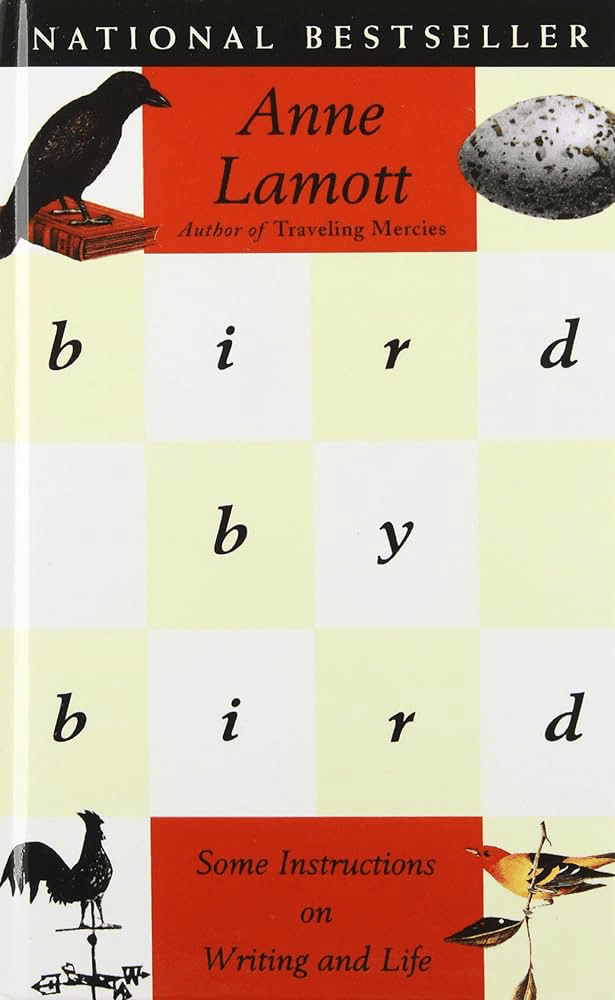
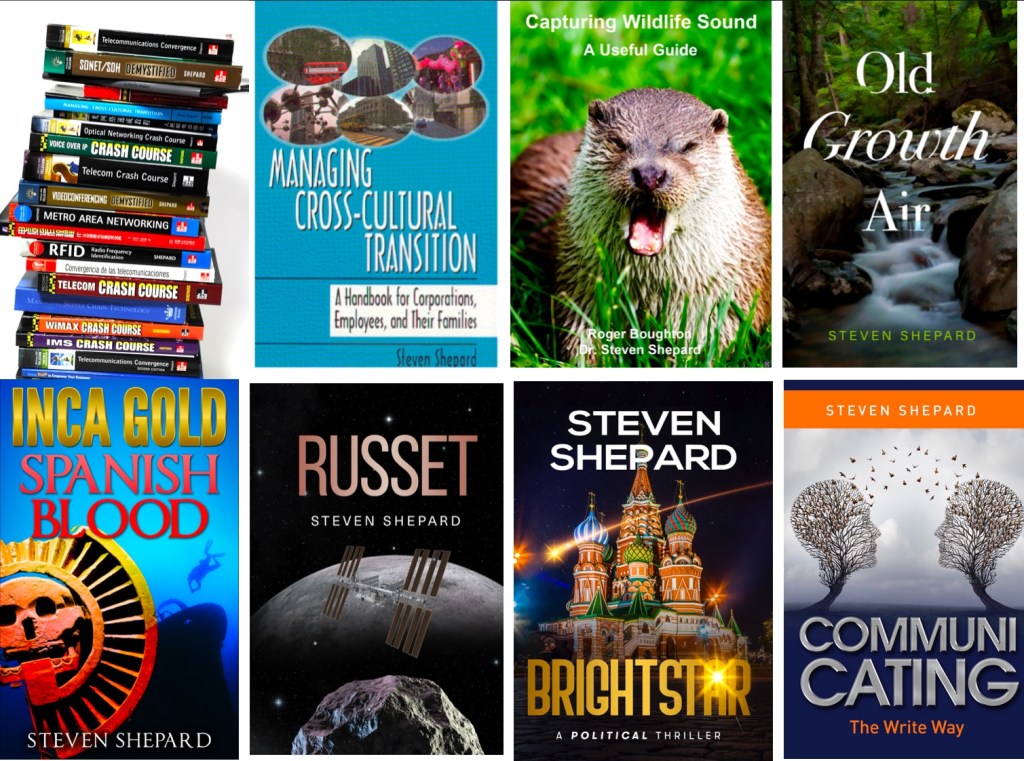
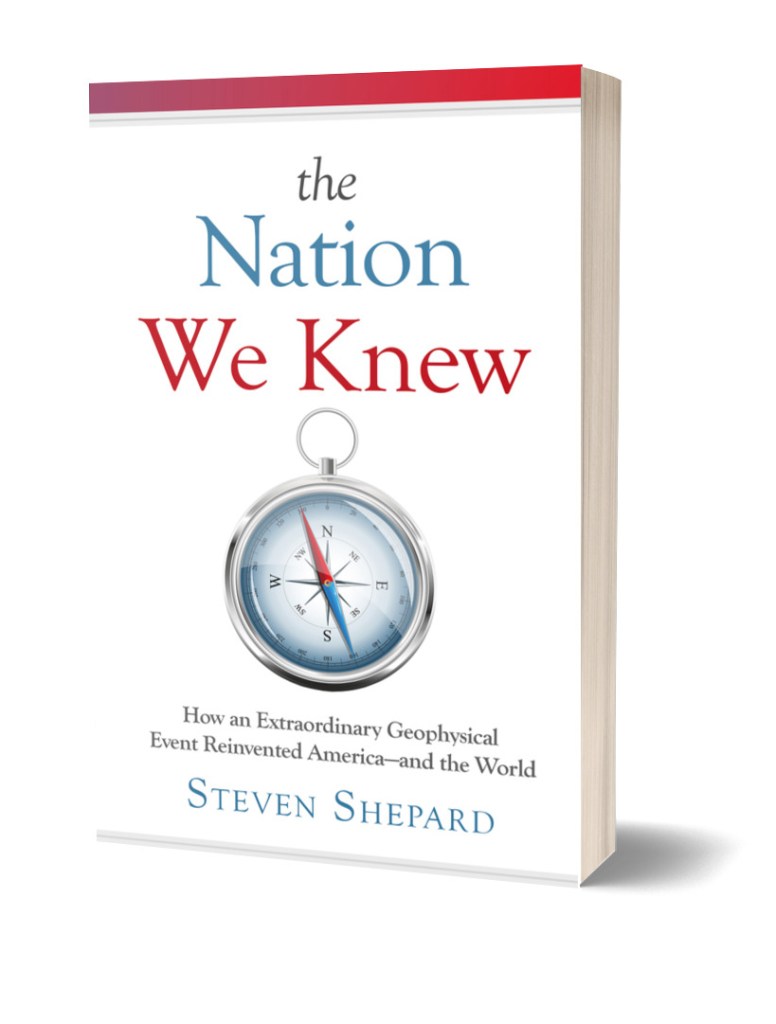
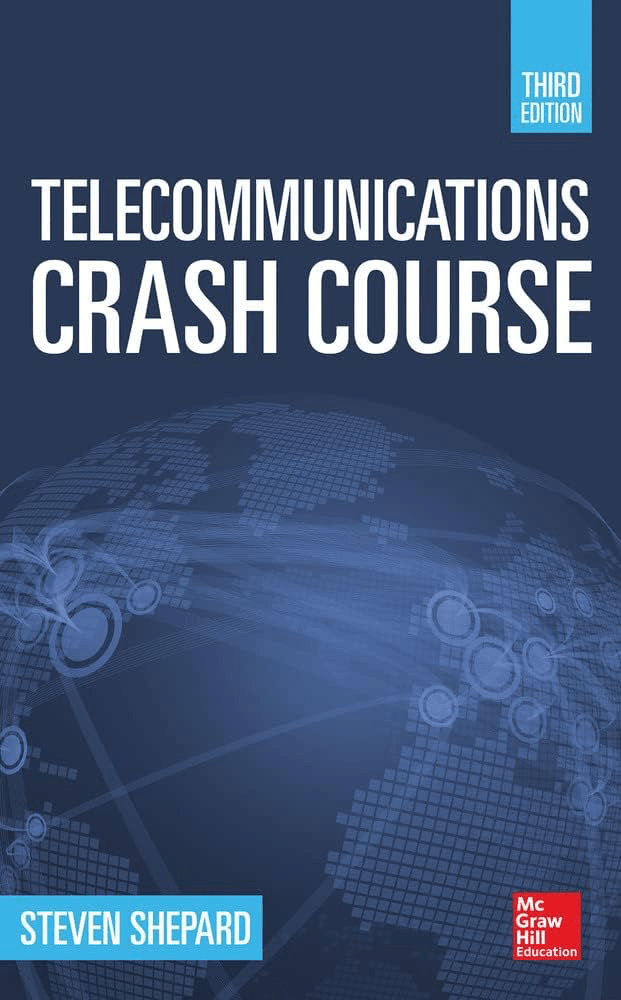

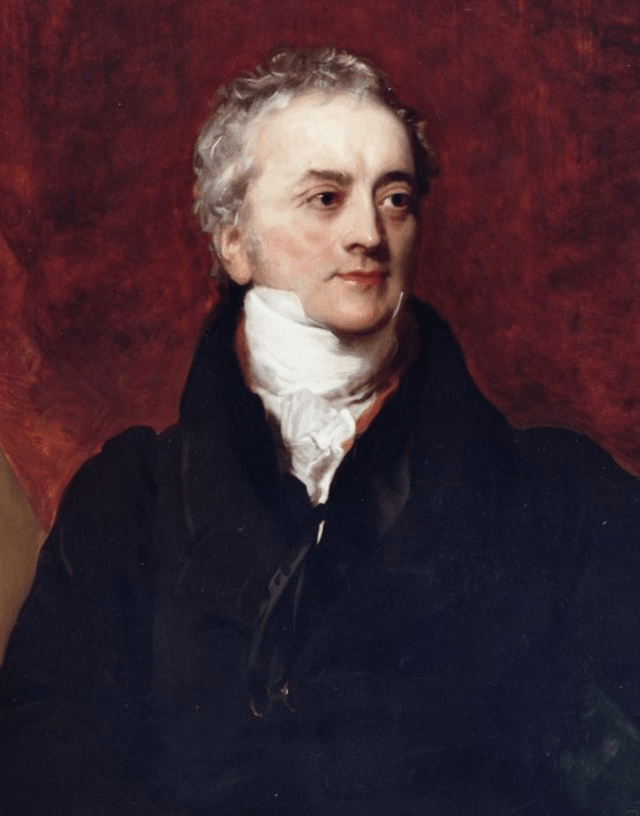
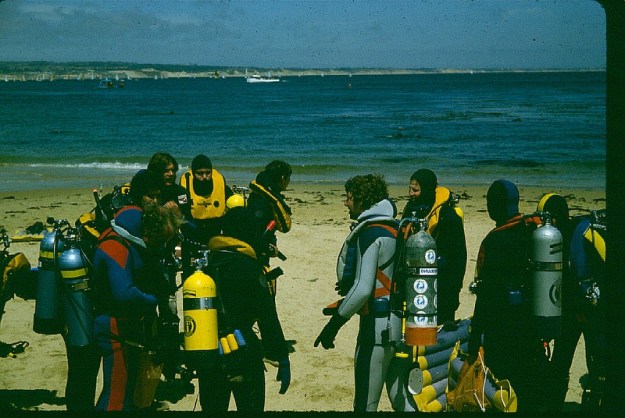


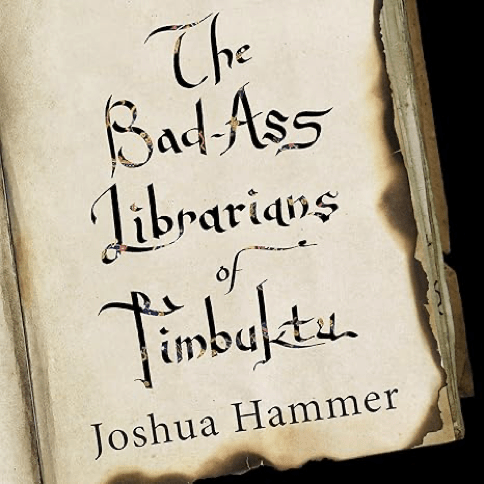
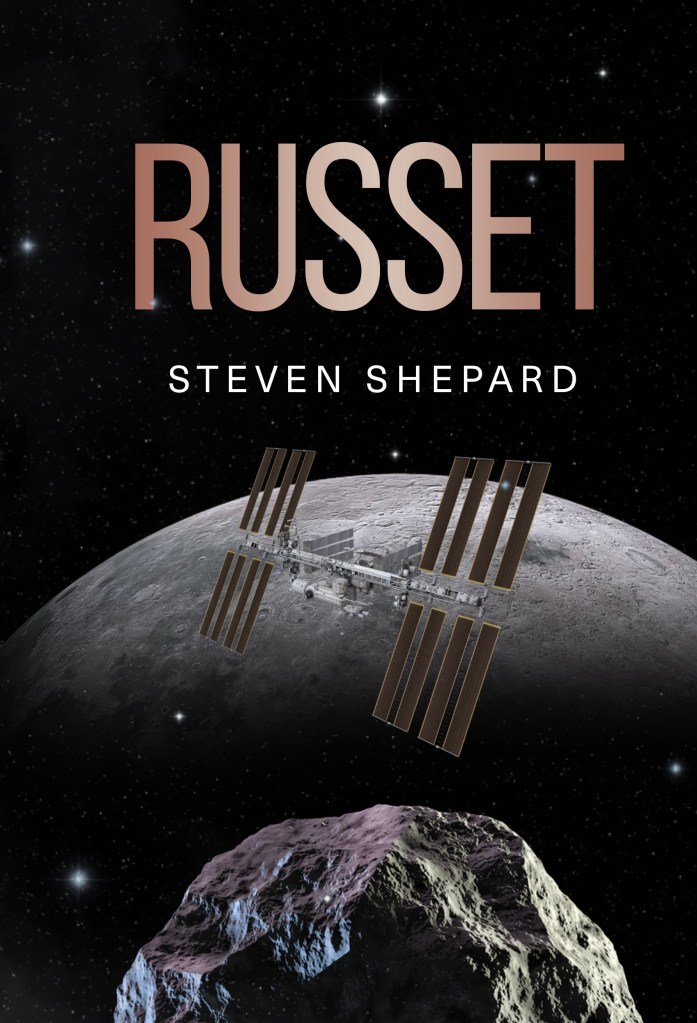
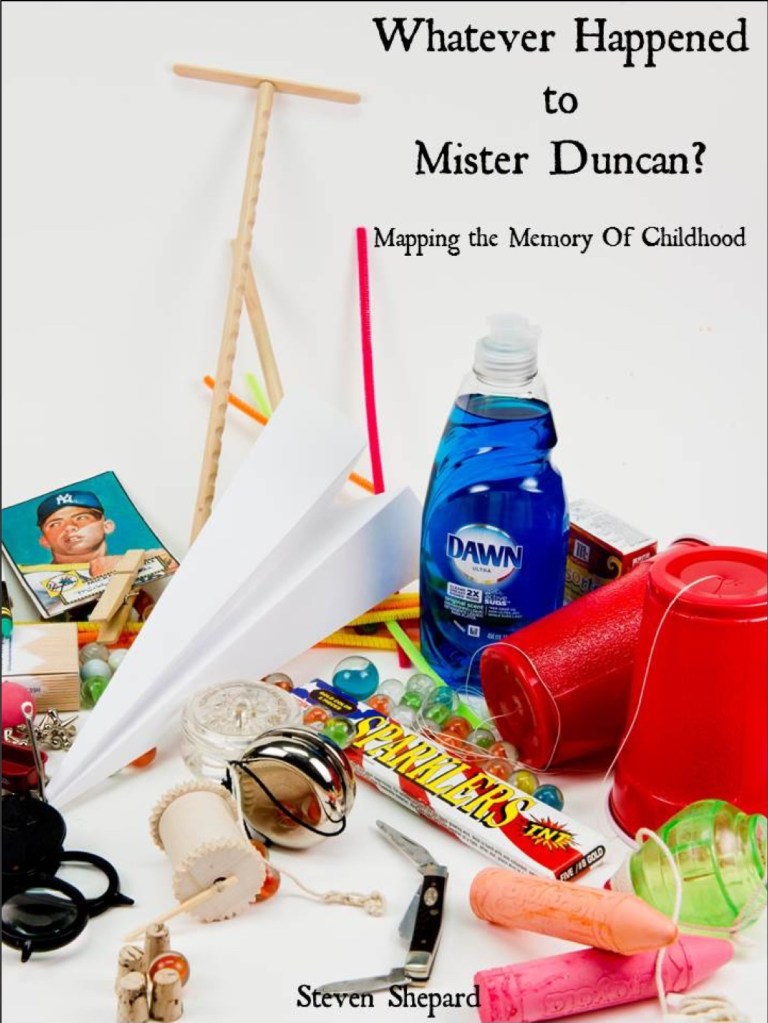
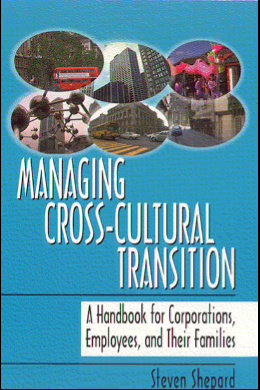


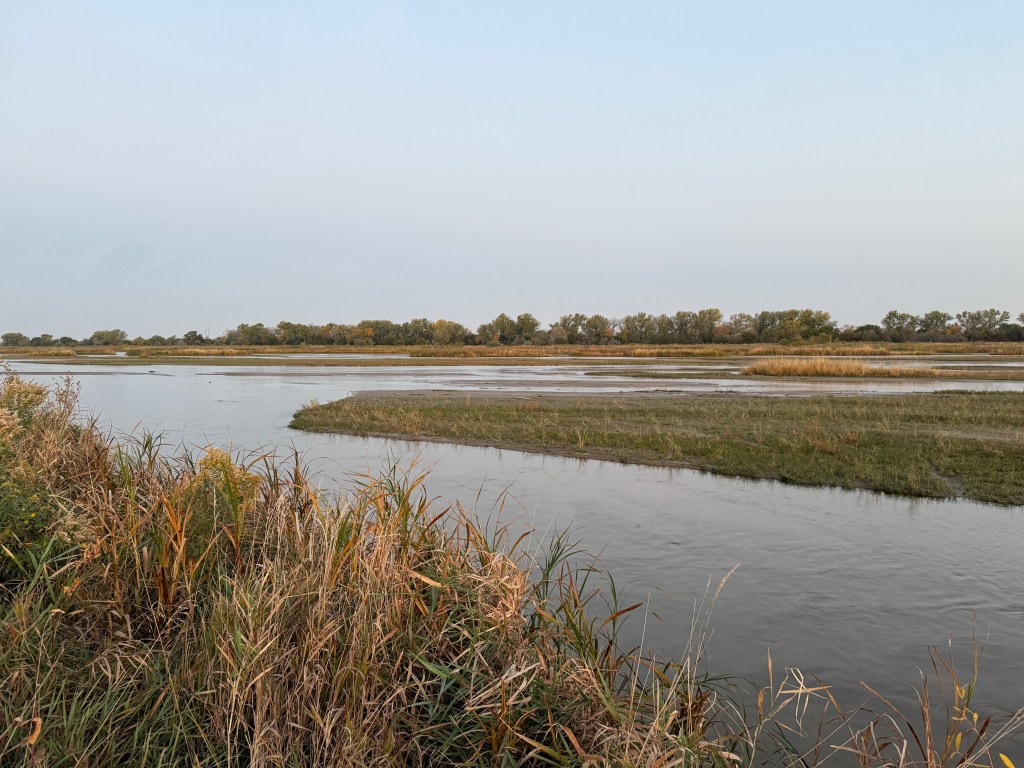
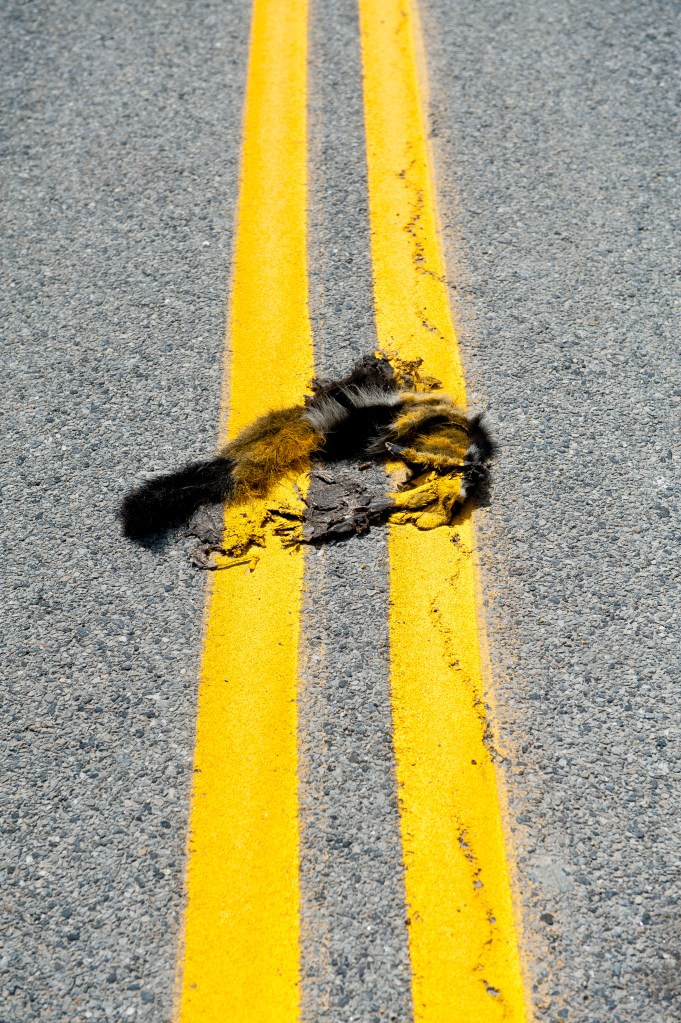
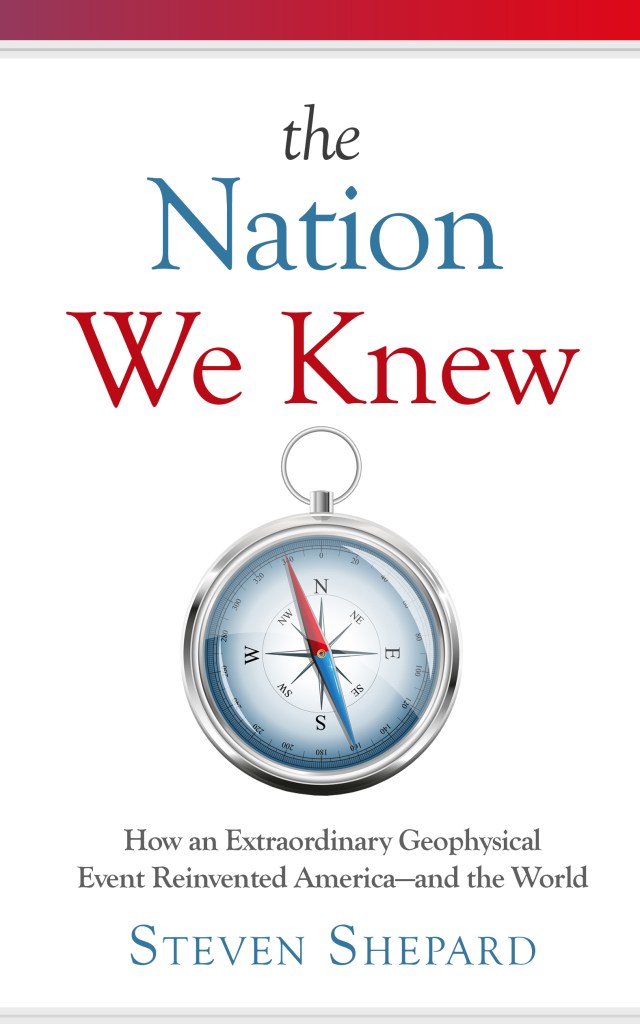
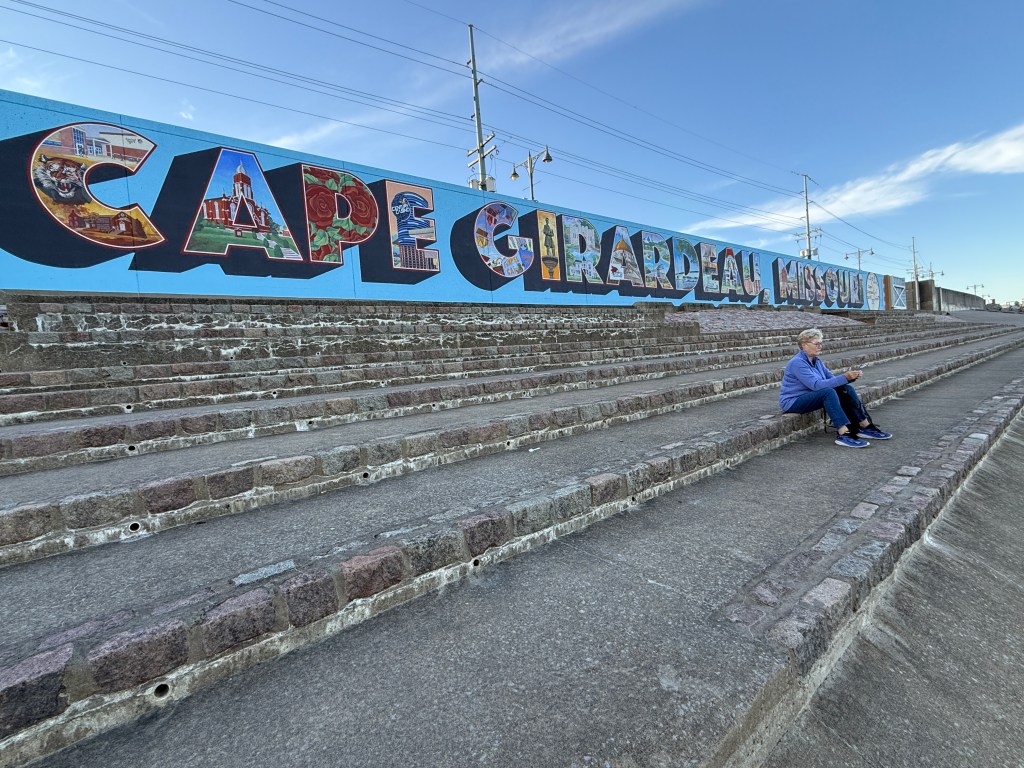
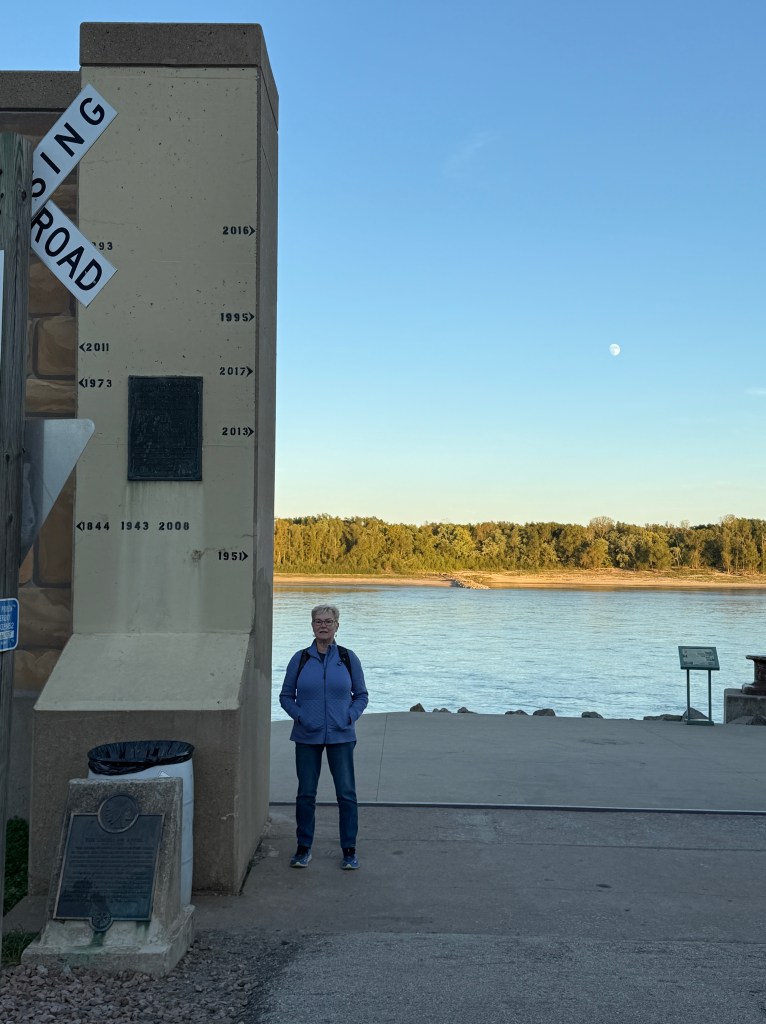
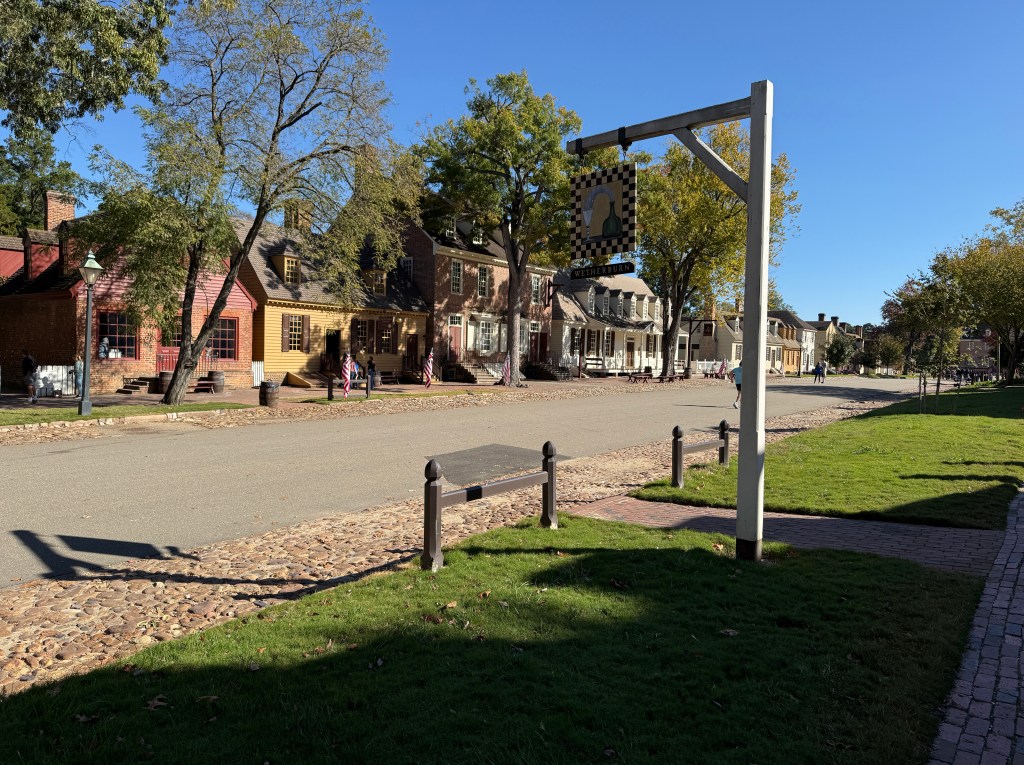
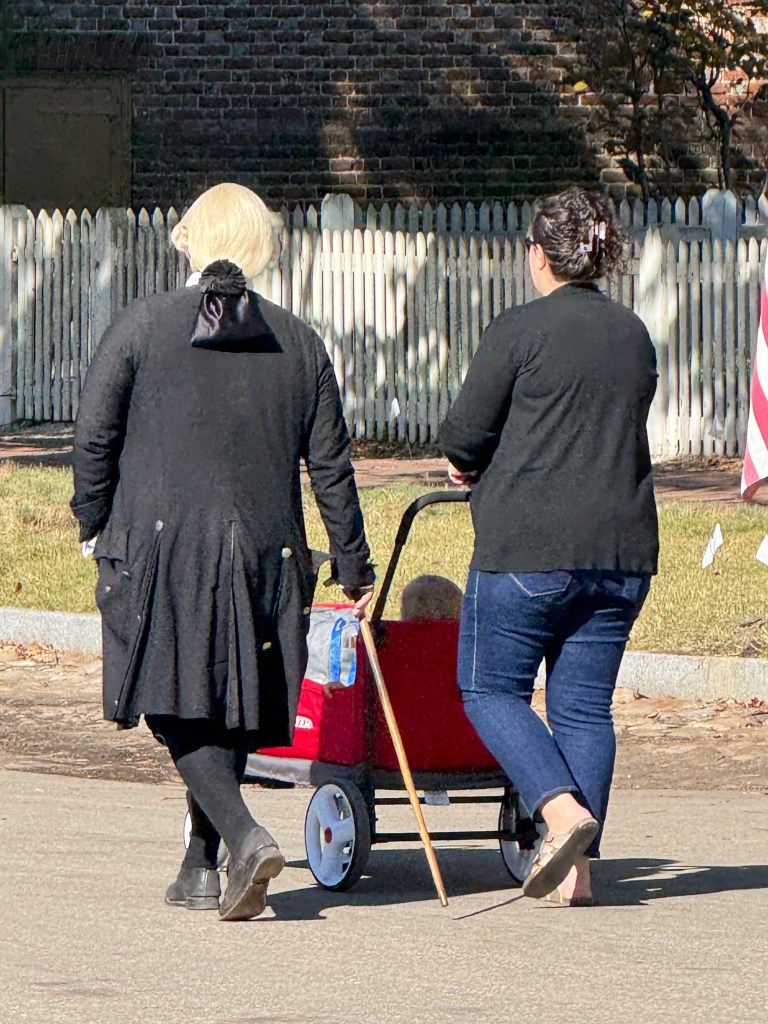

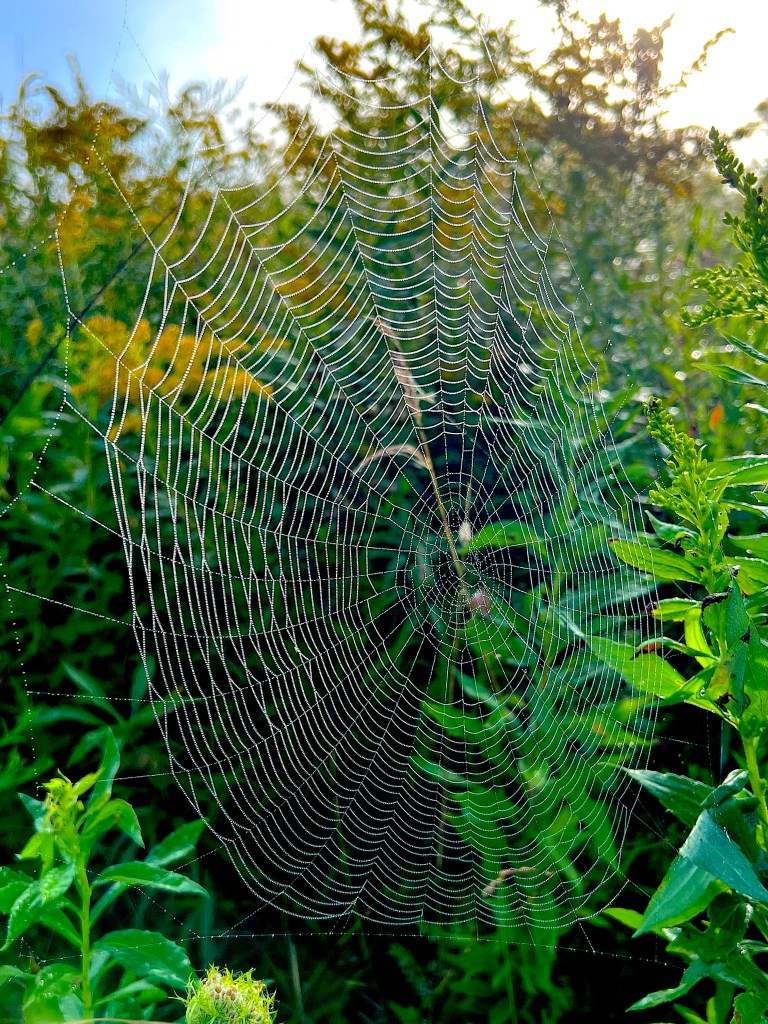
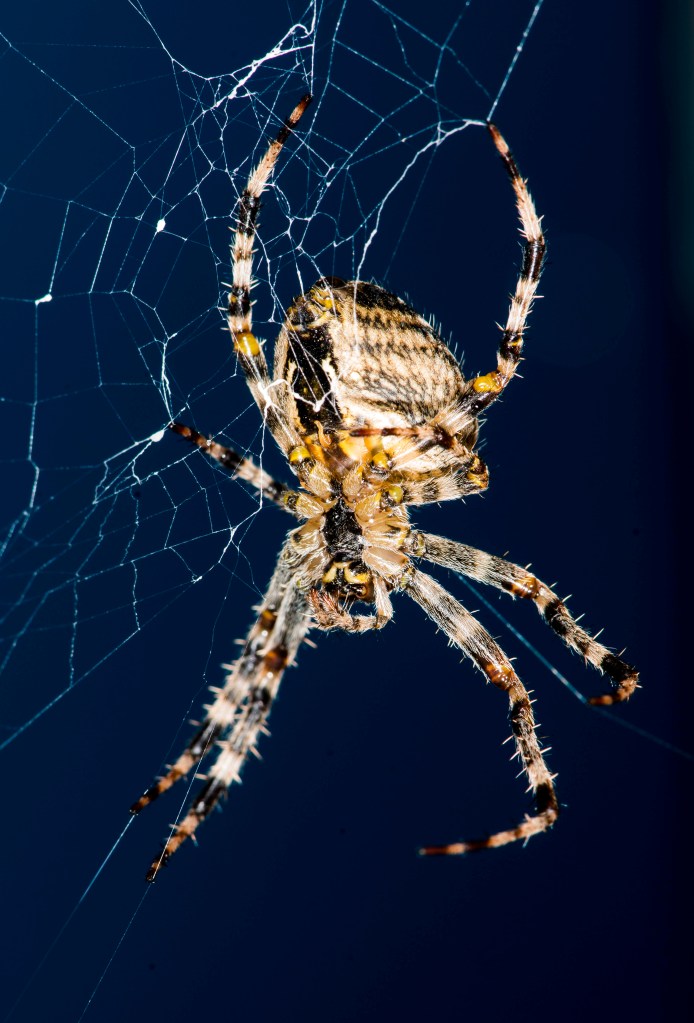

 Steven Shepard