I’ve been writing for a long time, and I love every second of the process. My first book came out in 1980; my 104th came out two months ago. All but seven of my books were released through traditional publishers; the others I self-published for a variety of good reasons that aren’t important. I also teach writing workshops, which I love.
I’ve gotten a passel of questions about writing over the last few weeks that I’ve decided to answer in this post, because the answers might be helpful to others. So, with your indulgence, I’m going to quickly cover two topics:
- Why we write: Writing vs. publishing
- The pleasant schizophrenia of writing across genres (fiction and non-fiction)
WHY WE WRITE
IN RESPONSE TO THE QUESTION, “Why do you write?” a serious writer responds, “Because I can’t NOT write,” or something to that effect. Writing isn’t something we do; it’s something we are, at least, that’s the case for me and most of the committed writers I know. If I miss a day of writing, I feel the same unease as when I miss a day of walking.
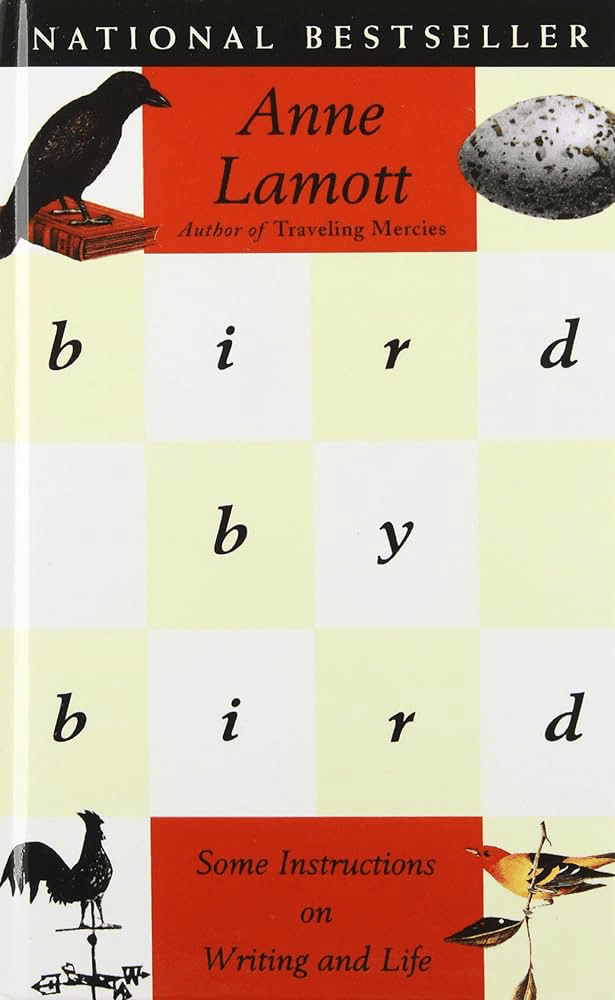
Anne Lamott, the author of Bird by Bird, makes a seminal point in that book. She observes that for many would-be writers, the goal is to get published, not to write a book. I know that sounds off, but it isn’t. Many writers want to have written a book so that they can fondly remember the process as they regale others about the experience and bask in the afterglow. In other words, they want to get published—BE published—more than they want to take the long writing journey. There’s a reason Ernest Hemingway’s description of writing, apocryphal though it may be, is so accurate: Writing a book is easy. All you have to do is sit down at your typewriter and stare at the paper until drops of blood form on your forehead.
It’s very, very hard and disciplined work to write a book.
Self-evident though it may sound, though, it’s an inviolable rule of the universe that you must write the book (or article, white paper, essay, poem) before you can publish it. The one necessarily begets the other.
Look: we all want to be published, because we see it as a third-party nod to our skill and prowess as a writer. It’s not enough for us to think our own work is good; we want the confirmation from others that we’re right. There’s absolutely nothing wrong with that. But consider this. The long and storied (yes, that’s deliberate) journey from an idea percolating in your mind to opening the box of author copies when it arrives on the porch, delivered by your new favorite friend, the UPS driver, is one of the greatest experiences you’ll ever have. And why is that? Well, several reasons. First, the only map for the journey ahead is in your mind. In fact, the territory that the map describes and through which you will journey doesn’t even exist yet, and it won’t until you set out to explore it by creating it. Second, you are the only person on the entire planet who knows your story as you bring it to life. And third, writing a book imbues you with the absolute and incalculable power of creation and destruction. You are free to create worlds, civilizations, fantastical beasts, people; and just as easily, with a swipe of the pen (or keyboard), you can make them vanish. In fact, every fiction writer I have ever known has told me that at some point in their writing career, they had a breathtaking moment of indescribable terror. It happened when they realized that the fate of the people who had been living rent-free in their heads for years was entirely, ineluctably in their hands. With great power, as Peter Parker admonishes us, comes great responsibility.
So, yes, think about getting published. It’s an important part of being a writer. But remember, that book sitting on the shelf is the end of the road, the finish line. When you get there, the journey ends, and trust me, even though there will be miles of rough gravel and strut-busting potholes along the way, more than a few times when you’ll lose control and careen into the ditch, and plenty of moments when you’ll feel that you’re hopelessly lost and will never get to the end of the journey, when all is said and done, two things will happen: you’ll feel a profound sense of letdown; and you’ll feel an enormous sense of accomplishment. Why? Because you did what Bilbo Baggins did in The Hobbit: you went there and back again.
A singular focus on ‘getting published’ denies you the exquisite joy of the journey required to get there.
WRITING ACROSS GENRES
I WRITE BECAUSE I AM A STORYTELLER. I write because it makes me feel good. I write because it pisses me off, forces me to struggle, is an enormously creative pursuit, and because the effort can yield magical things.
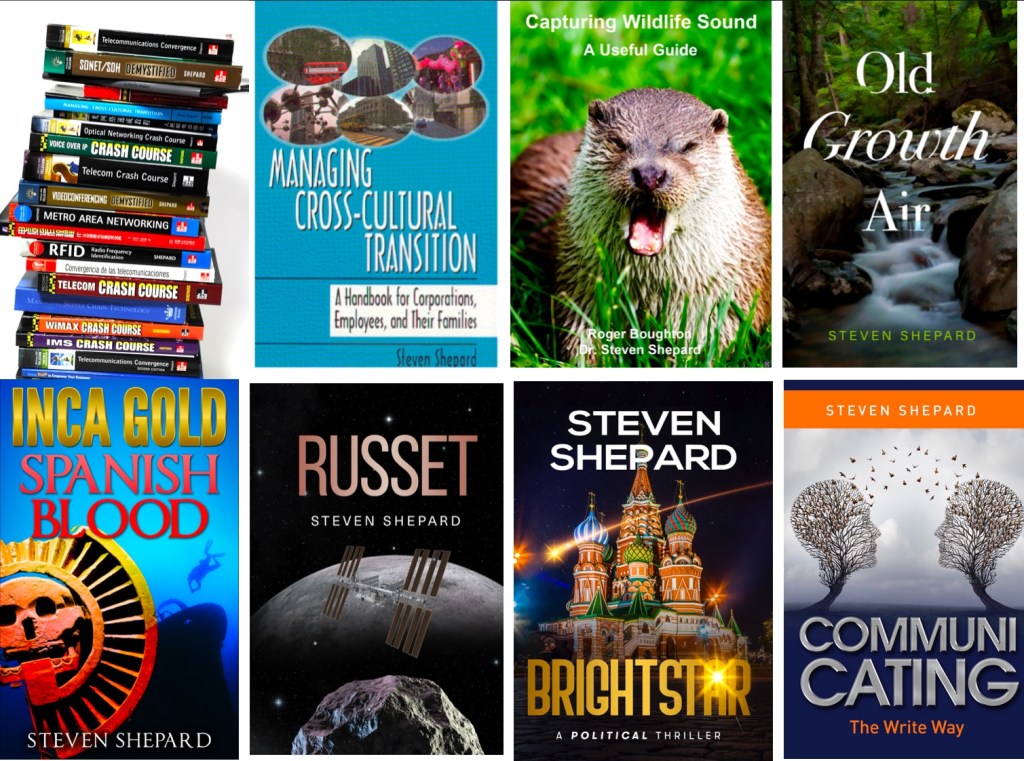
My first book was called Commotion in the Ocean, and it was a SCUBA diving manual. My second book was called Managing Cross-Cultural Transition, and it spoke to the challenges that expatriates face when they return to their home country after an extended stay abroad.
My next I-have-no-idea-how-many books (25? 30?) were all books about communications technologies, written for non-technologists. That’s the field where I spent my career. Two of those books became bestsellers.
Then, interspersed among the bit-weenie books, I wrote books about storytelling, photography, and history. Under contract, I wrote the biography of a renowned Canadian telecom executive. I wrote a handful of children’s books, and I wrote books about writing, leadership, wildlife sound recording, strategy, cybersecurity, and the natural world. And, I ghost-wrote quite a few books for other writers about topics that I can’t talk about.
Then, fiction began to call to me, and over the course of ten years or so I wrote four novels, one of which briefly became a global bestseller, holding the number one position in political fiction at Amazon for a couple of weeks.
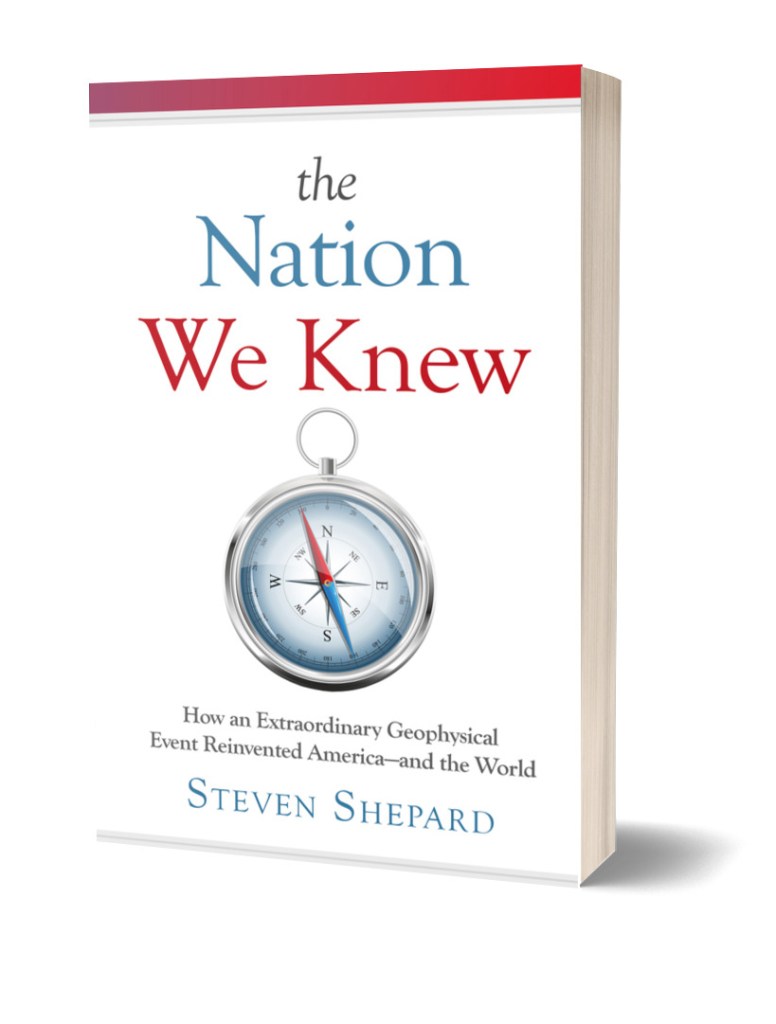
All of these books are rectangular and they all have covers, but that’s where the similarity ends. Weird, right? And this is why I am often queried about my writing, because most writers work within a single genre. They write poetry. They write mysteries and thrillers. They write science fiction, or bodice rippers, or historical fiction, or crime procedurals, or children’s books, or any of a thousand thousand non-fiction topics.
But me? When I’m asked what I write, I sometimes reply, “Well, words, mostly.” That’s snarky, but it’s accurate. I’m not in love with any particular genre, you see; I’m in love with writing. It’s like whittling a stick of wood with a pocket knife. The pleasure doesn’t lie with whatever I end up carving; the pleasure lies in the carving itself. That’s one of the two reasons I can and do write across diverse genres.
THE OTHER REASON, and it’s important, has to do with specific skills. Everybody has them; we all have one or more things that we do really well, as true for writing as it is for carpentry, photography, oil painting, car repair, or surgery.
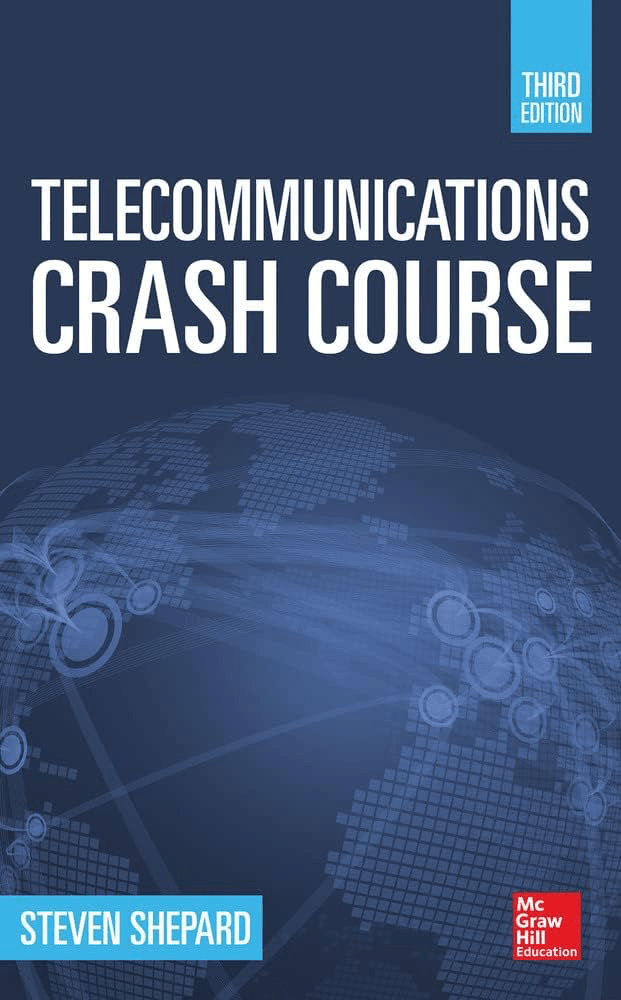
I am, above all else, a storyteller. That’s my skill. It’s the way my mind works. It’s the technique I rely on to create context for whatever topic I’m writing about, and to create context for whatever I’m trying to understand. One of my technology books that became a bestseller, The Telecom Crash Course, explains how telecom technologies work, but it’s written for an audience of non-technical business decision-makers. The book’s Preface begins with me, standing at a dusty, bustling crossroads in a small African village, watching as life happens there. It ends with me standing amongst a surgical team in that same village who are removing a woman’s gall bladder in an operating room that has been set up inside an old shipping container. Outside, goats and chickens and local kids run around, laughing and playing. Inside, the medical team assists with the procedure—‘assists’ because the surgeons who are actually performing the cholecystectomy are at a hospital in the U.S., seven thousand miles away, operating on the patient using a robotic surgery machine connected to them via a blazingly fast optical cable that winds across the seafloor from North America to Africa. The procedure is done laparoscopically; the surgeons in Maryland precisely control the three arms of the machine, inserting pencil-thin probes and instruments and cameras into three small incisions in the woman’s belly. The procedure takes 40 minutes, open to close; the woman goes home an hour later with six stitches, three band-aids and a bottle of painkillers.
Look: I could have told my readers that optical networking is important and really fast and deserves their attention and investment. Booooooooring…But, I decided to show them instead, by taking them on a storytelling journey, all true, by the way, and letting them see for themselves.

I need to make something clear here. I’ve written dozens of books about extremely technical topics, but I’m not a computer scientist or electrical engineer. My undergraduate degree is in Spanish, to be honest. But as I said, I spent my career in and around the telecom industry, speaking about and teaching technology to people who had a need to understand its implications. I know the subject well, but much more to the point of this essay, I’ve worked hard to develop the ability to explain complex topics, complex themes, through storytelling, by using the story to create context. and that is true, regardless of what I’m writing about.
Storytelling is my specific skill. What’s yours? If you’ve never thought about this, you should. What is the one thing that makes your work stand out above the rest? What do you incorporate in your writing that allows your creative signal to rise above the competitive noise? I spent most of my career working with people who had forgotten more about technology than I would ever know. I’m proud to admit that. But I had something they didn’t: the crucial ability to make complicated, off-putting topics understandable and—dare I say it? Interesting and entertaining. After all, isn’t that what writing is all about in the first place? Creating a bridge between your story and the reader? I think so. Otherwise, what’s the point?
 Steven Shepard