Summer has finally arrived in Vermont, and like most of the continent, as expected, the political temperature is also climbing to insufferable levels as November approaches. The circus begins.
I’m a writer. That doesn’t define what I do; it defines who I am. As such, my toolkit has individual compartments for verbs, nouns, adjectives, participles, gerunds, and adverbs. Lately, I find myself rummaging around quite a bit in the adverb drawer. Remember those? Who, what, when, where, why, how. In today’s hyper-polarized political climate, adverbs, two in particular, just might save us from ourselves if we let them. Let me explain.
“What are you?”
“I’m a Democrat.”
Wrong question, wrong answer. Why, you ask? (Another adverb, by the way). Because the instant we use the adverb what, we require the imposition of a label. Republican. Democrat. Libertarian. Progressive. Immigrant. Blue collar. Pro-life. Pro-choice. Vegan. NRA member. Those labels have one purpose: to distill, to artificially simplify the essence of the person they’re attached to so that the other party can quickly and clearly label them as friend or foe, enemy or ally, someone to like or someone to hate. But they don’t. Labels fall short in the worst possible way, because they say nothing about who the person is. They’re easy: it takes work and effort, you see, to invest in another person with the goal of truly understanding who they are. But this is life: there is no easy button.
Which is why a better question than “WHAT are you?” is, “Who are you?” Try to attach a label to that. I’m a college educated, white-collar, married man, with two kids and five grandkids. I don’t lean into labels; I lean into issues and ways to resolve them. I’m retired, fiscally conservative, socially liberal, and I have friends and relatives from both sides of the political aisle. I get along with all of them because I know WHO they are, not WHAT they are. And truthfully, I don’t CARE what they are. It’s immaterial to me.
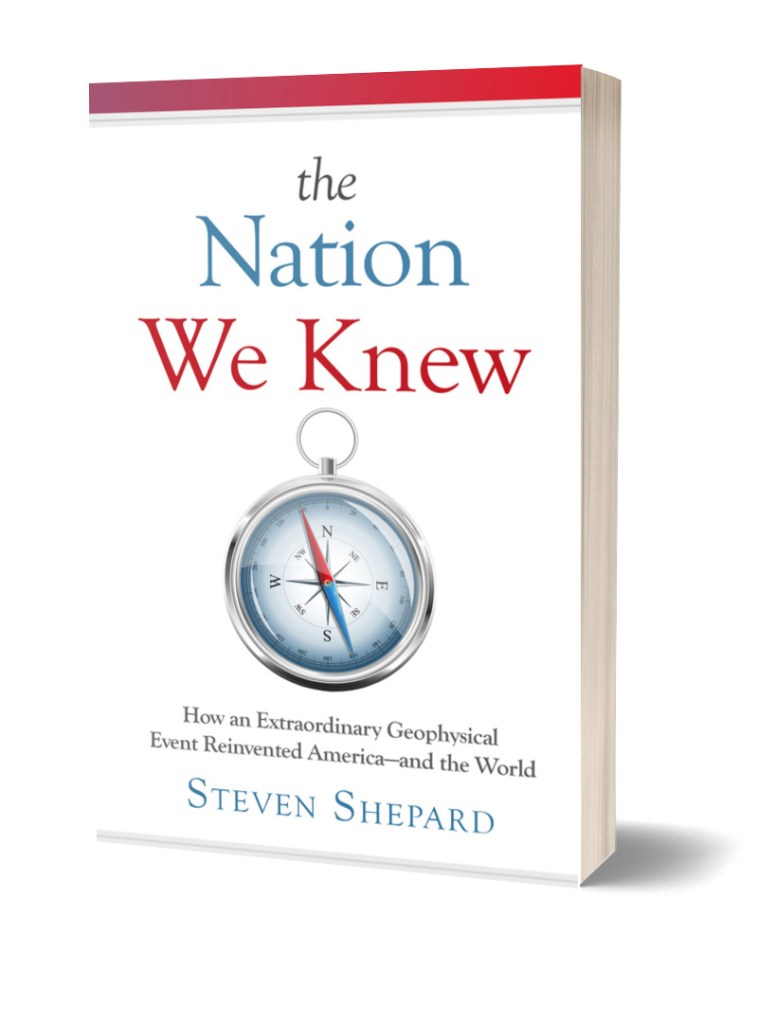
Those of you who read my book, “The Nation We Knew,” might recall that in the last chapter of the book I described a conversation I had with a guy out in Ohio who is in most ways my polar opposite, politically. Had I assessed him using the convenient ‘let’s just assign the guy a label’ protocol, I could have saved myself the effort of talking with him and simply disdained him because of the handy-dandy label I would have assigned to the guy. But instead, he and I had a meaningful conversation about things that are actually important, things that make us who we are. We talked about kids. Grandkids. We talked about our work. We shared the things that make us happy, the things that scare us, the things we want for our kids and grandkids. We talked about the kinds of books we read (remarkably similar, by the way), the hobbies we have, our favorite foods, what we drink, the frustrations we feel. In other words, I came away impressed with the guy—even though our labels were different colors. I like WHO he is. I don’t care WHAT he is, because it doesn’t matter. For important, meaningful conversations, it’s irrelevant.
My wife said something recently that really stuck with me (as most things do that she says). We were talking about religion, about how it has been politically weaponized,. She also expressed her understanding that religion is important to many people, and then she said this: “Here’s how I look at it. Are you living it or selling it? Because if you’re living it, I admire you and support your beliefs. But if you’re selling it, trying to convince others, that’s a different story. Who are you really trying to convince—me, or yourself?”
Want an example? There’s a woman who lives in our small Vermont town who is staunchly Catholic. She never married, and she’s now in her 90s. We met her when our kids were in elementary school. One of her kids—one of her ADOPTED kids—one of her 27 ADOPTED kids—was in our daughter’s class. Her kids are of different races, and many are developmentally or physically disabled. They’ve gone on to become lawyers, carpenters, doctors, and other professions. Around here, she’s called SuperMom.
She’s living it. She doesn’t tell anybody what to do; she shows us. How easy it would be to assign a label to her and be done with it: “What is she? She’s Catholic.” Or, we can focus on WHO she is, and how she LIVES who she is, every day. Just ask her kids. What a gift to the world.
Can you imagine how the political carnival would change if we laid off the labels and stuck with what’s actually important? I know, I know, tilting at windmills again.
Just something to think about.
 Steven Shepard