Like most young 19th-century boys, Hugh Lofting liked animals and playing outdoors. Born in 1886 in Maidenhead, in England’s Berkshires, he had his own little natural history museum and zoo when he was six years old. The fact that it was in his mom’s bedroom closet wasn’t a problem until she found it there.
The point is, Hugh loved nature, and everyone who knew him was convinced that he’d become a naturalist, or biologist, or something in a related field, when he grew up. So, everybody was surprised when he decided to study civil engineering. He started at MIT near Boston and completed his degree at London Polytechnic. When he graduated, he got work in the field: prospecting and surveying in Canada, working on the Lagos Railway in west Africa, then on to the Railway of Havana in Cuba. After traveling the world, he decided that a career change was in his future. He married, settled down in New York City, had kids, and began to write articles for engineering magazines and journals about topics like, ‘building culverts.’
In 1914, World War I, ‘The Great War, The War to End All Wars,’ broke out, and Hugh was commissioned as a lieutenant in the Irish Guards. He fought in Belgium and France, and the horrors of war affected him deeply. In fact, his feelings about the natural world once again came to the surface, as he witnessed the treatment of draught animals in the war. Their suffering affected him as much as the suffering of his fellow soldiers.
To help himself deal with the emotional trauma of war, he returned to his writing. He began to compose letters to his two children about a mythical, magical doctor who took care of animals, curing them of whatever malady had beset them.
In 1918, Hugh was badly wounded when a piece of shrapnel from a hand grenade shredded his leg. He left the military and after recovering from his injuries in England, returned to his family in New York.
Serendipity definitely played a role in the direction of Hugh Lofting’s life. His wife, charmed by the letters he wrote to his children while he was deployed, had kept them, and suggested he turn them into a book. He did. It was called, “The Story of Doctor Dolittle: Being the History of His Peculiar Life at Home and Astonishing Adventures in Foreign Parts.”
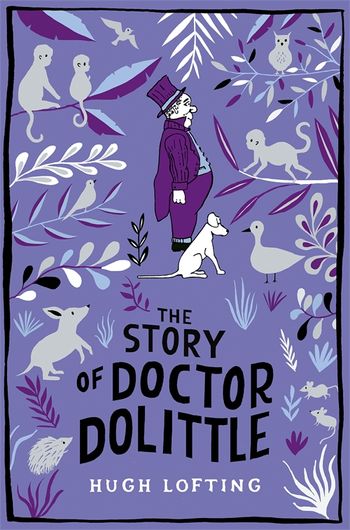
The book was an immediate bestseller, and between 1922 and 1928, he wrote a new Doctor Doolittle book every year, along with other titles.
Interesting story—it’s always fun to hear how a writer finds the track that defines their life’s work. But that’s not what I want to talk about here. I just finished re-reading Doctor Doolittle for the first time in a long time (I love children’s books), but I also just finished reading Ed Yong’s “An Immense World: How Animal Senses Reveal the Hidden Realms Around Us.” I didn’t plan it that way; they just happened to pop up in my reading stream, and much like Hugh Lofting, serendipity kicked in. Doctor Doolittle could talk to animals; Ed Yong writes extensively in his book about the extraordinary ways that non-human species communicate. In fact, there’s been a lot of chatter in the press lately about advances in interspecies communication and our soon-to-be-available ability to translate what our non-human neighbors are saying. That’s quite a breakthrough, considering how much trouble I often have understanding what other HUMANS are saying.
Before I get too far into this, let’s lay down some basics. We are NOT the only species that communicates, nor are we the only species that uses body language. Lots of animals do that. Orangutans, for example, often use pantomime with each other, and even with their human caregivers in orangutan rescue centers. And after recording thousands of hours of sound and observing the behavior of herds of elephants over a long period, researchers have determined that elephants have a specific call that means, ‘Bees—Run!!!’ In fact, there may be a form of interspecies communication going on here. When African wild dogs show up, one of the fiercest and most dangerous predators in all of Africa, elephants have a specific warning call which also causes other animals, like gazelle and impala, to take notice and run. But when elephants bellow about bees or other things, calls that sound just as urgent, they don’t even flinch. They just keep grazing, entirely unconcerned.
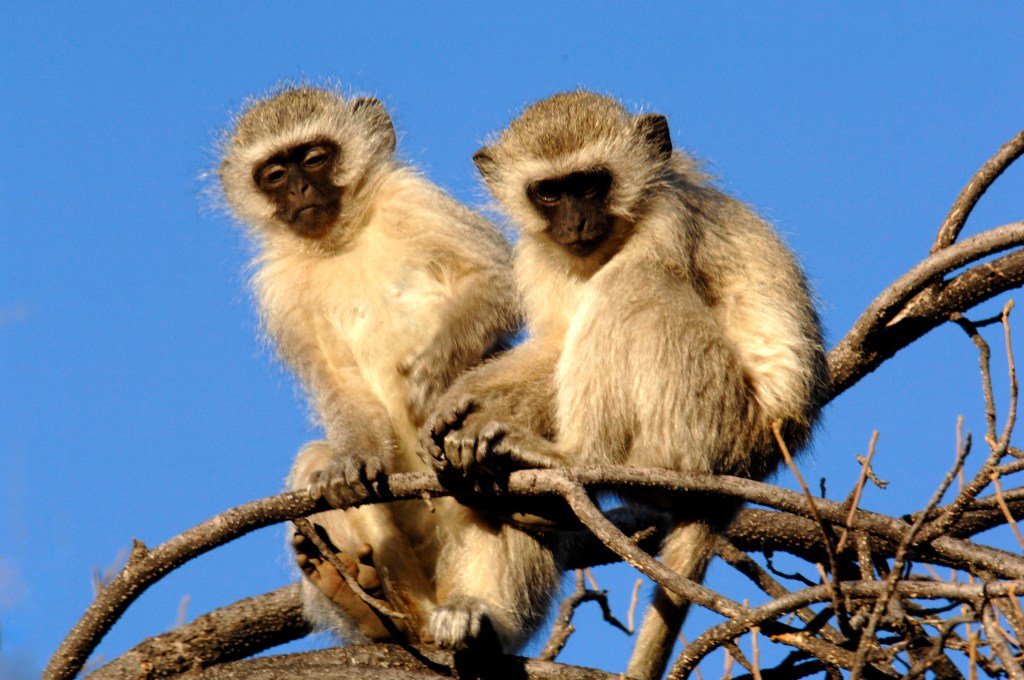
Monkeys do similar things. Vervets, the annoying little monkeys that once invaded and destroyed my room at an African game preserve in search of the sugar packets that had been left for coffee, have distinct calls for distinct scenarios. If one of them sees a land-based predator, like a leopard, they issue a specific call and everybody takes to the trees. If they see an aerial predator, like a crowned eagle, a distinctly different call sends the troop into the safety of ground cover.
Some species even add nuance and meaning to their calls by changing the order of the sounds they make. For example, if west African Campbell’s monkeys begin their threat calls with a deep booming sound, it means that whatever threat they’re seeing is still far away, but pay attention—be aware. If they start the call without the booming sound, it means that the threat is close and that whoever hears it should take cover immediately.
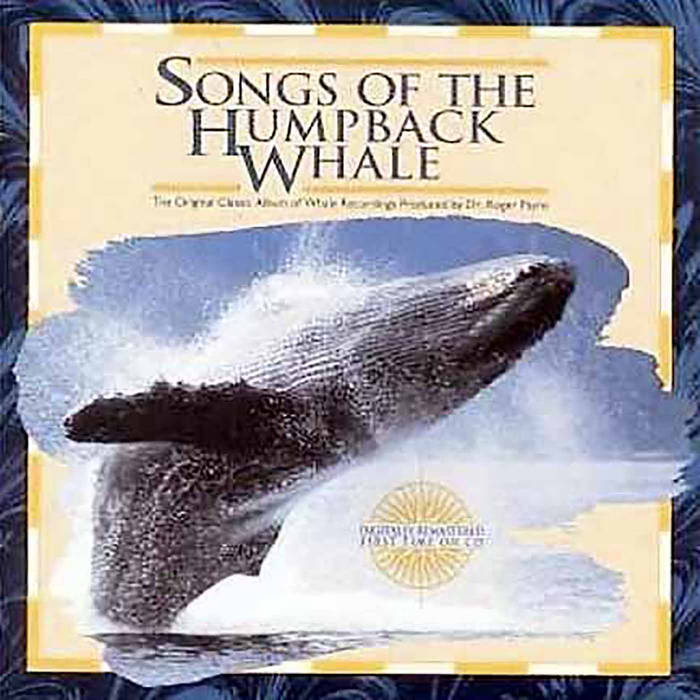
Sixty years ago, Roger Payne, a bioacoustics researcher at Tufts University who spent his time listening to the calls of moths, owls and bats, met a naval engineer who monitored Soviet submarine activity using hydrophones scattered across the sea floor. The engineer told Payne about sounds he had recorded that weren’t submarines, and after playing them for him, Payne was gobsmacked. He asked for and was given a copy of the sounds, which turned out to be made by humpback whales, and after listening to them over and over for months, he began to detect that the sounds, which were extremely diverse, had a structure to them. He loaded the audio files into a software package capable of producing a spectrogram, which is a visual representation of a sound, using time on the X-axis and frequency on the Y. By the way, this required a partnership with IBM to get access to a mainframe computer to do the analysis. Anyway, what his analysis confirmed was that whales call in a very specific order of unique vocalizations. Sometimes a call lasts 30 seconds, sometimes thirty minutes, but the sequence is always the same—identifiable sequences that he called songs. In fact, in 1970, Payne published his recordings as an album called Songs of the Humpback Whale. It went multi-platinum, selling more than 125,000 copies and catalyzing the effort to end commercial whaling around the world. Some of its tracks were included on the gold album attached to Voyagers 1 and 2 when they were launched into deep space in 1977.
Most recently, researchers have taken their analysis of animal sounds even farther, using AI to identify more complex patterns. Shane Gero is a Carleton University researcher who for the last 20 years has studied the vocalizations of sperm whales. After analyzing hundreds of hours of recordings, he and his team identified specific characteristic patterns that he called codas. It appears that the whales use these unique sounds to identify each other. He and his team are now feeding the sounds they’ve captured into a large language model that they will then unleash AI against in an effort to enhance our understanding of whale speak.
That’s remarkable—stunning, in fact. But speaking for myself, I feel inclined to invoke what I call the Jurassic Park Effect: Just because you can doesn’t mean you should. In the movie, researchers re-created dinosaurs from the DNA found in dinosaur blood in the stomachs of Jurassic mosquitos that were trapped in amber. They did it because they could, ignoring whether or not they should, and it didn’t end well. In fact, none of the sequels did—for humans, anyway. Creating a large language model to translate other species’ languages into human language strikes me as the same thing. Because when it happens, the conversation might go something like this:
‘Hey—nice to meet you! We’re the creatures who violently kick you out of your homes and then tear them down because we want to live there instead; we destroy your food sources; we blast loud noises into your marine homes 24 hours a day; we capture and eat huge numbers of you; we pour countless toxins into your air and water and soil; we build huge dams on your rivers to prevent you from migrating home as you’ve done for thousands of years; we do all kinds of things to help to make the environment hotter and unpredictably violent; and we make your terrestrial habitat so noisy that you can’t hear predators coming or mates calling. So with that introduction, how ya doin’? What shall we talk about?’
I don’t know. Maybe it’s just me, but I don’t think we’re gonna like what they have to say.
 Steven Shepard