There is a word in the English language that I have come to love. It is onomatopoeic in a way, a word that, when pronounced, sounds like what it describes. The word is fecundity. Something that exhibits the qualities of fecundity is said to be fecund. It means prolific, and its origins are entirely feminine: rooted in old Dutch and Middle English words for the adjective feminine, the verb suckle, the noun nipple. It’s all encompassing.
For me it defines a seasonal intermezzo: a short movement between the two longer sections of a major work. In this case, the major work is summer. In my mind it has two movements: the first, when winter fades and spring finally lets go and full-blown summer begins; the second, when the summer begins to grow tired from the feverish pace of the annual re-ignition of life. The intermezzo is the period that’s happening now, in mid-July. It’s used as a setup, an indicator of the beginning of the long slide once again toward bittersweet fall and melancholy winter.
I am sitting in a chair on my deck, trying to read a book while being unrelentingly ambushed by a multi-species land and air attack force. Ants of diverse sizes swarm the deck, the railings, and all the furniture, including the chair I’m sitting in. They don’t bite, but they send a message: don’t mind us, just passing through, but don’t get in the way of progress.
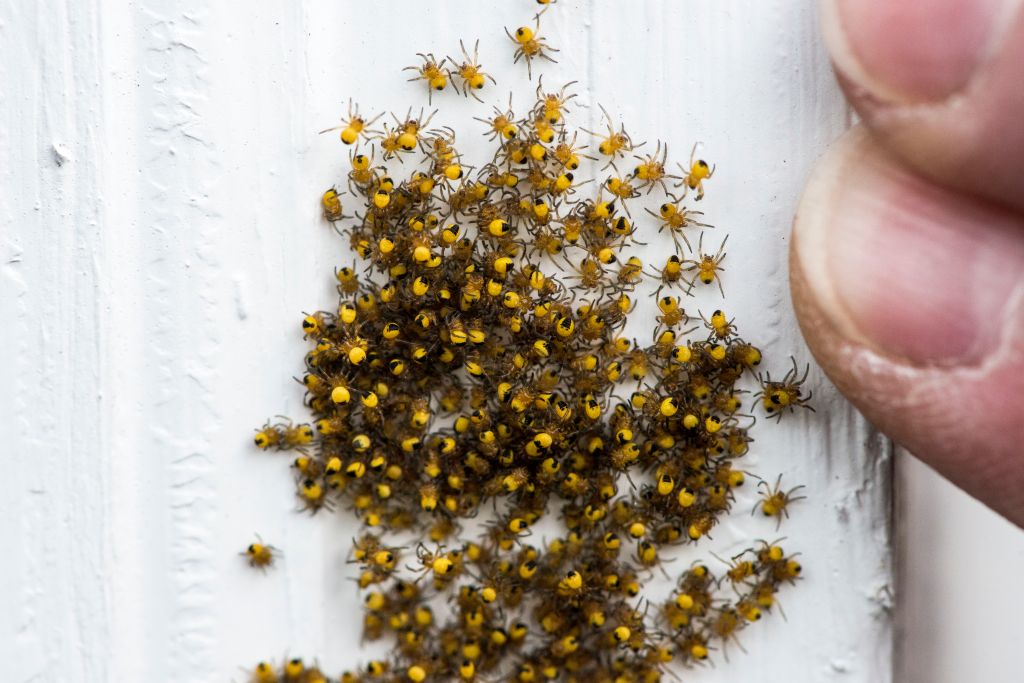
Cobwebs and sheet webs are everywhere—on the ground, between the deck rail balusters, connecting the post lights to the rails in great gossamer sheets of webbing, barely visible filaments waving in the air with spiderlings attached, tiny paratroopers on their telltales, off to colonize anything standing still, ballooning, kiting off. Contrary to the oft-stated belief that these were the webs found in corn cribs, cob comes from the Middle English coppe, meaning ‘spider.
I stand and peer over the railing at the flowerbed below. Weeds have profoundly grown out of control overnight, as if there was a countdown clock that zeroed at midnight last. GO-GO-GROW! Yesterday, a lone grass blade among the daylilies; today, an occasional daylily among the grass hummocks.
But it isn’t just the weeds that have mounted an invasion. The plantings in the garden redefine unruly, all fighting each other suddenly for center stage. A week ago, a walk among the hostas and daylilies and columbines was easy, the path we carved clear. Today, my mind turns to machetes.
Meanwhile the bugs and the birds grow weary of the manic pace of summer’s onset. The birds seem slower, less exuberant when they call; the bugs grow clumsy, with far more collisions and near-misses now than earlier in the season. The F35s have become Zeppelins. The fireflies, once staccato in their flashings, grow occasional, intermittent. The only exception seems to be the mosquitos. The black flies are gone, deer flies and horseflies make only half-efforts to land and bite, but the mosquitos are renewed, born-again assholes. They seem spawned from the humidity, a form of aquatic parthenogenesis, taking evil form from the very air. What a name: in Spanish, “little fly.” Who would give such an unpleasant and annoying—and in malarial miasmas, deadly—insect such a harmless name? And Spanish, for God’s sake—a language famous for stringing together extraordinarily colorful syllabic sequences for things far less annoying. Here, let me try: Hijo de puta gillipollas insecto cabrón. There. That’s better.
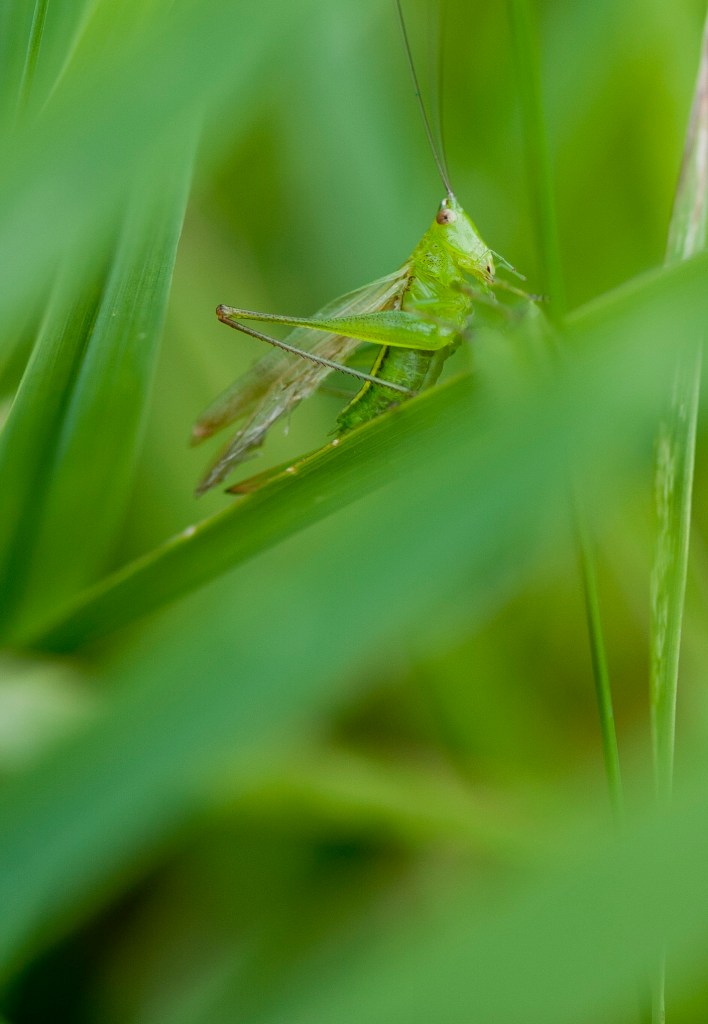
Another intermezzo phenomenon is that insects seldom seen suddenly appear in numbers: earwigs, grasshopper nymphs, potato beetles, and creatures I fail to identify. A second wave.
The weather is different during the intermezzo. Different descriptors apply. Sullen. Sultry. Torrid. Dank. Muggy. The sky boils with evil black thunder bumpers that rise to the stratosphere before flattening in great anvils, but then tease without dropping rain.
And water? It feels thicker somehow. I drop a hydrophone in a pond, intent on recording stridulating aquatic insects, and instead of the usual kerplunk I’m accustomed to, it comes back with more of a schloop, as if I were dropping a stone into Jello. Water moves more slowly, passing along the stream bed under protest. It doesn’t splash; it globs. It doesn’t flow serenely into back channels and eddies; it gets squished into them.
The second act of summer begins slowly and secretly. It’s stealthy, sneaking up on us. The plants of summer, Joe Pye Weed and poison parsnip, Queen Anne’s lace and milkweed, rye grass and cattails and goldenrod, all start to look unkempt and sullen, brown and torn around the edges, ragged and uncared for. They droop and fall over as nature gets sloppy in the second act. Vernal ponds dry and disappear, streams shrink to trickles and mud flats, and there, in mid-trail, a red leaf, a maple’s announcement of things to come.
Enjoy it. The intermezzo is nearing its end.
 Steven Shepard